Author Archives: vinaire

I am originally from India. I am settled in United States since 1969. I love mathematics, philosophy and clarity in thinking.

JUDAISM: The Chosen People

Reference: Judaism

[NOTE: In color are Vinaire’s comments.]

The fact is that Jews have continued their existence in the face of unbelievable odds and adversity, and have contributed to civilization out of all proportion to their numbers.

There is a familiar quatrain that runs:

How odd
Of God
To choose
The Jews.

Certainly, the idea that a universal God decided that the divine nature should be uniquely and incomparably disclosed to a single people is among the most difficult notions to take seriously in the entire study of religion. It is awkward not only for seeming to violate principles of impartiality and fair play, but also because many early peoples considered themselves special; one thinks of the Japanese, whose creation myth presents them as direct descendants of the Sun Goddess Amaterasu. When Moses tells the Jews, “The Lord God has chosen you to be a people for His own possession, out of all the peoples that are on the face of the earth” (Deuteronomy 7:6), is there any reason to think that we are in the presence of anything more than routine religious chauvinism?

The idea that a universal God decided that the divine nature should be uniquely and incomparably disclosed to a single people is among the most difficult notions to take seriously in the entire study of religion.

It is true that the Jewish doctrine of the election begins in a conventional mode, but almost at once it takes a surprising turn. For unlike other peoples, the Jews did not see themselves as singled out for privileges. They were chosen to serve, and to suffer the trials that service would often exact. By requiring that they “do and obey all that the Lord has spoken,” their election imposed on them a far more demanding morality than was exacted of their peers. A rabbinic theory has it that God initially offered the Torah to the world at large, but only the Jews were willing to accept its rigors. And (the thesis whimsically concludes) even they did so on impulse, not realizing what they were getting into. For “You only have I known of all the families of the earth; therefore I will punish you for all your iniquities” (Amos 3:2). Nor was this all. We have seen that Second Isaiah’s doctrine of vicarious suffering meant that the Jews were elected to shoulder a suffering that would otherwise have been distributed more widely.

The Jews did not see themselves as singled out for privileges. They were chosen to serve, and to suffer the trials that service would often exact. 

How different from the usual doctrine of election this Jewish version turns out to be! How much more demanding; how unattractive to normal inclinations. Still, the problem is not resolved. For grant that God called the Jews to heroic ordeal, not sinecure; the fact that they were singled out for a special role in the redemption of the world still looks like favoritism. The Bible makes no attempt to avert this suspicion. “It was not because you were more in number than other people,…but because the Lord loves you [that he] has chosen you to be a people for his own” (Deuteronomy 7:6–8).

Still, the fact that they were singled out for a special role in the redemption of the world still looks like favoritism.

This rankles. Flying as it does in the face of democratic sentiments, it has provoked a special theological phrase to accommodate it: “the scandal of particularity.” It is the doctrine that God’s doings can focus like a burning glass on particular times, places, and people(s)—in the interest, to be sure, of intentions that embrace human beings universally.

We shall not be able to validate this doctrine, but there are two things that we can do. We can understand what led the Jews to adopt the concept, and what it did for them.

It has provoked a special theological phrase to accommodate it: “the scandal of particularity.” 

Our search for what led the Jews to believe that they were chosen will carry us past an obvious possibility—national arrogance—to the facts of their history that we have already rehearsed. Israel came into being as a nation through an extraordinary occurrence, in which a milling band of slaves broke the shackles of the tyrant of their day and were lifted to the status of a free and self-respecting people. Almost immediately afterwards they were brought to an understanding of God that was head and shoulders above that of their neighbors, and deduced from it standards of morality and justice that still challenge the world. Through the three thousand years that have followed, they have continued their existence in the face of unbelievable odds and adversity, and have contributed to civilization out of all proportion to their numbers.

The fact is that Jews have continued their existence in the face of unbelievable odds and adversity, and have contributed to civilization out of all proportion to their numbers.

From beginning to end—this is the point that lies at the heart of the matter—the story of the Jews is unique. According to expectations they should not have escaped from Pharaoh in the first place. Why their God, Yahweh, became in their eyes a God of righteousness, whereas Chemosh, god of the Moabites, and other local deities did not, is, as even such a protagonist of natural explanations as Wellhausen admitted, “a question to which one can give no satisfactory answer.” The prophetic protest against social injustice is universally conceded to be “without close parallel in the ancient world.” And to the already quoted judgment that “by every sociological law the Jews should have perished long ago,” we can now add that of the philosopher Nicholas Berdyaev: “The continued existence of Jewry down the centuries is rationally inexplicable.”

From beginning to end the story of the Jews is unique. By every sociological law the Jews should have perished long ago. The continued existence of Jewry down the centuries is rationally inexplicable.

If what these facts and judgments attest is true and Jewish history has been exceptional, there are two possibilities. Either the credit belongs to the Jews themselves, or it belongs to God. Given this alternative, the Jews instinctively turned the credit Godward. One of the striking features of this people has been their persistent refusal to see anything innately special about themselves as people. According to a midrashic legend, when God took clay for the making of Adam he gathered it from every part of the world and from every color of earth to insure the universality and basic homogeneity of the human race. So the specialness of the Jewish experience must have derived from God’s having chosen them. A concept that appears at first to be arrogant turns out to be the humblest interpretation the Jews could give to the facts of their origin and survival.

A concept that appears at first to be arrogant turns out to be the humblest interpretation the Jews could give to the facts of their origin and survival.

It is possible, of course, to resent particularism even here, but one must ask whether in doing so we would not be resenting the kind of world we have. For like it or not, this is a world of particulars, and human minds are tuned thereto. Nothing registers on human attention until it obtrudes from its background. Apply this point to theology and what does it give us? God probably blesses us as much through the air we breathe as through other gifts; but if piety had to wait for people to infer God’s goodness from the availability of oxygen, it would have been long in coming. The same holds for history. If relief from oppression were routine, the Jews would have taken their liberation for granted. Chalk it up to human obtuseness, the fact remains that divine favors could envelop humanity as the sea envelops fish; were they automatic they would be dismissed as commonplace. This being so, perhaps only the individual, the unique, the particular could have brought the divine to human attention.

Perhaps only the individual, the unique, the particular could have brought the divine to human attention.

Today Jewish opinion is divided on the doctrine of the election. Some Jews believe that it has outgrown whatever usefulness or objective validity it may have had in biblical times. Other Jews believe that until the world’s redemption is complete, God continues to need people who are set apart, peculiar in the sense of being God’s task force in history. For those who think in this second way, the words of Isaiah speak not only of the past but with continuing, contemporary meaning.

Listen to me, O coastlands,
pay attention, you peoples from far away!
The Lord called me from before I was born,
while I was in my mother’s womb he named me.
He made my mouth like a sharp sword,
in his quiver he hid me away.
And he said to me, “You are my servant,
Israel, in whom I will be glorified. (Isaiah 49:1–3)

Jews believe that until the world’s redemption is complete, God continues to need people who are set apart, peculiar in the sense of being God’s task force in history.

.

PHYSICS DEPOSITORY

Reference: Course on Subject Clearing

On Tesla

  1. Experiments with Alternate Currents (1892)
  2. Problem of Increasing Human Energy (1900)
  3. Autobiography of Nikola Tesla (1978)
  4. Inventions of Nikola Tesla (1993)
  5. Tesla (FBI Files)

On Ernst Ruska

  1. The Development of Electron Microscope

.

HINDUISM: The World—Welcome and Farewell

Reference: Hinduism

Note: The original Text is provided below.
Previous / Next

This is a world in which good and evil, pleasure and pain, knowledge and ignorance, interweave in about equal proportions. And this is the way things will remain. The purpose of this world is to provide a training ground for the human spirit. 

.

Summary

.

Comments

.

Original Text

A ground plan of the world as conceived by Hinduism would look something like this: There would be innumerable galaxies comparable to our own, each centering in an earth from which people wend their ways to God. Ringing each earth would be a number of finer worlds above and coarser ones below, to which souls repair between incarnations according to their just desserts. 

“Just as the spider pours forth its thread from itself and takes it back again, even so the universe grows from the Imperishable.” Periodically the thread is withdrawn; the cosmos collapses into a Night of Brahma, and all phenomenal being is returned to a state of pure potentiality. Thus, like a gigantic accordion, the world swells out and is drawn back in. This oscillation is built into the scheme of things; the universe had no beginning and will have no end. The time frame of Indian cosmology boggles the imagination and may have something to do with the proverbial oriental indifference to haste. The Himalayas, it is said, are made of solid granite. Once every thousand years a bird flies over them with a silk scarf in its beak, brushing their peaks with its scarf. When by this process the Himalayas have been worn away, one day of a cosmic cycle will have elapsed.

When we turn from our world’s position in space and time to its moral character, the first point has already been established in the preceding section. It is a just world in which everyone gets what is deserved and creates his or her own future.

The second thing to be said is that it is a middle world. This is so, not only in the sense that it hangs midway between heavens above and hells below. It is also middle in the sense of being middling, a world in which good and evil, pleasure and pain, knowledge and ignorance, interweave in about equal proportions. And this is the way things will remain. All talk of social progress, of cleaning up the world, of creating the kingdom of heaven on earth—in short, all dreams of utopia—are not just doomed to disappointment; they misjudge the world’s purpose, which is not to rival paradise but to provide a training ground for the human spirit. The world is the soul’s gymnasium, its school and training field. What we do is important; but ultimately, it is important for the discipline it offers our individual character. We delude ourselves if we expect it to change the world fundamentally. Our work in the world is like bowling in an uphill alley; it can build muscles, but we should not think that our rolls will permanently deposit the balls at the alley’s other end. They all roll back eventually, to confront our children if we ourselves have passed on. The world can develop character and prepare people to look beyond it—for these it is admirably suited. But it cannot be perfected. “Said Jesus, blessed be his name, this world is a bridge: pass over, but build no house upon it.” It is true to Indian thought that this apocryphal saying, attributed to the poet Kabir, should have originated on her soil.

If we ask about the world’s metaphysical status, we shall have to continue the distinction we have watched divide Hinduism on every major issue thus far; namely, the one between the dual and the non-dual points of view. On the conduct of life this distinction divides jnana yoga from bhakti yoga; on the doctrine of God it divides the personal from the transpersonal view; on the issue of salvation it divides those who anticipate merging with God from those who aspire to God’s company in the beatific vision. In cosmology an extension of the same line divides those who regard the world as being from the highest perspective unreal from those who believe it to be real in every sense.

All Hindu religious thought denies that the world of nature is self-existent. It is grounded in God, and if this divine base were removed it would instantly collapse into nothingness. For the dualist the natural world is as real as God is, while of course being infinitely less exalted. God, individual souls, and nature are distinct kinds of beings, none of which can be reduced to the others. Non-dualists, on the other hand, distinguish three modes of consciousness under which the world can appear. The first is hallucination, as when we see pink elephants, or when a straight stick appears bent under water. Such appearances are corrected by further perceptions, including those of other people. Second, there is the world as it normally appears to the human senses. Finally, there is the world as it appears to yogis who have risen to a state of superconsciousness. Strictly speaking, this is no world at all, for here every trait that characterizes the world as normally perceived—its multiplicity and materiality—vanishes. There is but one reality, like a brimming ocean, boundless as the sky, indivisible, absolute. It is like a vast sheet of water, shoreless and calm. 

The non-dualist claims that this third perspective is the most accurate of the three. By comparison, the world that normally appears to us is maya. The word is often translated “illusion,” but this is misleading. For one thing it suggests that the world need not be taken seriously. This the Hindus deny, pointing out that as long as it appears real and demanding to us we must accept it as such. Moreover, maya does have a qualified, provisional reality.

Were we asked if dreams are real, our answer would have to be qualified. They are real in the sense that we have them, but they are not real inasmuch as what they depict need not exist objectively. Strictly speaking, a dream is a psychological construct, a mental fabrication. The Hindus have something like this in mind when they speak of maya. The world appears as the mind in its normal condition perceives it; but we are not justified in thinking that reality as it is in itself is as it is thus seen. A young child seeing its first movie will mistake the moving pictures for actual objects, unaware that the lion growling from the screen is projected from a booth at the rear of the theater. It is the same with us; the world we see is conditioned, and in that sense projected, by our perceptual mechanisms. To change the metaphor, our sense receptors register only a narrow band of electromagnetic frequencies. With the help of microscopes and other amplifiers, we can detect some additional wavelengths, but superconsciousness must be cultivated to know reality itself. In that state our receptors would cease to refract, like a prism, the pure light of being into a spectrum of multiplicity. Reality would be known as it actually is: one, infinite, unalloyed.

Maya comes from the same root as magic. In saying the world is maya, non-dual Hinduism is saying that there is something tricky about it. The trick lies in the way the world’s materiality and multiplicity pass themselves off as being independently real—real apart from the stance from which we see them—whereas in fact reality is undifferentiated Brahman throughout, even as a rope lying in the dust remains a rope while being mistaken for a snake. Maya is also seductive in the attractiveness in which it presents the world, trapping us within it and leaving us with no desire to journey on.

But again we must ask, if the world is only provisionally real, will it be taken seriously? Will not responsibility flag? Hinduism thinks not. In a sketch of the ideal society comparable to Plato’s Republic, the Tripura Rahasya portrays a prince who achieves this outlook on the world and is freed thereby from “the knots of the heart” and “the identification of the flesh with the Self.” The consequences depicted are far from asocial. Thus liberated, the prince performs his royal duties efficiently but dispassionately, “like an actor on the stage.” Following his teachings and example, his subjects attain a comparable freedom and are no longer motivated by their passions, though they still possess them. Worldly affairs continue, but the citizens are relieved of old resentments and are less buffeted by fears and desires. “In their everyday life, laughing, rejoicing, wearied or angered, they behaved like men intoxicated and indifferent to their own affairs.” Wherefore the sages that visited there called it “the City of Resplendent Wisdom.”

If we ask why Reality, which is in fact one and perfect, is seen by us as many and marred; why the soul, which is really united with God throughout, sees itself for a while as sundered; why the rope appears to be a snake—if we ask these questions we are up against the question that has no answer, any more than the comparable Christian question of why God created the world has an answer. The best we can say is that the world is lila, God’s play. Children playing hide and seek assume various roles that have no validity outside the game. They place themselves in jeopardy and in conditions from which they must escape. Why do they do so when in a twinkling they could free themselves by simply stepping out of the game? The only answer is that the game is its own point and reward. It is fun in itself, a spontaneous overflow of creative, imaginative energy. So too in some mysterious way must it be with the world. Like a child playing alone, God is the Cosmic Dancer, whose routine is all creatures and all worlds. From the tireless stream of God’s energy the cosmos flows in endless, graceful reenactment.

Those who have seen images of the goddess Kali dancing on a prostrate body while holding in her hands a sword and a severed head; those who have heard that there are more Hindu temples dedicated to Shiva (whose haunt is the crematorium and is God in his aspect of destroyer) than there are temples to God in the form of creator and preserver combined—those who know these things will not jump quickly to the conclusion that the Hindu worldview is gentle. What they overlook is that what Kali and Shiva destroy is the finite in order to make way for the infinite.

Because Thou lovest the Burning-ground,
I have made a Burning-ground of my heart—
That Thou, Dark One, hunter of the Burning-ground,
Mayest dance Thy eternal dance. (Bengali hymn)

Seen in perspective, the world is ultimately benign. It has no permanent hell and threatens no eternal damnation. It may be loved without fear; its winds, its ever-changing skies, its plains and woodlands, even the poisonous splendor of the lascivious orchid—all may be loved provided that they are not dallied over indefinitely. For all is maya, lila, the spell-binding dance of the cosmic magician, beyond which lies the boundless good, which all will achieve in the end. It is no accident that the only art form India failed to produce was tragedy.

In sum: To the question, “What kind of world do we have?” Hinduism answers:

  1. A multiple world that includes innumerable galaxies horizontally, innumerable tiers vertically, and innumerable cycles temporally.
  2. A moral world in which the law of karma is never suspended.
  3. A middling world that will never replace paradise as the spirit’s destination.
  4. A world that is maya, deceptively tricky in passing off its multiplicity, materiality, and dualities as ultimate when they are actually provisional.
  5. A training ground on which people can develop their highest capacities.
  6. A world that is lila, the play of the Divine in its Cosmic Dance—untiring, unending, resistless, yet ultimately beneficent, with a grace born of infinite vitality.

.

Physics I: Chapter 17

Reference: Beginning Physics I

CHAPTER 17: TRANSFER OF HEAT

.

KEY WORD LIST

Conduction, Conductors, Insulators, R-Factor, Convection, Radiation, Stefan-Boltzmann Law, Emissivity, Blackbody

.

GLOSSARY

For details on the following concepts, please consult CHAPTER 17.

CONDUCTION
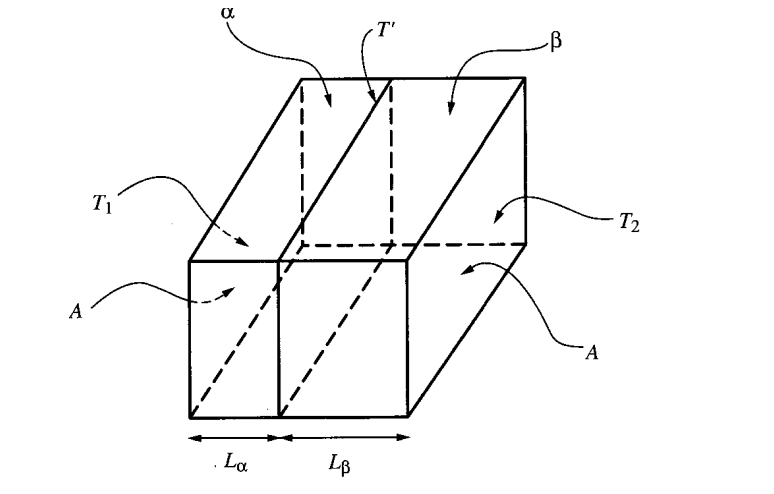
Heat conduction is the direct transfer of thermal energy from one layer of molecules to the next layer. The amount of transferred per unit time across a given cross section of a bar is directly proportional to the temperature difference and to the area and is inversely proportional to the length.

The proportionality constant in this equation is different for each material. It is called the coefficient of thermal conductivity (or conductivity, for short).

CONDUCTORS
Metals generally have larger conductivities than other solids and are therefore called good heat “conductors.”

INSULATORS
Materials that clearly don’t conduct heat well are called insulators.

R-FACTOR
The R-factor of a slab is its length divided by conductivity: R = L/k
Therefore, we have, H/A = ∆T/R, where R = R1 + R2 + R3

CONVECTION
Convection is a mechanism for the transfer of thermal energy that applies to fluids (liquids and gases). Unlike conduction, where there is no macroscopic migration of molecules, in convection the thermal energy is transferred by the motion of material from one place to another.

To a good approximation the rate of convective heat flow is proportional to the area of the contact surface and to the temperature difference between the surface and the bulk of the fluid away from the surface.

H = h A T

where h, the coefficient of convection, depends on the fluid, the geometry, and a variety of other factors (including a slight dependence on T).

If the circulation of the fluid is aided by a fan or pump, it is called forced convection. If the circulation is the consequence of the natural difference in density of the fluid (caused by a temperature difference) at different locations, it is called natural convection.

RADIATION
Radiation is a process that involves electromagnetic waves. Every substance at any temperature emits electromagnetic radiation, which carries energy with it. For a system to be in thermal equilibrium with its surroundings it must absorb as much radiation as it emits.

STEFAN-BOLTZMANN LAW
The total amount of radiation energy emitted per second from an object at uniform temperature and surface area is,

Where ϵ is a dimensionless constant, called the emissivity, with a value between 0 and 1 that varies from substance to substance; and σ is a universal constant called the Stefan-Boltzmann constant with the value

For an object at temperature T1 enclosed in a container with walls at temperature T2, the net rate of flow of thermal energy out of the object is

EMISSIVITY
The emissivity is a dimensionless constant with a value between 0 and 1 that varies from substance to substance. The emissivity is 1 for a good emitter. A good emitter is also a good absorber. At normal temperatures a good absorber-emitter appears black.

BLACKBODY
A perfect or ideal absorber-emitter (e = 1) is called a blackbody, but no real object is a perfect blackbody.

.

JUDAISM: Revelation

Reference: Judaism

[NOTE: In color are Vinaire’s comments.]

Revelation refers to a new step in the evolution of Mankind that brought about a sense of Oneness and Responsibility.

We have followed the Jews in their interpretation of the major areas of human experience and found them arriving at a more profound grasp of meaning than any of their Mediterranean neighbors; indeed, a grasp that in its essentials has not been surpassed. This raises the question: What produced this achievement? Was it an accident? Did the Jews simply stumble by chance on this cache of insight? If they had struck profundity in one or two areas, this thesis might be plausible; but as they rose to genius on every basic question, it seems inadequate. Is the alternative, then, that the Jews were innately wiser than other peoples? The Jewish doctrine that humanity constitutes a single family—symbolically announced in the story of Adam and Eve—expressly precludes such a notion. The Jews’ own answer is that they did not reach these insights on their own. They were revealed to them.

The Jewish doctrine that humanity constitutes a single family—symbolically announced in the story of Adam and Eve—shows a more profound grasp of human experience than any of their Mediterranean neighbors.

Revelation means disclosure. When someone says, “It came as a revelation to me,” the meaning is that something hitherto obscure becomes clear. A veil has lifted, and what was concealed is now revealed. As a theological concept revelation shares this basic meaning, while focusing on disclosure of a specific sort: God’s nature and will for humankind.

According to the Jews’, they did not reach these insights on their own. The insights were revealed to them.

As the record of these disclosures is in a book, there has been a tendency to approach revelation as if it were primarily a verbal phenomenon; to think of it as what God said either to the prophets or to other biblical writers. This, however, puts the cart before the horse. For the Jews God revealed himself first and foremost in actions—not words but deeds. This comes out clearly in Moses’ instruction to his people. “When your children ask you in time to come, ‘What is the meaning of the testimonies and the statutes and the ordinances that the Lord our God has commanded you?’ then you shall say to your son, ‘We were Pharaoh’s slaves in Egypt, but the Lord brought us out of Egypt with a mighty hand’”(Deuteronomy 6:21–22). The Exodus, that incredible event in which God liberated an unorganized, enslaved people from the mightiest power of the age, was not only the event that launched the Israelites as a nation. It was also the first clear act by which Yahweh’s character was made known to them.

For the Jews, God revealed himself first and foremost in deeds, not words. God’s decisive action was bringing an unorganized, enslaved people out of Egypt.

It is true that Genesis describes a number of divine revelations that preceded the Exodus, but the accounts of them were written later in the light of the decisive Exodus event. That God was a direct party to their escape from Pharaoh, the Jews did not doubt. “By every known sociological law,” writes Carl Mayer, “the Jews should have perished long ago.” The biblical writers would have gone further, contending that by every known sociological law the Jews should not have become a distinct people in the first place. Yet here was the fact: a tiny, loosely related group of people, who had no real collective identity and were in servitude to the great power of the day, had succeeded in making their getaway, eluding the chariots of their pursuers. As acutely aware of their own weakness as of Egypt’s strength, it seemed to the Jews impossible that their liberation was their own doing. It was a miracle. “By the grace of God, Israel was saved from death and delivered from the power of the Egyptians” (Exodus 12:50).

It was a miracle that a tiny, loosely related group of people, who had no real collective identity and were in servitude to the great power of the day, had succeeded in making their getaway, eluding the chariots of their pursuers.

Vividly cognizant of God’s saving power in the Exodus, the Jews proceeded to review their earlier history in the light of this divine intervention. As their liberation had obviously been engineered by God, what of the sequence that led up to it? Had it been mere chance? The Jews saw God’s initiative at work in every step of their corporate existence. It was no vagabond impulse that prompted Abraham to leave his home in Ur and assume the long, uncharted trek toward Canaan. Yahweh had called him to father a people of destiny. So it had been throughout: Isaac and Jacob had been providentially protected and Joseph exalted in Egypt for the express purpose of preserving God’s people from famine. From the perspective of the Exodus, everything fell into place. From the beginning God had been leading, protecting, and shaping his people for the decisive Exodus event that made of the Israelites a nation.

From the beginning God had been leading, protecting, and shaping his people for the decisive Exodus event that made of the Israelites a nation.

The Exodus, we are saying, was more than a historical divide that turned a people into a nation. It was an episode in which this people became overwhelmingly aware of God’s reality and character. But to put it this way, saying that the Jews perceived God’s character, is again to put the matter backward. As God took the initiative, it was God who showed the Jews his nature. God should be the subject of the assertion, not its object.

The Exodus could be a much more ancient episode when man first became aware of his intelligence and spread outwards from the African continent.

And what was the nature of the God that the Exodus disclosed? First, Yahweh was powerful—able to outdo the mightiest power of the time and whatever gods might be backing it. But equally, Yahweh was a God of goodness and love. Though this might be less obvious to outsiders, it was overwhelmingly evident to the Jews who were its direct recipients. Repeatedly, their gratitude burst forth in song: “Happy are you, O Israel; who is like you—a people saved by Yahweh?” (Deuteronomy 33:29). Had they themselves done anything to deserve this miraculous release? Not as far as they could see. Freedom had come to them as an act of sheer, unmerited grace, a clear instance of Yahweh’s unanticipated and astonishing love for them. It is of small moment whether the Jews recognized at once that this love was for all humanity, not just for themselves. Once the realization of God’s love had taken root, the Jews soon came to see it as extended to everyone. By the eighth century B.C.E. the Jews would be hearing God saying, “Are you not like the Ethiopians to me?” But the fact of God’s love had to be grasped before its range could be explored, and it was in the Exodus that this fact was brought home to them.

This could have been a step in evolution for man. “Freedom had come to them as an act of sheer, unmerited grace, a clear instance of Yahweh’s unanticipated and astonishing love for them.” 

Besides God’s power and love, the Exodus disclosed a God who was intensely concerned with human affairs. Whereas the surrounding gods were primarily nature deities, reifications of the numinous awe that people feel for nature’s grand phenomena, the Israelites’ God had come to them not through sun or storm or fertility but in a historical event. The difference in religious meaning was decisive.

This was the dawn of the awareness of oneness of nature.

The God that the Exodus disclosed cared enough about a human situation to step in and do something about it. That realization changed Israel’s religious agenda forever. No longer would the Jews be party to cajoling nature’s forces. They would rivet their attention on discerning Yahweh’s will and trying to enact it.

Jews were the first recipient of this awareness of oneness. The “Egyptian power” may refer to man’s earlier shackled mode of thinking.

Given these three basic disclosures of the Exodus—of God’s power, goodness, and concern for history—the Jews’ other insights into God’s nature followed readily. From the goodness of that nature it followed that God would want people to be good as well; hence Mount Sinai, where the Ten Commandments were established as the Exodus’s immediate corollary. The prophets’ demand for justice extended God’s requirements for virtue to the social sphere—institutional structures, too, are accountable. Finally, suffering must carry significance because it was unthinkable that a God who had miraculously saved his people would ever abandon them completely.

What followed was a sense of responsibility. “The prophets’ demand for justice extended God’s requirements for virtue to the social sphere—institutional structures, too, are accountable.”

The entire gestalt, when it burst upon the Jews, took shape around the idea of the covenant. A covenant is a contract, but more. Whereas a contract (to build a house, for example) concerns only a part of the lives of those who enter into it, a covenant (such as marriage) involves the pledging of total selves. Another difference is that a contract usually has a termination date, whereas a covenant lasts till death. To the Jews, God’s self-disclosure in the Exodus was the invitation to a covenant. Yahweh would continue to bless the Israelites if they, for their part, would honor the laws they had been given.

You have seen what I did to the Egyptians, and how I bore you on eagle’s wings and brought you to myself. Now therefore, if you obey my voice and keep my covenant, you shall be my treasured possession out of all the peoples. Indeed, the whole earth is mine, but you shall be for me a priestly kingdom and a holy nation. (Exodus 19:4–6)

It was this evolution toward the deep sense of oneness and responsibility that made Jewish people special.

Once the covenant relation was clearly formulated at Sinai, those who wrote the Bible saw the Abraham epic in its light as well. In the last days of the Sumerian universal state, from all the peoples of the Euphrates, God called Abraham and entered into covenant with him. If Abraham would be faithful to God’s will, God would not only give him a goodly land as inheritance but would cause his descendants to be numbered as the sands of the sea.

The sense of oneness and responsibility lead to the rewards of survival with abundance.

We entered this chapter via the Jewish passion for meaning. As our understanding of the religion deepened, however, we came to see that the key had to be recast. Meaning was secured, but from the Jewish perspective, not because they sought it exceptionally. It was revealed to them—not told to them but shown to them through Yahweh’s amazing actions. The sequence began with the Exodus-disclosure of Yahweh’s power, goodness, and concern. From those we can understand how the rest followed.

This new step in evolution applied to all forward looking people.

But why was this disclosure made to the Jews? Their own answer has been: Because we were chosen. This sounds so simple as to seem ingenuous. Clearly, the answer needs scrutiny.

.