Author Archives: vinaire

I am originally from India. I am settled in United States since 1969. I love mathematics, philosophy and clarity in thinking.

CHRISTIANITY: Eastern Orthodoxy

Reference: Christianity

[NOTE: In color are Vinaire’s comments.]

The Eastern Church has no pope. Instead, it holds that God’s truth is disclosed through “the conscience of the Church,” using this phrase to refer to the consensus of Christians generally through ecclesiastical councils. 

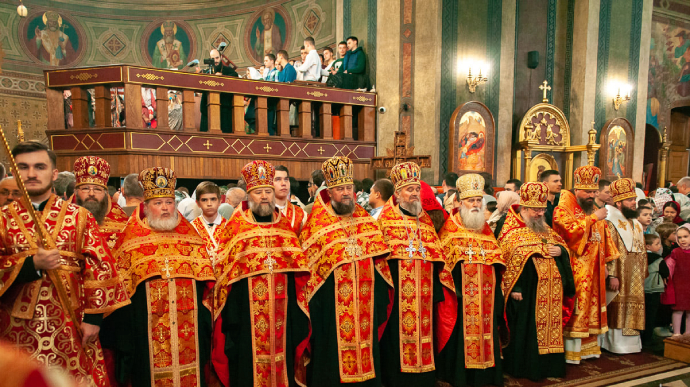
The Eastern Orthodox Church, which today has somewhere in the neighborhood of 250 million communicants, broke officially with the Roman Catholic Church in 1054, each charging the other with responsibility for the break. Eastern Orthodoxy includes the Churches of Albania, Bulgaria, Georgia, Greece, Romania, Russia, Serbia, and Sinai. While each of these Churches is self-governing, they are in varying degrees in communion with one another, and their members think of themselves as belonging primarily to the Eastern Church and only secondarily to their particular divisions within it. 

There is no overall governing authority over the Eastern Orthodox Church. They are a group of self-governing churches.

In most ways the Eastern Orthodox Church stands close to the Roman Catholic, for during more than half their histories they constituted a single body. It honors the same seven Sacraments and interprets them in fundamental respects exactly as does the Roman Church. On the teaching authority there is some difference, but even here the premise is the same. Left to private interpretation the Christian faith would disintegrate into conflicting claims and a mass of uncertainties. It is the Church’s responsibility to insure against this, and God enables it to do so; the Holy Spirit preserves its official statements against error. This much is shared with Rome. The differences are two. One of these has to do with extent. The Eastern Church considers the issues on which unanimity is needed to be fewer than does the Roman Church. In principle only issues that are mentioned in scripture can qualify, which is to say that the Church can interpret doctrines but it cannot initiate them. In practice the Church has exercised her prerogative as interpreter only seven times, in the Seven Ecumenical Councils, all of which were held before 787. This means that the Eastern Church assumes that though the articles a Christian must believe are decisive, their number is relatively few. Strictly speaking, all the decisions that the Ecumenical Councils reached are embedded in the creeds themselves; beyond these there is no need for dogmatic pronouncements on such matters as purgatory, indulgences, the Immaculate Conception, or the bodily assumption of Mary, the last of which Orthodoxy introduced in practice but without proclaiming as dogma. Catholics regard these dogmas positively, as the development of doctrine, whereas the Orthodox consider them “innovations.” Generalizing this difference, we can say that the Latin Church stresses the development of Christian doctrine, whereas the Greek Church stresses its continuity, contending that there has been no need for the Church to exercise its teaching authority outside the Ecumenical Councils. What is referred to as “the magisterium of the academy” enters into this difference, for nothing like the great university centers of Bologna and Paris characterize the Eastern experience. When we reach for an image to epitomize Roman Catholicism, we think of the Middle Ages. Its counterpart for Eastern Orthodoxy is the Church Fathers. 

In most ways the Eastern Orthodox Church stands close to the Roman Catholic Church. The differences are two. The Eastern Church assumes that though the articles a Christian must believe are decisive, their number is relatively few. The Latin Church stresses the development of Christian doctrine, whereas the Greek Church stresses its continuity. 

The other way in which the Eastern Church’s understanding of its role as teaching authority differs from the Western pertains to the means by which its dogmas are reached. The Roman Church, as we have seen, holds that in the final analysis they come through the pope; it is the decisions that he announces that the Holy Spirit preserves from error. The Eastern Church has no pope—if we want to epitomize the difference between the two Churches, it is this. Instead, it holds that God’s truth is disclosed through “the conscience of the Church,” using this phrase to refer to the consensus of Christians generally. This consensus needs, of course, to be focused, which is what ecclesiastical councils are for. When the bishops of the entire Church are assembled in Ecumenical Council, their collective judgment establishes God’s truth in unchangeable monuments. It would be correct to say that the Holy Spirit preserves their decisions from error, but it would be truer to the spirit of the Eastern Church to say that the Holy Spirit preserves Christian minds as a whole from lapsing into error, for the bishops’ decisions are assumed to do no more than focus the thought of the latter. 

The Eastern Church has no pope. Instead, it holds that God’s truth is disclosed through “the conscience of the Church,” using this phrase to refer to the consensus of Christians generally through ecclesiastical councils. 

This brings us to one of the special emphases of the Eastern Church. Because in many ways it stands midway between Roman Catholicism and Protestantism, it is more difficult to put one’s finger on features within it that are clearly distinctive; but if we were to select two (as we did in our sketch of Roman Catholicism), one of these would be its exceptionally corporate view of the Church. 

Common to all Christians is the view of the Church as the mystical body of Christ. Just as the parts of the body are joined in common well-being or malaise, so too are the lives of Christians interrelated. All Christians accept the doctrine that they are “members of one another”; but while matters of degree are notoriously difficult to determine, it could be argued that the Eastern Church has taken this notion more seriously than either Roman Catholicism or Protestantism. Each Christian is working out his or her salvation in conjunction with the rest of the Church, not individually to save a separate soul. The Russian branch of Orthodoxy has a saying to this effect: “One can be damned alone, but saved only with others.” And Orthodoxy goes further. It takes seriously Saint Paul’s theme of the entire universe as “groaning and in travail” as it awaits redemption. Not only is the destiny of the individual bound up with the entire Church; it is responsible for helping to sanctify the entire world of nature and history. The welfare of everything in creation is affected to some degree by what each individual contributes to or detracts from it. 

The Russian branch of Orthodoxy has a saying to this effect: “One can be damned alone, but saved only with others.” Not only is the destiny of the individual bound up with the entire Church; it is responsible for helping to sanctify the entire world of nature and history. 

Though the most important consequence of this strong corporate feeling is the spiritual one just stated—the downplaying of that “holy selfishness” that puts its own personal salvation before everything else—the concept comes out in two other quite practical ways. One of these has already been noted. In identifying the Church’s teaching authority with Christian conscience as a whole—“the conscience of the people is the conscience of the Church”—Orthodoxy maintains that the Holy Spirit’s truth enters the world diffused through the minds of Christians generally. Individual Christians, laity as well as clergy, are cells in “the mind of Christ,” which functions through them collectively. 

Orthodoxy maintains that the Holy Spirit’s truth enters the world diffused through the minds of Christians generally. Individual Christians, laity as well as clergy, are cells in “the mind of Christ,” which functions through them collectively. 

The other side of this point concerns administration. Whereas the administration of the Roman Church is avowedly hierarchical, the Eastern Church grounds more of its decisions in the laity. Congregations, for example, have more say in the selection of their clergy. The Roman Church may argue that this confuses the offices of laity with clergy; but the strong corporate feeling of the Eastern Church has led her to believe, again, that divine guidance, even when it reaches down to touch practical issues of Church administration, is more generally diffused among Christians than Rome allows. The clergy has its uninfringeable domain, the administration of the Sacraments; but outside that domain the line that separates clergy from the laity is thin. Priests need not be celibate. Even the titular head of the Eastern Church, the Patriarch of Constantinople, is no more than “first among equals,” and the laity is known as the “royal priesthood.” 

Whereas the administration of the Roman Church is avowedly hierarchical, the Eastern Church grounds more of its decisions in the laity. Priests need not be celibate.

In presenting the religions of Asia, it was suggested that union has counted for more there, and individuality less, than in the West; Hinduism sets the pace, with merger with the Absolute as its presiding goal. If this is roughly correct it helps to explain why it is the easternmost branch of Christianity that has most emphasized the corporate nature of the Church, both the ecclesiastical equality of its members (as against Catholicism), and their solidarity (as against Protestantism). It is also possible that residing, as it does, on the outskirts of Europe, it may have acquired less of a modern, Western overlay, and in consequence stands somewhat closer to early Christianity. We shall not explore that possibility, however, but proceed to the second distinctive emphasis its geography may have fostered, its mysticism, which resonates in ways with that of Asia. 

The easternmost branch of Christianity has most emphasized the corporate nature of the Church, both the ecclesiastical equality of its members (as against Catholicism), and their solidarity (as against Protestantism). 

Like all the religions we have considered, Christianity believes reality to be composed of two realms, the natural and the supernatural. Following death, human life is fully translated into the supernatural domain. Even in the present world, however, it is not insulated from it. For one thing the Sacraments, as we have seen, are channels whereby supernatural grace is made available to people in their current state. 

Like other religions, Christianity believes reality to be composed of two realms, the natural and the supernatural. 

This much virtually all Christianity teaches. The differences come when we ask to what extent it should be a part of the Christian program to try to partake of supernatural life while here on earth. Roman Catholicism holds that the Trinity dwells in every Christian soul, but its presence is not normally felt. By a life of prayer and penance it is possible to dispose oneself for a special gift by which the Trinity discloses its presence and the seeker is lifted to a state of mystical ecstasy. But as human beings have no right to such states, the states being wholly in the nature of free gifts of grace, the Roman Church neither urges nor discourages their cultivation. The Eastern Church encourages the mystical life more actively. From very early times, when the deserts near Antioch and Alexandria were filled with hermits seeking illumination, the mystical enterprise has occupied a more prominent place in its life. As the supernatural world intersects and impregnates the world of sense throughout, it should be a part of Christian life in general to develop the capacity to experience directly the glories of God’s presence.

Does the fish soar to find the ocean,
The eagle plunge to find the air,
That we ask of the stars in motion
If they have rumour of thee there?
Not where the wheeling systems darken,
And our benumbed conceiving soars,
The drift of pinions, would we harken,
Beats at our own clay-shuttered doors.
The angels keep their ancient places;
Turn but a stone, and start a wing:
‘Tis ye, ‘tis your estranged faces
That miss the many-splendoured thing.

(Francis Thompson, “The Kingdom of God”)

The Eastern Church encourages the mystical life more actively. By a life of prayer and penance it is possible to dispose oneself for a special gift by which the Trinity discloses its presence and the seeker is lifted to a state of mystical ecstasy. 

Mysticism is a practical program even for the laity. The aim of every life should be union with God—actual deification, by Grace, to the point of sharing the Divine Life; theosis is the Greek word for the doctrine that this sharing is possible. As our destiny is to enter creatively into the life of the Trinity, the love that circulates incessantly among the Father, Son, and Holy Spirit, movement toward this goal should be a part of every Christian life. For only as we advance toward increasing participation in the Trinity are we able to love God with our whole heart and soul and mind, and our neighbor as ourselves. The mystical graces are open to everyone, and it is incumbent for each to make of one’s life a pilgrimage toward glory.

The aim of every life should be union with God—actual deification, by Grace, to the point of sharing the Divine Life; theosis is the Greek word for the doctrine that this sharing is possible. 

.

Happiness: Precept 2-2

Reference: The Happiness Rundown

2-2. Do not take alcohol to excess

People who take alcohol are not alert. It impairs their ability to react even when it seems to them they are more alert because of it. Alcohol has some medicinal value. It can be grossly overestimated. Don’t let anyone who has been drinking drive you in a car or fly you in a plane. Drinking can take lives in more ways than one. A little liquor goes a long way; don’t let too much of it wind up in unhappiness or death. Deter people from excessive drinking. 

.

Exercise

0. Make sure you have completed the exercise section at Happiness: Precept 2-1. Study the precept above.

1. Check the responses to the following questions for false data (see false data steps at Happiness: Prologue).

(a) “Have you been told or taught that it was OK to take alcohol to excess?”
(b) “Do you have any rules or ideas contrary to not taking alcohol to excess?”
(c) “Have you been led to believe that you should take alcohol to excess?”
(d) “Do you know of anything that conflicts with not taking alcohol to excess?”
(e) “Do you have any false data about taking alcohol?”

.

2. Go over each of the following questions repetitively, until there are no more answers: 

(a) “How have others transgressed against the precept: ‘Do not take alcohol to excess’?”
(b) “How have you transgressed against the precept: ‘Do not take alcohol to excess’?”

Do a quick review to see if you did not miss any answers on this step. You should be feeling good about this step.

.

3. See if the following question definitely brings up some name you know of:

“Is there any specific person in your past who really transgressed against the precept: ‘Do not take alcohol to excess’?”

If no name comes up then go to step 4. if a name has come up, then continue with step 3 as follows:

“Can you recall an exact moment when you observed ___(name)___ transgressing this precept?”

If there is a realization, go to step 4. Otherwise, continue contemplating as follows, until there is some realization.

“Is there any time when you wanted to be like ___(name)___ ?” 
“Is there any time when you decided that taking alcohol to excess was a good thing?”
“Did you ever do anything bad to ___(name)___ ? 
(Get all possible answers)
“Are there any differences between ___(name)___ and yourself?”
“Are there any similarities between ___(name)___  and yourself?”

.

4. Handle any anomalies that come up on the following question by looking at the anomaly more closely. 

”Do you have any reservations about not taking alcohol to excess?” 

If the anomaly does not resolve then review the precept as well as all the exercise steps above to see if anything was missed. Then do step 4 again. When there is no anomaly go to step 5.

.

5. Contemplate on the following question.

“Do you have any reservations about getting someone else not to take alcohol to excess?” 

If any reservation comes up, then consider the following: 

“How would that be a problem?” 

Get answers to this question until there are no reservations.

.

Wrap up Precept 2

0. Review Precept 2.

1. Contemplate over the following question.

“Is there any conflict between being temperate and any other ideas you have encountered?”

Handle any conflict with false data steps.

.

2. Go over each of the following questions repetitively, until there are no more answers: 

“Have you thought of any other transgressions of others against the precept: ‘Be temperate’?”
“Have you thought of any other transgressions of your own against the precept: ‘Be temperate’?”
“During these sessions have you thought of any withhold?”

.

3. Consider this question:

“Do you have any feeling that you wouldn’t be yourself if you followed the precept: ‘Be temperate’?”

If this is not the case, go to the Step 4. Otherwise, ask yourself,

“Can you recall any person who felt the way you do about the precept: ‘Be temperate’?”

If no name comes up then go to step 4. if a name has come up, then continue with step 3 as follows:

“Can you recall an exact moment when you observed ___(name)___ transgressing this precept?”

If there is a realization, go to step 4. Otherwise, continue contemplating as follows, until there is some realization.

“Is there any time when you wanted to be like ___(name)___ ?” 
“Is there any time when you decided that not being temperate was a good thing?”
“Did you ever do anything bad to ___(name)___ ? 
(Get all possible answers)
“Are there any differences between ___(name)___ and yourself?”
“Are there any similarities between ___(name)___  and yourself?”

.

4. Check over the following questions. and handle any anomalies that come up.

“Do you have any other considerations about being temperate?”
“Do you have any other considerations about others being temperate?”

.

Happiness: Precept 2-1

Reference: The Happiness Rundown

2-1. Do not take harmful drugs

People who take drugs do not always see the real world in front of them. They are not really there. On a highway, in casual contact, in a home, they can be very dangerous to you. People mistakenly believe they “feel better” or “act better” or are “only happy” when on drugs. This is just another delusion. Sooner or later the drugs will destroy them physically. Discourage people from taking drugs. When they are doing so, encourage them to seek help in getting off them. 

.

Exercise

0. Make sure you have completed the exercise section at Happiness: Precept 2. Study the precept above.

1. Check the responses to the following questions for false data (see false data steps at Happiness: Prologue).

(a) “Have you been told or taught that it was OK to take harmful drugs?”
(b) “Do you have any rules or ideas contrary to not taking harmful drugs?”
(c) “Have you been led to believe that you should take harmful drugs?”
(d) “Do you know of anything that conflicts with not taking harmful drugs?”
(e) “Do you have any false data about taking drugs?”

.

2. Go over each of the following questions repetitively, until there are no more answers: 

(a) “How have others transgressed against the precept: ‘Do not take harmful drugs’?”
(b) “How have you transgressed against the precept: ‘Do not take harmful drugs’?”

Do a quick review to see if you did not miss any answers on this step. You should be feeling good about this step.

.

3. See if the following question definitely brings up some name you know of:

“Is there any specific person in your past who really transgressed against the precept: ‘Do not take harmful drugs’?”

If no name comes up then go to step 4. if a name has come up, then continue with step 3 as follows:

“Can you recall an exact moment when you observed ___(name)___ transgressing this precept?”

If there is a realization, go to step 4. Otherwise, continue contemplating as follows, until there is some realization.

“Is there any time when you wanted to be like ___(name)___ ?” 
“Is there any time when you decided that taking drugs was a good thing?”
“Did you ever do anything bad to ___(name)___ ? 
(Get all possible answers)
“Are there any differences between ___(name)___ and yourself?”
“Are there any similarities between ___(name)___  and yourself?”

.

4. Handle any anomalies that come up on the following question by looking at the anomaly more closely. 

”Do you have any reservations about not taking harmful drugs?” 

If the anomaly does not resolve then review the precept as well as all the exercise steps above to see if anything was missed. Then do step 4 again. When there is no anomaly go to step 5.

.

5. Contemplate on the following question.

“Do you have any reservations about getting someone else not to take harmful drugs?” 

If any reservation comes up, then consider the following: 

“How would that be a problem?” 

Get answers to this question until there are no reservations.

.

Happiness: Precept 2

Reference: The Happiness Rundown

2. BE TEMPERATE

2-1. Do not take harmful drugs. People who take drugs do not always see the real world in front of them. They are not really there. On a highway, in casual contact, in a home, they can be very dangerous to you. People mistakenly believe they “feel better” or “act better” or are “only happy” when on drugs. This is just another delusion. Sooner or later the drugs will destroy them physically. Discourage people from taking drugs. When they are doing so, encourage them to seek help in getting off them. 

2-2. Do not take alcohol to excess. People who take alcohol are not alert. It impairs their ability to react even when it seems to them they are more alert because of it. Alcohol has some medicinal value. It can be grossly overestimated. Don’t let anyone who has been drinking drive you in a car or fly you in a plane. Drinking can take lives in more ways than one. A little liquor goes a long way; don’t let too much of it wind up in unhappiness or death. Deter people from excessive drinking. 

Observing the points above, one becomes more physically able to enjoy life.

.

Exercise

0. Make sure you have completed the exercise section at Happiness: Precept 1-5. Study the precept above.

1. Check the responses to the following questions for false data (see false data steps at Happiness: Prologue).

(a) “Have you been told or taught not to be temperate?”
(b) “Do you have any rules or ideas contrary to being temperate?”
(c) “Have you been led to believe that you shouldn’t be temperate?”
(d) “Do you know of anything that conflicts with being temperate?”
(e) “Do you have any false data about being temperate?”

.

2. Go over each of the following questions repetitively, until there are no more answers: 

(a) “How have others transgressed against the precept: ‘Be temperate’?”
(b) “How have you transgressed against the precept: ‘Be temperate’?”

Do a quick review to see if you did not miss any answers on this step. You should be feeling good about this step.

.

3. See if the following question definitely brings up some name you know of:

“Is there any specific person in your past who really transgressed against the precept: ‘Be temperate’?”

If no name comes up then go to step 4. if a name has come up, then continue with step 3 as follows:

“Can you recall an exact moment when you observed ___(name)___ transgressing this precept?”

If there is a realization, go to step 4. Otherwise, continue contemplating as follows, until there is some realization.

“Is there any time when you wanted to be like ___(name)___ ?” 
“Is there any time when you decided that not being temperate was a good thing?”
“Did you ever do anything bad to ___(name)___ ? 
(Get all possible answers)
“Are there any differences between ___(name)___ and yourself?”
“Are there any similarities between ___(name)___  and yourself?”

.

4. Handle any anomalies that come up on the following question by looking at the anomaly more closely. 

”Do you have any reservations about being temperate?” 

If the anomaly does not resolve then review the precept as well as all the exercise steps above to see if anything was missed. Then do step 4 again. When there is no anomaly go to step 5.

.

5. Contemplate on the following question.

“Do you have any reservations about getting someone else to be temperate?” 

If any reservation comes up, then consider the following: 

“How would that be a problem?” 

Get answers to this question until there are no reservations.

.

CHRISTIANITY: Roman Catholicism

Reference: Christianity

[NOTE: In color are Vinaire’s comments.]

Catholics see Christ as having explicitly joined the sacramental agency of the Church to its teaching authority in his closing commission to his disciples. 

We have been speaking of Christianity as a whole. This does not mean that every Christian will agree with all that has been said. Christianity is such a complex phenomenon that it is difficult to say anything significant about it that will carry the assent of all Christians. So it must be stressed that what has gone before is an interpretation. Nevertheless, it has sought to be an interpretation of the points that, substantially at least, Christians hold in common. 

Christianity has become very complex with many different interpretations.

When we turn from the early Christianity we have been considering thus far to Christendom today, we find the Church divided into three great branches. Roman Catholicism focuses in the Vatican in Rome and spreads from there, being dominant, on the whole, through central and southern Europe, Ireland, and South America. Eastern Orthodoxy has its major influence in Greece, the Slavic countries, and the Soviet Union. Protestantism dominates Northern Europe, England, Scotland, and North America. 

Today’s Christianity is divided into three main branches: Roman Catholicism, Eastern Orthodoxy, and Protestantism.

Up to 313 the Church struggled in the face of official Roman persecution. In that year it became legally recognized and enjoyed equal rights with other religions of the empire. Before the century was out, in 380, it became the official religion of the Roman Empire. With a few minor splinterings, such as the Nestorians, it continued as a united body up to 1054. This means that for roughly half its history the Church remained substantially one institution. In 1054, however, its first great division occurred, between the Eastern Orthodox Church in the East and the Roman Catholic Church in the West. The reasons for the break were complex—geography, culture, language, and politics as well as religion were involved—but it is not our concern to detail them here. Instead we move to the next great division, which occurred in the Western Church with the Protestant Reformation in the sixteenth century. Protestantism follows four main courses—Baptist, Lutheran, Calvinists, and Anglican—which themselves subdivide until the current census lists over 900 denominations in the United States alone. Currently, the ecumenical movement is bringing some of these denominations back together again. With these minimum facts at our disposal, we can proceed to our real concern, which is to try to understand the central perspectives of Christendom’s three great branches. Beginning with the Roman Catholic Church, we shall confine ourselves to what are perhaps the two most important concepts for the understanding of this branch of Christendom: the Church as teaching authority, and the Church as sacramental agent.

First Christianity came to be recognized as one of the religions. Then it became THE religion under one administration. Then it split into Roman Catholicism and Eastern Orthodoxy based on cultural and geographical factors. In the West, Protestantism splintered off Roman Catholicism in big way. Then Protestantism came to be divided into four main courses and over 900 denominations.

The Church as Teaching Authority. First, the Church as teaching authority. This concept begins with the premise that God came to earth in the person of Jesus Christ to teach people the way to salvation—how they should live in this world so as to inherit eternal life in the next. If this is true, if his teachings really are the door to salvation and if the opening of this door was one of the prime reasons why he came to earth, it seems unlikely that he would have held this door ajar for his generation only. Would he not want his saving teachings to continue to be available to the world? 

An important aspect of the Roman Catholic Church is being a teaching authority. It teaches how to achieve eternal life in the next world. The anomaly is that why God has not appeared again and again in other generations and other places to bring his teachings to the whole world.

The reader might agree but add, “Do we not have his teachings—in the Bible?” This, however, raises the question of interpretation. The Constitution of the United States is a reasonably unambiguous document, but our social life would be chaos without an authority, the Supreme Court, to interpret it. Equally with the Bible. Leave it to private interpretation and whirlwind is the sure harvest. Unguided by the Church as teaching authority, Bible study is certain to lead different students to different conclusions, even on subjects of the highest moment. And since the net effect of proposing alternative answers to the same question is to make it impossible to believe any answer confidently, this approach would reduce the Christian faith to hesitation and stammer. 

The Roman Catholic Church acts to interpret the teachings in the Bible. Otherwise, there will be different interpretations and chaos in the Christian world.

Let us take a specific issue for illustration. Is divorce moral? Surely, on a question as important as this, any religion that proposes to guide the conscience of its members may be expected to have a definite view. But suppose we try to draw that view directly from the Bible? Mark 10:11 tells us that “Whoever divorces his wife and marries another commits adultery.” Luke 16:18 concurs. But Matthew 5:32 enters a reservation: “except on the ground of unchastity.” What is the Christian to think? What are the probabilities that the Matthew text has been tampered with? May an unwronged party remarry or not? 

There are different teachings in the Bible that give rise to doubt in important matters; for example, on the subject of divorce being moral. It makes one wonder if certain texts in the Bible has been tampered with.

The question is only a sample of the many that must remain forever in doubt if our only guides are the Bible and private conscience. Was Christ born of a virgin? Did his body ascend after death? Is the fourth Gospel authentic? Without a sure court of appeal, moral and theological disintegration seem inevitable. It was precisely to avert such disintegration that Christ established the Church to be his continuing representative on earth, that there might be one completely competent authority to adjudicate between truth and error on life-and-death matters. Only so could the “dead letter” of scripture be continually revivified by the living instinct of God’s own person. This is the meaning of the words, attributed to Jesus, “I tell you, you are Peter, and on this rock I will build my Church…. I will give you the keys of the Kingdom of heaven, and whatever you bind on earth shall be bound in heaven, and whatever you loose on earth shall be loosed in heaven” (Matthew 16:18–19). 

Christ established the Church to be his continuing representative on earth, that there might be one completely competent authority to adjudicate between truth and error on life-and-death matters. 

Ultimately, this idea of the Church as teaching authority shapes the idea of papal infallibility. Every nation has its ruler, be he emperor, king, or president. The earthly head of the Church is the pope, successor to St. Peter in the bishopric of Rome. The doctrine of papal infallibility asserts that when the pope speaks officially on matters of faith or morals, God stays him against error. 

Ultimately, this idea of the Church as teaching authority shapes the idea of papal infallibility. God stays the pope against error. 

This doctrine is so often misunderstood that we must emphasize that infallibility is a strictly limited gift. It does not assert that the pope is endowed with extraordinary intelligence. It does not mean that God helps him to know the answer to every conceivable question. Emphatically, it does not mean that Catholics have to accept the pope’s view on politics. The pope can make mistakes. He can fall into sin. The scientific or historical opinions he holds may be mistaken. He may write books that contain errors. Only in two limited spheres, faith and morals, is he infallible, and in these only when he speaks officially as the supreme teacher and lawgiver of the Church, defining a doctrine that should be held by all its members. When, after studying a problem that relates to faith or morals as carefully as possible and with all available help from expert consultants, he emerges with the Church’s answer—on these rare occasions it is not strictly speaking an answer, it is the answer. For on such occasions the Holy Spirit protects him from the possibility of error. These answers constitute the infallible teachings of the Church and as such are binding on Roman Catholics. 

But pope’s infallibility is limited to the spheres of faith and morals, only when he speaks officially as the supreme teacher and lawgiver of the Church, defining a doctrine that should be held by all its members. The Holy Spirit protects the pope  from the possibility of error.

The Church as Sacramental Agent. The second idea central to Roman Catholicism is the idea of the Church as sacramental agent. This supplements the idea of the Church as teaching authority. It is one thing to know what we should do; it is quite another to be able to do it, which is why there is a need for the Sacraments. The Church helps with both problems. It points the way in which we should live, and empowers us to live accordingly. 

The second idea central to Roman Catholicism is the idea of the Church as sacramental agent.

The second gift is as important as the first. Christ called his followers to live lives far above the average in charity and service. No one would claim that this is easy. The Catholic, however, insists that we have not faced our situation squarely until we realize that without help such a life is impossible. For the life to which Christ called people is supernatural in the exact sense of being contrary to the pull of natural human instincts. By their own efforts people can no more live above human nature than an elephant can live a life of reason. Help, therefore, is needed. The Church, as God’s representative on earth, is the agency to provide it, and the Sacraments its means for doing so. 

Sacraments are the means through which the Church enables its members to live a life of charity and service as called for by Christ.

Since the twelfth century the number of Sacraments in the Roman Catholic Church has been fixed at seven. In a striking way these parallel the great moments and needs of human life. People are born, they come of age, they marry or dedicate themselves completely to some life-purpose, and they die. Meanwhile, they must be reintegrated into society when they deviate, and they must eat. The Sacraments provide the spiritual counterparts of these natural events. As birth brings a child into the natural world, Baptism (by planting God’s first special grace in its soul) draws the infant into the supernatural order of existence. When the child reaches the age of reason and needs to be strengthened for mature reflection and responsible action, it is Confirmed. Usually, there comes a solemn moment during which an adult is joined to a human companion in Holy Matrimony, or dedicates his or her life entirely to God in Holy Orders. At life’s close the Sacrament of the Sick (extreme unction) closes earthly eyes and prepares the soul for its last passage. 

People are born, they come of age, they marry or dedicate themselves completely to some life-purpose, and they die. The Sacraments provide the spiritual counterparts of these natural events of human life.

Meanwhile two Sacraments need to be repeated frequently. One of these is Reconciliation (confession). Being what we are, people cannot live without falling into error and straying from the right. These aberrations make necessary definite steps by which they may be restored to the human community and divine fellowship. The Church teaches that if one confesses one’s sin to God in the presence of one of God’s delegates, a priest, and truly repents of the sin committed and honestly resolves (whether or not this resolve proves effective) to avoid it in the future, one will be forgiven. God’s forgiveness depends on the sinner’s penitence and resolve being genuine, but the priest has no infallible means for determining whether they are or not. If the penitent deceives himself or herself and the priest, the absolution pronounced is inoperative. 

Reconciliation (confession) is a Sacrament that needs to be repeated frequently to restore a person to the human community and divine fellowship. 

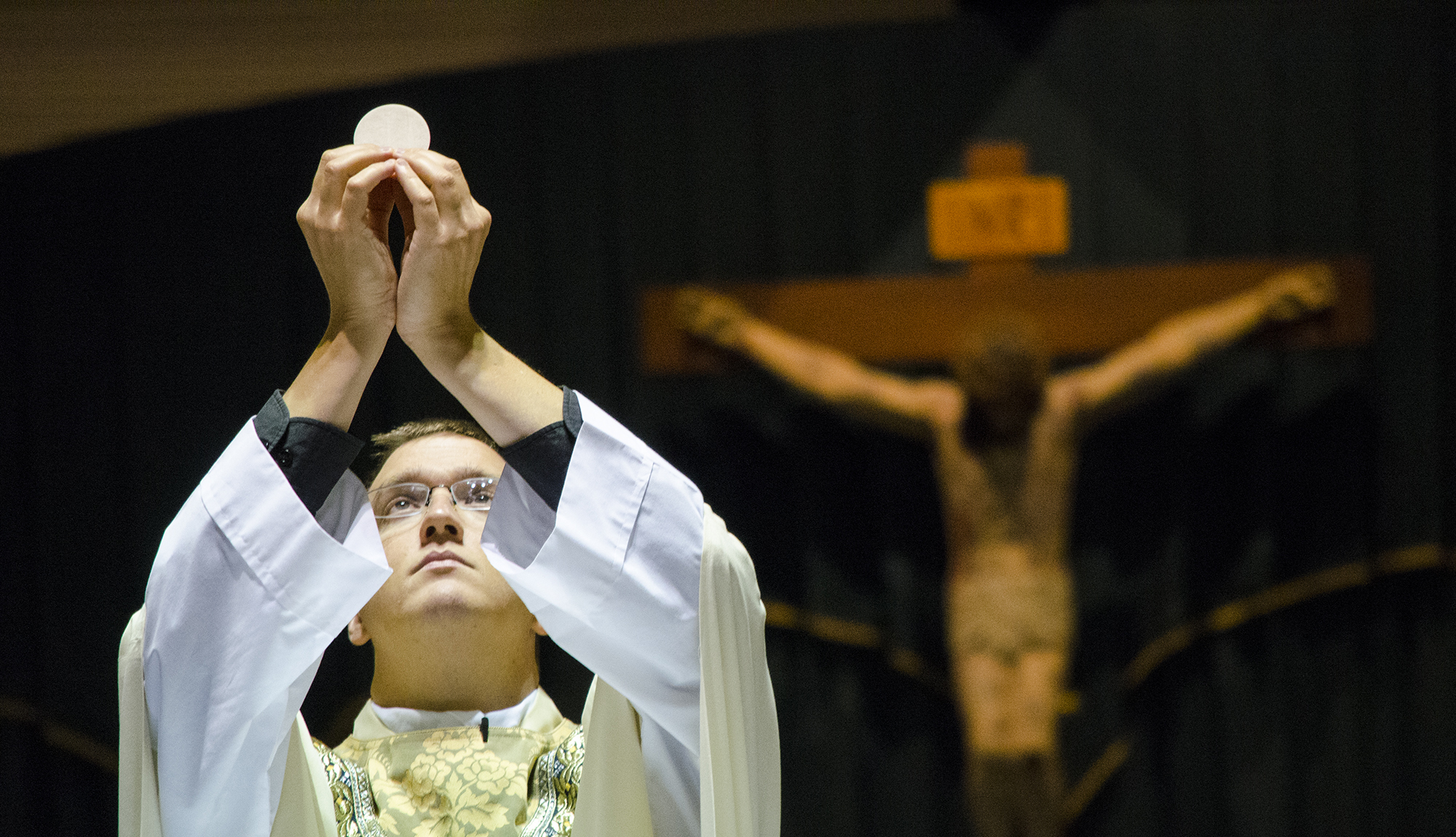
The central Sacrament of the Catholic Church is the Mass, known also as the Holy Eucharist, Holy Communion, or the Lord’s Supper. The word Mass derives from the Latin missa, which is a form of the verb “to send.” The ancient liturgy contained two dismissals, one for people interested in Christianity but not yet baptized, which preceded the sacrament of the Eucharist, and a second for fully initiated Christians after it had been celebrated. Coming as it did between these two dismissals, the rite came first to be called missa and then, by transliteration, the Mass. 

The central Sacrament of the Catholic Church is the Mass, known also as the Holy Eucharist, Holy Communion, or the Lord’s Supper.

The central feature of the Mass is the reenactment of Christ’s Last Supper in which, as he gave his disciples bread and wine, he said, “This is my blood that is shed for you.” It is false to the Catholic concept of this Sacrament to think of it as a commemoration through which priest and communicants elevate their spirits by symbolic remembrance of Christ’s example. The Mass provides an actual transfusion of spiritual energy from God to human souls. In a general way this holds for all the Sacraments, but for the Mass it holds uniquely. For the Catholic Church teaches that in the host and the chalice, the consecrated bread and wine, Christ’s human body and blood are actually present. They consider his words, “This is my body…. This is my blood,” explicit on this point. When a priest utters these words of consecration, therefore, the change that they effect in the elements is not one of significance only. The elements may not appear different afterward; analysis would register no chemical change. In technical language this means that their “accidents” remain as they were, but their “substance” is transubstantiated. We might say the Eucharist conveys God’s grace as a boat conveys its passengers, whereas the other sacraments convey grace as a letter conveys meaning. For the letter to have meaning, intelligence is required in addition to the paper and ink marks; so too in Sacraments other than the Eucharist God’s power is necessary in addition to the instruments of the sacrament. But in the Mass spiritual nourishment is literally to be had from the elements themselves. It is exactly as important for the Christians’ spiritual life to feast upon them as it is for their bodily lives to partake of food. Opening your mouth for the Bread of Life, writes Saint Francis de Sales,

full of faith, hope and charity, receive Him, in whom, by whom, and for whom, you believe, hope and love…. Represent to yourself that as the bee, after gathering from the flowers the dew of heaven and the choicest juice of the earth, reduces them into honey and carries it into her hive, so the priest, having taken from the altar the Savior of the world, the true Son of God, who, as the dew, is descended from heaven, and the true Son of the Virgin, who, as a flower is sprung from the earth of our humanity, puts him as delicious food into your mouth and into your body.

The central feature of the Mass is the reenactment of Christ’s Last Supper in which, as he gave his disciples bread and wine, he said, “This is my blood that is shed for you.” It is not a commemoration through which priest and communicants elevate their spirits by symbolic remembrance of Christ’s example. The Mass provides an actual transfusion of spiritual energy from God to human souls. In the Mass spiritual nourishment is literally to be had from the elements themselves.

This personal presence of God in the elements of the Mass distinguishes it significantly from the other Sacraments, but it does not vitiate the common bond that unites them all. Each is a means by which God, through Christ’s mystical body, literally infuses into human souls the supernatural power that enables them so to live in this world that in the world to come they may have life everlasting.

All Sacraments infuse into human souls the supernatural power that enables them so to live in this world that in the world to come they may have life everlasting.

Catholics see Christ as having explicitly joined the sacramental agency of the Church to its teaching authority in his closing commission to his disciples. “Go and make disciples of all nations, baptizing them in the name of the Father and of the Son and of the Holy Spirit, teaching them to observe all that I have commanded you; and lo, I am with you always, to the close of the age” (Matthew 28:19–20).

Catholics see Christ as having explicitly joined the sacramental agency of the Church to its teaching authority in his closing commission to his disciples. 

.