
Reference: Essays on Substance
The Problem of Relativity
The problem of relativity arises from the fact that, when it comes to a body moving in free space, we can measure its relative velocity only. We have no way of knowing its absolute velocity. For example, the earth moves at a velocity of 29.78 km/s around the sun, but the sun itself is moving. So, we do not know the absolute velocity of either earth or the sun in space.
Knowledge of the absolute velocities is necessary to test and refine our fundamental theories of physics. For example, accurate velocity data allows us to verify and refine the theory of gravity. The theory of gravity then helps accurately determine the masses and motion of celestial bodies.
Newton suggested that his concept of absolute space could be called ‘Aether,’ implying a connection between aether and a fixed reference frame. This idea was central to the Michelson-Morley experiment of 1887, which aimed to detect Earth’s motion through this supposedly stationary aether. The experiment aimed to measure the speed of light in perpendicular directions to observe any differences that would indicate the Earth’s movement relative to this aether. Michelson and Morley used an interferometer, which utilized light wave interference to perform incredibly precise measurements. They expected to observe interference fringes that would indicate different light speeds depending on the orientation of the apparatus relative to the Earth’s motion. But no such fringes were observed.
Einstein then developed his Special relativity that essentially replaced the “absolute rest frame” by an “absolute velocity frame” using the velocity of light. In addition, Einstein noticed that light, which had no mass, had momentum as did the material objects with mass. This led to Einstein establishing an equivalence between electromagnetic radiation and matter, with his famous equation: E = mc2.
But the absolute motion among celestial bodies was not independent of their mutual gravity, and this required accounting for acceleration in addition to simple velocities. To do so, Einstein developed General relativity using a four-dimensional framework, which included both space and time coordinates and their interdependence.
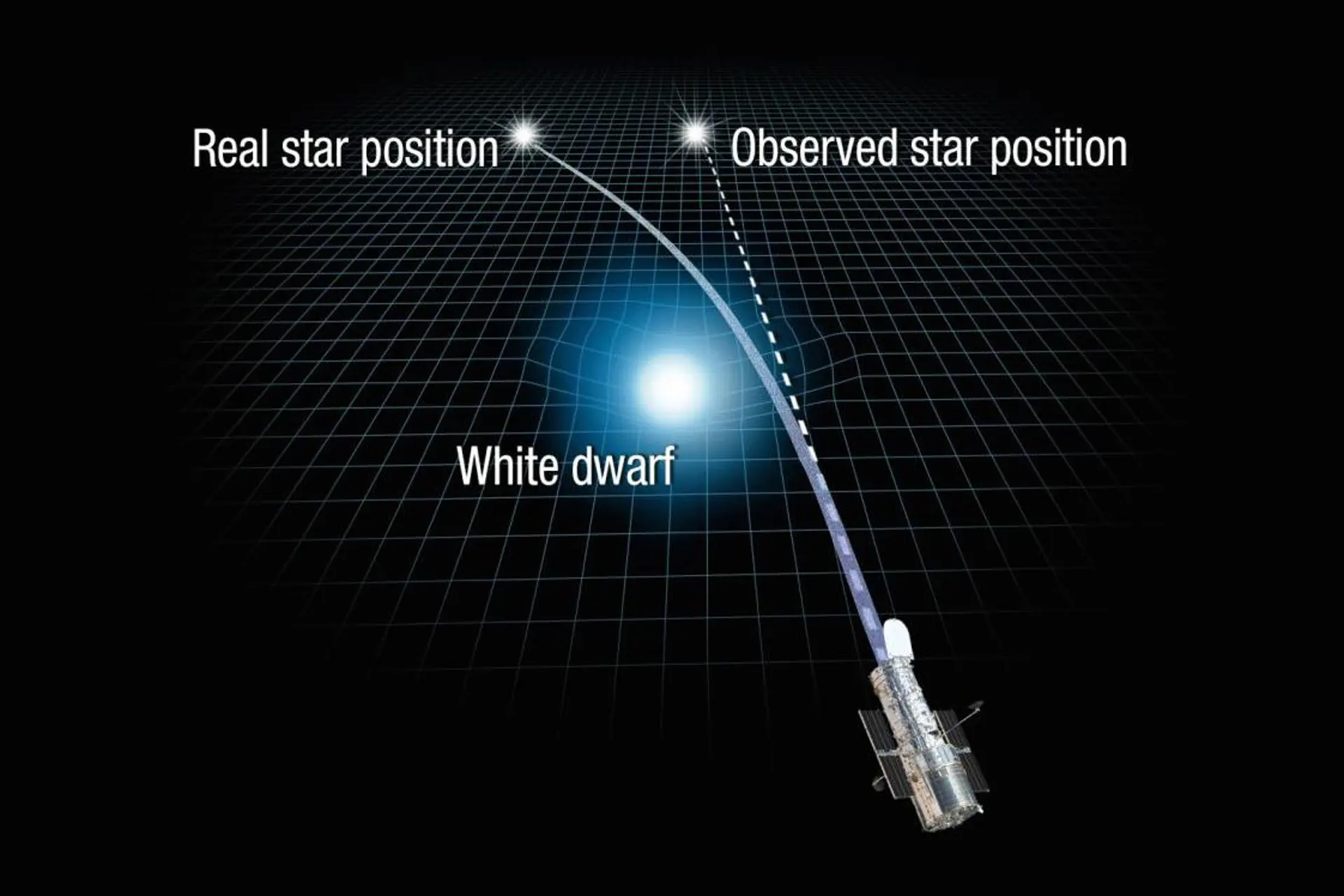
General relativity describes gravity not as a force, but as a consequence of the curvature of spacetime caused by mass and energy. It predicts phenomena such as gravitational time dilation, light deflection by massive bodies, and gravitational waves.
General relativity has been remarkably successful. It has found practical applications in everyday technology such as the Global Positioning System (GPS).
But, despite its remarkable success in explaining many gravitational phenomena, General relativity has several known limitations and weaknesses. For example, it does not integrate well with quantum mechanics, leading to inconsistencies when describing gravity at very small scales or high energies. It also requires the existence of dark matter and dark energy to explain observed cosmic phenomena, but these have not been directly detected.
These limitations suggest that General Relativity, while highly successful in many contexts, may be an approximation of a more fundamental theory of gravity that resolves these issues.
In order to understand the approximations in GR (General Relativity) one must understand the assumptions made in developing this theory. The key assumption appears to be the speed of light. The theoretical basis for the speed of light is Maxwell’s theory, which assumed light to be a disturbance in aether, which it is not.
.
