Monthly Archives: October 2011

The Fundamental Desire

There was nothing to know or unknow

When there came that stirring

And the question arose

How come there is nothing to know or unknow?

.

Thus came about speculation

And the observer of that speculation.

And so the self was formed

Infused with the desire to know itself.

.

Out of this grew the universe,

The galaxies, stars and planets.

And to understand all that

Life itself came about.

.

But underlying these myriads of manifestations

Was always that ancient desire to know

A desire that didn’t want to know

That it was actually creating

.

All that it wanted to know…

.

KHTK 3: PERCEPCIÓN

(Revisado Julio 9, 2011. Revisiones en azul)

Nosotros no necesariamente percibimos lo que está  “ahí afuera”. De hecho, nadie sabe realmente que hay “ahí afuera”. Nosotros percibimos solamente lo que nuestra mente nos indica.

.

TEORÍA

De acuerdo a Wikipedia, el proceso de percepción involucra los siguientes pasos:

  1. Los órganos sensoriales del cuerpo son estimulados por medio de luz, sonido, u otro proceso físico.
  2. Los órganos sensoriales convierten la energía entrante en actividad neuronal.
  3. Esas señales nerviosas son transmitidas al cerebro.
  4. El cerebro organiza e interpreta las señales.
  5. Esto crea consciencia o comprensión del medio ambiente.

Entonces, lo que ocurre es que el cerebro “ve” un patrón de impulsos nerviosos. La mente los considera como vista, oído, tacto, olor, etc. Ya que la percepción del universo físico coincide de persona en persona, podemos decir que ciertas consideraciones básicas en la mente podrían estar determinadas genéticamente. Sin embargo, la misma entrada sensorial puede resultar en diferentes percepciones dependiendo de la educación y experiencia previa de cada persona. Las percepciones pueden ser moldeadas por el aprendizaje, la memoria y la expectación.

LAS PERCEPCIONES SON PROCESADAS POR UN TRANSDUCTOR QUE CONSISTE DE CONSIDERACIONES BÁSICAS FIJADAS EN LA MENTE. ESTAS CONSIDERACIONES PUEDEN SER MODIFICADAS HASTA CIERTO GRADO.

La imagen en la pantalla de una computadora está hecha de miles de pixeles (componentes mínimos de la imagen). Similarmente, se puede considerar que la percepción está hecha de millones de “preceptos” que son convertidos en conceptos. Los sistemas perceptuales de la mente pre conscientemente intentan darle sentido a la información entrante. Ellos permiten a las personas ver el mundo a su alrededor en forma estable, aunque la información sensorial pueda ser incompleta y estar variando rápidamente. Este procesamiento de preceptos ocurre fuera del nivel de consciencia.

LAS CONSIDERACIONES MENTALES TRATAN DE DARLE SENTIDO A LA INFORMACIÓN SENSORIAL MEDIANTE EXTRAPOLACIÓN. NOSOTROS NO ESTAMOS USUALMENTE CONSCIENTES DE ESTE PROCESO.

No ha sido posible responder a la pregunta “¿Las cualidades sensoriales, tales como sonidos, colores y olores existen en una realidad objetiva o sólo en la mente de quien las percibe?” Ya que las ideas de “realidad objetiva”, “información sensorial” y “mente” son ellas mismas consideraciones teóricas, podemos ver la percepción solamente en términos de qué tan estable es, y hasta qué grado puede ser modificada.

LAS PERCEPCIONES NO SON ABSOLUTAS, INCLUSO LAS DEL UNIVERSO FISICO.

Las consideraciones que llevan a percepciones parecen estar interconectadas e influenciarse entre sí. No son absolutas por sí mismas pero ordenarlas puede dar una sensación de mayor consistencia.

LO QUE ES SIGNIFICANTE NO ES LO QUE PERCIBIMOS, SINO LA CONSISTENCIA O INCONSISTENCIA ENTRE LAS COSAS QUE PERCIBIMOS.

Así, el proceso de mirar se enfoca en reconocer lo que está ahí. Esto incluye consistencia e inconsistencia entre lo que se está percibiendo.

.

APLICACIÓN

En ausencia de un guía puedes hacer los ejercicios solo. El guía puede ayudar al estudiante de la siguiente manera:

(A) Repasa la sección de teoría con tu estudiante.

  1. Responde sus preguntas de la mejor manera que te sea posible
  2. Revisen los materiales de teoría hasta que no haya dudas.
  3. Asegúrate de que el estudiante entiende los puntos principales destacados en negritasen la sección de teoría.

(B) Haz que el estudiante haga los ejercicios en secuencia.

  1. Guía al estudiante a través de los ejercicios.
  2. Mantén una comunicación abierta y amigable acerca de la experiencia que está teniendo el estudiante en el ejercicio.
.

EJERCICIOS

EL PROPÓSITO DE ESTOS EJERCICIOS ES PONER EN PRÁCTICA EL MIRAR DIRECTAMENTE LA CONSISTENCIA Y LA INCONSISTENCIA ENTRE LO QUE ESTÁ SIENDO PERCIBIDO.

Ejercicio 3-1

Pon atención especialmente a la percepción del tacto durante tus actividades diarias. Por ejemplo, siente la ropa al colocarla sobre tu cuerpo; siente el peso y la temperatura de tu portafolios al cargarlo; siente el tacto de la perilla al abrir una puerta; siente tus zapatos mientras caminas con ellos, etc.

Reconoce cualquier consistencia o inconsistencia conforme se presenten.

Ejercicio 3-2

Pon atención especialmente a la percepción de la vista durante tus actividades diarias. Por ejemplo, percibe el color de las cosas conforme las miras; su brillantez, contraste y variedad; la forma y dimensiones de los objetos; los patrones entre los objetos,  etc.

Reconoce cualquier consistencia o inconsistencia conforme se presenten.

Ejercicio 3-3

Pon atención especialmente a la percepción del olfato durante tus actividades diarias. Por ejemplo, el olor del aire por su frescura o aroma flotando mientras caminas a través de mercados y diferentes vecindarios; el olor de los alimentos al sentarte a comer, etc.

Reconoce cualquier consistencia o inconsistencia conforme se presenten.

Ejercicio 3-4

Pon atención especialmente a la percepción del oído durante tus actividades diarias. Por ejemplo, escucha el tono y la calidad de los sonidos a tu alrededor; su volumen y su suavidad, escucha las palabras que se dicen sin añadirles ningún significado, etc.

Reconoce cualquier consistencia o inconsistencia conforme se presenten.

Ejercicio 3-5

Pon atención especialmente a la percepción del sabor durante tus actividades diarias. Por ejemplo, saborea el agua conforme la bebas; los diferentes sabores de la comida al alimentarte, etc.

Reconoce cualquier consistencia o inconsistencia conforme se presenten.

Ejercicio 3-6

Pon atención especialmente a la posición del cuerpo durante tus actividades diarias. Reconoce cualquier consistencia o inconsistencia conforme se presenten.

Ejercicio 3-7

Mira algo de la manera que acostumbras hacerlo. Luego mira las diferentes percepciones que conforman lo que estás mirando. Reconoce cualquier consistencia o inconsistencia conforme se presenten.

.

Wave Function Collapse (Part 1)

Here is a nice explanation of WAVE FUNCTION COLLAPSE, a concept from Quantum Mechanics,

Is Consciousness the ultimate wave?

Is Self the collapse of consciousness wave function?

Is Thought the collapse of self wave function?

Is Reality the collapse of thought wave function?

Is Physical universe the collapse of reality wave function?

The ultimate observer or looker is, of course, Unknowable. 🙂

Like the last digit of the decimal rendition of pi.

Because neither exists as we know existence.

.

Added October 28, 2012:

WAVE FUNCTION COLLAPSE = MANIFESTING

What is there before manifesting may only be speculated upon. Speculation then manifests.

So all manifesting may simply be preceded by speculation or visualization.

See AXIOM ZERO

.

Addition (12/31/18)

The assumption in the following video is that electrons are like little balls. This assumption is incorrect. Electrons are waves that are simply quite substantial. As far as “observer” goes, they have an instrument there, whose electric field interferes with the experiment. Please see,

Einstein’s Light Quanta

.

Quantum Levitation

Source of the original: Association of Science-Technology Centers (ASTC) and Tel-Aviv University.

This video demonstrating the power of superconductivity and magnetism has been making the rounds this week on the internet and is an example of how video is really the best way to capture and share with thousands of viewers the amazing power of science!

.

Vinaire’s comment: A magnetic field seems to be a condition of space.

.

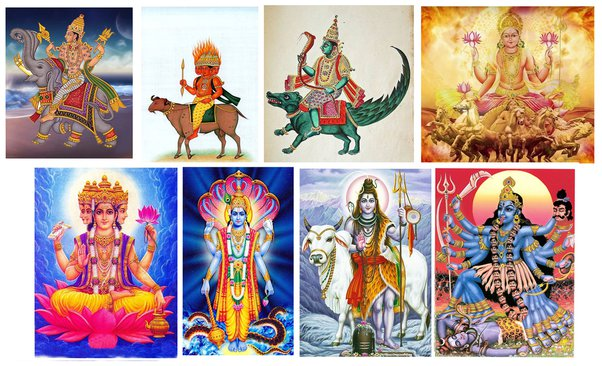
The Vedic Pantheon

Reference: Religion

[This is an old essay of mine written in 1996. My viewpoint has somewhat modified since then, but the data in this essay is still agreeable to me at a certain level. Hope it gives you a fresh viewpoint.]

.

Though many conservative Hindus may disagree with me, but my understanding of the various terms used in the Advaita philosophy in Hinduism is as follows:

.

BRAHMAN AND ATMAN 

==========================================
BRAHMAN: The Absolute Potential of Creativity.

==========================================

Brahman is potential and not actual. It is a non-manifestation. Any manifestation would have the attributes of matter, energy, space and time. These attributes are inherent to the Creation, but not to Brahman.

Any form that Man may hold for Brahman (and call it God) would be a form that Man has created to express this concept of the Absolute. But that form would not be Brahman.

The forms applied to Brahman may be visual or audio, or may be just mental or conceptual. Any such forms would have the attributes of matter, energy, space and time. So, none of these forms is Brahman.

Brahman may be inexpressible, but Brahman can be experienced and understood. Brahman is not unknowable.

From the viewpoint of understanding, Brahman (in religion) acts as the reference point for the whole existence, just as Zero (in mathematics) acts as a reference point for all numbers.

=========================================
ATMAN: Brahman manifested as a cause point.

=========================================

When creation occurs, the power to create (which is potential in Brahman) becomes actually expressed. Atman is the beingness we recognize as a “cause point” or a “creator.” There can be infinity of such beingnesses.

Any form that Man may hold for an Atman would be a form that Man has created to express his concept of a cause point or a creator. But that form would not be Atman.  Just like Brahman, Atman is formless.

What we perceive is nothing but a form having the attributes of matter, energy, space and time. Forms are things created. Thus, we can never perceive Atman, the creator of forms.

Actually, Atman is that which is doing the perceiving.

Atman may be understood only in terms of what it is creating. Thus, there are as many Atmans as there are independent creations at any moment.

Atman is an actuality. Brahman is the potential.

.

PARMATMAN AND JIVATMAN 

Paramatman and Jivatman define the two extreme states of Atman. Between these two states lie many other states. As Atman descends from the state of Paramatman it gets increasingly attached to creation, and becomes narrower in its viewpoint.

=====================================
PARAMATMAN: Atman in its supreme state.
=====================================

Paramatman is the supreme state of Atman. In this state the Atman is operating as total cause with full knowledge and responsibility.

The viewpoint of Paramatman is the broadest viewpoint possible, which is concerned with the survival of the whole universe and all things within it. 

===================================
JIVATMAN: Atman in its attached state.
===================================

Jivatman is that state of Atman where it is confusing itself with the body. It is not very causative, nor spiritually aware, nor very responsible. It is constrained by its own considerations.

The viewpoint of Jivatman is quite narrow. It is concerned only with the survival of the things it is attached to, at the expense of everything else.

.

PURUSHA AND PRAKRITI

Purusha and Prakriti symbolize the duality of the Creator and the Creation. This is the prime duality in which Brahman appears.

===============================
PURUSHA: The CREATOR principle
===============================

Purusha is that aspect of Brahman, which is creating existence out of non-existence.

Purusha is the source of all considerations that underlie creation. It is the source of all principles that define the physical universe, such as, the laws of conservation of energy and matter.

===============================
PRAKRITI: The CREATION principle

===============================

Prakriti constitutes the considerations of matter, energy, space and time that underlie all creation.

The FORM of what is created constitutes the matter aspect of Prakriti. An example of this would be the thought that appears out of no where as a divine inspiration.

The MOTION that finally solidifies into a form constitutes the energy aspect of Prakriti. An example of this would be the process by which that thought comes into being.

The DIMENSIONS in which the form exists constitutes the space aspect of Prakriti. An example of this would be the dimensions in which the thought exists and which give the thought its form.

The CHANGES when the creation occurs constitutes the time aspect of Prakriti. An example of this would be the alterations involved in the creation of the thought.

Thus, PRAKRITI is the matter, energy, space, and time aspects of any creation.

.

THE CYCLE OF EXISTENCE AND MAYA

The Hindu Trinity of Brahman, Vishnu, Mahesh defines the cycle of existence: Create, survive, destroy. SURVIVE means “continuous creation.” DESTRUCTION means, “complete disappearance of form,” as in the destruction of illusion. DESTRUCTION does not mean an alteration of form by force, such  as the “destruction” due to a natural calamity.

=============================================

THE CYCLE OF EXISTENCE:

The cycle of CREATE, SURVIVE, and DESTROY.

=============================================

The cycle of Existence consists of three elements: CREATE, SURVIVE, and DESTROY. Hinduism symbolizes these three elements as the gods BRAHMA, VISHNU, and MAHESH.

“To create” is to bring into existence. Thus, we also have non-existence.

“To survive” is to continue in existence. Survival is continuous creation, “Create, create, create…”

“To destroy” is to reduce back to non-existence. Destruction is a cessation of creation, “Create, no-creation.”

=====================================
MAYA: The impermanent nature of existence.
=====================================

MAYA refers to the following characteristic of existence: Anything that is created can also be destroyed. Therefore, anything that is created is impermanent.

A person who regards this impermanent creation as permanent (significant) is said to be under the influence of maya, or deception.

“God Himself is Mahamaya, who deludes the world with Her illusion and conjures up the magic of creation, preservation and destruction.” – Sri Ramakrishna

.

SOME DEFINITIONS

KRISHNA: A great Yogi, who lived the great truth and expounded upon it. Many use the term “Krishna” synonymously with Brahman and Parmatman.

LIFE:          The interaction of the spirit (creator) with the creation. Life may be compared to a game composed of Goals, Freedoms, and Barriers.

I (SELF):    The individual spirit.

MIND:        The instrument to ensure survival in the game of life.

BODY:       The instrument to transmit effort in playing of the game.

EGO:          Part of the mind impersonating as the “I”.

GODS:       The mind’s conception of the ideal states that an individual can be.

.