Metronomes & Mindfulness Contemplation

[I stole this idea from Joe Hanson, host/writer of PBS Digital Studios, through my buddy Chris Thompson]

Here we see exactly 32 metronomes unite in synchronous play with no help from human hands. The secret lies in the platform on which these metronomes are set up parallel to each other. This platform sits on rollers that can roll from side to side in the same direction that the metronome arms strike.

When any two metronome arms hit, their forces on the platform either cancel out or add together, depending on how out-of or in-sync they are. Any arms that are out of sync will experience a force in the opposite direction that inches them closer to the pack.

Eventually all 32 arms find the same rhythm and sync up. It is interesting to note that 32 is the fifth power of 2. The sixth power of 2 is 64. So, this may happen with 64 metronomes too.

.

Similarity to Mindfulness contemplation

The metronome model may explain in an earthly manner what happens during mindfulness contemplation. Correctly done contemplation will bring up realizations that will allow discontinuities, disharmonies and inconsistencies to level out.

In contemplation, breathing is allowed to have its own free rhythm that is not interfered with, and the attention is allowed to roam to allow free associations. Like the platform on rollers that does not put up any resistance, the person does not put up any resistance to the experiences which contemplation brings to view.

After some practice with this contemplation,  the things that are bothering the person seems to settle down with realizations that make them continuous, harmonious and consistent with reality.

Then a mindfulness guided process may be used to introduce an inconsistency. One may then sit back and watch that inconsistency level out by itself. Wonderful realizations may follow in the wake of this process.

NOTE; Synchronization will not occur in either of these cases (metronomes or meditation) if the platform, or self, offers resistance.

.

Khan Academy: Door to Self-Learning

Make Learning Human: the Secret to Sal Khan’s Success

Sal Khan
Sal Khan, center, posed for photos with students after autographing copies of his book, The One World Schoolhouse: Education Reimagined. Photo: David L. Chandler

Khan Academy founder Sal Khan ’98, MEng ’98 told an MIT audience May 8 about one secret to his success: he created his early videos for one person, his cousin in Louisiana. That human touch has made all the difference, he says. “If I were making these for Bill Gates, I would have messed up,” by making the videos seem polished but not personal. Instead, he says, Khan Academy’s 4,100 free online videos are “very conversational and focused on intuition.” Watch the one-hour interview with MIT President L. Rafael Reif, with an introduction from a 60 Minutes segment.

The Art of Choosing

Sheena Iyengar: The art of choosing

.

Concepts in Arithmetic (old 2)

negative

ARITHMETIC = Arithmos (number) + Techne (Skill) = Number skill

.

(1)  In counting, the previous number is one less.

1 less than 3       =     2

1 less than 2       =     1

1 less than 1       =     0 (zero, nothing)

.

(2)  Zero provides the reference point for all counting numbers.

1      =     0 + 1

5      =     0 + 5

9      =     0 + 9

If N is any number then,

N      =     0 + N

For measuring heights on earth, zero is the sea level.

.

(3)  Then numbers may be counted both forward and backward from zero.

Numbers counted forward from 0 are positive numbers:  +N   =   0 + N

Numbers counted backward from 0 are negative numbers:  –N   =   0 – N

The numbers go on forever in both forward and backward directions.

This we call the set of INTEGERS (untouched, hence, undivided)

.

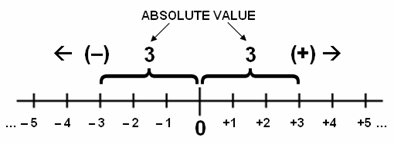
(4)  The set of integers may be visualized as a number line.

Integer0

.

(5)    An integer is made up of a sign and an absolute value.

Integer2

Absolute value of +3   =    |+3|    =    3

Absolute value of –3   =    |–3|    =    3

.

(6)  POSITIVE affirms the existing characteristic.

Positive of a positive integer is that positive integer:    + (+1)   =   +1

Positive of a negative integer is the negative integer:  + (–1)   =   –1

.

(7)  NEGATIVE indicates the opposite characteristic.

Negative of a positive integer is the negative integer:   – (+1)   =   –1

Negative of a negative integer is the positive integer:   – (–1)   =   +1

.

(8)  A Rational number can be expressed as a ratio of two counting numbers.

Therefore, there is a definite unit on which a rational number is based.

This unit is the common factor of the two counting numbers.

.

(9) An Irrational number cannot be expressed as a ratio of two counting numbers.

Therefore, there is no unit, however small, on which an irrational number may be based.

Please see Going Beyond Counting.

Thus, the basic nature of number being discrete comes under question.

.

(10)  The following are considered as Real numbers:

Natural, whole, positive, negative, rational and irrational numbers.

Real numbers may be represented on a Number Line with a common reference point of zero.

The reference point of zero may be selected arbitrarily on the number line.

.

(11)  The square of an integer of either sign is always a positive integer.

A positive integer has two square roots: one positive and the other negative.

A negative integer has no square root in the real number system.

.

(12)  The square root of –1 is denoted as i (an imaginary unit)

Thus,      i2   =   −1

Therefore, the square root of 4 is written as 2i.

.

(13)  The Imaginary numbers may be represented on a different number line.

The imaginary and real numbers lines are independent of each other.

.

(14)  A complex number a + bi is made up of real and imaginary components.

The real component is a, and the imaginary component is bi

Here a and b are real numbers, and i is the imaginary unit satisfying i2 = −1

.

(16)  The Complex numbers may be represented on a complex plane.

A complex plane is determined by a real number line as the horizontal axis,

and an imaginary number line as the vertical axis.

The reference point of zero is shared by both number lines.

.

Space, Time, Dimensions, and Filter

unreality

“The Absolute Truth is that there is nothing absolute in the world, that everything is relative, conditioned and impermanent, and that there is no unchanging, everlasting, absolute substance like Self, Soul, or Ātman within or without.” ~ Buddha

.

How can we express the above mathematically?

We may say that the location (origin) used to refer to the locations of all other objects is not absolute. That origin may be selected arbitrarily. We may say that the duration (eternity) against which to measure the duration of all other objects is not absolute. That eternity may be selected arbitrarily. And then we select an arbitrary unit of measure, and fix it.  Now we have a consistent dimension on which all things relative may be placed.

This is what gives us three dimensions of space; and the dimension of time. These are the primary dimensions. Beyond these we have derived dimensions of mass, velocity, temperature, etc.

When we try to think beyond physical space-time, we run into mental speculation. We then find ourselves in a mental space-time. This is real to the degree that all associations have been kept consistent. We have simply shifted from concreteness to abstraction. This provides us with a super-dimension of abstraction that runs across the primary dimensions of space-time.

Thus, it is the relative nature of this universe which is perceived as space and time.

.

From Reality & Mindfulness

Space and time exist because manifestations are perceived as being relative to each other, both in their position as well as in their duration. If manifestations were absolute, or non-existent, there would be no space and time.

The location of an object is always relative to another location. As a minimum, the location of an object is referenced by the location of the observer. Similarly, the duration of an object is always relative to duration of another object, and, as a minimum, it is referenced by the duration of the observer. The absolute “location-in-itself” or “duration-in-itself” does not exist

Space and time depend on manifestation being perceived as relative.

A closer look, or overview, provides us with new information about objects. For example, the close-ups of insects, images through electron microscope, and views through Hubble Telescope are so striking that we are taken aback. Similarly, when we dilate or compress duration, we get new information about how phenomena transpire. This applies not only to physical but also to mental objects.

By controlling space and time we can obtain new insights into manifestations.

Was this “new” information always there as part of manifestation?

The answer is yes. People who are smart really know what they are looking at. They have a much finer sense of differentiation because they observe carefully. This gives them the ability to operate efficiently. Whether they are managing a company, or researching into a theoretical subject like mathematics, they perceive a lot more.

What does controlling space and time really means? It means positioning oneself to get a better look, or breaking down, or combining, sequences to see what is there. The idea is to scrutinize with mindfulness.

Anything that influences perception is part of filter by definition. Space and time influence our perception.

Space and time seems to be aspects of the filter that we all carry.

Even when objects are manifested in complete detail, space and time keep us from perceiving them for what they are. Knowing this we can start to get an idea of the nature of the elusive filter.

.

A wonderful example of consistency is mathematical associations. It is the consistency of space-time dimensions that comes across as reality.

This consistency breaks down as we observe life. Here we have an unknown filter that influences our perception of reality. Any inconsistency then appears as unreality.

This blog entry is offered as a place to discuss our observations and speculations about space, time, dimensions and filter. Have a go at it.

.