1215 – 1277 Peter Juliani taught in the medical faculty of the University of Siena, and wrote on medical, philosophical and psychological topics. He was personal physician to Pope Gregory X and later became archbishop and cardinal. He was elected pope under the name John XXI in 1276.
c. 1214 – 1294 Roger Bacon advocated for empirical methods and wrote on optics, visual perception, and linguistics.
1240 – Bartholomeus Anglicus published De Proprietatibus Rerum, which included a dissertation on the brain, recognizing that mental disorders can have a physical or psychological cause.
1247 – Bethlehem Royal Hospital in Bishopsgate outside the wall of London, one of the most famous old psychiatric hospitals was founded as a priory of the Order of St. Mary of Bethlem to collect alms for Crusaders; after the English government secularized it, it started admitting mental patients by 1377 (c. 1403), becoming known as Bedlam Hospital; in 1547 it was acquired by the City of London, operating until 1948; it is now part of the British NHS Foundation Trust.
1317 – 1340 William of Ockham, an English Franciscan friar and scholastic philosopher and theologian, is commonly known for Occam’s razor, the methodological principle that the simplest explanation is to be preferred. He also produced significant works on logic, physics, and theology, advancing his thoughts about intuitive and abstracted knowledge.
c. 1375 – English authorities regarded mental illness as demonic possession, treating it with exorcism and torture.
c. 1400 – Renaissance Humanism caused a reawakening of ancient knowledge of science and medicine.
1433 – 1499 Marsilio Ficino was a renowned figure of the Italian Renaissance, a Neoplatonist humanist, a translator of Greek philosophical writing, and the most influential exponent of Platonism in Italy in the fifteenth century.
c. 1450 – The pendulum in Europe swings, bringing witch mania, causing thousands of women to be executed for witchcraft until the late 17th century.
1590 – Scholastic philosopher Rudolph Goclenius coined the term “psychology”; though usually regarded as the origin of the term, there is evidence that it was used at least six decades earlier by Marko Marulić.
c. 1600 – 1625 Francis Bacon was an English philosopher, statesman, scientist, lawyer, jurist, author, and pioneer of the scientific method. His writings on psychological topics included the nature of knowledge and memory.
1672 – Thomas Willis published the anatomical treatise De Anima Brutorum, describing psychology in terms of brain function.
1677 – Baruch Spinoza died, leaving Ethics, Demonstrated in Geometrical Order, Pt. 2 focusing on the human mind and body, disputing Descartes and arguing that they are one, and Pt. 3 attempting to show that moral concepts such as good and evil, virtue, and perfection have a basis in human psychology.
1701 – Gottfried Wilhelm Leibniz published the Law of Continuity, which he applied to psychology, becoming the first to postulate an unconscious mind; he also introduced the concept of threshold.
1781 – Immanuel Kant published Critique of Pure Reason, rejecting Hume’s extreme empiricism and proposing that there is more to knowledge than bare sense experience, distinguishing between “a posteriori” and “a priori” knowledge, the former being derived from perception, hence occurring after perception, and the latter being a property of thought, independent of experience and existing before experience.
1783 – Ferdinand Ueberwasser designated himself Professor of Empirical Psychology and Logic at the Old University of Münster; four years later, he published the comprehensive textbook Instructions for the regular study of empirical psychology for candidates of philosophy at the University of Münster which complemented his lectures on scientific psychology.
1798 – Immanuel Kant proposed the first dimensional model of consistent individual differences by mapping the four Hippocrates‘ temperament types into dimensions of emotionality and energetic arousal. These two dimensions later became an essential part of all temperament and personality models.
.
East
1130–1200 CE – Zhu Xi and Neo‑Confucian mind Zhu Xi develops a li–qi framework where the xin (heart‑mind) unifies moral nature and emotions; cultivation of mind via investigation of things and meditation becomes the central Confucian psychological discipline.
13th century CE – Japanese Zen consolidation By the 12th–13th centuries, Zen (Rinzai, Sōtō) is firmly established in Japan, propagating rigorous meditative disciplines (zazen, kōan practice) as methods for direct realization of mind‑nature.
1308–1364 CE – Longchenpa and Dzogchen systematization Longchen Rabjam (Longchenpa) codifies Nyingma Dzogchen (“Great Perfection”) with a refined account of primordial awareness (rigpa), spontaneous presence, and the natural state, influencing all later Tibetan contemplative psychology.
1357–1419 CE – Tsongkhapa and Gelug synthesis Je Tsongkhapa synthesizes Madhyamaka, Yogācāra, and pramāṇa into a graded path (Lamrim), emphasizing analytic meditation on emptiness intertwined with concentration training as the most reliable method for cognitive and affective transformation.
1472–1529 CE – Wang Yangming’s moral psychology Wang Yangming advances the doctrine of the unity of knowing and acting and liangzhi (innate knowing), focusing on uncovering and correcting automatic thoughts and desires—a remarkably CBT‑like moral psychology within Neo‑Confucianism.
c. 50 – Aulus Cornelius Celsus died, leaving De Medicina, a medical encyclopedia; Book 3 covers mental diseases. The term insania, insanity, was first used by him. The methods of treatment included bleeding, frightening the patient, emetics, enemas, total darkness, and decoctions of poppy or henbane, and pleasant ones such as music therapy, travel, sport, reading aloud, and massage. He was aware of the importance of the doctor-patient relationship.
c. 100 – Rufus of Ephesus believed that the nervous system was instrumental in voluntary movement and sensation. He discovered the optic chiasma by anatomical studies of the brain. He stressed taking a history of both physical and mental disorders. He gave a detailed account of melancholia, and was quoted by Galen.
93–138 – Soranus of Ephesus advised kind treatment in healthy and comfortable conditions, including light, warm rooms.
c. 130–200 – Galen “was schooled in all the psychological systems of the day: Platonic, Aristotelian, Stoic, and Epicurean” He advanced medicine by offering anatomic investigations and was a skilled physician. Galen developed further the theory of temperaments suggested by Hippocrates, that people’s characters were determined by the balance among four bodily substances. He also distinguished sensory from motor nerves and showed that the brain controls the muscles.
345–399 – Evagrius Ponticus described a rigorous way of introspection within the early Christian monastic tradition. Through introspection, monks could acquire self-knowledge and control their stream of thought which signified potentially demonic influences. Ponticus developed this view in Praktikos, his guide to ascetic life.
c. 390 – Nemesius wrote De Natura Hominis (On Human Nature); large sections were incorporated in Saint John Damascene‘s De Fide Orthodoxia in the eighth century. Nemesius’ book De Placitis Hippocratis et Platonis (On the Doctrines of Hippocrates and Plato) contains many passages concerning Galen’s anatomy and physiology, believing that different cavities of the brain were responsible for different functions.
397–398 – St. Augustine of Hippo published Confessions, which anticipated Freud by near-discovery of the subconscious. Augustine’s most complete account of the soul is in De Quantitate Animae (The Greatness of the Soul). The work assumes a Platonic model of the soul.
5th century – Caelius Aurelianus opposed harsh methods of handling the insane, and advocated humane treatment.
c. 423–529 – Theodosius the Cenobiarch founded a monastery at Kathismus, near Bethlehem. Three hospitals were built by the side of the monastery: one for the sick, one for the aged, and one for the insane.
c. 451 – Patriarch Nestorius of Constantinople: his followers dedicated themselves to the sick and became physicians of great repute. They brought the works of Hippocrates, Aristotle, and Galen, and influenced the approach to physical and mental disorders in Persia and Arabia.
625–690 – Paul of Aegina suggested that hysteria should be treated by ligature of the limbs, and mania by tying the patient to a mattress placed inside a wicker basket and suspended from the ceiling. He also recommended baths, wine, special diets, and sedatives for the mentally ill. He described the following mental disorders: phrenitis, delirium, lethargus, melancholia, mania, incubus, lycanthropy, and epilepsy
c. 800 – The first bimaristan was built in Baghdad. By the 13th century, bimaristans grew into hospitals with specialized wards, including wards for mentally ill patients.
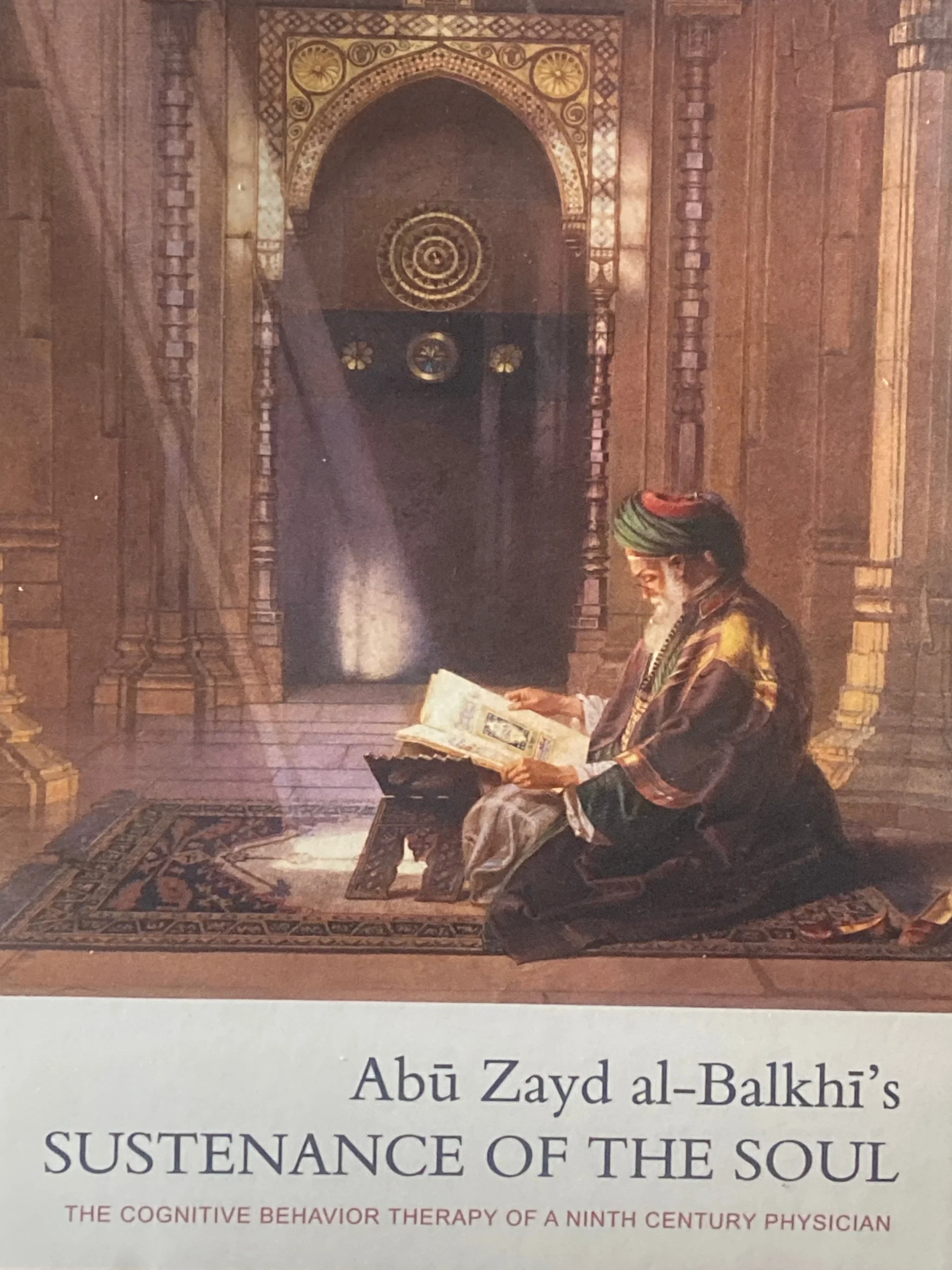
c. 900 – Ahmed ibn Sahl al-Balkhi urged doctors to ensure that they evaluated the state of both their patients’ bodies and souls, and highlighted the link between spiritual or mental health and overall health.
c. 900 – al-Razi (Rhazes) promoted psychotherapy and an understanding attitude towards those with psychological distress.
490–430 Empedocles proposed a first natural, non-religious system of factors that create things around, including human characters. In his model he used four elements (water, fire, earth, air) and four seasons to derive diversity of natural systems.
470–399 Socrates – Socrates has been called the father of western philosophy, if only via his influence on Plato and Aristotle. Socrates made a major contribution to pedagogy via his dialectical method and to epistemology via his definition of true knowledge as true belief buttressed by some rational justification.
470–370 Democritus – Democritus distinguished between insufficient knowledge gained through the senses and legitimate knowledge gained through the intellect—an early stance on epistemology.
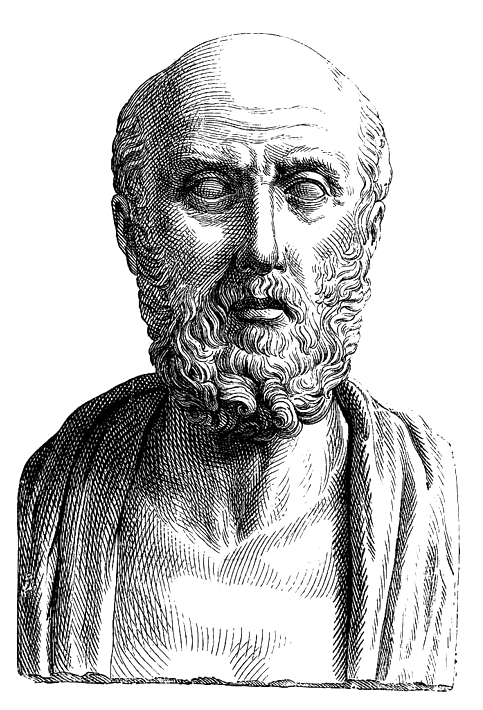
460 BC – 370 BCE – Hippocrates introduced principles of scientific medicine based upon naturalistic observation and logic, and denied the influence of spirits and demons in diseases. Introduced the concept of “temperamentum”(“mixture”, i.e. 4 temperament types based on a ratio between chemical bodily systems. Hippocrates was among the first physicians to argue that brain, and not the heart is the organ of psychic processes.
387 BCE – Plato suggested that the brain is the seat of mental processes. Plato’s view of the “soul” (self) is that the body exists to serve the soul: “God created the soul before the body and gave it precedence both in time and value, and made it the dominating and controlling partner.” from Timaeus
c. 350 BCE – Aristotle wrote on the psuchê (soul) in De Anima, first mentioning the tabula rasa concept of the mind.
c. 300–30 Zeno of Citium taught the philosophy of Stoicism, involving logic and ethics. In logic, he distinguished between imperfect knowledge offered by the senses and superior knowledge offered by reason. In ethics, he taught that virtue lay in reason and vice in rejection of reason. Stoicism inspired Aaron Beck to introduce cognitive behavioral therapy in the 1970s.
123–43 BCE – Themison of Laodicea was a pupil of Asclepiades of Bithynia and founded a school of medical thought known as “methodism.” He was criticized by Soranus for his cruel handling of mental patients. Among his prescriptions were darkness, restraint by chains, and deprivation of food and drink. Juvenal satirized him and suggested that he killed more patients than he cured.
c. 100 BCE – The Dead Sea Scrolls noted the division of human nature into two temperaments.
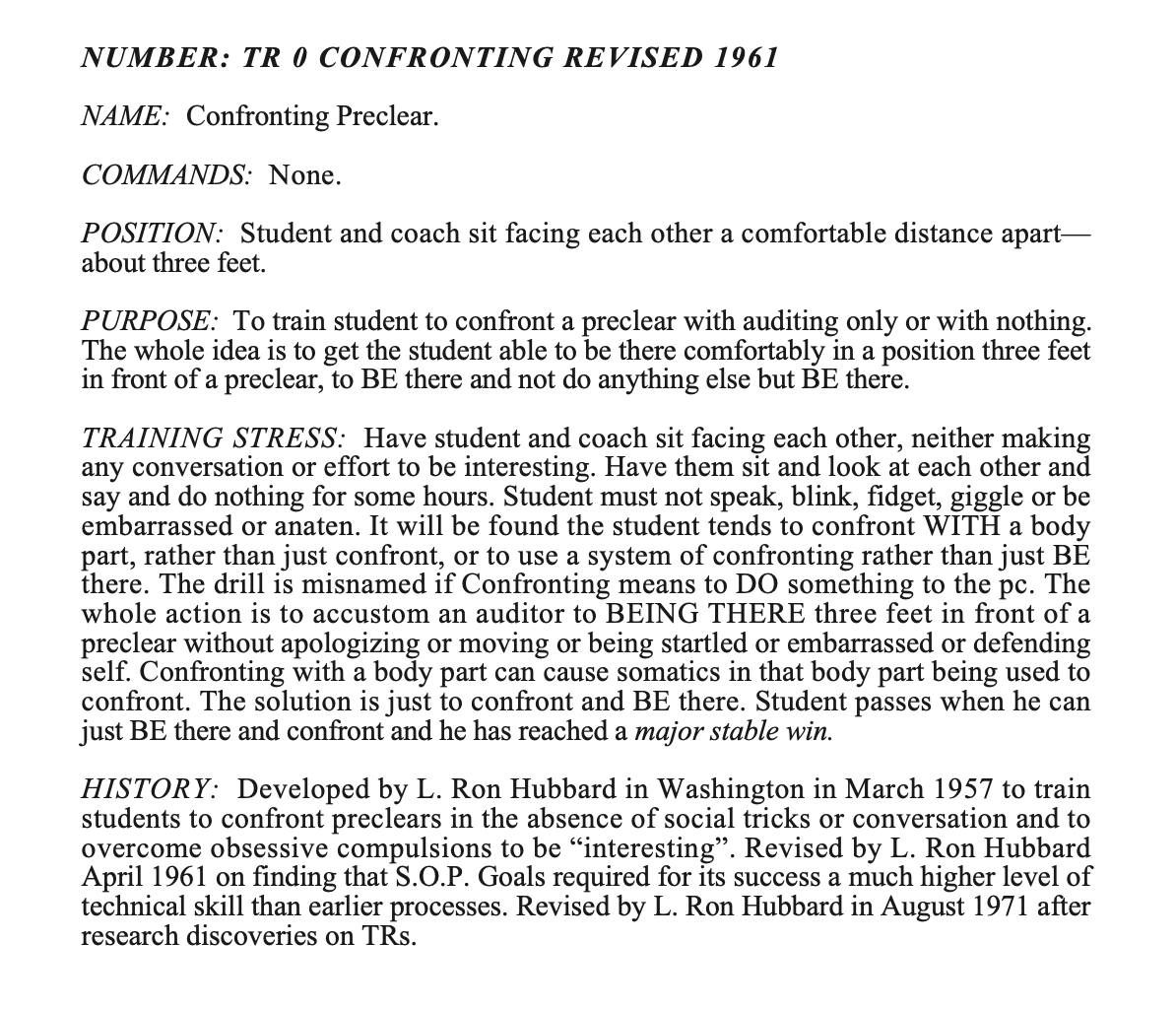
This is a powerful exercise that promotes mindfulness if practiced with the following purpose:
“To be there comfortably observing another person as that person observes you.”
Do not try to suppress any thoughts, feelings of embarrassment, or pressure to do something. You just be there without avoiding such reactions, or flinching away.
Here the other person (coach) is acting as a pc (preclear). A preclear is a person who is working to get rid of all mental obstructions. In this exercise, both people are working to get rid of their mental obstructions.
This exercise may be done quite gainfully with different people until you feel comfortable in the presence of any person.
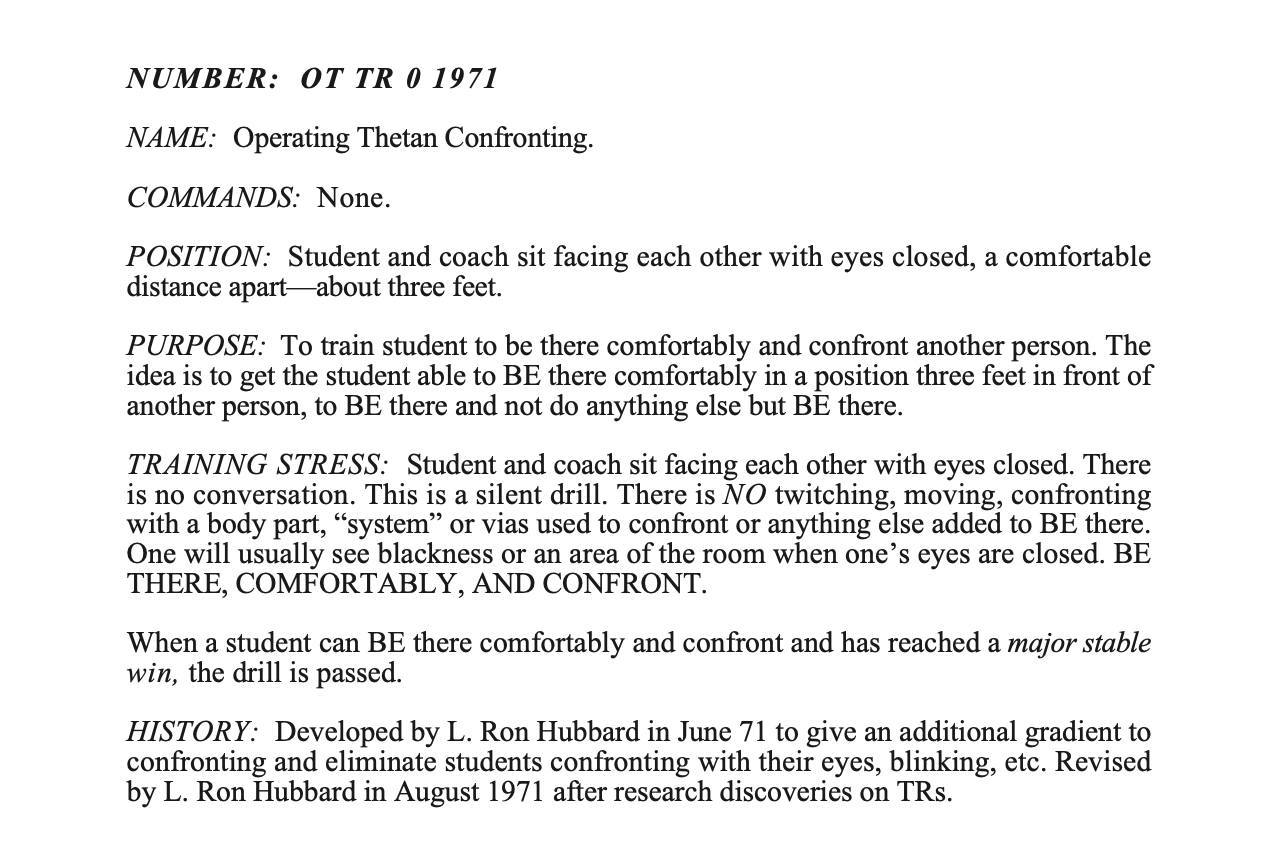
This is a powerful exercise that promotes mindfulness if practiced with the following purpose:
“To be there comfortably with your thoughts.”
You don’t try to avoid your thoughts or suppress them. You just be there with your thoughts without avoiding them.
Here the other person (coach) is acting as a pc (preclear). A preclear is a person who is working to get rid of all mental obstructions. In this exercise, both people are working to get rid of their mental obstructions.
This exercise may be done quite gainfully with thoughts that you are sensitive to, or with ideas that make you feel uncomfortable. You simply look at those thoughts and ideas more closely until you gain greater clarity.