PLATO: Socrates

Reference: The Story of Philosophy 

Note: The original Text is provided below.
Previous / Next

.

Summary

.

Comments

.

Original Text

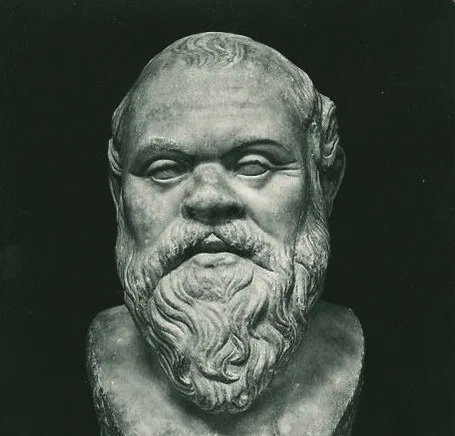
If we may judge from the bust that has come down to us as part of the ruins of ancient sculpture, Socrates was as far from being handsome as even a philosopher can be. A bald head, a great round face, deep-set staring eyes, a broad and flowery nose that gave vivid testimony to many a Symposium—it was rather the head of a porter than that of the most famous of philosophers. But if we look again we see, through the crudity of the stone, something of that human kindliness and unassuming simplicity which made this homely thinker a teacher beloved of the finest youths in Athens. We know so little about him, and yet we know him so much more intimately than the aristocratic Plato or the reserved and scholarly Aristotle. Across two thousand three hundred years we can yet see his ungainly figure, clad always in the same rumpled tunic, walking leisurely through the agora, undisturbed by the bedlam of politics, buttonholing his prey, gathering the young and the learned about him, luring them into some shady nook of the temple porticos, and asking them to define their terms.

They were a motley crowd, these youths who flocked about him and helped him to create European philosophy. There were rich young men like Plato and Alcibiades, who relished his satirical analysis of Athenian democracy; there were socialists like Antisthenes, who liked the master’s careless poverty, and made a religion of it; there was even an anarchist or two among them, like Aristippus, who aspired to a world in which there would be neither masters nor slaves, and all would be as wordlessly free as Socrates. All the problems that agitate human society to-day, and provide the material of youth’s endless debate, agitated as well that little band of thinkers and talkers, who felt, with their teacher, that life without discourse would be unworthy of a man. Every school of social thought had there its representative, and its perhaps origin. 

How the master lived hardly anybody knew. He never worked, and he took no thought of the morrow. He ate when his disciples asked him to honor their tables; they must have liked his company, for he gave every indication of physiological prosperity. He was not so welcome at home, for he neglected his wife and children; and from Xanthippe’s point of view he was a good-for-nothing idler who brought to his family more notoriety than bread. Xanthippe liked to talk almost as much as Socrates did; and they seem to have had some dialogues which Plato failed to record. Yet she, too, loved him, and could not contentedly see him die even after three-score years and ten. 

Why did his pupils reverence him so? Perhaps because he was a man as well as a philosopher: he had at great risk saved the life of Alcibiades in battle; and he could drink like a gentleman without fear and without excess. But no doubt they liked best in him the modesty of his wisdom: he did not claim to have wisdom, but only to seek it lovingly; he was wisdom’s amateur, not its professional. It was said that the oracle at Delphi, with unusual good sense, had pronounced him the wisest of the Greeks; and he had interpreted this as an approval of the agnosticism which was the starting-point of his philosophy “One thing only I know, and that is that I know nothing.” Philosophy begins when one learns to doubt particularly to doubt one’s cherished beliefs, one’s dogmas and one’s axioms. Who knows how these cherished beliefs became certainties with us, and whether some secret wish did not furtively beget them, clothing desire in the dress of thought? There is no real philosophy until the mind turns round and examines itself. Gnothi seauton, said Socrates: Know thyself.

There had been philosophers before him, of course: strong men like Thales and Heraclitus, subtle men like Parmenides and Zeno of Elea, seers like Pythagoras and Empedocles; but for the most part they had been physical philosophers; they had sought for the physis or nature of external things, the laws and constituents of the material and measurable world. That is very good, said Socrates; but there is an infinitely worthier subject for philosophers than all these trees and stones, and even all those stars; there is the mind of man. What is man, and what can he become?

So he went about prying into the human soul, uncovering assumptions and questioning certainties. If men discoursed too readily of justice, he asked them, quietly tò tí?—what is it? What do you mean by these abstract words with which you so easily settle the problems of life and death? What do you mean by honor, virtue, morality, patriotism? What do you mean by yourself? It was with such moral and psychological questions that Socrates loved to deal. Some who suffered from this “Socratic method,” this demand for accurate definitions, and clear thinking, and exact analysis, objected that he asked more than he answered, and left men’s minds more confused than before. Nevertheless he bequeathed to philosophy two very definite answers to two of our most difficult problems— What is the meaning of virtue? and What is the best state?

No topics could have been more vital than these to the young Athenians of that generation. The Sophists had destroyed the faith these youths had once had in the gods and goddesses of Olympus, and in the moral code that had taken its sanction so largely from the fear men had for these ubiquitous and innumerable deities; apparently there was no reason now why a man should not do as he pleased, so long as he remained within the law. A disintegrating individualism had weakened the Athenian character, and left the city a prey at last to the sternly-nurtured Spartans. And as for the state, what could have been more ridiculous than this mob-led, passion-ridden democracy, this government by a debating-society, this precipitate selection and dismissal and execution of generals, this unchoice choice of simple farmers and tradesmen, in alphabetical rotation, as members of the supreme court of the land? How could a new and natural morality be developed in Athens, and how could the state be saved?

It was his reply to these questions that gave Socrates death and immortality. The older citizens would have honored him had he tried to restore the ancient polytheistic faith; if he had led his band of emancipated souls to the temples and the sacred groves, and bade them sacrifice again to the gods of their fathers. But he felt that that was a hopeless and suicidal policy, a progress backward, into and not “over the tombs.” He had his own religious faith: he believed in one God, and hoped in his modest way that death would not quite destroy him; but he knew that a lasting moral code could not be based upon so uncertain a theology. If one could build a system of morality absolutely independent of religious doctrine, as valid for the atheist as for the pietist, then theologies might come and go without loosening the moral cement that makes of willful individuals the peaceful citizens of a community.

If, for example, good meant intelligent, and virtue meant wisdom; if men could be taught to see clearly their real interests, to see afar the distant results of their deeds, to criticize and coordinate their desires out of a self-cancelling chaos into a purposive and creative harmony—this, perhaps, would provide for the educated and sophisticated man the morality which in the unlettered relies on reiterated precepts and external control. Perhaps all sin is error, partial vision, foolishness? The intelligent man may have the same violent and unsocial impulses as the ignorant man, but surely he will control them better, and slip less often into imitation of the beast. And in an intelligently administered society—one that returned to the individual, in widened powers, more than it took from him in restricted liberty—the advantage of every man would lie in social and loyal conduct, and only clear sight would be needed to ensure peace and order and good will. 

But if the government itself is a chaos and an absurdity, if it rules without helping, and commands without leading, how can we persuade the individual, in such a state, to obey the laws and confine his self-seeking within the circle of the total good? No wonder an Alcibiades turns against a state that distrusts ability, and reverences number more than knowledge. No wonder there is chaos where there is no thought, and the crowd decides in haste and ignorance, to repent at leisure and in desolation. Is it not a base superstition that mere numbers will give wisdom? On the contrary is it not universally seen that men in crowds are more foolish and more violent and more cruel than men separate and alone? Is it not shameful that men should be ruled by orators, who “go ringing on in long harangues, like brazen pots which, when struck, continue to sound till a hand is put upon them”? Surely the management of a state is a matter for which men cannot be too Intelligent, a matter that needs the unhindered thought of the finest minds. How can a society be saved, or be strong, except it be led by its wisest men? 

Imagine the reaction of the popular party at Athens to this aristocratic gospel at a time when war seemed to require the silencing of all criticism, and when the wealthy and lettered minority were plotting a revolution. Consider the feelings of Anytus, the democratic leader whose son had become a pupil of Socrates, and had then turned against the gods of his father, and laughed in his father’s face. Had no Aristophanes predicted precisely such a result from his specious replacement of the old virtues by unsocial intelligence? [In The Clouds (423 B.C.) Aristophanes had made great fun of Socrates and his “Thinking-shop.” where one learned the art of proving one’s self right, however wrong. Phidippides beats his father on the ground that his father used to beat him, and every debt should be repaid. The satire seems to have been good-natured enough: we find Aristophanes frequently in the company of Socrates; they agreed in their scorn of democracy; and Plato recommended The Clouds to Dionysius. As the play was brought out twenty-four years before the trial of Socrates, it could have had no great share in bringing the tragic dénouement of the philosopher’s life.]

Then the revolution came, and men fought for it and against, bitterly and to the death. When the democracy won, the fate of Socrates was decided: he was the intellectual leader of the revolting party, however pacific he might himself have been; he was the source of the hated aristocratic philosophy; he was the corrupter of youths drunk with debate. It would be better, said Anytus and Meletus, that Socrates should die. 

The rest of the story all the world knows, for Plato wrote it down in prose more beautiful than poetry. We are privileged to read for ourselves that simple and courageous (if not legendary) “apology,” or defense, in which the first martyr of philosophy proclaimed the rights and necessity of free thought, upheld his value to the state, and refused to beg for mercy from the crowd whom he had always contemned. They had the power to pardon him; he disdained to make the appeal. It was a singular confirmation of his theories, that the judges should wish to let him go, while the angry crowd voted for his death. Had he not denied the gods?Woe to him who teaches men faster than they can learn. 

So they decreed that he should drink the hemlock. His friends came to his prison and offered him an easy escape; they had bribed all the officials who stood between him and liberty. He refused. He was seventy years old now (399 B. c.); perhaps he thought it was time for him to die, and that he could never again die so usefully. “Be of good cheer,” he told his sorrowing friends, “and say that you are burying my body only.” “When he had spoken these words,” says Plato, in one of the great passages of the world’s literature,

he arose and went into the bath-chamber with Crito, who bade us wait; and we waited, talking and thinking of … the greatness of our sorrow; he was like a father of whom we were being bereaved, and we were about to pass the rest of our lives as orphans. . . . Now the hour of sunset was near, for a good deal of time had passed while he was within. When he came out, he sat down with us again, … but not much was said. Soon the jailer … entered and stood by him saying “To you Socrates, whom I know to be the noblest and gentlest and best of all who ever came to this place, I will not impute the angry feelings of other men, who rage and swear at me when, in obedience to the authorities, I bid them drink the poison indeed I am sure that you will not be angry with me; for others, as you are aware, and not I, are the guilty cause. And so fare you well, and try to bear lightly what must needs be; you know my errand.” Then bursting into tears he turned away and went out. 

Socrates looked at him and said: “I return your good wishes, and will do as you bid.” Then turning to us, he said, “How charming the man is; since I have been in prison he has always been coming to see me, and now see how generously he sorrows for me. But we must do as he says, Crito; let the cup be brought, if the poison is prepared; if not, let the attendant prepare some.”

“Yet,” said Crito, “the sun is still upon the hill-tops, and many a one has taken the draught late; and after the announcement has been made to him he has eaten and drunk, and indulged in sensual delights; do not hasten then, there is still time.” 

Socrates said: “Yes, Crito, and they of whom you speak are right in doing thus, for they think that they will gain by the delay; but I am right in not doing thus, for I do not think that I should gain anything by drinking the poison a little later; I should be sparing and saving a life which is already gone; I could only laugh at myself for this. Please then to do as I and not to refuse me.”

Crito, when he heard this, made a sign to the servant; and the servant went in, and remained for some time, and then returned with the jailer carrying the cup of poison. Socrates said: “You, my good friend, who are experienced In these matters, shall give me directions how I am to proceed.” The man answered: “You have only to walk about until your legs are heavy, and then to lie down, and the poison will act.” At the same time he handed the cup to Socrates, who in the easiest and gentlest manner, without the least fear or change of color or feature, looking at the man with all his eyes, as his manner was, took the cup and said: “What do you say about making a libation out of this cup to any god? May I, or not?” The man answered: “We only prepare, Socrates, just so much as we deem enough.” “I understand,” he said: “yet I may and must pray to the gods to prosper my journey from this to that other world—may this then, which is my prayer, be granted to me.” Then, holding the cup to his lips, quite readily and cheerfully he drank the poison. 

And hitherto most of us had been able to control our sorrow; but now when we saw him drinking, and saw too that he had finished the draught, we could no longer forbear, and in spite of myself my own tears were flowing fast; so that I covered my face and wept over myself; for certainly I was not weeping over him, but at the thought of my own calamity in having lost such a companion. Nor was I the first, for Crito, when he found himself unable to restrain his tears, had got up and moved away, and I followed; and at that moment Apollodorus, who had been weeping all the time, broke out into a loud cry which made cowards of us all. Socrates alone retained his calmness: “What is this strange outcry?” he said. “I sent away the women mainly in order that they might not offend in this way, for I have heard that a man should die in peace. Be quiet, then, and have patience.” When we heard that, we were ashamed, and restrained our tears; and he walked about until, as he said, his legs began to fail, and then he lay on his back, according to the directions, and the man who gave him the poison now and then looked at his feet and legs; and after a while he pressed his foot hard and asked him if he could feel; and he said “No”; and then his leg, and so upwards and upwards, and showed us that he was cold and stiff. And then Socrates felt them himself, and said, ”When the poison reaches the heart, that will be the end.” He was beginning to grow cold about the groin, when he uncovered his face (for he had covered himself up) and said, they were his last words, “Crito, I owe a cock to Asclepius; you will remember to pay the debt?” “The debt shall be paid,” said Crito; “is there anything else?” There was no answer to this question; but in a minute or two a movement was heard, and the attendant uncovered him; his eyes were set, and Crito closed his eyes and mouth. 

Such was the end of our friend, whom I may truly call the wisest, the justest, and best of all the men whom I have ever known. 

.
PLATO: The Context of Plato

Reference: The Story of Philosophy 

Note: The original Text is provided below.
Previous / Next

.

Summary

.

Comments

.

Original Text

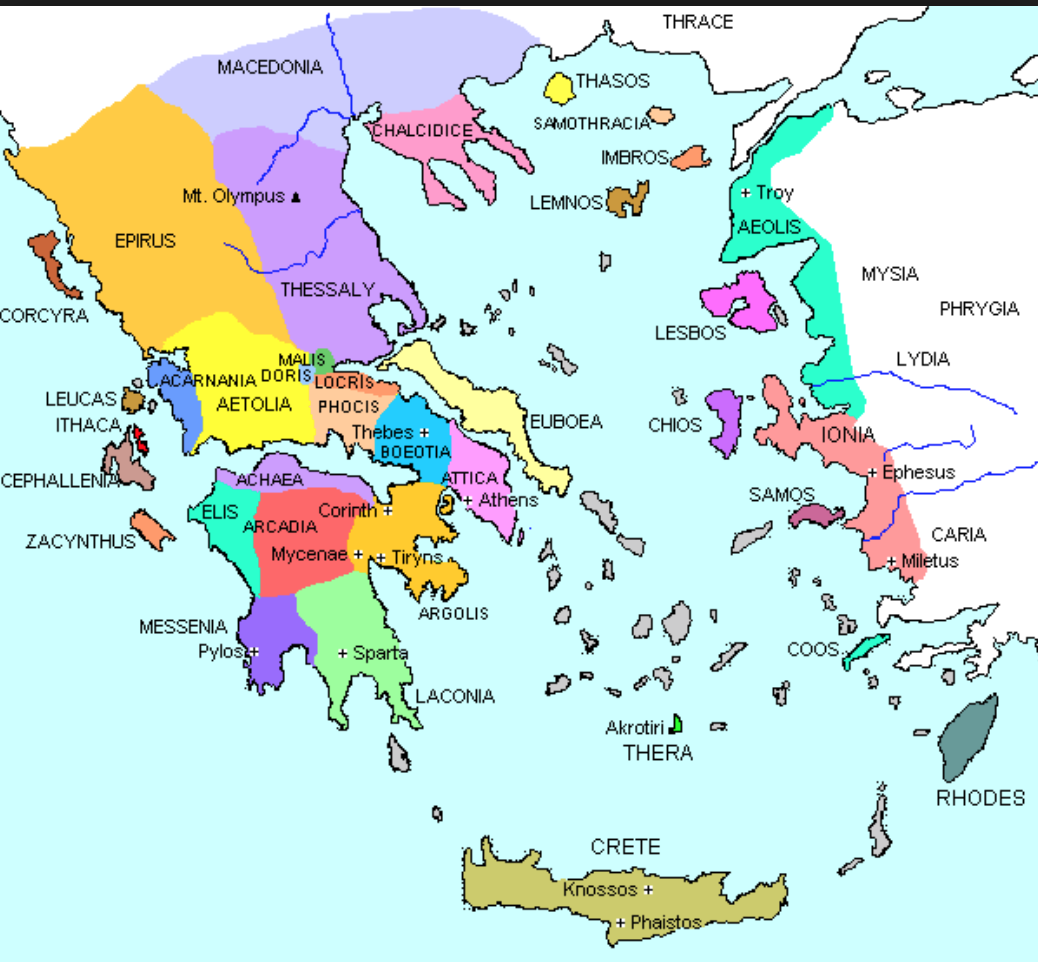
If you look at a map of Europe you will observe that Greece is a skeleton-like hand stretching its crooked fingers out into the Mediterranean Sea. South of it lies the great island of Crete, from which those grasping fingers captured, in the second millennium before Christ, the beginnings of civilization and culture. To the east, across the Aegean Sea, lies Asia Minor, quiet and apathetic now, but throbbing, in pre-Platonic days, with industry, commerce and speculation. To the west, across the Ionian, Italy stands, like a leaning tower in the sea, and Sicily and Spain, each in those days with thriving Greek colonies; and at the end, the “Pillars of Hercules” (which we caIl Gibraltar), that sombre portal through which not many an ancient mariner dared to pass. And on the north those still untamed and half-barbaric regions, then named Thessaly and Epirus and Macedonia, from which or through which the vigorous bands had come which fathered the geniuses of Homeric and Periclean Greece.

Look again at the map, and you see countless indentations of coast and elevations of land; everywhere gulfs and bays and the intrusive sea; and all the earth tumbled and tossed into mountains and hills. Greece was broken into isolated fragments by these natural barriers of sea and soil; travel and communication were far more difficult and dangerous then than now; every valley therefore developed its own self-sufficient economic life, its own sovereign government, its own institutions and dialect and religion and culture. In each case one or two cities, and around them, stretching up the mountain-slopes, an agricultural hinterland: such were the “city-states” of Euboea, and Locris, and Aetolia, and Phocis, and Boeotia, and Achaea, and Argolis, and Elis, and Arcadia, and Messenia, and Laconia—with its Sparta, and Attica—with its Athens.

Look at the map a last time, and observe the position of Athens: it is the farthest east of the larger cities of Greece. It was favorably placed to be the door through which the Greeks passed out to the busy cities of Asia Minor, and through which those elder cities sent their luxuries and their culture to adolescent Greece. It had an admirable port, Piraeus, where countless vessels might find a haven from the rough waters of the sea. And it had a great maritime fleet.

In 490-470 B.C. Sparta and Athens, forgetting their jealousies and joining their forces, fought off the effort of the Persians under Darius and Xerxes to turn Greece into a colony of an Asiatic empire. In this struggle of youthful Europe against the senile East, Sparta provided the army and Athens the navy. The war over, Sparta demobilized her troops, and suffered the economic disturbances natural to that process; while Athens turned her navy into a merchant fleet, and became one of the greatest trading cities of the ancient world. Sparta relapsed into agricultural seclusion and stagnation, while Athens became a busy mart and port, the meeting place of many races of men and of diverse cults and customs, whose contact and rivalry begot comparison, analysis and thought.

Traditions and dogmas rub one another down to a minimum in such centers of varied intercourse; where there are a thousand faiths we are apt to become skeptical of them all. Probably the traders were the first skeptics; they had seen too much to believe too much; and the general disposition of merchants to classify all men as either fools or knaves inclined them to question every creed. Gradually, too, they were developing science; mathematics grew with the increasing complexity of exchange, astronomy with the increasing audacity of navigation.

The growth of wealth brought the leisure and security which are the prerequisite of research and speculation; men now asked the stars not only for guidance on the seas but as well for an answer to the riddles of the universe; the first Greek philosophers were astronomers. “Proud of their achievements,” says Aristotle, “men pushed farther afield after the Persian wars; they took all knowledge for their province, and sought ever wider studies.” Men grew bold enough to attempt natural explanations of processes and events before attributed to supernatural agencies and powers; magic and ritual slowly gave way to science and control; and philosophy began.

At first this philosophy was physical; it looked out upon the material world and asked what was the final and irreducible constituent of things. The natural termination of this line of thought was the materialism of Democritus (460-360 B.C.) “in reality there is nothing but atoms and space.” This was one of the main streams of Greek speculation; it passed underground for a time in Plato’s day, but emerged in Epicurus (342-270), and became a torrent of eloquence in Lucretius (98-55 B.C.). But the most characteristic and fertile developments of Greek philosophy took form with the Sophists, traveling teachers of wisdom, who looked within upon their own thought and nature, rather than out upon the world of things. They were all clever men (Gorgias and Hippias, for example), and many of them were profound (Protagoras, Prodicus); there is hardly a problem or a solution in our current philosophy of mind and conduct which they did not realize and discuss. They asked questions about anything; they stood unafraid in the presence of religious or political taboos; and boldly subpoenaed every creed and institution to appear before the judgment-seat of reason. In politics they divided into two schools. One, like Rousseau, argued that nature is good, and civilization bad; that by nature all men are equal, becoming unequal only by class-made institutions: and that law is an invention of the strong to chain and rule the weak. Another school, like Nietzsche, claimed that nature is beyond good and evil; that by nature all men are unequal; that morality is an invention of the weak to limit and deter the strong; that power is the supreme virtue and the supreme desire of man; and that of all forms of government the wisest and most natural is aristocracy.

No doubt this attack on democracy reflected the rise of a wealthy minority at Athens which called itself the Oligarchical Party, and denounced democracy as an incompetent sham. In a sense there was not much democracy to denounce; for of the 400,000 inhabitants of Athens 250,000 were slaves, without political rights of any kind; and of the 150,000 freemen or citizens only a small number presented themselves at the Ecclesia, or general assembly, where the policies of the state were discussed and determined. Yet what democracy they had was as thorough as never since; the general assembly was the supreme power; and the highest official body, the Dikasteria, or supreme court, consisted of over a thousand members (to make bribery expensive), selected by alphabetical rote from the roll of all the citizens. No institution could have been more democratic, nor, said its opponents, more absurd. 

During the great generation-long Peloponnesian war (430-400 B. C.), in which the military power of Sparta fought and at last defeated the naval power of Athens, the Athenian oligarchic party, led by Critias, advocated the abandonment of democracy on the score of its inefficiency in war, and secretly lauded the aristocratic government of Sparta. Many of the oligarchic leaders were exiled; but when at last Athens surrendered, one cf the peace conditions imposed by Sparta was the recall of these exiled aristocrats. They had hardly returned when, with Critias at their head, they declared a rich man’s revolution against the “democratic” party that had ruled during the disastrous war. The revolution failed, and Critias was killed on the field of battle. 

Now Critias was a pupil of Socrates, and an uncle of Plato. 

.

The Sexual Function

Sadhguru says, “All duality is striving for unity because what was once one has manifested itself as two; now there is a perpetual longing to become one.” He gives that as the reason for sex.

I don’t think that is correct. All dualities are actually dimensions assigned to Akasha by the attention field. These dimensions can be depicted as scales that stretch to infinity in either direction (see the POSTULATE # 15). This generates the infinite variations of the universe.

Sex is nature’s way of creating new combinations of atoms and monads as new identities. This is Nature’s trial and error method to evolve. Sex is natural and the nature uses DNA programming enforced through electro-chemical means to accomplish it.

The impulse underlying sex is not to become one, but to evolve.

Sexual desire is powerful. It suspends all other mental processes when a certain threshold is crossed. When not understood and suppressed it can become a terrible fixation. It has pretty much become a fixation with most people in the modern societies.

Sex is NOT two opposites making an attempt to become one. Bodies are discrete; they will never become one. You are neither your body, nor your mental matrix or identity. You are the ultimate continuum called the attention field.

The ecstasy of sex is just that. It is simply the conversion of physical energy into metaphysical energy. It gives you a taste of being the attention field.

“Masculine” and “feminine” are not opposite but complementary elements like ‘electrical” and “magnetic” of the electro-magnetic energy. There is a dance between the two as part of pleasing each other since unnecessary force is not natural. Social mores, like courting, simply make it colorful.

Men and women have different biological functions that should be understood, accepted, and smoothly integrated in the fabric of the society.

Yoga (union) doesn’t mean that everything should become one by reducing to a single point. It simply means that the existence should be seen as continuous, harmonious and consistent throughout.

.

THE BHAGAVAD GITA: Chapter 10

Reference: Course on The Bhagavad Gita
English Translation By Shri Purohit Swami

.

Chapter 10

श्रीभगवानुवाच
भूयएवमहाबाहोश्रृणुमेपरमंवचः।
यत्तेऽहंप्रीयमाणायवक्ष्यामिहितकाम्यया।।10.1।।

10.1 “Lord Shri Krishna said: Now, O Prince! Listen to My supreme advice, which I give thee for the sake of thy welfare, for thou art My beloved.

नमेविदुःसुरगणाःप्रभवंनमहर्षयः।
अहमादिर्हिदेवानांमहर्षीणांचसर्वशः।।10.2।।

10.2 Neither the professors of divinity nor the great ascetics know My origin, for I am the source of them all.

योमामजमनादिंचवेत्तिलोकमहेश्वरम्।
असम्मूढःसमर्त्येषुसर्वपापैःप्रमुच्यते।।10.3।।

10.3 He who knows Me as the unborn, without beginning, the Lord of the universe, he, stripped of his delusion, becomes free from all conceivable sin.

बुद्धिर्ज्ञानमसंमोहःक्षमासत्यंदमःशमः।
सुखंदुःखंभवोऽभावोभयंचाभयमेवच।।10.4।।

10.4 Intelligence, wisdom, non-illusion, forgiveness, truth, self-control, calmness, pleasure, pain, birth, death, fear and fearlessness;

अहिंसासमतातुष्टिस्तपोदानंयशोऽयशः।
भवन्तिभावाभूतानांमत्तएवपृथग्विधाः।।10.5।।

10.5 Harmlessness, equanimity, contentment, austerity, beneficence, fame and failure, all these, the characteristics of beings, spring from Me only.

महर्षयःसप्तपूर्वेचत्वारोमनवस्तथा।
मद्भावामानसाजातायेषांलोकइमाःप्रजाः।।10.6।।

10.6 The seven Great Seers [Mareechi, Atri, Angira, Pulah, Kratu, Pulastya, Vahishta], the Progenitors of mankind, the Ancient Four [The Masters: Sanak, Sanandan, Sanatan, Sanatkumar.], and the Lawgivers were born of My Will and come forth direct from Me. The race of mankind has sprung from them.

एतांविभूतिंयोगंचममयोवेत्तितत्त्वतः।
सोऽविकम्पेनयोगेनयुज्यतेनात्रसंशयः।।10.7।।

10.7 He who rightly understands My manifested glory and My Creative Power, beyond doubt attains perfect peace.

अहंसर्वस्यप्रभवोमत्तःसर्वंप्रवर्तते।
इतिमत्वाभजन्तेमांबुधाभावसमन्विताः।।10.8।।

10.8 I am the source of all; from Me everything flows. Therefore the wise worship Me with unchanging devotion.

मच्चित्तामद्गतप्राणाबोधयन्तःपरस्परम्।
कथयन्तश्चमांनित्यंतुष्यन्तिचरमन्तिच।।10.9।।

10.9 With minds concentrated on Me, with lives absorbed in Me, and enlightening each other, they ever feel content and happy.

तेषांसततयुक्तानांभजतांप्रीतिपूर्वकम्।
ददामिबुद्धियोगंतंयेनमामुपयान्तिते।।10.10।।

10.10 To those who are always devout and who worship Me with love, I give the power of discrimination, which leads them to Me.

तेषामेवानुकम्पार्थमहमज्ञानजंतमः।
नाशयाम्यात्मभावस्थोज्ञानदीपेनभास्वता।।10.11।।

10.11 By My grace, I live in their hearts; and I dispel the darkness of ignorance by the shining light of wisdom.

अर्जुनउवाच
परंब्रह्मपरंधामपवित्रंपरमंभवान्।
पुरुषंशाश्वतंदिव्यमादिदेवमजंविभुम्।।10.12।।

10.12 Arjuna asked: Thou art the Supreme Spirit, the Eternal Home, the Holiest of the Holy, the Eternal Divine Self, the Primal God, the Unborn and the Omnipresent.

आहुस्त्वामृषयःसर्वेदेवर्षिर्नारदस्तथा।
असितोदेवलोव्यासःस्वयंचैवब्रवीषिमे।।10.13।।

10.13 So have said the seers and the divine sage Narada; as well as Asita, Devala and Vyasa; and Thou Thyself also sayest it.

सर्वमेतदृतंमन्येयन्मांवदसिकेशव।
नहितेभगवन्व्यक्ितंविदुर्देवानदानवाः।।10.14।।

10.14 I believe in what Thou hast said, my Lord! For neither the godly not the godless comprehend Thy manifestation.

स्वयमेवात्मनाऽत्मानंवेत्थत्वंपुरुषोत्तम।
भूतभावनभूतेशदेवदेवजगत्पते।।10.15।।

10.15 Thou alone knowest Thyself, by the power of Thy Self; Thou the Supreme Spirit, the Source and Master of all being, the Lord of Lords, the Ruler of the Universe.

वक्तुमर्हस्यशेषेणदिव्याह्यात्मविभूतयः।
याभिर्विभूतिभिर्लोकानिमांस्त्वंव्याप्यतिष्ठसि।।10.16।।

10.16 Please tell me all about Thy glorious manifestations, by means of which Thou pervadest the world.

कथंविद्यामहंयोगिंस्त्वांसदापरिचिन्तयन्।
केषुकेषुचभावेषुचिन्त्योऽसिभगवन्मया।।10.17।।

10.17 O Master! How shall I, by constant meditation, know Thee? My Lord! What are Thy various manifestations through which I am to mediate on Thee?

विस्तरेणात्मनोयोगंविभूतिंचजनार्दन।
भूयःकथयतृप्तिर्हिश्रृण्वतोनास्तिमेऽमृतम्।।10.18।।

10.18 Tell me again, I pray, about the fullness of Thy power and Thy glory; for I feel that I am never satisfied when I listen to Thy immortal words.

श्रीभगवानुवाच
हन्ततेकथयिष्यामिदिव्याह्यात्मविभूतयः।
प्राधान्यतःकुरुश्रेष्ठनास्त्यन्तोविस्तरस्यमे।।10.19।।

10.19 Lord Shri Krishna replied: So be it, My beloved fried! I will unfold to thee some of the chief aspects of My glory. Of its full extent there is no end.

अहमात्मागुडाकेशसर्वभूताशयस्थितः।
अहमादिश्चमध्यंचभूतानामन्तएवच।।10.20।।

10.20 O Arjuna! I am the Self, seated in the hearts of all beings; I am the beginning and the life, and I am the end of them all.

आदित्यानामहंविष्णुर्ज्योतिषांरविरंशुमान्।
मरीचिर्मरुतामस्मिनक्षत्राणामहंशशी।।10.21।।

10.21 Of all the creative Powers I am the Creator, of luminaries the Sun; the Whirlwind among the winds, and the Moon among planets.

वेदानांसामवेदोऽस्मिदेवानामस्मिवासवः।
इन्द्रियाणांमनश्चास्मिभूतानामस्मिचेतना।।10.22।।

10.22 Of the Vedas I am the Hymns, I am the Electric Force in the Powers of Nature; of the senses I am the Mind; and I am the Intelligence in all that lives.

रुद्राणांशङ्करश्चास्मिवित्तेशोयक्षरक्षसाम्।
वसूनांपावकश्चास्मिमेरुःशिखरिणामहम्।।10.23।।

10.23 Among Forces of Vitality I am the life, I am Mammon to the heathen and the godless; I am the Energy in fire, earth, wind, sky, heaven, sun, moon and planets; and among mountains am the Mount Meru.

पुरोधसांचमुख्यंमांविद्धिपार्थबृहस्पतिम्।
सेनानीनामहंस्कन्दःसरसामस्मिसागरः।।10.24।।

10.24 Among the priests, know, O Arjuna, that I am the Apostle Brihaspati; of generals I am Skanda, the Commander-in-Chief, and of waters I am the Ocean.

महर्षीणांभृगुरहंगिरामस्म्येकमक्षरम्।
यज्ञानांजपयज्ञोऽस्मिस्थावराणांहिमालयः।।10.25।।

10.25 Of the great seers I am Bhrigu, of words I am Om, of offerings I am the silent prayer, among things immovable I am the Himalayas.

अश्वत्थःसर्ववृक्षाणांदेवर्षीणांचनारदः।
गन्धर्वाणांचित्ररथःसिद्धानांकपिलोमुनिः।।10.26।।

10.26 Of trees I am the sacred Fig-tree, of the Divine Seers Narada, of the heavenly singers I am Chitraratha, their Leader, and of sages I am Kapila.

उच्चैःश्रवसमश्वानांविद्धिमाममृतोद्भवम्।
ऐरावतंगजेन्द्राणांनराणांचनराधिपम्।।10.27।।

10.27 Know that among horses I am Pegasus, the heaven-born; among the lordly elephants I am the White one, and I am the Ruler among men.

आयुधानामहंवज्रंधेनूनामस्मिकामधुक्।
प्रजनश्चास्मिकन्दर्पःसर्पाणामस्मिवासुकिः।।10.28।।

10.28 I am the Thunderbolt among weapons; of cows I am the Cow of Plenty, I am Passion in those who procreate, and I am the Cobra among serpents.

अनन्तश्चास्मिनागानांवरुणोयादसामहम्।
पितृ़णामर्यमाचास्मियमःसंयमतामहम्।।10.29।।

10.29 I am the King-python among snakes, I am the Aqueous Principle among those that live in water, I am the Father of fathers, and among rulers I am Death.

प्रह्लादश्चास्मिदैत्यानांकालःकलयतामहम्।
मृगाणांचमृगेन्द्रोऽहंवैनतेयश्चपक्षिणाम्।।10.30।।

10.30 And I am the devotee Prahlad among the heathen; of Time I am the Eternal Present; I am the Lion among beasts and the Eagle among birds.

पवनःपवतामस्मिरामःशस्त्रभृतामहम्।
झषाणांमकरश्चास्मिस्रोतसामस्मिजाह्नवी।।10.31।।

10.31 I am the Wind among purifiers, the King Rama among warriors; I am the Crocodile among the fishes, and I am the Ganges among rivers.

सर्गाणामादिरन्तश्चमध्यंचैवाहमर्जुन।
अध्यात्मविद्याविद्यानांवादःप्रवदतामहम्।।10.32।।

10.32 I am the Beginning, the Middle and the End in creation; among sciences, I am the science of Spirituality; I am the Discussion among disputants.

अक्षराणामकारोऽस्मिद्वन्द्वःसामासिकस्यच।
अहमेवाक्षयःकालोधाताऽहंविश्वतोमुखः।।10.33।।

10.33 Of letters I am A; I am the copulative in compound words; I am Time inexhaustible; and I am the all-pervading Preserver.

मृत्युःसर्वहरश्चाहमुद्भवश्चभविष्यताम्।
कीर्तिःश्रीर्वाक्चनारीणांस्मृतिर्मेधाधृतिःक्षमा।।10.34।।

10.34 I am all-devouring Death; I am the Origin of all that shall happen; I am Fame, Fortune, Speech, Memory, Intellect, Constancy and Forgiveness.

बृहत्सामतथासाम्नांगायत्रीछन्दसामहम्।
मासानांमार्गशीर्षोऽहमृतूनांकुसुमाकरः।।10.35।।

10.35 Of hymns I am Brihatsama, of metres I am Gayatri, among the months I am Margasheersha (December), and I am the Spring among seasons.

द्यूतंछलयतामस्मितेजस्तेजस्विनामहम्।
जयोऽस्मिव्यवसायोऽस्मिसत्त्वंसत्त्ववतामहम्।।10.36।।

10.36 I am the Gambling of the cheat and the Splendour of the splendid; I am Victory; I am Effort; and I am the Purity of the pure.

वृष्णीनांवासुदेवोऽस्मिपाण्डवानांधनंजयः।
मुनीनामप्यहंव्यासःकवीनामुशनाकविः।।10.37।।

10.37 I am Shri Krishna among the Vishnu-clan and Arjuna among the Pandavas; of the saints I am Vyasa, and I am Shukracharya among the sages.

दण्डोदमयतामस्मिनीतिरस्मिजिगीषताम्।
मौनंचैवास्मिगुह्यानांज्ञानंज्ञानवतामहम्।।10.38।।

10.38 I am the Sceptre of rulers, the Strategy of the conquerors, the Silence of mystery, the Wisdom of the wise.

यच्चापिसर्वभूतानांबीजंतदहमर्जुन।
नतदस्तिविनायत्स्यान्मयाभूतंचराचरम्।।10.39।।

10.39 I am the Seed of all being, O Arjuna! No creature moving or unmoving can live without Me.

नान्तोऽस्तिममदिव्यानांविभूतीनांपरंतप।
एषतूद्देशतःप्रोक्तोविभूतेर्विस्तरोमया।।10.40।।

10.40 O Arjuna! The aspects of My divine life are endless. I have mentioned but a few by way of illustration.

यद्यद्विभूतिमत्सत्त्वंश्रीमदूर्जितमेववा।
तत्तदेवावगच्छत्वंममतेजोंऽशसंभवम्।।10.41।।

10.41 Whatever is glorious, excellent, beautiful and mighty, be assured that it comes from a fragment of My splendour.

अथवाबहुनैतेनकिंज्ञातेनतवार्जुन।
विष्टभ्याहमिदंकृत्स्नमेकांशेनस्थितोजगत्।।10.42।।

10.42 But what is the use of all these details to thee? O Arjuna! I sustain this universe with only small part of Myself.”

.

Subject Clearing

Verses 10:1-10:3 Chapter 10 starts with the fundamental of Unknowable.

ULTIMATE REALITY
The Ultimate reality is the source of everything, yet it is Unknowable. It is unborn and without beginning. 

Verses 10:4-10:5 describe the various characteristics or dimensions of being.

INTELLECT
There is a logical mind that has the power of forming and retaining conceptions and general notions. 

WISDOM
There is the perception that we don’t really know deeply enough, and so we should continue to strive for deeper knowledge. 

NON-ILLUSION
Freedom from illusion comes about when one can see things as they are, without resorting to speculations. 

FORGIVENESS
Forgiveness comes about when one recognizes the injustice for what it truly is. 

TRUTH
Truth comes about when anomalies in a situation are resolved. 

SELF-CONTROL & CALMNESS
Self-control and calmness come about when one simply focuses on resolving anomalies. 

PLEASURE & PAIN
Pleasure and pain are the reactions to situations. 

BIRTH & DEATH
Both and death are about coming into and leaving embodied existence.

FEAR & FEARLESSNESS
There may be some fear when one starts to face an anomaly but as one is able to face it the fear goes away. 

HARMLESSNESS
Harmlessness is providing a feeling of safety and security by being non-threatening. 

EQUANIMITY
Equanimity is emotional stability that comes from not reacting to things in terms of like and dislike.

CONTENTMENT
Having resolved deep anomalies one remains satisfied within oneself regardless of the outcome of activities. 

AUSTERITY
Austerity is practice of restraint that brings about gradual suffering to be faced, such that it strengthens one’s will.

BENEFICENCE
The doing of good (active goodness or kindness) without expecting anything in return. 

FAME & INFAMY
Honor and disgrace that comes from one actions in life. 

Verse 10:6 describes the great ancient personalities responsible for the civilization.

SAPTARISHIS
Saptarishis (seven sages) are regarded as the patriarchs of the Vedic religion. They were the knowers and annotators of Vedas. From them come the lineages of all the brahmins. Their names are identified with the seven stars of Ursa Major.

KUMARAS
The four Kumaras are regarded as born of the mind of Brahma. Their names mean “Ancient,” “Eternal,” “Ever Joyful” and “Ever Young.” They roam the universe together as children without any desire but with purpose to teach. They have studied Vedas and are enlightened.

MANU
Manu is the title or name of fourteen mystical Kshatriya rulers of earth, or alternatively as the head of mythical dynasties that begin with each cyclic kalpa (aeon) when the universe is born anew.

LAW GIVERS
These twenty-five mythical figures are the progenitors of mankind who are devoted to the Laws of Nature. The Laws of Nature are more ancient as they preceded mankind, and the mankind evolved out of them.

Verses 10:7-10:9 talk about correct understanding.

CORRECT UNDERSTANDING
A Yogi who has realized the role of the Laws of nature has no more doubt of his understanding of their power, and he is completely devoted to this understanding. These Laws provide the clue to oneness of this universe. This brings about the stability of contentment and delight.

Verses 10:10-10:11 talks about dedicated pursuit for understanding.

DEDICATED PURSUIT
A dedicated pursuit for understanding leads to power of discrimination. That replaces the darkness of ignorance by wisdom.

Verses 10:12-10:19 query into the manifestations by which the Unknowable has pervaded the universe, and wonder in what order should one meditate on those manifestations.

Verse 10:20-10:42 follow with a list of subjects to meditate on starting with Self, Nature, Beingness, Sciences, Philosophies and Phenomena. In short, this list covers everything that can be known. This list of subjects given in these verses are based on the knowledge at the time the Bhagavad Gita was written. These subjects will have different titles today.

Basically, one should meditate on all the subjects starting from the most fundamental ones and then come forward meditating on the rest in a logical order.

Surprisingly, this sounds pretty much like what is being done currently in Subject Clearing.

.

Meditation from Mystery to Knowing

Reference: Course on Human Nature

This meditation is done under the Discipline of Mindfulness. It helps the viewpoint of a person move from being in mystery to a state of full knowing.

During this meditation, the person starts by focusing on the notion of mystery. Then he works his way up by focusing sequentially on mystery of unconsciousness and waiting; fixation on sex, eating, symbols, thinking, effort, and emotions; and on looking, knowing about, and not-knowing; and finally, on full knowing. 

At each level the meditation is resolving some sort of fixation. If you meditate at a level for a few minutes and find no fixations, simply move to the next level. If a fixation comes up then simply be aware of it and continue to meditate using the discipline of mindfulness. You will know when that fixation is resolved. You then move to the next level of focus.

You go through all these levels in sequence again and again. It may take weeks or months until you suddenly find that there are no fixations any more. As you make progress you will feel an increasing sense of freedom. Finally you will have a great sense of freedom.

“Meditate on the notion of mystery.”

A mystery is anything that remains unexplained or unknown. The anatomy of Mystery is an inability to predict, followed by terrific confusion and then total blackout. The person just shut it all off and said, “I won’t look at it anymore”. Mystery is the level of always pretending there’s something to know earlier than the Mystery. There really is nothing to know back of a Mystery, except the Mystery itself. Meditate on mystery until you recognize that it is a mystery. There is nothing earlier; you just have to look closely at what is there.

“Meditate on the mystery of unconsciousness.”

Unconsciousness is a condition wherein the organism is uncoordinated to greater or lesser degree in its analytical process and motor controls, such as, under anesthesia. Death is more than unconsciousness; it is the disintegration of the body and identity into atoms and monads. You meditate on the mystery of unconsciousness to see what comes up. Meditate on unconsciousness until the feeling of mystery starts to resolve.

“Meditate on the mystery of waiting.”

Waiting is inactivity or being in a state of repose, until something expected happens. You meditate on waiting to see if any mystery comes up. If so then meditate on it until the feeling of mystery starts to resolve.

“Meditate on the fixation on sex.”

When a person thinks he is not going to survive, he will go into the “sexing-ness band”. If you starve cattle for a while they’ll start to breed, and if you feed them too well, they’ll stop breeding. This shows that the fixation on sex is closely associated with the anxiety to survive. Meditate on fixation on sex (on anxiety to survive) until the feeling of fixation starts to resolve.

Meditate on the fixation on eating.”

Animals eat animals to stay alive. This is their level of knowledge. Here we have fixation on eating and the knowledge associated with it is very condensed. This is what we understand as the dog eat dog world. One has no appreciation of other people and things, other than as means for their own survival. Meditate on any fixation related to eating (on own survival) until the feeling of fixation starts to resolve.

Meditate on the fixation on symbols.”

A symbol contains mass, meaning and mobility and it is in motion relative to some orientation point. At this level a person figures with symbols. His sense of knowledge is very literal, and it doesn’t go any deeper than the surface. Meditate on any fixation on symbols until the feeling of fixation starts to resolve.

Meditate on the fixation on thinking.”

At this level a person is fixated on thinking.  He is, forever, trying to figure things out. There is no progress because he cannot work or act. This is the “figure-figure” case. Meditate on any fixation on thinking until the feeling of fixation starts to resolve.

Meditate on the fixation on effort.”

At this level a person got to touch everything and feel everything before he can know anything. He’ll get a mental image picture of a past incident in order to get an idea of what is happening to him in the present. He cannot observe for himself. Meditate on any fixation on effort until the feeling of fixation starts to resolve.

Meditate on the fixation on emotion.”

At this level we have to have knowledge by emotion. A person has all kinds of emotions about things. He knows things by his emotional reaction to them. Meditate on any fixation on emotion until the feeling of fixation starts to resolve.

“Meditate on looking.”

At this level we have to look to find out as opposed to simply knowing. Meditate on looking and not simply knowing until whatever came up starts to resolve.

“Meditate on knowing about.”

At this level a person has indirect knowledge of something as opposed to knowing it intimately. In this process you meditate on things you only know about indirectly until whatever came up starts to resolve.

“Meditate on knowing.”

There are things that you are so intimately familiar with that they have become part of your nature. You don’t even notice them. In this process you meditate on things that have become second nature to you until whatever came up starts to resolve.

“Meditate on not-knowing.”

There are things that we don’t know anything about and use speculation in their place. Then we start to believe that speculation to be the reality. In this process you meditate on knowledge that is speculation only until whatever came up starts to resolve.

.