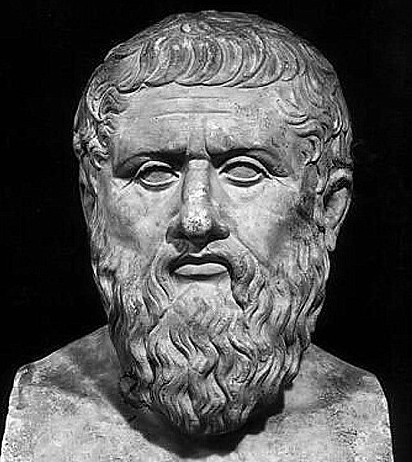
PLATO: The Psychological Problem

Reference: The Story of Philosophy

Note: The original Text is provided below.
Previous / Next

.

Summary

.

Comments

.

Original Text

But behind these political problems lies the nature of man; to understand politics, we must, unfortunately, understand psychology. “Like man, like state” (575); “governments vary as the characters of men vary; … states are made out of the human natures which are in them” (544); the state is what it is because its citizens are what they are. Therefore we need not expect to have better states until we have better men; till then all changes will leave every essential thing unchanged. “How charming people are!—always doctoring, increasing and complicating their disorders, fancying they will be cured by some nostrum which somebody advises them to try, never getting better, but always growing worse. … Are they not as good as a play, trying their hand at legislation, and imagining that by reforms they will make an end to the dishonesties and rascalities of mankind—not knowing that in reality they are cutting away at the heads of a hydra?” (425). 

Let us examine for a moment the human material with which political philosophy must deal. 

Human behavior, says Plato, flows from three main sources; desire, emotion, and knowledge. Desire, appetite, impulse, instinct—these are one; emotion, spirit, ambition, courage—these are one; knowledge, thought, intellect, reason—these are one. Desire has its seat in the loins; it is a bursting reservoir of energy, fundamentally sexual. Emotion has its seat in the heart, in the flow and force of the blood; it is the organic resonance of experience and desire. Knowledge has its seat in the head; it is the eye of desire and can become the pilot of the soul. 

These powers and qualities are all in all men, but in divers degrees. Some men are but the embodiment of desire; restless and acquisitive souls, who are absorbed in material quests and quarrels, who burn with lust of luxuries and show, and who rate their gains always as naught compared with their ever-receding goals: these are the men who dominate and manipulate industry. But there are others who are temples of feeling and courage, who care not so much what they fight for, as for victory “in and for itself”; they are pugnacious rather than acquisitive; their pride is in power rather than in possession, their joy is on the battle-field rather than in the mart: these are the men who make the armies and navies of the world. And last are the few whose delight is in meditation and understanding; who yearn not for goods, nor for victory, but for knowledge; who leave both market and battle-field to lose themselves in the quiet clarity of secluded thought; whose will is a light rather than a fire, whose haven is not power but truth: these are the men of wisdom, who stand aside unused by the world. 

Now just as effective individual action implies that desire, though warmed with emotion, is guided by knowledge; so in the perfect state the industrial forces would produce but they would not rule; the military forces would protect but they would not rule; the forces of knowledge and science and philosophy would be nourished and protected, and they would rule. Unguided by knowledge, the people are a multitude without order, like desires in disarray; the people need the guidance of philosophers as desires need the enlightenment of knowledge. “Ruin comes when the trader, whose heart is lifted up by wealth, becomes ruler” (484) ; or when the general uses his army to establish a military dictatorship. The producer is at his best in the economic field, the warrior is at his best in battle; they are both at their worst in public office; and in their crude hands politics submerges statesmanship. For statesmanship is a science and an art; one must have lived for it and been long prepared. Only a philosopher-king is fit to guide a nation. “Until philosophers are kings, or the kings and princes of this world have the spirit and power of philosophy, and wisdom and political leadership meet in the same man, … cities will never cease from ill, nor the human race” (478). 

This is the key-stone of the arch of Plato’s thought. 

.

PLATO: The Political Problem

Image result for The Political Problem

Reference: The Story of Philosophy

Note: The original Text is provided below.
Previous / Next

.

Summary

.

Comments

.

Original Text

Justice would be a simple matter, says Plato, if men were simple; an anarchist communism would suffice. For a moment he gives his imagination reign: 

First, then, let us consider what will be their way of life. … Will they not produce corn, and wine, and clothes, and shoes, and build houses for themselves? And when they are housed they will work in summer commonly stripped and barefoot, but in winter substantially clothed and shod. They will feed on barley and wheat, baking the wheat and kneading the flour, making noble puddings and loaves; these they will serve up on a mat of reed or clean leaves, themselves reclining the while upon beds of yew or myrtle boughs. And they and their children will feast, drinking of the wine which they have made, wearing garlands on their heads, and having the praises of the gods on their lips, living in sweet society, and having a care that their families do not exceed their means; for they will have an eye to poverty or war. … Of course they will have a relish—salt, and olives, and cheese, and onions, and cabbages or other country herbs which are fit for boiling; and we shall give them a dessert of figs, and pulse, and beans, and myrtle-berries, and beech-nuts, which they will roast at the fire, drinking in moderation. And with such a diet they may be expected to live in peace to a good old age, and bequeath a similar life to their children after them (372). 

Observe here the passing reference to the control of population (by infanticide, presumably), ‘to vegetarianism, and to a ”return to nature,” to the primitive simplicity which Hebrew legend pictures in the Garden of Eden. The whole has the sound of Diogenes the “Cynic,” who, as the epithet implied, thought we should “turn and live with the animals, they are so placid and self-contained”; and for a moment we are likely to classify Plato with St. Simon and Fourier and William Morris and Tolstoi. But he is a little more skeptical than these men of kindly faith; he passes quietly on to the question, Why is it that such a simple paradise as he has described never comes?—why is it that these Utopias never arrive upon the map?

He answers, because of greed and luxury. Men are not content with a simple life: they are acquisitive, ambitious, competitive, and jealous; they soon tire of what they have, and pine for what they have not; and they seldom desire anything unless it belongs to others. The result is the encroachment of one group upon the territory of another, the rivalry of groups for the resources of the soil, and then war. Trade and finance develop, and bring new class-divisions. “Any ordinary city is in fact two cities, one the city of the poor, the other of the rich, each at war with the other; and in either division there are smaller ones—you would make a great mistake if you treated them as single states” (423). A mercantile bourgeoisie arises, whose members seek social position through wealth and conspicuous consumption: “they will spend large sums of money on their wives” (548). These changes in the distribution of wealth produce political changes: as the wealth of the merchant over-reaches that of the land-owner, aristocracy gives way to a plutocratic oligarchy—wealthy traders and bankers rule the state. Then statesmanship, which is the coordination of social forces and the adjustment of policy to growth, is replaced by politics, which is the strategy of party and the lust for the spoils of office. 

Every form of government tends to perish by excess of its basic principle. Aristocracy ruins itself by limiting too narrowly the circle within which power is confined; oligarchy ruins itself by the incautious scramble for immediate wealth. In either case the end is revolution. When revolution comes it may seem to arise from little causes and petty whims; but though it may spring from slight occasions it is the precipitate result of grave and accumulated wrongs; when a body is weakened by neglected ills,· the merest exposure may bring serious disease (556). “Then democracy comes: the poor overcome their opponents, slaughtering some and banishing the rest; and give to the people an equal share of freedom: and power” (557). 

But even democracy ruins itself by excess—of democracy. Its basic principle is the equal right of all to hold office and determine public policy. This is at first glance a delightful arrangement; it becomes disastrous because the people are not properly equipped by education to select the best rulers and the wisest courses (588). “As to the people they have no understanding, and only repeat what their rulers are pleased to tell them” (Protagoras, 317); to get a doctrine accepted or rejected it is only necessary to have it praised or ridiculed in a popular play (a hit, no doubt, at Aristophanes, whose comedies attacked almost every new idea). Mob-rule is a rough sea for the ship of state to ride; every wind of oratory stirs up the waters and deflects the course. The upshot of such a democracy is tyranny or autocracy; the crowd so loves flattery, it is so “hungry for honey,” that at last the wiliest and most unscrupulous flatterer, calling himself the “protector of the people” rises to supreme power (565). (Consider the history of Rome.) 

The more Plato thinks of it, the more astounded he is at the folly of leaving to mob caprice and gullibility the selection of political officials—not to speak of leaving it to those shady and wealth-serving strategists who pull the oligarchic wires behind the democratic stage. Plato complains that whereas in simpler matters—like shoe-making—we think only a specially-trained person will serve our purpose, in politics we presume that every one who knows how to get votes knows how to administer a city or a state. When we are ill: we call for a trained physician, whose degree is a guarantee of specific preparation and technical competence—we do not ask for the handsomest physician, or the most eloquent one; well then, when the whole state is ill should we not look for the service and guidance of the wisest and the best? To devise a method of barring incompetence and knavery from public office, and of selecting and preparing the best to rule for the common good—that is the problem of political philosophy. 

.

PLATO: The Ethical Problem

Reference: The Story of Philosophy

Note: The original Text is provided below.
Previous / Next

.

Summary

.

Comments

.

Original Text

The discussion takes place in the house of Cephalus, a wealthy aristocrat. In the group are Glaucon and Adeimantus, brothers of Plato; and Thrasymachus, a gruff and excitable Sophist. Socrates, who serves as the mouthpiece of Plato in the dialogue, asks Cephalus: 

“What do you consider to be the greatest blessing which you have reaped from wealth?” 

Cephalus answers that wealth is a blessing to him chiefly because it enables him to be generous and honest and just. Socrates, after his sly fashion, asks him just what he means by justice; and therewith lets loose the dogs of philosophic war. For nothing is so difficult as definition, nor anything so severe a test and exercise of mental clarity and skill. Socrates finds it a simple matter to destroy one after another the definitions offered him; until at last Thrasymachus, less patient than the rest, breaks out “with a roar”:

“What folly has possessed you, Socrates? And why do you others all drop down at one another’s feet in this silly way? I say that if you want to know what justice is, you should answer and not ask, and shouldn’t pride yourself on refuting others. … For there are many who can ask but cannot answer” (336). 

Socrates is not frightened; he continues to ask rather than answer; and after a minute of parry and thrust he provokes the unwary Thrasymachus to commit himself to a definition: 

Listen, then,” says the angry Sophist, “I proclaim that might is right, and justice is the interest of the stronger. … The different forms of government make laws, democratic, aristocratic, or autocratic, with a view to their respective interests; and these laws, so made by them to serve their interests, they deliver to their subjects as ‘justice,’ and punish as ‘unjust’ anyone who transgresses them. … I am speaking of injustice on a large scale; and my meaning will be most clearly seen in autocracy, which by fraud and force takes away the property of others, not retail but wholesale. Now when a man has taken away the money of the citizens and made slaves of them, then, instead of swindler and thief he is called happy and blessed by all. For injustice is censured because those who censure it are afraid of suffering, and not from any scruple they might have of doing injustice themselves” (338-44). 

This, of course, is the doctrine which our own day more or less correctly associates with the name of Nietzsche. “Verily I laughed many a time over the weaklings who thought themselves good because they had lame paws.” Stirner expressed the idea briefly when he said that “a handful of might is better than a bagful of right.” Perhaps nowhere in the history of philosophy is the doctrine better formulated than by Plato himself in another dialogue, Gorgias, (483 f), where the Sophist Callicles denounces morality as an invention of the weak to neutralize the strength of the strong. 

They distribute praise and censure with a view to their own interests; they say that dishonesty is shameful and unjust—meaning by dishonesty the desire to have more than their neighbors; for knowing their own inferiority, they would be only too glad to have equality. … But if there were a man who had sufficient force (enter the Superman), he would shake off and break through and escape from all this; he would trample under foot all our formulas and spells and charms, and all our laws, that sin against nature. … He who would truly live ought to allow his desires to wax to the uttermost; but when they have grown to their greatest he should have courage and intelligence to minister to them, and to satisfy all his longings. And this I affirm to be natural justice and nobility. But the many cannot do this; and therefore they blame such persons, because they are ashamed of their own inability, which they desire to conceal; and hence they call intemperance base. … They enslave the nobler natures, and they praise justice only because they are cowards. 

This justice is a morality not for men but for foot-men (oude gar andros all’ andrapodou tinos) ; it is a slave-morality, not a hero-morality; the real virtues of a man are courage (andreia) and intelligence (phronesis).

Perhaps this hard “immoralism” reflects the development of imperialism in the foreign policy of Athens, and its ruthless treatment of weaker states. “Your empire,” said Pericles in the oration which Thucydides invents for him, “is based on your own strength rather than the good will of your subjects.” And the same historian reports the Athenian envoys coercing Melos into joining Athens in the war against Sparta: “You know as well as we do that right, as the world goes, is only in question for equals in power; the strong do what they can, and the weak suffer what they must.” We have here the fundamental problem of ethics, the crux of the theory of moral conduct. What is justice?—shall we seek righteousness, or shall we seek power?—is it better to be good, or to be strong?

How does Socrates—i.e., Plato—meet the challenge of this theory? At first he does not meet it at all. He points out that justice is a relation among individuals, depending on social organization; and that in consequence it can be studied better as part of the structure of a community than as a quality of personal conduct. If, he suggests, we can picture a just state, we shall be in a better position to describe a just individual. Plato excuses himself for this digression on the score that in testing a man’s vision we make him read first large type, then smaller; so, he argues, it is easier to analyze justice on a large scale than on the small scale of individual behavior. But we need not be deceived: in truth the Master is patching two books together, and uses the argument as a seam. He wishes not only to discuss the problems of personal morality, but the problems of social and political reconstruction as well. He has a Utopia up his sleeve, and is resolved to produce it. It is easy to forgive him, for the digression forms the core and value of his book. 

.

PLATO: The Preparation of Plato

Reference: The Story of Philosophy

Note: The original Text is provided below.
Previous / Next

.

Summary

.

Comments

.

Original Text

Plato’s meeting with Socrates had been a turning point in his life. He had been brought up in comfort, and perhaps in wealth; he was a handsome and vigorous youth—called Plato, it is said, because of the breadth of his shoulders ; he had excelled as a soldier, and had twice won prizes at the Isthmian games. Philosophers are not apt to develop out of such an adolescence. But Plato’s subtle soul had found a new joy in the”dialectic”game of Socrates; it was a delight to behold the master deflating dogmas and puncturing presumptions with the sharp point of his questions; Plato entered into this sport as he had in a coarser kind of wrestling; and under the guidance of the old “gad-fly” (as Socrates called himself) he passed from mere debate to careful analysis and fruitful discussion. He became a very passionate lover of wisdom, and of his teacher. “I thank God,” he used to say, “that I was born Greek and not barbarian, freeman and not slave, man and not woman; but above all, that I was born in the age of Socrates.” 

He was twenty-eight when the master died; and this tragic end of a quiet life left its mark on every phase of the pupil’s thought. It filled him with such a scorn of democracy, such a hatred of the mob, as even his aristocratic lineage and breeding had hardly engendered in him; it led him to a Catonic resolve that democracy must be destroyed, to be replaced by the rule of the wisest and the best. It became the absorbing problem of his life to find a method whereby the wisest and the best might be discovered, and then enabled and persuaded to rule. 

Meanwhile his efforts to save Socrates had marked him out for suspicion by the democratic leaders; his friends urged that Athens was unsafe for him, that it was an admirably propitious moment for him to see the world. And so, in that year 399 B.C., he set out. Where he went we cannot for certain say; there is a merry war of the authorities for every turn of his route. He seems to have gone first to Egypt; and was somewhat shocked to hear from the priestly class which ruled that land, that Greece was an infant-state, without stabilizing traditions or profound culture, not yet therefore to be taken seriously by these sphinxly pundits of the Nile. But nothing so educates us as a shock; the memory of this learned caste, theocratically ruling a static agricultural people, remained alive in Plato’s thought, and played its part in writing his Utopia. And then off he sailed to Sicily, and to Italy; there he joined for a time the school or sect which the great Pythagoras had founded; and once again his susceptible mind was marked with the memory of a small group of men set aside for scholarship and rule, living a plain life despite the possession of power. Twelve years he wandered, imbibing wisdom from every source, sitting at every shrine, tasting every creed. Some would have it that he went to Judea and was moulded for a while by the tradition of the almost socialistic prophets; and even that he found his way to the banks of the Ganges, and learned the mystic meditations of the Hindus. We do not know. 

He returned to Athens in 387 B.C., a man of forty now, ripened to maturity by the variety of many peoples and the wisdom of many lands. He had lost a little of the hot enthusiasms of youth, but he had gained a perspective of thought in which every extreme was seen as a half-truth, and the many aspects of every problem blended into a distributive justice to every facet of the truth. He had knowledge, and he had art; for once the philosopher and the poet lived in one soul; and he created for himself a medium of expression in which both beauty and truth might find room and play—the dialogue. Never before, we may believe, had philosophy assumed so brilliant a garb; and surely never since. Even in translation this style shines and sparkles and leaps and bubbles over. “Plato,” says one of his lovers, Shelley, “exhibits the rare union of close and subtle logic with the Pythian enthusiasm of poetry, melted by the splendor and harmony of his periods into one irresistible stream of musical impressions, which hurry the persuasions onward as in a breathless career.” It was not for nothing that the young philosopher had begun as a dramatist.

The difficulty in understanding Plato lies precisely in this intoxicating mixture of philosophy and poetry, of science and art; we cannot always tell in which character of the dialogue the author speaks, nor in which form; whether he is literal or speaks in metaphor, whether he jests or is in earnest. His love of jest and irony and myth leaves us at times baffled; almost we could say of him that he did not teach except in parables. “Shall I, as an older person, speak to you, as younger men, in apologue or myth?” asks his Protagoras. These dialogues, we are told, were written by Plato for the general reading public of his day: by their conversational method, their lively war of pros and cons, and their gradual development and frequent repetition of every important argument, they were explicitly adapted (obscure though they may seem to us now) to the understanding of the man who must taste philosophy as an occasional luxury, and who is compelled by the brevity of life to read as he who runs may read. Therefore we must be prepared to find in these dialogues much that is playful and metaphorical; much that is unintelligible except to scholars learned in the social and literary minutiae of Plato’s time; much that today will seem irrelevant and fanciful, but might well have served as the very sauce and flavor by which a heavy dish of thought was made digestible for minds unused to philosophic fare. 

Let us confess, too, that Plato has in sufficient abundance the qualities which he condemns. He inveighs against poets and their myths, and proceeds to add one to the number of poets and hundreds to the number of myths. He complains of the priests (who go about preaching hell and offering redemption from it for a consideration—cf. The Republic, 364), but he himself is a priest, a theologian, a preacher, a super-moralist, a Savonarola denouncing art and inviting vanities to the fire. He acknowledges, Shakespeare-like, that “comparisons are slippery” (Sophist, 231,) but he slips out of one into another and another and another; he condemns the Sophists as phrase-mongering disputants, but he himself is not above chopping logic like a sophomore. Faguet parodies him: “The whole is greater than the part?—Surely.—And the part is less than the whole?—Yes… Therefore, clearly, philosophers should rule the state?—What is that?—It is evident; let us go over it again.”

But this is the worst that we can say of him; and after it is said, the Dialogues remain one of the priceless treasures of the world. The best of them, The Republic, is a complete treatise in itself, Plato reduced to a book; here we shall find his metaphysics, his theology, his ethics, his psychology, his pedagogy, his politics, his theory of art. Here we shall find problems reeking with modernity and contemporary savor: communism and socialism, feminism and birth-control and eugenics, Nietzschean problems of morality and aristocracy, Rousseauian problems of return to nature and libertarian education, Bergsonian elan vital and Freudian psychoanalysis—everything is here. It is a feast for the elite, served by an unstinting host. “Plato is philosophy, and philosophy Plato,” says Emerson; and awards to The Republic the words of Omar about the Koran: “Burn the libraries, for their value is in this book.” 

Let us study The Republic

.

The Wave Function

In Schrodinger’s wave equation for the electron, the wave function (ψ) could represent the very substance of energy that thickens as frequency increases. Here the “center of mass” of the electron itself is no longer a point but dispersed. But the “center of mass” of the whole atom can be a point.

I do not see Quantum Mechanics as a radical break from the past. In the past a particle, such as, an atom, was perceived as a solid billiard ball whose internal structure was a black box. Quantum mechanics is simply an advance in science that is looking more closely at that black box. The mass of an atom is concentrated in the nucleus, except for some mass scattered around the nucleus in the form of the electrons. This shows that the mass “dilutes” into electromagnetic substance. The mathematics that is trying to explain this is complicated.

The mathematics of wave-particle duality of De Broglie and the Schrodinger’s equation is based on the analogy between the behavior of light of very short wavelength and the behavior of ordinary particles of matter. This means that matter could be an extension of the upper end of the electromagnetic spectrum.

The new discovery is that that the “center of mass” of a particle like electron cannot be determined precisely because it is dispersed. Classical Newtonian mechanics is based on precise point-like “center of mass.” But at very small scales, a “particle” seems to have a more diffused picture, and classical mechanics can no longer be used. At still smaller scales, we may find the nucleons to be diffused as well.

The location of a particle is determined by the location of its “center of mass”. If this location cannot be determined exactly, and is described in terms of probability, then the “center of mass” itself is dispersed. This gives the picture of a particle of variable energy density.

The Schrodinger’s equation treats electron as if it is a “wave” made of thick elastic fluid. This wave is not moving in some medium. It is the “medium” itself moving as a wave. It becomes “thicker” with higher amplitude. The amplitude is a measure of its thickness. The rising and falling “thickness” is made up of rising and falling frequency. The spectral line is the peak of this frequency. It is like a resonance; but this is a traveling “resonance”. The electron is an energy resonance moving around the nucleus of an atom.

In classical mechanics, the density of matter means the “concentration of atoms” in a certain volume. The density of individual atomic particle is determined by its mass number in the periodic table. The density of individual sub-atomic particle is then determined by its wave function. Beyond the density of the sub-atomic particle is the energy density of the electromagnetic quantum, which is based on simple frequency.

.