Reference: Tertium Organum
NOTE: Text in color contains my comments.
.
Chapter 13: Life
The apparent and hidden side of life. Positivism as the study of the phenomenal side of life. Of what does the “two-dimensionality” of positive philosophy consist? The regarding of everything upon a single plane, in one physical sequence. The streams which flow underneath the earth. What can the study of life, as a phenomenon, yield? The artificial world which science erects for itself. The unreality of finished and isolated phenomena. The new apprehension of the world.
.
There exist visible and hidden causes of phenomena; there exist also visible and hidden effects.
Let us consider some one example.
In all textbooks on the history of literature we are told that in its time Goethe’s Werther provoked an epidemic of suicides.
What did provoke these suicides?
Let us imagine that some “scientist” appears, who, being interested in the fact of the increase of suicides, begins to study the first edition of Werther according to the method of exact, positive science. He weighs the book, measures it by the most precise instruments, notes the number of its pages, makes a chemical analysis of the paper and the ink, counts the number of lines on every page, the number of letters, and even how many times the letter A is repeated, how many times the letter B, and how many times the interrogation mark is used, and so on. In other words he does everything that the pious Mohammedan performs with relation to the Koran of Mohammed, and on the basis of his investigations writes a treatise on the relation of the letter A of the German alphabet to suicide.
Or let us imagine another scientist who studies the history of painting, and deciding to put it on a scientific basis, starts a lengthy series of analyses of the pigment used in the pictures of famous painters in order to discover the causes of the different impressions produced upon the beholder by different pictures.
Imagine a savage studying a watch. Let us admit that he is a wise and crafty savage. He takes the watch apart and counts all its wheels and screws, counts the number of teeth in each gear, finds out its size and thickness. The only thing that he does not know is what all these things are for. He does not know that the hand completes the circuit of the dial in half of twenty-four hours, i.e., that it is possible to tell time by means of a watch.
All this is “positivism.”
We are too familiar with “positivistic” methods, and so fail to realize that they end in absurdities and that if we are seeking to explain the meaning of anything, they do not lead to the goal at all.
The difficulty is that for the explanation of the meaning positivism is of no use. For it, nature is a closed book of which it studies the appearance only.
In the matter of the study of the operations of nature, the positive methods have achieved much, as is proven by the innumerable successes of modern technics, including the conquest of the air. But everything in the world has its own definite sphere of action. Positivism is very good when it seeks an answer to the question of how something operates under given conditions; but when it makes the attempt to get outside of its definite conditions (space, time, causation), or presumes to affirm that nothing exists outside of these given conditions, then it is transcending its own proper sphere.
It is true that the more serious positive thinkers deny the possibility of including in “positive investigation” the question of why and what for. But as a matter of fact the positive standpoint is not the only possible one. The usual mistake of positivism consists in its not seeing anything except itself — it either considers everything as possible to it, or considers as generally impossible much that is entirely possible, but not for positive inquiry.
Humanity will never cease to search, however, for answer to the questions why, and wherefore.
The positivistic scientist finds himself in the presence of nature almost in the position of a savage in a library of rare and valuable books. For a savage a book is a thing of definite size and weight. However long he may ask himself what purpose this strange thing serves, he will never discover the truth from its appearance; and the contents of the book will remain for him the incomprehensible noumenon. In like manner the contents of nature are incomprehensible to the positivistic scientist.
But if a man knows of the existence of the contents of the book — the noumenon of life — if he knows that a mysterious meaning is hidden under visible phenomena, there is the possibility that in the long run he will discover the contents.
For success in this it is necessary to grasp the idea of the inner contents, i.e, the meaning of the thing in itself.
The scientist who discovers little tablets with hieroglyphics, or wedgeshaped inscriptions in an unknown language, deciphers and reads them after great labor. And in order to accomplish this he needs only one thing: it is necessary for him to know that these little signs represent an inscription. As long as he regards them simply as an ornament, as the outside embellishment of little tablets, or as an accidental tracing without meaning — up to that time their meaning and significance will be closed to him absolutely. But let him only assume the existence of that meaning and the possibility of its comprehension will be already within sight.
No secret cipher exists which cannot be solved without the aid of any key. But it is necessary to know that it is a cipher. This is the first and necessary condition. Lacking this it is impossible to accomplish anything.
All visible phenomenon has underlying explanations for questions, such as, why and what for. Such details make the understanding of the phenomenon complete.
.
The idea of the existence of the visible and the hidden sides of life was known to philosophy long ago. Phenomena were regarded as only one aspect of the world, and as being infinitely small compared to the hidden aspect — seeming, not existing really, arising in consciousness at the moment of its contact with the real world. Another side, noumena, was recognized as really existing in itself, but inaccessible for our receptivity.
But there is no greater error than to regard the world as divided into phenomena and noumena — to conceive of phenomena and noumena apart from one another, and susceptible of being separately known. This is philosophic illiteracy, which shows itself most clearly in the dualistic spiritistic theories. The division into phenomena and noumena exists only in our minds. The “phenomenal world” is simply our incorrect perception of the world.
As Carl DuPrel has said, “The world beyond is this world, only perceived strangely.” It would be more accurate to say, that this world is the world beyond perceived strangely.
Kant’s idea is quite correct, that the study of the phenomenal side of the world will not bring us any nearer to the understanding of “things-in-themselves.” The “thing-in-itself” — that is the thing as it exists in itself, independently of us. The “phenomenon of the thing” — that is the thing in such semblance as we perceive it.
The example of a book in the hands of an illiterate savage shows us quite clearly that it is sufficient not to know about the existence of the noumenon of a thing (the contents of the book in this case) in order that it shall not manifest itself in phenomena. On the other hand, the knowledge of its existence is sufficient to make possible its discovery with the aid of the very phenomena which, without the knowledge of the noumenon, would be perfectly useless.
Just as it is impossible for a savage to attain to an understanding of the nature of a watch by a study of its phenomenal side — the number of wheels, and the number of teeth in each gear — so also for the positivistic scientist, studying the external, manifesting side of life, its secret raison d’etre and the aim of separate manifestations will be forever hidden.
To the savage the watch will be an extremely interesting, complicated, but entirely useless toy. Somewhat after this manner a man appears to the scientist-materialist — a mechanism infinitely more complex, but equally unknown as regards the purpose for which it exists and the manner of its creation.
We pictured to ourselves how incomprehensible the functions of a candle and of a coin would be for a plane-man, studying two similar circles on his plane. In like manner the functions of a man are incomprehensible to the scientist, studying him as a mechanism. The reason for this is clear. It is because the coin and the candle are not two similar circles, but two different objects, having an entirely different use and meaning in that world which is relatively higher than the plane — and man is not a mechanism, but something having an aim and meaning in the world relatively higher than the visible one.
The functions of a candle and of a coin in our world are for the imaginary plane-man an inaccessible noumenon. It is evident that the phenomenon of a circle cannot give any understanding of the function of a candle, and its difference from the function of a coin. But two-dimensional knowledge exists not alone on the plane. Materialistic thought tries to apply it to real life. A curious result follows, the true meaning of which is, unhappily, incomprehensible to many people. One of such applications is “the economic man” — this is quite clearly the two-dimensional and flat being moving in two directions — those of production and consumption — i.e., living upon the plane of production-consumption. How is it possible to imagine man in general as such an obviously artificial being? And how is it possible to hope to understand the laws of the life of man, with his complex spiritual aspirations and his great impulse to know, to understand everything around about him and within himself — by studying the imaginary laws of the imaginary being upon an imaginary plane? The inventors of this theory alone possess the secret of the answer to this question. But the economic theory of human life attracts men as do all simple theories giving a short answer to a series of complicated questions. And we are ourselves too entangled in materialistic theories to see anything beyond them.
It is an error to regard the world as divided into phenomena and noumena. The “thing-in-itself” is the complete awareness of the thing when one is not identifying with it. Man cannot be understood just by his appearance or by materialistic economic theories.
.
Positivistic science does not really deny the theory of phenomena and noumena, it only affirms, in opposition to Kant, that in studying phenomena we are gradually approaching to noumena. The noumena of phenomena science considers to be the motion of atoms and the ether, or the vibrations of electrons; it conceives of the universe as a whirl of mechanical motion or the field of manifestation of electro-magnetic energy taking on the “phenomenal tint” for us on their reception by the organs of sense.
“Positivism” affirms that the phenomena of life and psychic phenomena are simply the functions of physical phenomena, that without physical phenomena the phenomena of life, thought and emotion cannot exist and that they represent only certain complex combinations of the foregoing; and furthermore that all these three kinds of phenomena are one and the same thing in substance — and the higher, i.e., the phenomena of life and of consciousness, are only different expressions of the lower, i.e., of one and the same physico-mechanical or electro-magnetic energy.
But to all this it is possible to answer one thing. If it were true it would have been proven long ago. Nothing is easier than to prove the energetic hypothesis of life and the psyche. Just create life and thought by the mechanical method. Materialism and energetics are those “obvious” theories which cannot be true without proofs, because they cannot not have proofs if they contain even a little grain of truth.
But there are no proofs at the disposition of these theories; quite the reverse: the infinitely greater potentiality of the phenomena of life and the psyche compared with physical phenomena assures us of the exact opposite.
The simple fact, above shown, of the enormous liberating, unbinding force of psychic phenomena is sufficient to establish quite really and firmly the problem of the world of the hidden.
And the world of the hidden cannot be the world of unconscious mechanical motion, of unconscious development of electro-magnetic forces. The positivistic theory admits the possibility of explaining the higher through the lower, the invisible through the visible. But it has been shown at the very beginning that this is the explanation of one unknown by another unknown. There is still less justification for explaining the known through the unknown. Yet that “lower” (matter and motion) through which the positivists strive to explain the “higher” (life and thought) is itself unknown. Consequently it is impossible to explain and define anything else in terms of it, while the higher, i.e., the thought, this is our sole known: it is this alone that we do know, that we are conscious of in ourselves, that we can neither mistake nor doubt. And if thought can evoke or unbind physical energy, and motion can never create or unbind thought (out of a revolving wheel no thought ever arose) so of course we shall strive to define, not the higher in terms of the lower, but the lower in terms of the higher. If the invisible, like the contents of a book or the purpose of a watch, defines by itself the visible, so also we shall endeavor to understand not the visible, but the invisible.
Starting from a false assumption concerning the mechanicality of the noumenal side of nature, positive science, upon which the view of the world of the intelligent majority of contemporary humanity is founded, makes still another mistake in regard to cause and effect, or the law of functions — that is, it mistakes what is cause, and what is effect.
A postulate that underlies the idea of matter is not materialistic itself. So the scientific theory, which says that the phenomena of life and psychic phenomena are simply the functions of physical phenomena, that without physical phenomena the phenomena of life, thought and emotion cannot exist, does not really make sense. The whole spectrum of substance (matter, radiation, thought) must come about together.
It will be interesting to understand the transition from spiritual (thought) to physical (matter), or physical (matter) to spiritual (thought), on the spectrum of substance. This transition must lie in the domain of radiation because spiritual radiation exists as aura around the body; whereas, we are familiar with light as physical radiation.
.
Just as the two-dimensional plane-man thinks of all phenomena touching his consciousness as lying on one plane, so the positivistic method strives to interpret upon one plane all phenomena of different orders, i.e., to interpret all visible phenomena as the effects of antecedent visible phenomena, and as the inevitable cause of subsequent visible phenomena. In other words, it sees in causal and functional interdependence merely phenomena proceeding upon the surface, and studies the visible world, or the phenomena of the visible world, not admitting that causes can enter into this world which are not contained in it or that the phenomena of this world can possess functions extending beyond it.
But this could be true only in case there were no phenomena of life and of thought in the world, or if the phenomena of life and thought were really derivatives from physical phenomena, and did not possess infinitely greater latent force than they. Then only should we have the right to consider the chains of phenomena in their physical or visible sequence alone, as positivistic philosophy does. But taking into consideration the phenomena of life and thought we shall inevitably recognize that the chain of phenomena often translates itself from a sequence purely physical to a biological sequence, i.e., one in which there is much of the hidden and invisible to us — or to a psychical sequence where there is even more of the hidden; but during reverse translations from biological and psychical spheres into physical sequences actions proceed often, if not always, from regions which are hidden from us; i.e., the cause of the visible is the invisible. In consequence of this we must admit that it is impossible to consider the chains of sequences in the world of physical phenomena only. When such a sequence touches the life of a man or that of a human society, we perceive clearly that it escapes from the “physical sphere” and returns into it. Regarding the matter from this standpoint we see that, just as in the life of one man and in the life of a society there are many streams, at times appearing on the surface and spouting up in boisterous torrents, and at other times disappearing deep underground, hidden from view, but only waiting for their moment to appear again on the surface, so do we observe in the world continuous chains of phenomena and we perceive how these chains shift from one order of phenomena to another without a break. We observe how the phenomena of consciousness — thoughts, feelings, desires — are accompanied by physiological phenomena — creating them perhaps —- and inaugurate a series of purely physical phenomena; and we see how physical phenomena, becoming the object of sensations of sight, hearing, touch, smell and the like, induce physiological phenomena, and then psychological. But looking at life from that side, we see only physical phenomena, and having assured ourselves that it is the only reality we may not notice the others at all. Herein appears the enormous power of suggestion in current ideas. To a sincere positivist any metaphysical argument proving the unreality of matter or energy seems sophistry. It strikes him as a thing unnecessary, disagreeable, hindering a logical train of thought, an assault without aim or meaning on that which in his opinion is firmly established, alone immutable, lying at the foundation of everything. He vexedly fans away from himself all “idealistic” or “mystical” theories as he would a buzzing mosquito.
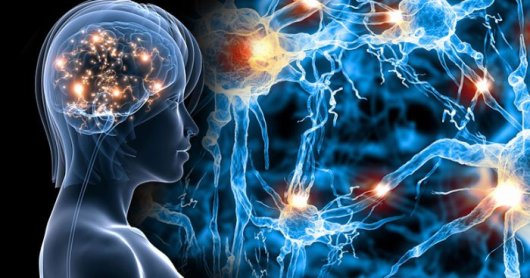
But the fact is that thought and energy are different in substance and cannot be one and the same thing, because they are different sides of one and the same thing. For if we open the cranium of a living man in order to observe all the vibrations of the cells of the gray matter of the brain, and all the quivering white fibres, in spite of everything there will be merely motion, i.e., the manifestation of energy, and thought will remain somewhere beyond the limits of investigation, retreating like a shadow at every approach. The “positivist,” when he begins to realize this, feels that the ground is quaking underneath his feet, feels that by his method he will never approach to the thought. Then he sees clearly the necessity for a new method. As soon as he begins to think about it he begins quite unexpectedly to notice things around him which he did not see before. His eyes begin to open to that which he did not wish to see before. The walls which he had erected around himself begin to fall one after another, and behind the falling walls infinite horizons of possible knowledge, hitherto undreamed of, unroll before him.
Thereupon he completely alters his view of everything surrounding him. He understands that the visible is produced by the invisible; and that without understanding the invisible it is impossible to understand the visible. His “positivism” begins to totter and, if he is a man with a bold thought, then in some splendid moment he will perceive those things which he was wont to regard as real and true to be unreal and false, and those things regarded as false to be real and true.
First of all he will see that manifested physical phenomena often hide themselves, like a stream that has gone underground. Yet they do not disappear altogether, but continue to exist in latent form in some minds, in someone’s memory, in the words or books of someone, just as the future harvest is latent in the seeds. And thereafter they again burst into light; out of this latent state they come into an apparent one, making a roar, reverberation, motion.
We observe such transitions of the invisible into the visible in the personal life of man, in the life of peoples, and in the history of humanity. These chains of events go on continuously, interweaving among themselves, entering one into another, sometimes hidden from our eyes, and sometimes visible.
I find an admirable description of this idea in the chapter on “Karma” in Light on the Path by Mabel Collins.
Consider with me that the individual existence is a rope which stretches from the infinite to the infinite, and has no end and no commencement, neither is it capable of being broken. This rope is formed of innumerable fine threads, which, lying closely together, form its thickness . . . and remember that the threads are living — are like electric wires; more, are like quivering nerves. . . .
But eventually the long strands, the living threads which in their unbroken continuity form the individual, pass out of the shadow into the shine. . . .
This illustration presents but a small portion — a single side of the truth: it is less than a fragment. Yet dwell on it; by its aid you may be led to perceive more. What it is necessary first to understand is not that the future is formed by any separate acts of the present, but that the whole of the future is in unbroken continuity with the present, as the present is with the past. In the plane, from one point of view, the illustration of the rope is correct.
The passages quoted show us that the idea of karma, developed in remote antiquity by Hindu philosophy, embodies the idea of the unbroken consecutiveness of phenomena. Each phenomenon, no matter how insignificant, is a link of an infinite and unbroken chain, extending from the past into the future, passing from one sphere into another, sometimes manifesting as physical phenomena, sometimes hiding in the phenomena of consciousness.
If we regard karma from the standpoint of our theory of time and space of many dimensions, then the connection between distant events will cease to be wonderful and incomprehensible. If events most distant from one another in relation to time touch one another in the fourth dimension, this means that they are proceeding simultaneously as cause and effect, and the walls dividing them are just an illusion which our weak intellect cannot conquer. Things are united, not by time, but by an inner connection, an inner correlation. And time cannot separate those things which are inwardly near, following one from another. Certain other properties of these things force us to think of them as being separated by the ocean of time. But we know that this ocean does not exist in reality and we begin to understand how and why the events of one millennium can directly influence the events of another millennium.
The hidden activity of events becomes comprehensible to us. We understand that the events must become hidden in order to preserve for us the illusion of time.
We know this — know that the events of today were the ideas and feelings of yesterday — and that the events of tomorrow are lying in someone’s irritation, in someone’s hunger, in someone’s suffering, and possibly still more in someone’s imagination, in someone’s fantasy, in someone’s dreams.
We know all this, yet nevertheless our “positive” science obstinately seeks to establish correlations between visible phenomena only, i.e., to regard each visible or physical phenomenon as the effect of some other physical phenomenon only, which is also visible.
This tendency to regard everything upon one plane, the unwillingness to recognize anything outside of that plane, horribly narrows our view of life, prevents our grasping it in its entirety and taken in conjunction with the materialistic attempts to account for the higher as a function of the lower, appears as the principal impediment to the development of our knowledge, the chief cause of the dissatisfaction with science, the complaints about the bankruptcy of science, and its actual bankruptcy in many of its relations.
The dissatisfaction with science is perfectly well grounded, and the complaints about its insolvency are entirely just, because science has really entered a cul de sac out of which there is no escape, and the official recognition of the fact that the direction it has taken is entirely the wrong one, is only a question of time.
In the human body the interplay among psychical, biological and physical phenomena is quite obvious. We can say that the whole spectrum of substance (from matter to radiation to thought) is quite active in the body. We simply have to look at it more closely.
At an elementary level, motion is an inherent aspect of substance. It is observed in Brownian motion, in the electrons around the nucleus, and in the rapid propagation of light. We may find a very complex motion present at the level of the DNA.
It appears that biological life may start with the profusion of electrons in a DNA molecule. The live electronic circuits thus formed can compute and control. The DNA molecules throughout the body communicate with each other at lightning speeds through the aura of radiation. Here we have the whole spectrum of substance in smooth operation.
The DNA molecules are capable of passing on the blueprint of the body, and thought programming, through uncountable generations in an unbroken chain. The whole complex system of life is, thus, capable of operating itself.
.
We may say — not as an assumption, but as an affirmation — that the world of physical phenomena in itself represents the section, as it were, of another world, existing right here, and the events of which are proceeding right here, but invisibly to us. There is nothing more miraculous or supernatural than life. Consider the street of a great city, in all its details. An enormous diversity of facts will result. But how much is hidden underneath these facts of that which it is impossible to see at all! What desires, passions, thoughts, greed, covetousness; how much of suffering both petty and great; how much of deceit, falsity; how much of lying; how many invisible threads — sympathies, antipathies, interests — bind this street with the entire world, with all the past and with all the future. If we realize this imaginatively, then it will become clear that it is impossible to study the street by that which is visible alone. It is necessary to plunge into the depths. The complex and enormous phenomena of the street will not reveal its infinite noumenon, which is bound up both with eternity and with time, with the past and with the future, and with the entire world.
Therefore we have a full right to regard the visible phenomenal world as a section of some other infinitely more complex world, manifesting itself at a given moment in the first one.
And this world of noumena is infinite and incomprehensible for us, just as the three-dimensional world, in all its manifoldness of function, is incomprehensible to the two-dimensional being. The nearest approach to “truth” which is possible for a man is contained in the saying: everything has an infinite variety of meanings, and to know them all is impossible. In other words, “truth,” as we understand it, i.e., the finite definition, is possible only in a finite series of phenomena. In an infinite series it will certainly become its own opposite.
Hegel has given utterance to this last thought: “Every idea, extended into infinity, becomes its own opposite.”
In this change of meaning is contained the cause of the incomprehensibility to man of the noumenal world. The substance of a thing, i.e., the thing-in-itself, contains an infinite quantity of meanings and functions of something which it is impossible to grasp with our mind. And in addition to this it involves a change of meaning of one and the same thing. In one meaning it represents an enormous whole, including within itself a great number of things; in another meaning it is an insignificant part of a great whole. Our mind cannot bind all this into one; therefore, the substance of a thing recedes from us according to the measure of our knowledge, just as a shadow flees before us. Light on the Path says:
“You will enter the light, but you will never touch the flame.”
This means, that all knowledge is relative. We can never grasp all the meanings of any one thing, because in order to grasp them all, it is necessary for us to grasp the whole world, with all the variety of meanings contained in it.
The principal difference between the phenomenal and noumenal aspects of the world is contained in the fact that the first one is always limited, always finite; it includes those properties of a given thing which we can generally know as phenomena: the second, or noumenal aspect, is always unlimited, always infinite. And we can never say where the hidden functions and the hidden meanings of a given thing end. Properly speaking, they end nowhere. They may vary infinitely, i.e., may seem various, ever new from some new standpoint, but they cannot utterly vanish, any more than they can cease, come to an end.
All that is highest to which we shall come in the understanding of the meaning, the significance, of the soul of any phenomenon, will again have another meaning, from another, still higher standpoint, in still broader generalization — and there is no end to it! In this is the majesty and the horror of infinity.
The new ideas introduced here that explain life at a fundamental level are:
- The concept of SUBSTANCE that extends beyond matter.
- The dimension of substance from matter to radiation to thought.
- The presence of inherent motion in substance, which increases rapidly from matter to radiation to thought.
- The DNA molecule having the capability of carrying programming and the ability to compute.
- The aura of radiation that makes instantaneous coordination possible throughout the body; and, maybe, among a whole specie.
.
Let us also remember that the world as we know it does not represent anything stable. It must change with the slightest change in the forms of our knowledge. Phenomena which appear to us as unrelated can be seen by some other more inclusive consciousness as parts of a single whole. Phenomena which appear to us as similar may reveal themselves as entirely different. Phenomena which appear to us as complete and indivisible, may be in reality exceedingly complex, may include within themselves different elements, having nothing in common. And all these together may be one whole in a category quite incomprehensible to us. Therefore, beyond our view of things another view is possible — a view, as it were, from another world, from “over there” from “the other side ”
Now “over there” does not mean some other place, but a new method of knowledge, a new understanding. And should we regard phenomena not as isolated, but bound together with inter-crossing chains of things and events, we would begin to regard them not from over here, but from over there.
Life has the property of ONENESS (continuity, consistency and harmony). The moment a change occurs, other changes occur instantly, such that the oneness is maintained throughout. When this process is interrupted, sickness and aberration results.
.