Category Archives: Subject Clearing

Objectivity and Subjectivity

The question of objectivity and subjectivity disappears when we recognize that thought is also a substance that is sensed mentally. In other words, thought and consciousness are as much a part of the universe as radiation and matter.

Detached from the universe is a uniform awareness that is not identified with anything in the universe. Awareness is, therefore, a dimension independent of the universe, whereas, consciousness is not.

Space is obviously the extent of substance, when it is treated in geometry as “space filled with matter”. So, when we recognize thought also as a substance, we can look at “empty space” as “space filled with thought”. This establishes space as a property of the universe, and not a property of our senses. This contradicts Kant because Kant didn’t look at thought as a substance.

The idea of subjectivity comes about only when we identify ourself with consciousness. We then think that, when we look at consciousness, we are looking “inwards” at ourselves. But, consciousness consists of thought, and we can look at consciousness as objectively as we can look at matter.

Thus, there is no subjectivity. There is only objectivity.

There is nobody looking at the universe, who can then turn around and look at itself subjectively. There is only an awareness of universe that is a new dimension, which is independent of all other dimensions of the universe.

We simply have to detach ourselves from any identification with any forms of the universe, and be one with that independent dimension of awareness. We can then investigate consciousness and subconsciousness like we investigate any other phenomenon of the universe.

This has long been recommended by the Vedas, Hinduism and Buddhism.

.

Awareness, a New Dimension

Looking at THOUGHT as a substance really opens up the view to a new dimension.

SUBSTANCE
Substance is that which is substantial enough to be sensed and perceived. We may divide the substance of this universe into three categories: (1) matter, (2) radiation, and (3) thought. Matter has extremely high consistency called mass. Radiation has a such small consistency that it is considered to have no mass. Thought has still less consistency that cannot be sensed physically. It can only be sensed mentally. Consistency means “a degree of density, firmness, viscosity, etc.” We have decreasing consistency from matter to radiation to thought. Matter and radiation are considered to be physical substances. Thought is considered to be a metaphysical substance, or even a spiritual substance. 

According to Ouspensky, understanding of a new dimension requires a new vocabulary. Sometimes, the vocabulary is already there; it just requires a bit more clarity.

For example, we have been using the words, AWARENESS and CONSCIOUSNESS interchangeably. But, with thought as a category of substance of the universe, we can differentiate between these two concepts, as follows:

AWARENESS
Awareness senses thought but it is not made up of thought; whereas, consciousness is made up of thought itself. Therefore, awareness is a dimension independent of the universe; whereas, consciousness is a dimension of the universe. In fact, awareness has the ability to postulate thought and sense the outcome. The source of this awareness is unknowable.

Thus, awareness has no attributes. It creates attributes through postulates. This just represents in modern terms the ancient concept of Nirākār Brahman. Nirākār Brahman has no attributes; but it creates attributes, such as, thought and consciousness, through Maya. Thus, we get a better understanding of Nirākār Brahman as awareness, and of Maya as postulates.

These ancient concepts now become real to us, and very useful.

.

Kantian Framework Integrated

Kant’s subjective framework is basically a set of postulates that are used to interpret what we sense. However, these postulates must be integrated as one to make the resulting perceptions consistent.

This framework contains the postulates of substance, space and time. In Kant’s time, substance was synonymous with matter. The object that were perceived were of material origin and mechanical in nature. These objects existed in space and time, which could not be defined objectively. But, today, we know that substance is more than just matter; and we can define space and time objectively.

Substance
Einstein’s theory of relativity sketches out a spectrum of substance from matter to radiation with accompanied change in motion. This observation provides a new definition of SUBSTANCE: Substance is that which is substantial enough to be sensed directly. According to this definition, thought can also be a substance. This is an objective look at thought. And, since the inner sense and its “subjective” framework are, no doubt, substantial, they may looked upon to consist of thought in an objective manner.

Space and Time
As the substance changes with motion, its extent and duration change also. Since space represents the extent of substance; and time represents the duration of substance, we get an integrations among the postulates of substance, space and time. This modifies Kant’s subjective framework. It puts it in an objective light.

An Integrated Universe
We may now integrate Kant’s “subjective” framework with the “external” world to come up with a single system of an integrated Universe. This gives us a universe that contains its own framework of perception. In this universe, the better is the assimilation among sensations, the clearer is the perception. 

Modification
The Kantian system separates the category of substance from the sensibility of space and time and does not integrate them as postulates.

The Kantian philosophy is basically a theory that is based on an antiquated understanding of substance, space and time. With a proper understanding, it is possible to integrate the “inner” sense with the “external” world forming a single system.

We do not stand apart from this universe. We are a part of this universe. In fact, we have the potential to be the whole universe.

.

Kant’s Subjective Framework

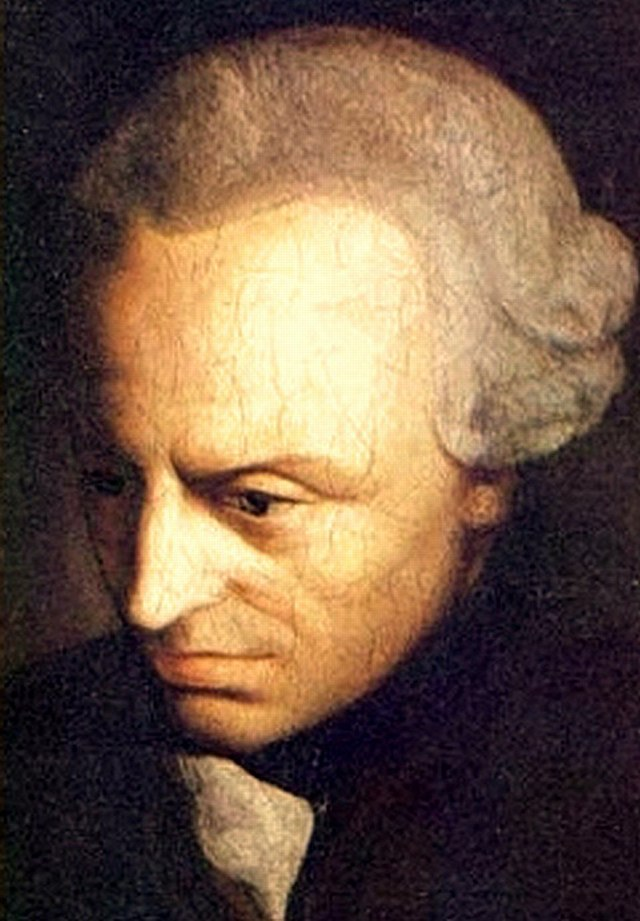
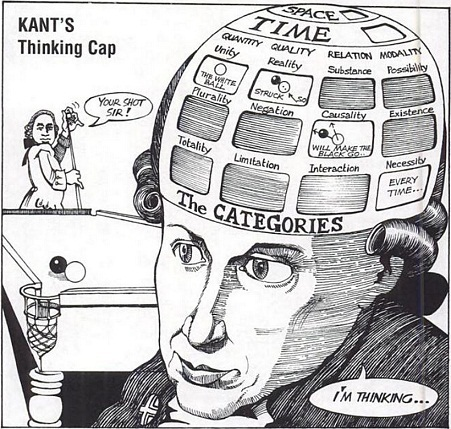
In Kant’s terms, the “subjective framework,” that makes perception possible, is the whole a priori structure of our mind (forms of intuition plus categories). “Space” and “time” are pure, a priori forms of human sensibility—ways in which any sensible object must be given to us. And, “Categories” are the pure concepts of the understanding: basic a priori ways in which the mind must think any possible object of experience. They are not learned from experience but are conditions for having coherent experience at all.

SUBJECTIVE FRAMEWORK
The “subjective framework” is the set of a priori conditions that belong to our cognitive constitution:

  1. The pure forms of sensibility (space and time), which shape how anything can be given. 
  2. The pure concepts of the understanding (categories), which structure how what is given can be thought as an object under concepts like substance, causality, unity, etc. 

Calling this framework “subjective” does not mean arbitrary or merely personal; it means it belongs to the subject’s side and does not characterize things in themselves, yet it is necessary and universal for all human experience. 

SPACE
For Kant, space is not a property of things in themselves or a general concept abstracted from experiences, but a single, pure intuition that structures all outer appearances.  It is the form of outer sense: any object given as “outside” us must be represented as spatially ordered (having position, size, relations of beside/within, etc.), and this spatial framework is in the mind a priori, not learned from experience. 

TIME
Time is likewise a pure intuition, but it is the form of inner sense: the way in which all our representations—inner states and, mediately, outer appearances—are ordered as earlier/later, simultaneous, enduring, etc.  Time is not something we perceive as an object; rather, it is the universal temporal form to which all our experiences are subject and without which no succession or change could be represented at all. 

CATEGORIES
Kant groups twelve categories under four headings, mirroring the forms of judgment:

  1. Quantity
    • Unity: the concept under which an object is taken as one, a single something counted as a unit.
    • Plurality: the concept under which there are several units, a “many” of the same sort.
    • Totality: the concept of the all-of-them-taken-together, the completed whole of a plurality.
  2. Quality
    • Reality: the pure concept of a positive determination of sensation (some degree of a feature, such as warmth or brightness), thought as something given.
    • Negation: the pure concept of the absence of that determination, corresponding to a zero degree of the same scale (cold as absence of warmth, darkness as absence of light).
    • Limitation: the concept of a positive reality bounded by negation, i.e., a finite degree of a sensible feature that is less than maximal but more than zero.
  3. Relation
    • Inherence and Subsistence: the category under which something is thought as a substance that persists through time, with properties (accidents) that inhere in it and can change while the underlying subject remains.
    • Causality and Dependence: the concept under which one state or event is thought as the cause that determines another as its effect in temporal succession.
    • Community (Reciprocity): the concept of substances coexisting in space such that each stands in mutual causal interaction with the others, forming a network of reciprocal influence.
  4. Modality
    • Possibility / Impossibility: concerns whether a concept agrees with the formal conditions of possible experience, that is, whether such an object could coherently appear in space and time under the categories.
    • Existence (Actuality) / Non‑existence: concerns whether something is given in accordance with the conditions of experience, i.e., whether it is actually instantiated in perception.
    • Necessity / Contingency: concerns whether, given the conditions of possible experience and lawful connection (e.g., causal laws), an object or state must be so, or could be otherwise.

The categories are rules for synthesizing the manifold of intuition into objects of experience: they determine, for example, that what is experienced endures as a substance, that changes stand in causal relations, and that objects can be judged possible, actual, or necessary. Without these a priori concepts, sensations would be a “blind” manifold, never rising to objective cognition; with them, appearances can be thought as objects in one unified experience.

.

The Two Postulates

Not only the external world, but also the inner sense, are part of this Universe. Both the external world and the inner sense appear to be based on the following two postulates:

FIRST POSTULATE
The first postulate is that both consciousness and the world are substantial. The substance of the world is matter and radiation; and the substance of the inner sense is thought. The natural extension of substance appears as Space; and the natural duration of substance appears as Time.

SUBSTANCE
Substance is that which is substantial enough to be sensed and perceived. We may divide the substance of this universe into three categories: (1) matter, (2) radiation, and (3) thought. Matter has extremely high consistency called mass. Radiation has a such small consistency that it is considered to have no mass. Thought has still less consistency that cannot be sensed physically. It can only be sensed mentally. Consistency means “a degree of density, firmness, viscosity, etc.” We have decreasing consistency from matter to radiation to thought. Matter and radiation are considered to be physical substances. Thought is considered to be a metaphysical substance, or even a spiritual substance.

SPACE
Space refers to the extension of substance. There is no space in the absence of substance. The “empty space” is empty of matter only; but it defines the extension of radiation and thought. The “space” studied in geometry is actually the abstraction of matter-space.

TIME
Time refers to the duration of substance. Matter has near infinite duration. Any duration, which is less than infinite, appears as motion. In the absence of substance there is neither duration, nor motion nor time.

SECOND POSTULATE
The second postulate is that the the goal of both consciousness and the world is integration toward a oneness (continuity, consistency and harmony) of form. This appears as chaos converting into order.

ONENESS
In Postulate Mechanics, Oneness is understood as CONSISTENCY among parts. This consistency appears as CONTINUITY at very small scales, and as HARMONY at very large scales. Oneness does not imply sameness. Oneness means that all that is known is continuous, consistent and harmonious. Oneness lies in the continuity of dimensions, consistency of realities, and harmony of relations. Oneness underlies the very concept of the Universe, and also the concept of Scientific Method. Oneness is not a monotone canvas; but it is a beautiful painting full of colors and forms that are continuous, consistent and harmonious.