Category Archives: Scientology

Scientology and its Derivatives

Reference: Course on Subject Clearing

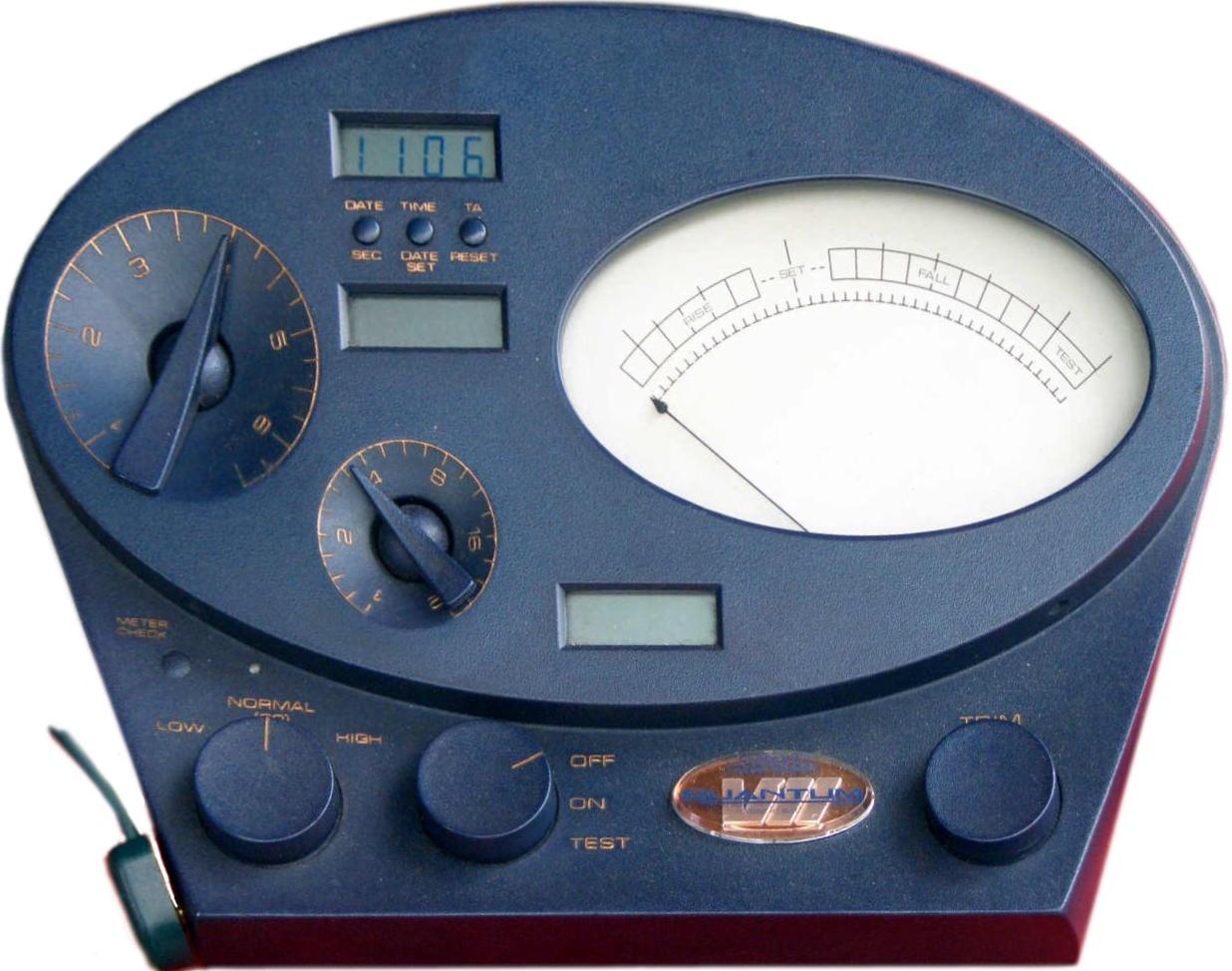
The whole problem with these Scientology derivative OT procedures seems to be the same as with the Scientology OT procedures. This problem arises with their dependence on the E-meter. All kind of strange symbology at these OT levels exists only because of the apparent “support” of the E-meter reads.

The basic misconception is that E-meter reads support whatever whacky theory one comes up with. This misconception started with Hubbard himself.

E-meter reads do not corroborate any theories. They do not replace the scientific method.

The Scientific Method rests on the Principle of Oneness. That is where the validity of any theory rests ultimately. It rests with the resolution of anomalies. 

PRINCIPLE OF ONENESS
Oneness does not imply sameness. Oneness means that all that is known is continuous, consistent and harmonious. This principle of oneness underlies the very concept of the universe. It also underlies the Scientific method. This principle gives us the ideal scene for logic, because its violation gives us anomalies.
 

Subject Clearing follows the Scientific Method as it focuses on the resolution of anomalies.

Hubbard rejected the Principle of Oneness (see Identity vs Individuality). His procedures do not deal with anomalies. His concept of outpoints falls far short of the concept of anomalies. The point is,

Any OT Theory based on E-meter reads is not scientific because it does not follow the scientific method.

.

The House GPM

Reference: The Level of OT II
Previous/Next

The House GPM addresses the universe and how it is put together.

LRH Instructions for House GPM

According to LRH, “So called because a House (internal room) may appear when it is contacted.”

.

Subject Clearing Prerequisites

Study and understand the following concepts:

  1. The Universe
  2. The Oneness

.

The House GPM


This GPM is made up of 5 pairs (10 items). Each set of 5 pairs is repeated with the 5 different end words. This gives us total of 50 items.

.

The End Words

These 5 different end word are used with the items of the GPM:

… (pairs 1-4) / (pair 5)
(a) Create / Creations
(b) View / Views
(c) Exist / Existences
(d) Know / Knowns
(e) Remember / Memories

.

The GPM Items

A set of 5 pairs of items is as follows:

  1. (a) I should __________.
    (b) I shouldn’t __________.
  2. (a) I must __________.
    (b) I mustn’t __________.
  3. (a) I do __________.
    (b) I don’t __________.
  4. (a) I can __________.
    (b) I can’t __________.
  5. (a) There are __________.
    (b) There aren’t __________.

A House (interior) appears when this GPM is run.

.

Running the House GPM

There are 25 pairs of opposite postulates. One contemplates on these pairs as in the earlier GPMs. Looking at the pair of opposites exteriorizes one from any identification with thoughts.

The Universe impinges on awareness. The impingement generates sensations. Postulates arise to give meaning to those sensations. The “Creation” of postulates is followed by a “view” of what is created. The creation now “exists.” One comes to “know” the Universe as one assimilates it. One then “remembers” the aspects of the universe in relation to each other.

On this GPM one is addressing the understanding of the Universe. The oneness of the universe requires that these postulates be continuous, consistent and harmonious.

.

The Big Being GPM

Reference: The Level of OT II
Previous/Next

The Big Being GPM addresses space, form and its survival. The big being suggests the expansiveness of space an form.

LRH Instructions for Big Being GPM

.

Subject Clearing Prerequisites

Study and understand the following concepts:

  1. The Space
  2. The Spectrum of Substance

.

The Big Being GPM

This GPM is made up of 15 pairs of items (a total of 30 items) as follows.

Explosion
Appearance of a huge Being in sky.

  1. (a) You must survive.
    (b) You mustn’t survive.
  2. (a) You should survive.
    (b) You shouldn’t survive.
  3. (a) You can survive.
    (b) You can’t survive.

  1. (a) He must survive.
    (b) He mustn’t survive.
  2. (a) He should survive.
    (b) He shouldn’t survive.
  3. (a) He can survive.
    (b) He can’t survive.

  1. (a) They must survive.
    (b) They mustn’t survive.
  2. (a) They should survive.
    (b) They shouldn’t survive.
  3. (a) They can survive.
    (b) They can’t survive.

  1. (a) We must survive.
    (b) We mustn’t survive.
  2. (a) We should survive.
    (b) We shouldn’t survive.
  3. (a) We can survive.
    (b) We can’t survive.

  1. (a) All must survive.
    (b) All mustn’t survive.
  2. (a) All should survive.
    (b) All shouldn’t survive.
  3. (a) All can survive.
    (b) All can’t survive.

Explosion.

The Big Being GPM starts with an explosion and also ends with an explosion. In between we have the postulate regarding different aspects of survival of all existence.

.

Running the Big Being GPM

There are 15 pairs of opposite postulates. One contemplates on these pairs as in the earlier GPMs. Looking at the pair of opposites exteriorizes one from any identification with thoughts.

Thoughts are as expansive as space. Survival means continuation of the expansive postulates. One is unconsciously postulating the survival of all that one has ever postulated and the reasoning proceeding from those postulates. The idea here is to become aware of that automaticity.

On this GPM one is handling fixation on survival.

.

Definitions

SURVIVE
When “survive” becomes concerned with the continuation of a certain form only, it is a fixation that generates this GPM.

.

The Tocky GPM

Reference: The Level of OT II
Previous/Next

The Tocky GPM deals with time. The end word used here is “Sun swing” which suggests TIME. Time suggests the tick-tock of a clock, which gives this GPM its name “Tocky GPM.” Time refers to a regular, cyclic occurrence.

LRH Instructions for Tocky GPM

Hubbard says, “That’s what you get for making this universe.” “Get out.” He seems to be referring to one’s fixation on the physical universe. The whole idea is to get rid of this fixation, and not necessarily the universe.

.

Subject Clearing Prerequisites

Study and understand the following concepts:

  1. The Substance
  2. The Time

.

The Tocky GPM

There are 24 items in Tocky GPM as follows:

  1. Create Sun swing
  2. Create no Sun swing
  3. Abide Sun swing
  4. Abide no Sun swing
  5. Enjoy Sun swing
  6. Enjoy no Sun swing
  7. Welcome Sun swing
  8. Welcome no Sun swing
  9. Share Sun swing
  10. Share no Sun swing
  11. Keep Sun swing
  12. Keep no Sun swing
  13. Hold Sun swing
  14. Hold no Sun swing
  15. Exploit Sun swing
  16. Exploit no Sun swing
  17. Deplore Sun swing
  18. Deplore no Sun swing
  19. Skip Sun swing
  20. Skip no Sun swing
  21. Continue Sun swing
  22. Continue no Sun swing
  23. Forget Sun swing
  24. Forget no Sun swing

The key characteristic of this universe is that it is enduring. The endurance manifests as cycles. The cycle of attention is to reach and withdraw.

.

Running the Tocky GPM

The 24 items of this GPM present 12 pairs of opposite postulates. One contemplates on these pairs as in the Electrical GPM. Looking at the pair of opposites exteriorizes one from any identification with the postulates.

The “sun swing” is a symbol for endurance as a regularly repeating cycle. The universe may be described as one large cycle, that contains smaller cycles within it. Those smaller cycles contain within them still smaller cycles and so on. Here we are looking at the attention becoming increasingly condensed as it identifies more and more with the substance of the universe.

On this GPM one is addressing the mechanism of fixation.

.

Definitions

TOCKY
The word “tocky”comes from “tick tock” of a clock. It refers to a regular, cyclic occurrence.

SUN SWING
The sun swings across front left to right as you face South. This is visualized as the “end word” on the items of this GPM. It suggests the cyclic but arbitrary nature of TIME.

UNIVERSE
The key characteristic of this universe, and of everything in it, is CYCLIC. Nothing in this universe is permanent or eternal.

.

The Electrical GPM

Reference: The Level of OT II
Previous/Next

The Electrical GPM is the first of the set of GPMs, which is run on the Scientology upper level of OT II. That means that it is the earliest GPM on the whole track as far as Hubbard could determine from his research.

LRH Instructions on Electrical GPM

Hubbard says, “It is an oddity as it has an electrical shock as its end word rather than a word. This was to convince a thetan he should think of himself as an electrical being.”

Hubbard defines shock as, “an electrical impact and flow.”

.

Subject Clearing Prerequisites

Study and understand the following concepts:

  1. The Unknowable-Knowable
  2. The Postulate
  3. The Reality
  4. The Anomaly

.

The Electrical GPM

There are 20 items in Electrical GPM as follows.

  1. Create (shock)
  2. Create no (shock)
  3. Destroy (shock)
  4. Destroy no (shock)
  5. Love (shock)
  6. Love no (shock)
  7. Hate (shock)
  8. Hate no (shock)
  9. Be (shock)
  10. Be no (shock)
  11. Disown (shock)
  12. Disown no (shock)
  13. Use (shock)
  14. Use no (shock)
  15. Condemn (shock)
  16. Condemn no (shock)
  17. Seize (shock)
  18. Seize no (shock)
  19. Escape (shock)
  20. Escape no (shock)

This list apparently refers to the occurrence of the earliest postulate. The sudden manifestation of a postulate may appear as a shock. 

.

Running the Electrical GPM

These 20 items of the GPM describe 10 pairs of opposite postulates. One contemplates on the first element, then on the second element, and then both elements of the pair. The pair of opposites help one develop a viewpoint that is exterior to both items of the pair.

Handle the next two items in a similar manner, and so on down the line.

Make sure you follow the The 12 Aspects of Mindfulness as you contemplate and visualize.

On this GPM one is addressing the mechanism of postulating and remaining exterior to what one postulates.

.

Definitions

END WORD
End Word is the word used at the end of statement for a goal, which is always a noun. If the statement for a goal is “To know the Unknowable” then the end word is “Unknowable.” 

GOAL
Goal is a postulate stating the aim towards which the effort is directed. For example, a goal would be, “To know the Unknowable.”

SHOCK
The shock is a discontinuity that may be felt as an electrical impact and flow.

.