Category Archives: Science

Spacetime without Matter

3047944-poster-p-1-mastering-the-extremely-difficult-art-of-letting-go

We view space from a matter-centric viewpoint. For us space is the distance between two material points. It seems that when there are no material points the concept of space will be entirely different. Without matter, space feels like some sort of vague awareness.

Maybe it is awareness itself that appears as space through the filter of matter.

.

It is the disturbance in space that spreads with alternating electric and magnetic characteristics. It brings about consciousness of what is there by appearing as light.

Maybe it is pure consciousness itself that appears as light through the filter of matter.

.

The electromagnetic characteristics come together as a field. The interplay among frequencies produces various gradients within that field.  Here we see electromagnetic characteristics being knitted together into various shapes.

Maybe it is consciousness shaping itself that appears as electromagnetic field  through the filter of matter.

.

That makes awareness compare to undisturbed space, and consciousness compare to electromagnetic field (disturbed space). Time enters into the picture when space is disturbed. We may compare time to the desire that disturbs awareness to generate consciousness.

The disturbed space spreads out as electromagnetic wave. It may be said that light is simply the spreading of pure consciousness at a universal level.

.

Space may then be viewed as the “fabric” of this universe. The essence of space is awareness.

Time then shapes the universe out of the “fabric” of space. The essence of time is desire.

.

Reality of Relativity (Part I)

Relativity

  • Neither locations in space, nor Instances in time are absolute.
  • Ratio of space-time intervals becomes absolute in EM disturbance.
  • Space-time intervals become infinitesimal in the core of atom.
  • Then location and instances appear absolute as matter.

Space and time intervals appear in a constant ratio as “disturbance”, which we see as light or dynamic electromagnetic field. In the absence of this disturbance neither space nor time exists. When space and time intervals become infinitesimal in the core of an atom, we have matter.  Matter seems to acquire absolute locations and instances in space and time. [EM = electromagnetic]

.

  • The nature of this disturbance is electromagnetic.
  • It reflects permittivity and permeability of disturbed space.
  • This electromagnetic disturbance is its own medium.
  • The “speed” of this disturbance as light is constant.

The above is the basic postulate of Einstein’s theory of relativity. It is supported by experimental evidence.

.

  • The “wavelength to period ratio” of the disturbance is constant.
  • Both wavelength and period are scaled up and down by frequency.
  • The “frequency” denotes the energy of space-time disturbance.
  • It is this energy that brings form to the disturbance.

The disturbance appears as electromagnetic field which is shaped by frequency gradients in it. What is there in absence of the field is unknown, but it allows the field to spread.

.

  • There cannot be absolute units of space and time at this stage.
  • Space manifests as the continuity of forms throughout the field.
  • Time manifests as the dynamic harmony of forms within the field.
  • The only property that can be measured in absolute unit is frequency.

With space and time varying in a fundamental way we cannot find absolute units to separate them. But since they vary in a constant ratio, we find that an absolute unit may be applied to frequency.

.

  • We may only speculate what came before space-time.
  • But after space-time came energy and matter.
  • A whole spectrum of frequency characterizes energy.
  • At the upper end of spectrum frequency collapses as matter.

Space-time provides a dynamically changing environment in terms of frequency. This environment is called energy that has a large spectrum of frequency. At the upper end of this spectrum the space and time intervals become so small that energy collapses into matter.

.

  • Space and time intervals vary in energy spectrum.
  • But they always occur in absolute ratio as frequency.
  • At the upper end of spectrum these intervals become infinitesimal.
  • And space and time seem to acquire separate and absolute units.

Space and time seem to have absolute and separate units only for matter and not for the electromagnetic field. Classical mechanics deals with matter and treats space and time as absolute. This does not lead to error.

.

  • Velocity is defined by constant units for space and time.
  • The concept of velocity applies to matter, and not to EM field.
  • The constant ‘c’ is the ratio of space time intervals of light.
  • Its interpretation as “speed of light” is a matter-centric view.

The theory of relativity correctly recognizes ‘c’ as a universal constant, but it looks at it as “speed” from a matter-centric view. This misinterpretation gives rise to subjective ideas of length contraction and time dilation.

.

  • Velocity may be used to assess relativity among matter particles.
  • It cannot assess relativity between EM field (light) and matter.
  • Frequency is appropriate to assess relativity within energy field.
  • Frequency is also more appropriate to assess relativity of field to matter.

Einstein’s theory of relativity introduces confusion by using the concept of velocity to compare matter with field. The concept of velocity cannot be applied to electromagnetic field because space and time does not have absolute units in that context. Frequency is a more appropriate criterion to compare matter with field.

.

  • Velocity, by definition, is relative to a fixed location in space.
  • A location can be fixed in space only by the presence of matter.
  • No velocity exists when there is no matter to reference from.
  • The concept of velocity is limited to material particles only.

When we talk about velocity of a wave it is only relative to a fixed location in space. A location can be fixed in space only by the presence of matter. Therefore, in absence of matter, the concept of velocity cannot be applied to waves and field.

.

  • The uniform velocity cannot be distinguished from state at rest.
  • A uniform velocity cannot have a value of its own.
  • Its value depends on the motion of another material object.
  • Therefore, uniform velocity can only be subjective in nature.

How do we know that we are not moving uniformly at the speed of light? How should something moving uniformly at the speed of light appear? If we try to measure our speed relative to another moving material object, then the view of our speed will depend on the other object. Magnitude of uniform velocity is subjective at best.

.

  • Only acceleration has value relative to itself.
  • Therefore, acceleration provides an objective measure.
  • Acceleration also applies to matter only.
  • Acceleration is a meaningful measure rather than velocity.

Only thing that we can measure objectively for matter is acceleration. Any measure of uniform velocity is subjective. Therefore, the use of Lorentz Factor in the theory of relativity, only leads to subjective conclusions.

.

  • The Lorentz factor derives from Pythagorean Theorem.
  • And from the use of rigid coordinates referenced from matter.
  • These conditions do not apply to electromagnetic field.
  • The Lorentz factor does not apply to electromagnetic field.

The properties of electromagnetic field are very different from the properties of matter. The concept of velocity applies to matter and not to electromagnetic field. The theory of relativity treats electromagnetic field to be rigid like matter when it is not. It also treats matter to contort in space and time like electromagnetic field when it does not.

.

Physics, Reality & Subjectivity

time-illusion

The current state of Physics is such that it relies heavily on mathematics. We even have Copenhagen interpretation of Quantum Mechanics. That means the “mathematics” of Quantum Mechanics can be interpreted in other ways too. Quantum Mechanics may have some successful applications but it lacks overall interpretation that is fully consistent with reality.

Mathematics does make us aware of hidden relationships, which would not be obvious otherwise. But mathematics should not be confused with reality as pointed out in Mathematics and Reality.

Heavy reliance on mathematics actually started with Einstein’s theory of Relativity. Einstein was correct in establishing a relationship between space and time at the fundamental level; but that also meant that the units of space and time could no longer be used in an absolute and independent sense. By saying that these units themselves varied while still using them made space and time all the more confusing. It brought subjectivity into physics.

Einstein postulated that speed of light was a universal constant based on Maxwell’s equations, which showed that the such speed could depend only on certain physical properties of space (namely, permittivity and permeability). Einstein also declared that there was no aether based on Michaelson-Morley’s experiment, which could discover no evidence for “aether wind”.

This adds up to the classical understanding that the speed of wave depends entirely on the properties of the medium. By default, that medium for light appears to be space. However, this has been hard to accept because space has never been thought of as something material.

If material is thought of as being made up of atoms and molecules then space is definitely not that. The phenomenon of space and light somehow seems to involve a substance more basic than matter.

Let us postulate that light is a disturbance in space. It is the disturbed space, which appears to spread as light. There are physical properties involved here without anything material being present. This turns our current understanding of physics on its head. This gives rise to the disturbance theory.

The electromagnetic field is a physical reality, which is more fundamental than any material reality.

We now see electromagnetic field existing even in the absence of any material or charge. Its wavelength (a property of space) and period (a property of time) occur in a constant ratio per Einstein’s postulate of “constant speed of light”. The variable remaining then is the frequency (a property of energy). This gives us “space-time-energy” as related dimensions.

The theory of relativity gets into length contraction and time dilation because it is examining parts of the universe through other parts. This gets very confusing very fast because there are infinite frames of references all moving relative to one another. Relativity makes sense only when we examine the motion of a part of the universe relative to the motion of universe as a whole. Only then we can properly compare one part to another.

Besides, Einstein’s observer is dependent on the speed of light for its observation. Vision is only one of the many physical senses. All physical senses ultimately combine into the mental sense of abstraction, which is used by science.

The theory of Relativity gets into subjectivity by using the “speed of light” as the absolute basis for “observer”.

By making vision to be the absolute basis for his “observer” Einstein got involved into mathematics that was quite dissociated with reality.

It is the universe as a whole that provides a stable frame of reference. This can be treated adequately by the mental sense of abstraction, which is not limited by the “speed of light”. This reference frame is not absolute, but it is stable enough for the purposes of physics.

The next activity in theoretical physics should be to examine the relationship between spacetime and energy as taken up in Disturbance theory.

.

Time in Theory of Relativity

st_equation_gps_f

There is really no conflict between the constant velocity of light, the principle of relativity and the theorem of the addition of velocities employed in classical mechanics.

The key discovery by Dutch Astronomer De Sitter was that the velocity of propagation of light cannot depend on the velocity of motion of the body emitting the light. That means the relative velocities among masses within the Mass Coordinate System (MCS) have no bearing on the velocity of light in the Field Coordinate System (FCS).

Velocity of light is constant in terms of “wavelength to period” ratio in FCS. So the concept of “frequency”, being a variable, is more useful in terms of relativity in FCS. On the other hand, the concept of “velocity” is more useful in terms of relativity in MCS.

Thus, light seems to form a uniform background in which objects move relative to one other. Light does not move relative to objects. Light takes time to reach an object in space according to the distance between that object and another object, which is the source of light.

Physical awareness of an object at a physical location takes place when light from the object reaches that physical location. This is local awareness which depends on the physical location. This local awareness determines TIME locally by establishing the order in which it perceives various objects or events.

Objective awareness in universal terms comes about by piecing together all local observation logically. This is what we know as scientific awareness. This scientific awareness determines time objectively by establishing order within the parts of the universe.

Explaining time in terms of local awareness, which is limited by finite “velocity of light”, simply offers a subjective view of time. Objective view of time comes from a scientific (logical) view that does not depend on the “velocity of light”.

The theory of relativity deals only with local (subjective) idea of time, and not with the universal (objective) idea of time.

Objective time is established by looking at sequences from a universal viewpoint. In a universal viewpoint one can logically visualize the whole universe at once.

When one looks at two light waves passing each other in opposite directions from a universal viewpoint, one shall find their relative velocity to be 2c.

.

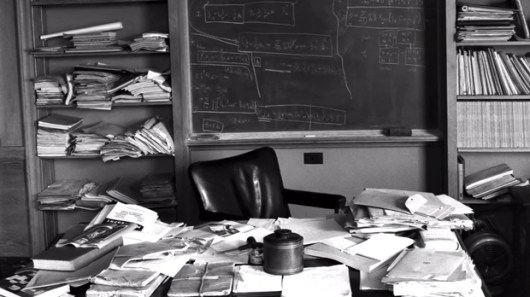
Einstein’s Unfinished Work

tumblr_m9mnbdc1LX1rqpa8po1_1280

I asked on Quora the following question, which led to an interesting exchange.

If two sound waves passed each other in opposite directions, would they be traveling at relatively twice the speed of sound for that medium?


Mathematically, this answer to this question should not change whether we talk about sound waves or light waves for the following reason.

The speed of a wave depends entirely on the property of the medium. As long as the properties of the medium do not change, the speed of the wave remains the same. This fact is observable for sound as well as for light. There was no question about the medium for sound as it is obviously understood to be material. However, in late 19th century, question arose about the medium of light because it could not be identified with any material.

But that question was settled when no material-based ether was found and electromagnetism (light) was established as a physical reality in its own right. Electromagnetic field demonstrably became a substance that was more basic than matter.

We may postulate space as electromagnetic field of zero frequency. This space breaks into electric and magnetic fields the moment it is disturbed. Thus it has definite physical properties in terms of permittivity and permeability. This makes space a physical medium. Light then travels as a disturbance in a physical medium.

Mathematically, light is a disturbance in a physical medium just like sound.

To repeat, the speed of a wave depends entirely on the property of the medium. Speed may be expressed as the ratio of “wave length to period”. This ratio shall then be constant regardless of the frequency of the wave. When we use uniform vibratory motion of frequency as the frame of reference we automatically satisfy the requirement of the principle of relativity.

We see space as rigid to account for the motion of matter in an”inertial” frame of reference. But space cannot be rigid when we consider the electromagnetic wave propagating through it. Therefore, for light we need  a “non-inertial” frame of reference that sees space as flexible.

The principle of relativity is not violated when we consider uniform translatory motion of material objects in an inertial frame of reference, and uniform vibratory motion of frequency waves in a non-inertial frame of reference.

Einstein’s Special Theory of Relativity was intended to solve the erroneous view of Newtonian mechanics that space and time were absolute and independent. This view came under question when electromagnetic phenomenon was discovered. Einstein actually solved this problem by simply postulating that light travels at a constant speed, thus setting up a dependence between space and time.

Einstein’s postulate of constant “speed of light” implies that it must depend on certain physical properties. This confirms the view of space as a physical medium.

Space is rigid for matter but flexible for light. We cannot, therefore, use the same rigid frame of reference to compare the translatory motion of rigid objects with the vibratory motion of light. This means that,

Lorentz transformation, which assumes space to be rigid, cannot be used to determine transformation between space and time.

We need to determine the relationship between the inertial frame of reference applied to mass, and the non-inertial frame of reference applied to frequency.

This seems to be the work left unfinished by Einstein.

.