Category Archives: Science

What is Mass?

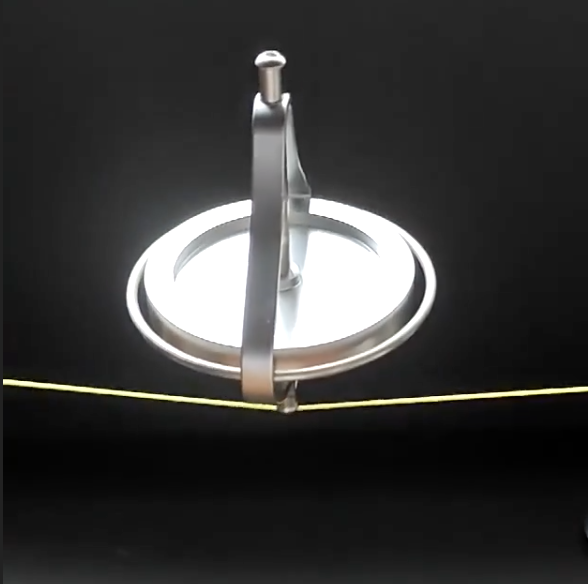
A top spinning on the table, or a gyroscope spinning in space, tends to maintain its orientation. Any disturbance to this orientation is resisted. This is inertia. The resistance is coming purely from its spinning motion. Non-cyclic motion has no such inertia.

Inertia is the characteristics of a spinning or cyclic motion. 

When we try to push a heavy metal ball hanging from a thread, it requires some force to move it. Most of the resistance is coming from its mass. This is also inertia. But this ball is not spinning. Its inertia is actually coming from the spinning particles within it. 

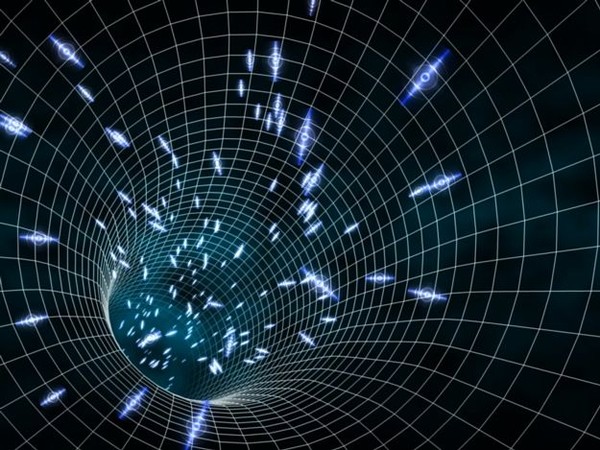
The heavy metal ball is made of atoms. Each atom is like a whirlpool. Most of the inertia of the atom is coming from the spinning neutrons and protons in its nucleus. Spinning electrons may contribute to this inertia but that is negligible.

Mass of an object is the sum total of the inertia of all spinning nucleons within it.

Mass of an object has 2 different components

  1. Inertia of one nucleon (proton or neutron).
  2. The number of nucleons making up the object.

.

Rest Mass vs. Relativistic Mass

According to Physics, the photon has zero invariant or rest mass. But it has a relativistic mass of hv/c2.

In truth, the rest-mass of any object is always zero. When you are out in space alone with nothing around you, you are at rest because you do not feel any motion. The feeling of motion arises only when there is acceleration. Therefore, we equate “rest” to be same as the state of zero acceleration. 

When a physical object is moving at a “uniform velocity,” its acceleration is zero. Such an object may be considered to be at rest when alone out in space. This is the mathematical, or scientific view. Therefore, when a photon is moving at the uniform speed of light, its acceleration is zero. Scientifically, a photon is always in a state of “rest.”

Inertia is manifested only when an effort is made to change the “uniform velocity” of an object. We call this inertia “mass” in case of matter. We may call this inertia “consistency” in case of a photon. Its measure is hv/c2

This mass, or consistency, is manifested only at the moment of impact, when there is a deceleration. That is when momentum is manifested too. It is interesting to note that Newton used the word “motion” in the sense of momentum.

Physics calls it “relativistic mass.” But this is the mass, or consistency, that is manifested only when there is acceleration or deceleration. It is not manifested under uniform velocity.

This resolves the confusion between “rest-mass” and “relativistic mass.” 

The “rest-mass” of all objects is always zero. And the “relativistic mass” is the same as what we commonly understand to be the inertial mass.

.

Substance and Consistency

Inertial mass is generally referred to as “mass” in case of matter. We shall refer to the inertial mass as “consistency” in case of light. Therefore, the “relativistic mass” of photon becomes the “consistency of light.”

We shall refer to consistency by the symbol C. Therefore, for light,

C = hv/c2 = (h/c2) v

This means, that the consistency is proportional to the frequency. The proportionality constant h/c2 has the dimensions of [MT] or “mass x time.” Therefore, consistency has the same dimension as mass. Consistency condenses into mass as frequency increases.

Thus, consistency condenses gradually into mass from photon to electron to neutron.

As consistency increases, so does inertia. The two might be considered synonymous. Since, inertia is the property of substance, this puts light in the category of substance.

We may broadly define substance as “anything that is substantial enough to be sensed.” The physical universe is made of substance that we sense with our physical senses. This includes light and not just matter.

We define consistency as the degree of substantiality of substance. It is recognized as density, firmness, or viscosity of the substance. For example, “Honey has higher consistency than water.” 

For “energy substance” consistency is measured per quantum, where quantum is determined by frequency.

For “material substance” consistency is measured by the mass of its elementary particle, such as, proton or neutron. The elementary particle of matter is determined by its smallest discrete inertia.

.

Consistency of Matter

As light travels from a star to the far reaches of the universe, its consistency remains the same while its intensity decreases. The consistency is determined by frequency, while the intensity is determined by the amplitude of the light wave.

Similarly, as matter breaks down into smaller particles, its consistency remains the same while its amount decreases. The consistency is determined by the mass of a neutron, while the mass of the object is the aggregate of the mass of all the neutron particles in that object.

Therefore, the consistency of matter is “the mass of its core particle.” This takes into account the spectrum of matter. For example, the core particle of a black hole could be more massive than a neutron.

From the view of total mass, the consistencies of Earth and Sun are calculated in Relative Consistencies of Substance as follows:

C” (Earth) =  235.6
C” (Sun) = 256.6

And the relative consistencies are calculated as follows:

Crel (Earth) = 1
Crel (Sun) = 1.089

If we consider the core particle of Earth to be a neutron, then

C (Earth) = 77.6
C (Sun) = 84.5

This means that the core particle of Sun could be heavier than neutron. But this needs to be verified more carefully, since we are using relative velocities for the above calculations.

.

Newton, Einstein and Motion

Distinct Motions

With the analogy of a pool filled with water, there are two different kind of motions we are looking at.

  1. Motion of the wave in the water
  2. Motion of the whole pool of water.

Let’s consider a “particle” made of a material of certain consistency. Then we have two distinct motions:

  1. Motion of the material within the particle.
  2. Motion of the particle itself.

Motion type 1 is “continuous motion.” Motion type 2 is “discrete motion.”

When we are looking at the motion of a particle, we are looking at discrete motion. This is the kind of motion that Newton studied.

.

Visualization of Motion

Newton visualized the motion of particles as the heavenly bodies moving in space. Here we have mass moving within an environment containing no mass. This is discrete motion. It would not be much different from neutrons moving in free space.

We find that discrete motion has to be relative because we are considering the speed of a particle relative to the speed of another particle. That is how Newton looked at all motion.

The speed of light was at first considered to be the motion of light corpuscles in the inertial frame of reference defined by Earth. It was, therefore, expected to be relative to the speed of Earth and other planets in the Solar system. When the Michelson-Morley experiment first determined that the speed of light was constant in different inertial frames, it came as a shock because it violated Newton’s relativity. In other words, it the speed of light was found to be independent of the motion of the observer against all expectations.

.

The Speed of Light

Einstein then postulated the speed of light to be a universal constant. With the mathematics derived from this postulate Einstein was able to explain the anomaly observed in the orbit of planet Mercury. Einstein’s relativity essentially shifted the frame of reference from inertial mass to mass-less light.

Einstein also found that light was made of quanta, which was real, but he stopped short of calling light a substance. Like Newton, Einstein also looked at the motion of light corpuscles (as light quanta) relative to the motion of material particles assuming both to be point particles. Einstein’s mathematics was right but it was limited to the mathematical interpretation of light quantum as a point particle.

.

The Particle

Light does not have mass, but it has momentum. This means that light has a mass-like consistency. Therefore, light is a substantial wave much like the wave of sound. The only difference is that light is not made of atoms.

Only those “particles” with center of mass may be conceptualized as point particles. Light does not have mass; and, therefore, it cannot be considered to be made of point particles.

The size of the particle shall be related to the wavelength of the material. The wavelength of the mass inside a neutron is extremely small. So, when we consider a neutron as a particle, we know it to be very small.

When we consider an electron to be a particle, we know its wavelength to be much larger than that of neutron. Compared to the size of the neutron, the electron would be about the size of a hydrogen atom.

When it comes to light, its particle is incredibly large. And, the particle of gravity may be as large as the universe.

So, in the case of light, we may visualize, the substance of light moving within the light particle, which would be continuous motion (motion type 1).

.

Relative vs. Absolute Motion

Whereas, discrete motion is always relative, we find a different situation with respect to continuous motion. Here we are looking at the speed of substance to be determined by its own medium, and not relative to something external to it.

For example, the speed of sound is determined from the characteristics of its medium. In this sense, the speed of sound may be looked upon as absolute because it does not depend on the speed of the observer. Similarly, Maxwell could determine the speed of light from the permeability and permittivity of space. This proved the speed of light to be independent of the observer as well.

.

The Substance

The consistency of substance arises as a result of repetitive motion. Therefore, we may postulate,

The consistency of substance is proportional to its repetitive motion.

The constant of proportionality will be a universal constant.

Let us assume the motion of an object to be represented by its speed.

We observe that the speed of matter is negligible compared to the speed of light, whereas, the consistency of light is negligible compared to the consistency of matter.

Therefore, mathematically, the speed of substance is inversely proportional to its consistency. In other words, the ratio of two different consistencies should be inverse of the ratio of corresponding speeds.

Let us assume the ratio of the speed of light to the speed of matter to be of the order of the speed of light, which is 3 x 10⁸.

We will then expect the ratio of consistency of matter to the consistency of light to be of the same order of magnitude,

We have related the consistency of substance to its frequency: See The Spectrum of Substance.

Let us assume the consistency of matter to be close to the consistency of neutron, which is 277.6 .

Let us take the consistency of light to be the average value of 249.

The desired ratio is 277.6 / 249 = 228.6 = 4 x 10⁸

This is of the same order of magnitude as the approximate ratio of the speeds of light and matter. This value is higher because the consistency of neutron is slightly higher than the average consistency of matter. Therefore, it is quite possible that the consistency and motion of substance are inversely proportional to each other.

This may be interpreted as follows:

Motion of 1 cycle within the light particle is equivalent to motion of the order of 108 cycles in the neutron.

At the moment, this is merely a hypothesis. It needs to be examined more rigorously.

.

Speed and Consistency

The above postulate has many possible consequences:

  1. Every physical object has a natural speed in free space that depends on its consistency (mass).
  2. When an object is accelerated from its natural speed with the application of an external force, its consistency decreases by an infinitesimal amount.
  3. When the external force is removed, the acceleration of the object returns to zero. If the object now continues to move at the higher speed, its consistency also stays at the infinitesimally lower value.
  4. If the consistency of the object returns to its original value, then its natural velocity shall also return to its original value.

The above anticipates the Higgs Mechanism.

Furthermore,

  1. A physical object can never be accelerated to the speed of light without reducing its mass to consistency of light.

.

Spacetime and Geometry

Spacetime

  1. Motion becomes “Spacetime” when cycles are introduced.
  2. Introduction of a cycle = emergence of space and time
  3. It means that space and time form the dimensions of cyclical motion.
  4. Motion when repeated gains consistency and appears as substance.
  5. The consistency of substance provides a measure of inertia.
  6. Space becomes the extents, and time becomes the duration of substance
  7. “Location” may be defined as the extents and duration of substance.

.

Geometry

  1. The geometrical points in space actually represent discrete atoms in a field of gravity.
  2. The points or atoms form the discrete foreground.
  3. The space or the field of gravity form the continuous background. 
  4. The atom become more centered as its mass increases. The geometrical point doesn’t capture this.
  5. The field of gravity has many gradients. The geometrical space doesn’t capture this.

.

A Theoretical Model of Substance

Motion that is not cyclical is free and it has infinite range. This is represented by infinite speed as it is all over that range. On the other hand, cyclical motion means that the motion is repeating itself. The faster it repeats itself, the higher is its frequency.

This repetition puts a limitation on the freedom of motion. With increasing repetition the freedom becomes increasingly limited. This is represented by the speed of cyclical motion decreasing with increasing frequency. 

An example of cyclical motion is the oscillatory motion of a pendulum. When this pendulum moves while oscillating, the motion acquires the appearance of a wave that has a wavelength. The product of the frequency and wavelength gives a measure of its speed. The mathematical formulas for wave motion apply to the cyclical motion.

The cyclical motion means a certain fixedness because the same motion is repeating itself. As the frequency of this repetition increases it means that the motion is becoming more fixed. This fixedness appears as a consistency, which resists change.

This resistance to change is called inertia. The resistance (inertia) appears as force. This force can be felt. This is the basic nature of substance.

Underlying any substance there is force, and underlying that force is cyclical motion.

As the frequency of cyclical motion increases, it not only acquires increasing consistency, but it also acquires a curvature. This is because the range of free motion within a cycle is becoming smaller. We may say that the least cyclical motion represents the “surface” of the universe, which obviously has a curvature because it contains the universe. As one goes deeper into the universe, the motion becomes more consistent and substance-like. The overall picture of cyclical motion may appear somewhat like a “whirlpool.” This is what we see in the spiral shape of the galaxies. This we also see in the structure of atoms.

At the center of a whirlpool we have extremely dense and spinning motion. This anticipates black holes at the center of galaxies and nuclei at the center of the atoms.

The cyclical motion of a very large range, ultimately, condenses into a spinning motion of a very small range.

.

Summary

Here we have the whole spectrum of substance created out of cyclical motion. As this cyclical motion increases in frequency, it gains consistency, inertia and substance. It acquires a curvature because of its narrowing range. We thus have a shrinking circumference. This gives it a look very similar to that of a whirlpool.

From the periphery of the atom to is nucleus, we have cyclical motion that is gradually increasing in consistency and shrinking in its circumference, ending up in a dense spinning nucleus at the center.

.