Author Archives: vinaire

I am originally from India. I am settled in United States since 1969. I love mathematics, philosophy and clarity in thinking.

The Vedic Pantheon

Reference: Religion

[This is an old essay of mine written in 1996. My viewpoint has somewhat modified since then, but the data in this essay is still agreeable to me at a certain level. Hope it gives you a fresh viewpoint.]

.

Though many conservative Hindus may disagree with me, but my understanding of the various terms used in the Advaita philosophy in Hinduism is as follows:

.

BRAHMAN AND ATMAN 

==========================================
BRAHMAN: The Absolute Potential of Creativity.

==========================================

Brahman is potential and not actual. It is a non-manifestation. Any manifestation would have the attributes of matter, energy, space and time. These attributes are inherent to the Creation, but not to Brahman.

Any form that Man may hold for Brahman (and call it God) would be a form that Man has created to express this concept of the Absolute. But that form would not be Brahman.

The forms applied to Brahman may be visual or audio, or may be just mental or conceptual. Any such forms would have the attributes of matter, energy, space and time. So, none of these forms is Brahman.

Brahman may be inexpressible, but Brahman can be experienced and understood. Brahman is not unknowable.

From the viewpoint of understanding, Brahman (in religion) acts as the reference point for the whole existence, just as Zero (in mathematics) acts as a reference point for all numbers.

=========================================
ATMAN: Brahman manifested as a cause point.

=========================================

When creation occurs, the power to create (which is potential in Brahman) becomes actually expressed. Atman is the beingness we recognize as a “cause point” or a “creator.” There can be infinity of such beingnesses.

Any form that Man may hold for an Atman would be a form that Man has created to express his concept of a cause point or a creator. But that form would not be Atman.  Just like Brahman, Atman is formless.

What we perceive is nothing but a form having the attributes of matter, energy, space and time. Forms are things created. Thus, we can never perceive Atman, the creator of forms.

Actually, Atman is that which is doing the perceiving.

Atman may be understood only in terms of what it is creating. Thus, there are as many Atmans as there are independent creations at any moment.

Atman is an actuality. Brahman is the potential.

.

PARMATMAN AND JIVATMAN 

Paramatman and Jivatman define the two extreme states of Atman. Between these two states lie many other states. As Atman descends from the state of Paramatman it gets increasingly attached to creation, and becomes narrower in its viewpoint.

=====================================
PARAMATMAN: Atman in its supreme state.
=====================================

Paramatman is the supreme state of Atman. In this state the Atman is operating as total cause with full knowledge and responsibility.

The viewpoint of Paramatman is the broadest viewpoint possible, which is concerned with the survival of the whole universe and all things within it. 

===================================
JIVATMAN: Atman in its attached state.
===================================

Jivatman is that state of Atman where it is confusing itself with the body. It is not very causative, nor spiritually aware, nor very responsible. It is constrained by its own considerations.

The viewpoint of Jivatman is quite narrow. It is concerned only with the survival of the things it is attached to, at the expense of everything else.

.

PURUSHA AND PRAKRITI

Purusha and Prakriti symbolize the duality of the Creator and the Creation. This is the prime duality in which Brahman appears.

===============================
PURUSHA: The CREATOR principle
===============================

Purusha is that aspect of Brahman, which is creating existence out of non-existence.

Purusha is the source of all considerations that underlie creation. It is the source of all principles that define the physical universe, such as, the laws of conservation of energy and matter.

===============================
PRAKRITI: The CREATION principle

===============================

Prakriti constitutes the considerations of matter, energy, space and time that underlie all creation.

The FORM of what is created constitutes the matter aspect of Prakriti. An example of this would be the thought that appears out of no where as a divine inspiration.

The MOTION that finally solidifies into a form constitutes the energy aspect of Prakriti. An example of this would be the process by which that thought comes into being.

The DIMENSIONS in which the form exists constitutes the space aspect of Prakriti. An example of this would be the dimensions in which the thought exists and which give the thought its form.

The CHANGES when the creation occurs constitutes the time aspect of Prakriti. An example of this would be the alterations involved in the creation of the thought.

Thus, PRAKRITI is the matter, energy, space, and time aspects of any creation.

.

THE CYCLE OF EXISTENCE AND MAYA

The Hindu Trinity of Brahman, Vishnu, Mahesh defines the cycle of existence: Create, survive, destroy. SURVIVE means “continuous creation.” DESTRUCTION means, “complete disappearance of form,” as in the destruction of illusion. DESTRUCTION does not mean an alteration of form by force, such  as the “destruction” due to a natural calamity.

=============================================

THE CYCLE OF EXISTENCE:

The cycle of CREATE, SURVIVE, and DESTROY.

=============================================

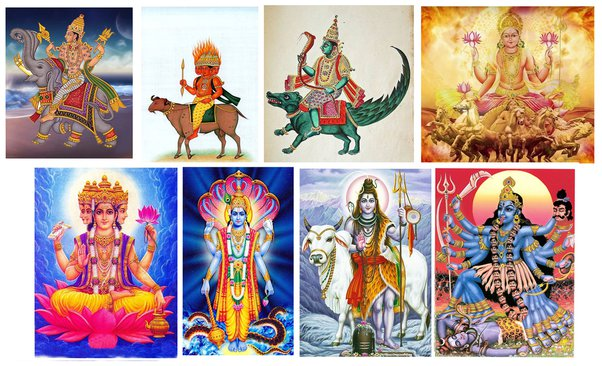
The cycle of Existence consists of three elements: CREATE, SURVIVE, and DESTROY. Hinduism symbolizes these three elements as the gods BRAHMA, VISHNU, and MAHESH.

“To create” is to bring into existence. Thus, we also have non-existence.

“To survive” is to continue in existence. Survival is continuous creation, “Create, create, create…”

“To destroy” is to reduce back to non-existence. Destruction is a cessation of creation, “Create, no-creation.”

=====================================
MAYA: The impermanent nature of existence.
=====================================

MAYA refers to the following characteristic of existence: Anything that is created can also be destroyed. Therefore, anything that is created is impermanent.

A person who regards this impermanent creation as permanent (significant) is said to be under the influence of maya, or deception.

“God Himself is Mahamaya, who deludes the world with Her illusion and conjures up the magic of creation, preservation and destruction.” – Sri Ramakrishna

.

SOME DEFINITIONS

KRISHNA: A great Yogi, who lived the great truth and expounded upon it. Many use the term “Krishna” synonymously with Brahman and Parmatman.

LIFE:          The interaction of the spirit (creator) with the creation. Life may be compared to a game composed of Goals, Freedoms, and Barriers.

I (SELF):    The individual spirit.

MIND:        The instrument to ensure survival in the game of life.

BODY:       The instrument to transmit effort in playing of the game.

EGO:          Part of the mind impersonating as the “I”.

GODS:       The mind’s conception of the ideal states that an individual can be.

.

Some Practical Philosophy

Will Rogers, who died in a 1935 plane crash, was one of the greatest sages the world has ever known.

Enjoy the following:

  1. Never slap a man who’s chewing tobacco.

  2. Never kick a cow chip on a hot day.

  3. There are two theories to arguing with a woman. Neither works.

  4. Never miss a good chance to shut up.

  5. Always drink upstream from the herd.

  6. If you find yourself in a hole, stop digging.

  7. The quickest way to double your money is to fold it and put it back into your pocket.

  8. There are three kinds of men: The ones that learn by reading. The few who learn by observation. The rest of them have to pee on the electric fence and find out for themselves.

  9. Good judgment comes from experience, and a lot of that comes from bad judgment.

  10. If you’re riding’ ahead of the herd, take a look back every now and then to make sure it’s still there.

  11. Lettin’ the cat outta the bag is a whole lot easier’n puttin’ it back.

  12. After eating an entire bull, a mountain lion felt so good he started roaring. He kept it up until a hunter came along and shot him. The moral: When you’re full of bull, keep your mouth shut.

.

Intuition or Gibberish?

The physical universe

And the spiritual universe

Are subsets of the Universe of Consideration.

.

The Universe of Consideration seems to come about

Because of the effort of the Unknowable

To know itself.

.

It is Looking that seems to be creating space.

It is Looking that seems to be accelerating the expansion of the universe.

It is Looking that is collapsing the wave function.

Could this looking be that dreaded Unknowable?

.

Space fills itself with space.

Space is its own fabric.

Space undulates…

And that is light.

.

Space undulating is “space + time”

And that is energy (light is one expression of that energy)

Presence of time indicates presence of additives.

An additive is the basic inconsistency.

.

The true nature of a number is “irrational.”

Could the rational number be a “collapsed irrational number.”

.

The true nature of matter and energy also seems to be “irrational.”

Could the discreteness of matter and energy be “collapsed matter and energy.”

.

Could the discreteness of consideration be a “collapsed consideration.”

 .

Are there some connections…

Or, is it all just insane gibberish?

.

MILESTONE 4: Multiplication

Multiplication is “repeated addition.”

To explore further logic that follows from the idea of multiplication as “repeated addition,” go to the link

MATH MILESTONES #A4, MULTIPLICATION

Many a time the problem with multiplication gets resolved by getting the student to count on the ten fingers “by two,” “by three,” “by four,” etc. When the student is counting on his fingers, say, “by three,” each finger has a value of three. As he counts “by three,” he adds three at each count. He may then write down the count in a column. This will then be the multiplication table for three.

By repeated addition, one may easily produce multiplication tables, and then use them to solve problems.

The proper approach is to create the multiplication table, as above, many times using “repeated addition.” Knowing the techniques of addition from MS 02: ADDITION can be of great help. You are building the skill in multiplication as an extension of the skill in addition. This approach is better than simple memorization.

The real shortcuts in math come from thinking with the basics, such as,

  1. A number multiplied  by zero  = the number “added repeatedly” zero times = zero

  2. A number multiplied by one =  the number “added repeatedly” once = the number

  3. A number multiplied by 10 = the digits shift one place value to the left = the number with a zero attached (e.g., 3 x 10 = 30;  12 x 10 = 120).  

Check out the above with repeated addition on abacus per MILESTONE 1: Numbers & Place Values]

.

The following is the most amazing property of repeated addition.

4 x 17     = 4 added repeatedly 17 times

= 4 added repeatedly 10 times + 4 added repeatedly 7 times

This may be written as,

4 x 17  =  4 x (10 + 7)  = (4 x 10) + (4 x 7)  

One may now compute this mentally as 40 +28 = 68. Here, the key property is

4 x (10 + 7)  = (4 x 10) + (4 x 7)

This ia also written in its general form as

a x (b + c)  = (a x b) + (a x c)

And we recognize it as the Distributive Property.

.

Since one operation of multiplication contains many opearation of addition, multiplication takes precedence over addition in mixed operations.  For example,

3  +  2  x  4  =  11  (not 20)

Here are some videos from the Khan Academy that explain multiplication:

Basic Multiplication

Multiplication 2: The Multiplication Tables

Multiplication 3: 10,11,12 times tables

Multiplication 4: 2-digit times 1-digit number

Multiplication 5: 2-digit times a 2-digit number

Multiplication 6: Multiple Digit Numbers

Multiplication 7: Old video giving more examples

Mulitplication 8: Multiplying decimals (Old video)

Lattice Multiplication

Why Lattice Multiplication Works

.

Going Beyond Self

The well-known sequence of “Body – Mind – Spirit” may be expanded as follows:

  • Body (or Sensory input)
  • Perception
  • Experience
  • Information
  • Hypothesis
  • Theory
  • Principles
  • Axioms
  • Spirit (or Self)

All these stages between Body and Spirit comprise the mind. The function of the mind is to assess and determine what is there. The sensory input is assessed as perception. Perception is then assessed as experience. Experience is then assessed as Information. And so on down the line. We may look at these stages as the “Scale of Mind.”

At the top of this scale we have the Sensory Input, which may be characterized as material from some unknown primordial state, which is basic to all existence. At the bottom we have identifiable existence, whether animate or inanimate, the basic unit of which may be regarded as “self.”

One may say that sensory input from the primordial state precipitates through these stages recursively, thus bringing about self, and an evolution of self. “Self” may be looked upon as a UNIT of existence, whether it is a thought or an atom. To understand the make-up of “self”, we may borrow some ideas from mathematics.

  1. A UNIT is what we count one at a time. “Self” has the characteristic of individuality that renders it to be counted one at a time.

  2. A rational number posits a unit that divides into both numerator and the denominator. Such a unit has a finite magnitude, no matter how large or small. Similarly, we may consider “self” to be a finite individuality, regardless of its characteristics.

  3. An irrational number reveals that a “unit” is essentially an arbitrarily constructed concept. This discovery created quite an upset in the mathematical world. Please see Going Beyond Counting. If we look at the parallel here, maybe “self,” though useful, is essentially an arbitrarily constructed concept.

Prior to the emergence of self (whether as thought, or as atom, or whatever lies at the core), there is simply a primordial state that cannot be described. It cannot be called chaotic for there is no reference point to assess chaos. That state is its own reference point.

The primordial state creates its own perception, experience, information, hypothesis, thesis, principles, axioms etc. to finally come up with a fabric of self on a totally arbitrary basis. That fabric then seems to create its own perception, experience, information, etc. to evolve into self. This recursive process seems to evolve a self out of “no self,” much like an irrational number evolves out of “no unit.”

Another parallel may be drawn from the formation of a particle (photon) out of a “no particle” (electromagnetic wave). The electromagnetic wave seems to be a phenomenon of space. Space may be looked upon as empty, or as nothing; but space is an observable phenomenon on its own right.

We all perceive and experience the same physical universe. Is it because we agree with each other consciously or unconsciously? Or, is it because we share the same sensory input as the fabric of our very makeup? Does thought and atom have the same basis?

From sensory input to self there seems to be a progression from impressions to visualization.  This may be looked upon as the gradual introduction of self-determination, or free will. Again it is a recursive phenomenon and it cannot be said if thought came first, or the atom, in the equation of “self.”

Cognitive functions may be an outcome of this developing ability to visualize after much such iteration. Memory may be a combination of impressions and visualizations. The consistency between impressions and visualizations may manifest as honesty and integrity.

Are we really separate from the physical universe? Or, is the physical universe simply an extension of us? Let’s leave that to future contemplation (looking) for now.

.