Author Archives: vinaire

I am originally from India. I am settled in United States since 1969. I love mathematics, philosophy and clarity in thinking.

Relativistic Mass

Reference: Essays on Substance

Relativistic Mass

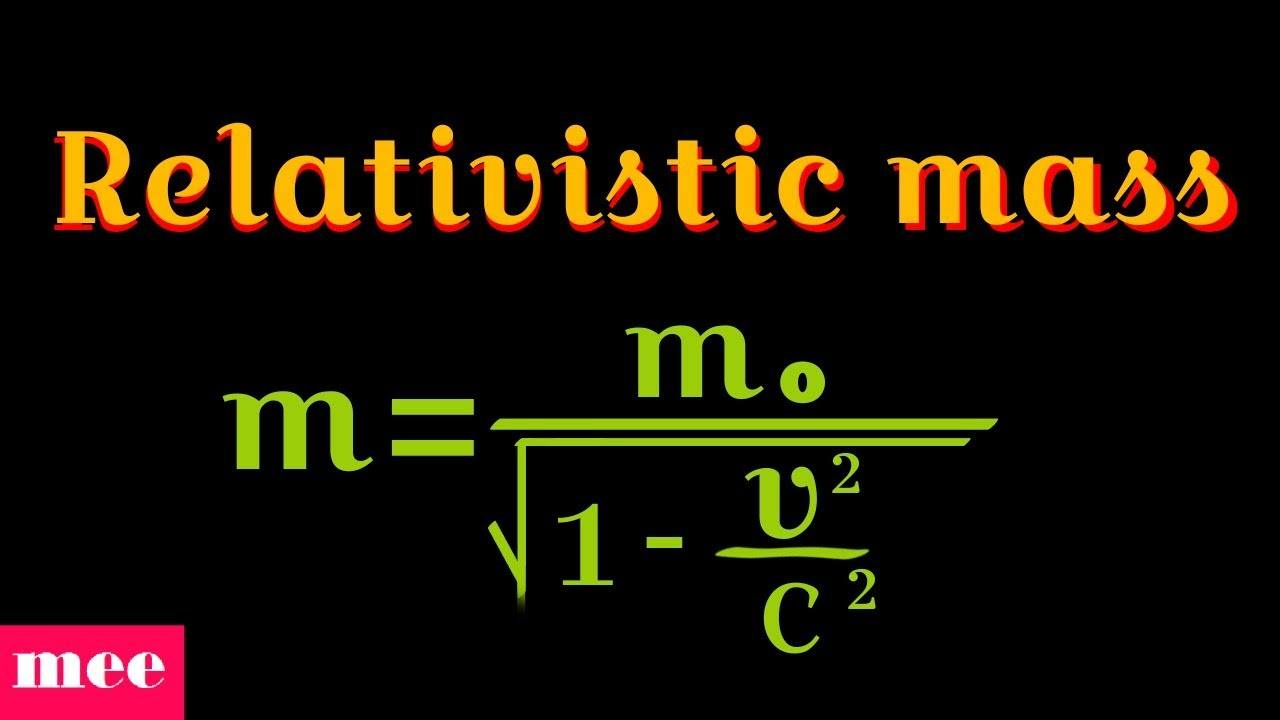
Many people believe, “As the speed of matter approaches the speed of light its mass increases to infinity, and therefore it is impossible to make matter travel faster than light.” Such people misinterpret Einstein’s theory of Relativity. This belief erroneously considers the external force required to increase the velocity of a particle as its “additional mass.”

In fact, a matter particle, as an isolated system, will decrease in its mass and inertia to increase in velocity. If external force is involved, then more force will be required to push a particle that offers less inertia. For example, a photon has no mass or inertia; therefore, it becomes impossible to accelerate it even with an infinite amount of push.

Einstein never derived the expression for relativistic mass himself and privately disapproved of it. By 1948, he had come to denounce the use of relativistic mass as it was being applied in special relativity.

The fact is that matter is very limited in its velocity before it looses its identity as matter and converts into a quanta of energy to have greater speed.

.

New Theory and Skeptics

Reference: Essays on Substance

New Theory and Skeptics

There will always be skeptics to new ideas, theories and discoveries. If these skeptics provide reasoning for their skepticism, then they should be listened to, and effort should be made to resolve the anomalies pointed out. But if the skeptics have a closed mind, and they offer no reasoning but fixed ideas only, then they should be ignored outright.

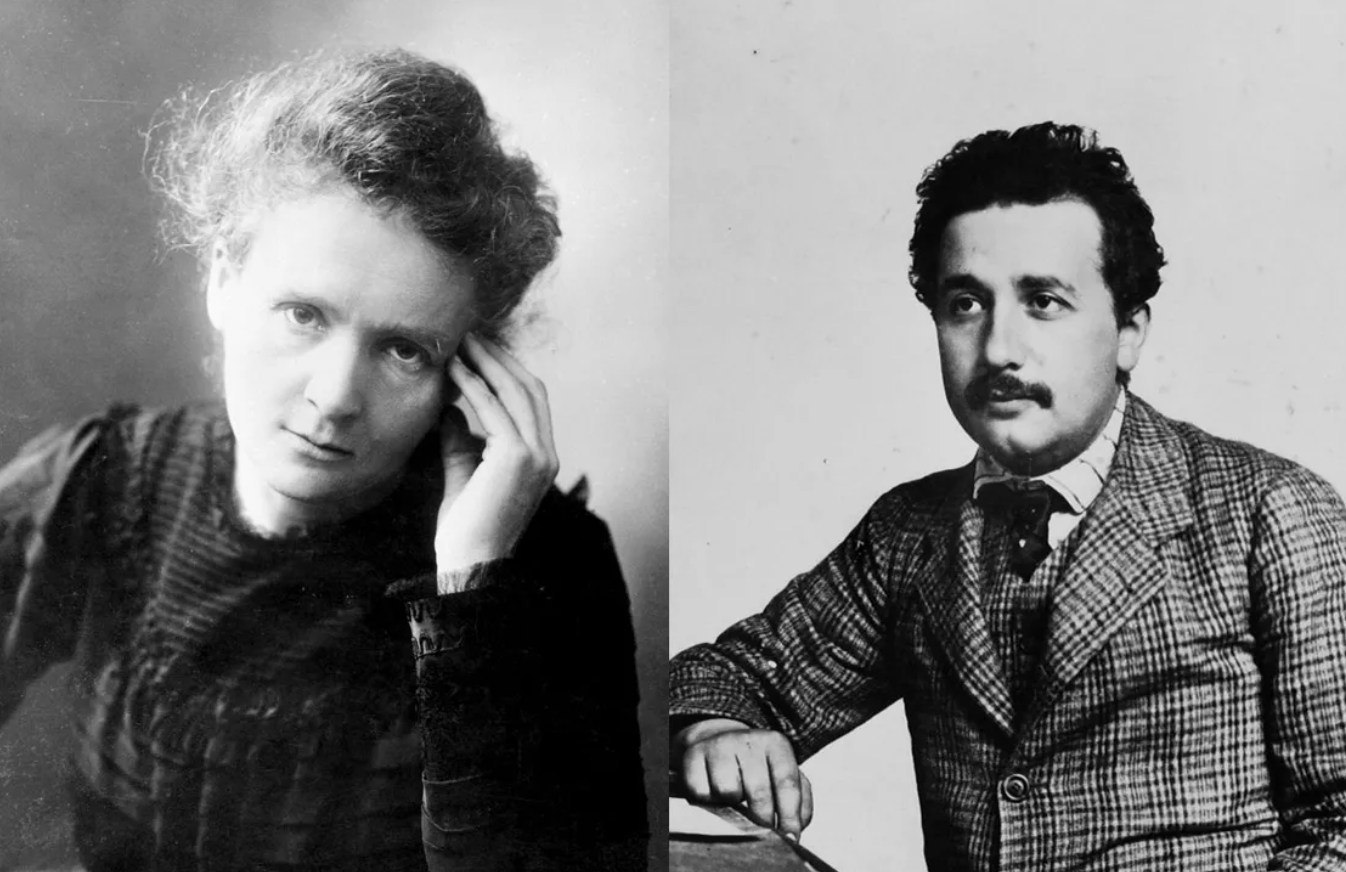
Both Albert Einstein and Marie Curie had their share of skeptics. In 1911, Einstein advised Curie as follows:

“If the rabble continues to occupy itself with you, then simply don’t read that hogwash, but rather leave it to the reptile for whom it has been fabricated.”

Here is Einstein’s letter to Curie in full:

“Highly esteemed Mrs. Curie,

“Do not laugh at me for writing you without having anything sensible to say. But I am so enraged by the base manner in which the public is presently daring to concern itself with you that I absolutely must give vent to this feeling. However, I am convinced that you consistently despise this rabble, whether it obsequiously lavishes respect on you or whether it attempts to satiate its lust for sensationalism! I am impelled to tell you how much I have come to admire your intellect, your drive, and your honesty, and that I consider myself lucky to have made your personal acquaintance in Brussels. Anyone who does not number among these reptiles is certainly happy, now as before, that we have such personages among us as you, and Langevin too, real people with whom one feels privileged to be in contact. If the rabble continues to occupy itself with you, then simply don’t read that hogwash, but rather leave it to the reptile for whom it has been fabricated.

“With most amicable regards to you, Langevin, and Perrin, yours very truly,

“A. Einstein

“P.S. I have determined the statistical law of motion of the diatomic molecule in Planck’s radiation field by means of a comical witticism, naturally under the constraint that the structure’s motion follows the laws of standard mechanics. My hope that this law is valid in reality is very small, though.”

Grateful for Einstein’s support during a time when she was being attacked by the press and others in the scientific community, Curie would go on to become great friends with Einstein. 

.

The Basis of Scientific Method

Reference: Essays on Substance

The Basis of Scientific Method

The Scientific Method was described earlier at

The Scientific Method

The following 12 aspects of mindfulness form the basis of the Scientific Method. Mindfulness provides the discipline for looking and contemplation.

1. Observe without getting influenced by your expectations and desires.

Desires make one want certain outcomes. This leads to speculations that have no basis other than one’s expectations. But it is only when you know what is there can you predict future in a reasonable and consistent manner.

2. Observe things as they are, without assuming anything.

Familiarity makes one assume certain things to be there. Such assumptions can take the form of beliefs, convictions, biases, fixed ideas, etc. The visualization is already there in the mind, and it gets superimposed over what is actually there. However familiar something may be, it is never permanent, and it may not actually be there.

3. If something is missing do not imagine something else in its place.

If something is missing, then recognize that it is missing. Do not imagine something in its place. If someone asks you a question and no answer come up in your mind, then do not feel obliged to make up an answer. Accept that you do not have an answer.

4. If something does not make sense, then do not explain it away.

If something does not make sense, then recognize that it does not make sense. Do not try to justify it. Justification simply puts the blame somewhere without resolving the inconsistency. When you are faced with an inconsistency, and you feel an impulse to explain it away, then be alert to what you might be taking for granted. At times it may take some out-of-the-box thinking to realize what is going on.

5. Use physical senses as well as the mental sense to observe.

We associate the idea of sense organs with eye, ear, nose, tongue, and body. We use them to observe physical objects, such as, chair, car, house, etc. However, the mind is also a sense organ, which senses ideas, thoughts, feelings, emotions, etc. These are mental objects. When being mindful, recognize both physical and mental objects for what they are.

6. Let the mind un-stack itself.

Let the mind un-stack itself naturally through patient contemplation on whatever comes up. Observe the issue uppermost in the mind, and then the next, and the next. Let the mind deal with issues in the order it wants to. There should be no effort to recall, to dig for answers, or to interfere with the mind in any way. Simply look at what is right there in front of the mind’s eye at any moment. The mind will never present anything overwhelming when allowed to un-stack itself.

7. Experience fully what is there.

Experiencing is the deepest form of mindfulness. A person is deeply mindful of his feelings, emotions and impulses when he is experiencing them. So, dive into the very heart of whatever arises in the mind without resisting. If the mind is racing, then experience it racing without contributing to it.

8. Do not suppress anything from yourself.

Not suppressing anything from yourself is being totally honest with yourself. Follow your attention wherever it goes and do not suppress. Do not avoid something just because it seems shameful or painful. It is the suppression of perceptions, memories, knowledge, visualizations, thinking, etc., that causes all difficulties in life. By not suppressing you establish complete integrity of your perceptions.

9. Associate data freely.

In order to practice mindfulness, you will have to let your mind associate data freely. Mindfulness is being comfortable with the very activity of thinking itself. So, let the mind associate data freely on its own.

10. Do not get hung up on name and form.

Name acts as a broad reference point to something. Form is one of the many ways that a thing may be represented. The perception of a thing goes beyond its name and form. Fixation on name and form may act as built-in judgment of what is there. To know something, one must go beyond name and form and look at it more closely including all its associations.

11. Contemplate thoughtfully.

When mindfulness is practiced, thinking becomes contemplation. Problems are solved by looking at them non-judgmentally and recognizing the relationships. One looks around to get the missing information instead of trying to “figure it out”.

12. Let it all be effortless.

When you let it be, it becomes effortless. Effort comes into play only when there is resistance to letting it be. It is completely safe when you let the body and mind unwind gradually on their own. Trouble occurs only when you become anxious and start to dig for answers.

.

Special Relativity & Time

Reference: Essays on Substance

Special Relativity & Time

The following essay is based on Chapter III, Section 1 “Astronomer Royal’s Time” of the book, “The Nature of the Physical World” by A. S. EDDINGTON. Eddington conducted an expedition to observe the solar eclipse of 29 May 1919 on the Island of Príncipe that provided one of the earliest confirmations of general relativity, and he became known for his popular expositions and interpretations of the theory.

Eddington starts this section by pointing out how time is perceived for everyday use is so very different from the time we sense subjectively. The fact is that the time for everyday use is based on the behavior of matter; but the time that we sense subjectively is based on the behavior of our thoughts. We may say that changes in matter provide the perception of “matter-time” for everyday use; and changes in thought provide the perception of “thought-time” that we have consciousness of. 

The matter-time has been woven into the structure of the classical physical scheme. But it is not the same as the thought-time that we are conscious of. The difference becomes obvious when we are waiting in the doctor’s office; the time appears to pass very slowly.

Eddington talks about how Einstein’s theory links the nature of time to the nature of space. This means matter-time has the same relationship with matter-space, as thought-time has with thought-space. Eddington identifies thought-time as “interval,” but it is actually “thought-interval” and not “matter-interval.” When we represent the enduring world as a three-dimensional space leaping from instant to instant through time, we are relating matter-space to matter-interval, and not to thought-interval.

Eddington then considers the situation, “If two people meet twice they must have lived the same time between the two meetings, even if one of them has travelled to a distant part of the universe and back in the interim.” In this case, the thought-interval will be very different for the two people, but their matter-interval will be the same.

Eddington then states, “If the speed of travel is very great we may find that, whilst the stay-at-home individual has aged 70 years, the traveler has aged 1 year.” This is obviously false because body would respond to the matter-interval, which is the same for both individuals. This confusion is due to incomplete math of the special theory of relativity, which does not take into account the relationship between speed and rigidity of substance.

Matter will not stay matter at terrific speeds. It will reduce to electromagnetic radiation. The math of Special relativity is applicable only  within the range of speeds that matter can have; and that too approximately.

It is interesting to see an established scientist misinterpreting the incomplete mathematics of a theory.

.

Second Postulate of Relativity

Reference: Essays on Substance

Second Postulate of Relativity

Let’s look at the second postulate underlying relativity.

(2) The speed of light in a vacuum is the same for all observers, regardless of the motion of the light source or the observer.

The speed of light may be compared to the ratio of the average wavelength of light to the average wavelength of an atom. We calculated that ratio using the wavelength of a nucleon (instead of an atom) to be 4 x 10⁸. It is in the same ballpark. See

The Rigidity of Mass

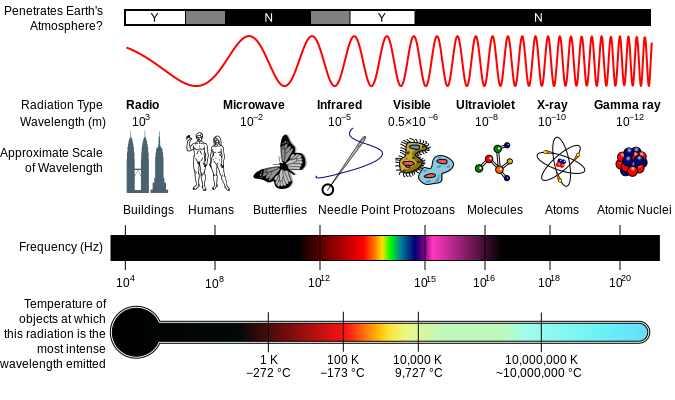
When we look from one end of the EM spectrum to the other, this ratio varies as follows:

For longest radio wave: 2^(77.6-1.6) = 7.5 x 10²²
For shortest gamma ray: 2^(77.6-66.6) = 2 x 10³

Apparently, there is a large variation in the speed of EMR, but we use the speed of visible light as our standard.

The speed of visible light is about 3 x 10⁸ times the speed of matter. This ratio is so large that it is practically constant relative to any inertial frame of matter. For this reason, the theory of relativity works, but it works relative to material frames of reference only.

It does not work that effieciently when we consider the electron’s frame of reference.

.