Author Archives: vinaire

I am originally from India. I am settled in United States since 1969. I love mathematics, philosophy and clarity in thinking.

Space, Mathematics and Einstein

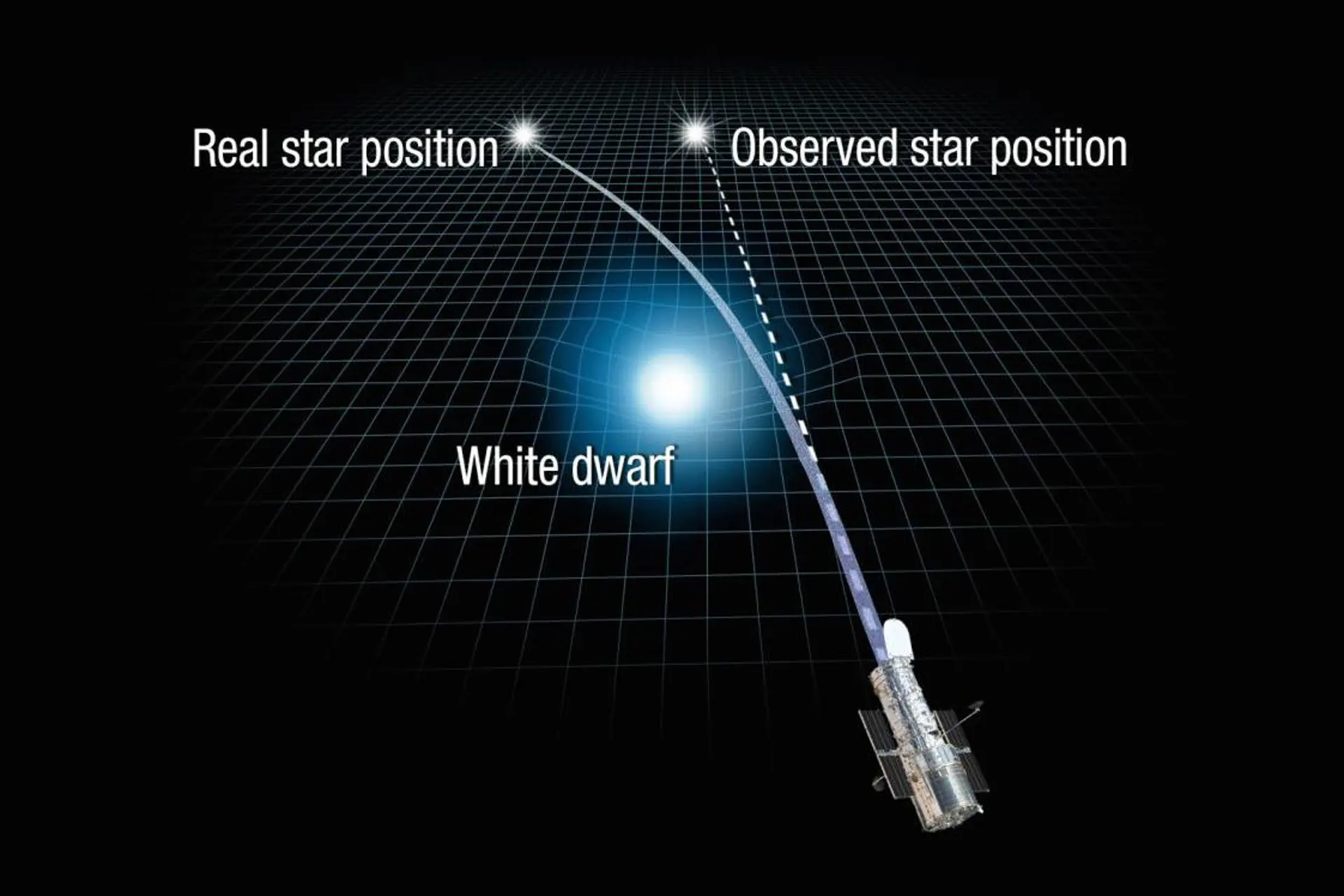
Einstein, in his general relativity, gives pure space a structure. This structure is influenced by the presence of physical mass. Where does this structure of space come from?

Space can curve. If this is an analogy, then the only description of space curving is through mathematics. Mathematics is based on postulates that are in coherence with each other. These postulates, axioms, or rules are all pure thought

So, a structure for pure space is being postulated in GR. Light is shown to follow this structure. Gravity of planets is also explained when planets are seen to follow this structure of pure space.

Basically, GR is postulating a coherence between physical structure of matter and radiation on one hand and the structure of pure space on the other. Matter, radiation and “space” are shown to be in some kind of coherence, or equilibrium, with each other.

We can sense the physical structures of matter and radiation through our physical senses. But we can sense the structure of pure space only through the thought put in mathematics. We can sense thought through our mental sense. And this makes thought a substance on its own right.

This is because SUBSTANCE can be defined as “anything substantial enough to be sensed.” We sense thought differently from radiation and matter; but thought, radiation and matter can all be sensed.

We may, therefore, say that pure space is made of thought.

.

Clearing Subjects

Reference: The Book of Subject Clearing

The first action of Subject Clearing is to choose the right subject to clear. This would be the most relevant subject at the top of list of Exercise 2 in Listing Subjects.

If this item pertains to personal life then go to Handling Personal Life and do the exercises there until your attention is no longer on personal life. Then do Exercise 2 again.

When the top item of Exercise 2 no longer pertains to personal life, then continue with the exercise below. This exercise requires the discipline of The 12 Aspects of Mindfulness for maximum positive results.

.

Exercise 3: Clearing Subjects

  1. Select the most relevant subject at the top of list. See the exercise in Listing Subjects.
  2. Make a list of all the key words related to that subject.
  3. Start clearing the meanings of these key words. Please see Word Meanings.
  4. Use AI and mindfulness meditation to fully understand the concepts underlying the key words in the context of the subject.
  5. As you become aware of more key words of the subject, add them to the list.
  6. Arrange all key words, starting from the purpose of the subject, from broad to narrow concepts on a gradient. 
  7. Please note that such an arrangement may branch out in various directions.
  8. Notice the missing, contradictory and arbitrary concepts that now become visible. Please see Resolving Anomalies.
  9. The missing concepts may be hidden under not so developed or overlapping concepts.
  10. Add the key words related to such concepts in the right sequence on the list.
  11. The contradictions may be resolved by looking more closely at the related definitions and fine tuning them. 
  12. The arbitrary, redundant or overlapping concepts may be given due consideration before getting rid of them.
  13. Develop comprehensive definitions for the key words as you resolve anomalies.
  14. Develop a glossary in which the key words and their definitions are presented alphabetically.
  15. Focus on working out the fundamentals of that subject, down to the postulates. 
  16. Come forward defining the subsequent concepts until there is continuity, consistency and harmony among them.
  17. Do this until your attention is no longer fixated on the subject, and it is free to consider other subjects.
  18. Go back to the exercise of Listing Subjects, and rearrange the subjects again that are crowding your mind.
  19. Go back to step 1 above.

.

Handling Personal Life

Reference: The Book of Subject Clearing

Regrets

When applying Subject Clearing to personal life, here is a specific exercise:

  1. Start making a list of actions you committed, or omitted, which resulted in harm of some kind, and you have regrets about it.
  2. For each such action meditate specifically on the following aspects:
    • The precise TIME (in days, weeks, months and years ago) when that action occurred.
    • The precise PLACE (location in house, city, state, country) where that action took place.
    • The precise FORM (category, type) of that action, such as, a betrayal, a lie, etc.
    • The full EVENT (the details of that action—one moment to the next) from beginning to end.
  3. Keep meditating and continue adding such actions to your list until you start to feel relief.

You just have to get totally honest with yourself. This exercise may require a bit of courage.

.

General Approach

A general approach of Subject Clearing to personal life shall be as follows:

  1. Make a list of all the things that you have attention on. NOTE: It is important that you complete this list to a point that you have a feeling of satisfaction.
  2. Arrange these items in the order from the most to the least relevant.
  3. Meditate on the top item from this list.
  4. Notice the missing, contradictory and arbitrary considerations that now become visible. NOTE: This is the key step.
  5. Find missing considerations. Resolve contradictions among considerations through meditation. Get rid of arbitrary considerations.
  6. Do this until your attention is no longer fixated on this item, and it free to consider other items of personal life.
  7. Go back to step 1.

.

Comprehensive Approach

If the above is not comprehensive enough for you then go to Grassroots Scientology.

.

Listing Subjects

Reference: The Book of Subject Clearing

In this exercise we start making a complete list of subjects that are crowding your mind.

During this exercise, if any time you have difficulty with focusing your attention then go to Handling Introversion and do the exercises there until your attention is extroverted and stabilized. Then return to this exercise.

.

Exercise 2: Listing Subjects

  1. Once you understand the different categories of subjects, start making a list of all the subjects that are crowding your mind. 
  2. Find all the subjects related to the doubts, perplexities, and confusions you have, and write their titles on a list.
  3. When you have accounted for all the things crowding in your mind by your list of subjects, you will feel a sense of relief. If not, then look anything missing on this list.
  4. When your list is complete, start clearing up the meanings of subject titles according to the example given below. At a minimum clear up the ‘root meaning’ and ‘purpose’.
  5. If more subjects come to your mind as you proceed with this exercise, just add them to this list.
  6. Once the meanings of all subject titles are cleared, arrange the subjects on the list from most relevant to the least.
  7. The end product of this exercises is a well-arranged, complete list of subjects that are crowding your mind.

Example: Clear the meaning of subject title.

  1. Suppose the subject title is MATHEMATICS. 
  2. The first action is to look up the “root meaning” of MATHEMATICS to get the basic sense of it.
    1. You may use a Dictionary or Google to look up the word MATHEMATICS.
    2. Or, you may ask Perplexity, “What is the root meaning of the word MATHEMATICS?”
    3. You may get a response somewhat along the lines: “Mathematics” derives from Greek máthēma, meaning “that which is learned” or “knowledge.” Ignore other details.
  3. The second action is to look up the “purpose” of MATHEMATICS.
    1. You may use a Dictionary or Google to look up definitions until you understand the purpose.
    2. Or, you may ask Perplexity, “What is the purpose of MATHEMATICS?”
    3. You may get a response somewhat along the lines: “The purpose of mathematics is to provide a universal framework for understanding, describing, and solving problems in the world through patterns, logic, and quantitative relationships.” Ignore other details.


Go to Clearing Subjects for the next exercise.

.

Holding: Radiation

RADIATION

—A—

—B—

BLACK BODY
(1859) Black body… discovery of radiation (light, emission spectrum) as field-substance… Mechanical-substance in equilibrium with field-substance based on temperature only… Temperature defines the state of activity of the substance…

BLACK-BODY RADIATION (Notes)
1. Black Body
2. Thermodynamic Equilibrium
3. Equipartition Theorem
4. Rayleigh-Jeans Law
5. Ultraviolet Catastrophe
6. Black-body Radiation

(1900) Blackbody radiation… Electromagnetic energy could only be emitted in quantized form…

All consistencies of the EM spectrum are in equilibrium with each other. These consistencies occur in precise steps. This spectrum goes all the way up to the electron.

—C—

‘c’ (UNIVERSAL CONSTANT)
The space and time are related through the consistency of substance. This relationship yields the universal constant ‘c’.

CLASSICAL TO QUANTUM MECHANICS
1. Field-Matter Interactions
2. Derivation of Planck’s Radiation Law

COSMOLOGICAL CONSTANT
In cosmology, the cosmological constant, alternatively called Einstein’s cosmological constant, is the constant coefficient of a term that Albert Einstein temporarily added to his field equations of general relativity.

COSMOLOGY
Cosmology is a branch of astronomy that involves the origin and evolution of the universe, from the Big Bang to today and on into the future. According to NASA, the definition of cosmology is “the scientific study of the large scale properties of the universe as a whole.”

—D—

—E—

EINSTEIN’S POSTULATES
Einstein provided a new theory of motion. He postulated that

  1. The laws of physics are the same for everyone. The universe plays no favorites and doesn’t decide on who is moving and who isn’t.
  2. The speed of light is measured to be the same for everyone. Two people who are moving at very different speeds will both measure the speed of light to be the same.

NOTE: The relative speeds in material domain are so small that, compared to the speed of light, they are practically zero.

We can say, light has a natural speed. It is relative to other speeds. Similarly, light has a natural consistency. It is relative to other consistencies. Thus, substance has properties of motion and consistency. They are inversely lated.

ELECTRIC CONSTANT (ε0)
ε0 is called permittivity of free space. Permittivity is a property of all materials. It is related to how an external electrical field will affect charges within a medium. In free space there are no charges to affect, unless the permittivity of space is the minimum value tied into the nature of space and time in a way that we do not fully understand. ε0 contains information about how strong the electric force is when you remove considerations of charge and distance… 

ELECTROMAGNETIC FORCE
Electromagnetic Force has extremely large range, stronger at shorter distances. Electromagnetic force involves charges; but the weak force doesn’t. Seems like the electromagnetic force is due to steeper gradient of consistency than the weak force.

ENERGY (EINSTEIN)
Einstein essentially discovered that light was a substance that had a consistency much less than that of matter, which gave it a much greater motion. Because of its imperceptible consistency and much greater motion, light was recognized as “pure” energy, because, until then, energy was related to the motion of matter. 

—F—

—G—

GAMMA RADIATION
Gamma radiation is governed by electromagnetic force.

—H—

—I—

—J—

—K—

—L—

LIGHT
Light is a substance of consistency within a certain range that is much less than the range of consistency of matter. In fact, the universal constant of the speed of light is actually the ratio of the average consistency of matter to the average consistency of light.

—M—

MAGNETIC CONSTANT (μ0)
The constant μ0 a magnetic analog, permeability of free space, from Ampere’s Law, which describes how a magnetic field affects magnets in a medium.

MAGNETISM
Use in compasses… one end points North… Oersted (1819) discovered that electric current in a wire deflected the needle of a compass. Electric current in the wire generated a magnetic field. The wire makes a magnetic field that has a circular shape, and it doesn’t have north and south poles. Faraday (1831) discovered that changing magnetic field caused current in the wire… electricity and magnetism are related… this was a pivotal moment in the history of technology. Maxwell (1861) published Maxwell’s Equations that put all the earlier work together showing that electricity and magnetism are one and the same. Derivative form of these equations led to crucial insight; it led to classical wave equation. The constant was related to the speed of light; it showed that light was an electromagnetic wave.

MASS (REST)
Rest mass is the mass of an object that is at rest relative to you, and because you can move faster than the object to push it. 

MASS (RELATIVISTIC)
The term ‘relativistic mass’ was invented to convey the idea that it is harder to push a moving object, as you have to be moving faster than the object to push it. It is a misconception that a particle’s mass gets bigger as it speeds up.

MAXWELL’S EQUATIONS
Maxwell’s equations led to the concept that light is an electromagnetic wave; but to a wrong visualization. Just because similar math applies to transverse waves of ripples in water, does not necessarily mean that light can be visualized as having ripples. But that is how light is shown in all scientific illustrations. Light is a fluid-like smooth flow in space of a very diffused substance. The electrical and magnetic fields are internal states that convert into each other at a very rapid rate, but that has nothing to do with how light appears in space except for its color. There are no ripples of light existing in some medium. This is a great illustration of a matter-centric view that we carry, and which has led to many misunderstandings. Just like the word “particle,” the word “wave” has also led to the wrong visualization of substance other than matter. The best way to visualize substance is in terms of the CONSISTENCY of its FIELD.

MOTION (Inherent)
Motion is relative looseness of substance. The tighter and more rigid is the substance, the less motion it contains. The looser and more flexible is the substance, the more motion it contains. The opposite of motion is inertia. The lesser is the inertia the greater is the motion. Light is extremely loose substance. Thought is looser still.

—N—

—O—

—P—

—Q—

—R—

RADIATION
(1905) Einstein theoretically derives the equivalence of matter and energy. This basically establishes the validity of electromagnetic radiation as a substance.

RELATIVITY
(1905) Einstein publishes his Special Theory of Relativity. This takes advantage of the large difference in quantization between field-substance and material-substance.

—S—

—T—

—U—

—V—

—W—

—X—

X-RAYS
(1895) Discovery of X-rays… Highly energetic photons… Greater penetration into material-substance.

—Y—

—Z—

.