Author Archives: vinaire

I am originally from India. I am settled in United States since 1969. I love mathematics, philosophy and clarity in thinking.

Happiness: Precept 1-1

Reference: The Happiness Rundown

1-1. Get care when you are ill

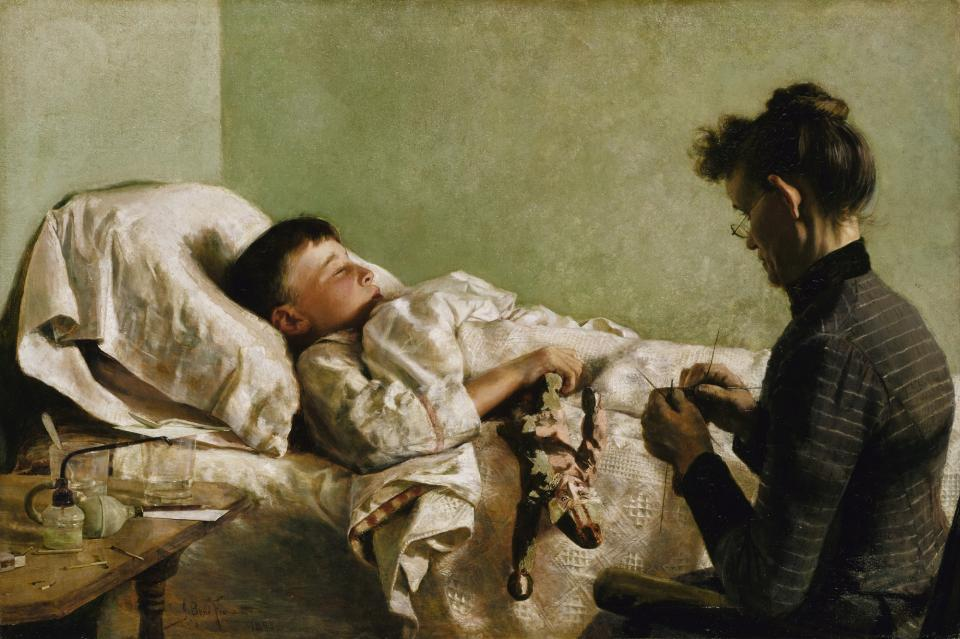
When they are ill, even with communicable diseases, people often do not isolate themselves or seek proper treatment. This, as you can easily see, tends to put you at risk. Insist that when someone is ill that he or she takes the proper precautions and gets proper care. 

.

Exercise

0. Make sure you have completed the exercise section at Happiness: Precept 1. Study the precept above.

1. Check the responses to the following questions for false data (see false data steps at Happiness: Prologue).

(a) “Have you been told or taught not to get care when you are ill?”
(b) “Do you have any rules or ideas contrary to getting care when you are ill?”
(c) “Have you been led to believe that you shouldn’t get care when you are ill?”
(d) “Do you know of anything that conflicts with getting care when you are ill?”
(e) “Do you have any false data about getting care when you are ill?”

.

2. Go over each of the following questions repetitively, until there are no more answers: 

(a) “How have others transgressed against the precept: ‘Get care when you are ill’?”
(b) “How have you transgressed against the precept: ‘Get care when you are ill’?”

Do a quick review to see if you did not miss any answers on this step. You should be feeling good about this step.

.

3. See if the following question definitely brings up some name you know of:

“Is there any specific person in your past who really transgressed against the precept: ‘Get care when you are ill’?”

If no name comes up then go to step 4. if a name has come up, then continue contemplating as follows:

“Can you recall an exact moment when you observed ___(name)___ transgressing this precept?”

If there is a realization, go to step 4. Otherwise, continue contemplating as follows, until there is some realization.

“Is there any time when you wanted to be like ___(name)___ ?” 
“Is there any time when you decided that not getting care when you were ill was a good thing?”
“Did you ever do anything bad to ___(name)___ ? 
(Get all possible answers)
“Are there any differences between ___(name)___ and yourself?”
“Are there any similarities between ___(name)___  and yourself?”

.

4. Handle any anomalies that come up on the following question by looking at the anomaly more closely. 

”Do you have any reservations about getting care when you are ill?” 

If the anomaly does not resolve then review the precept as well as all the exercise steps above to see if anything was missed. Then do step 4 again. When there is no anomaly go to step 5.

.

5. Contemplate on the following question.

“Do you have any reservations about getting someone else to keep the precept: ‘Get care when you are ill’?” 

If any reservation comes up, then consider the following: 

“How would that be a problem?” 

Get answers to this question until there are no reservations.

.

Theta, MEST and Death

Static implies that Theta and MEST are substances in two different dimensions. Theta is the potential that becomes actual only when manifested in MEST. This manifestation results in motion which is life. In Hubbard’s Theta-MEST theory, theta may separate from MEST and survive as pure potential.

Hubbard postulated the Theta-MEST theory to explain the phenomena of Death. Most of the conscious life leaves the body at the moment of death. So, Hubbard postulated a unit of theta (thetan) leaving the body at death. But life in the organs of the body takes another 14 days to leave completely. So Hubbard postulated a Genetic Entity to explain that. But even when the body disintegrates completely, some motion still remains at the atomic level. This presents an anomaly because if theta leaves the MEST, then no motion should be left at all in MEST.

We find that motion is inherent to MEST at the atomic level and it can never be separated. Motion becomes more sophisticated as MEST becomes more complex at the molecular level. As molecules increase in complexity they act like computers. A DNA molecule is so complex that it can store the whole blue print of the body within itself. The sophisticated motion at the level of the body expresses itself as thought. Throughout this increasing complexity of MEST, the increasingly sophisticated motion cannot be separated from MEST.

So, at the moment of death, most of the sophisticated motion of life ceases, because the overall system of the body breaks down. The remaining motion of the body ceases over the next 14 days as body’s sub-systems break down one by one. Subsequently, any sophisticated motion goes dormant in the DNA molecules. So, we can explain death in terms of an integrated Theta-MEST system gradually breaking down and becoming dormant, instead of “theta leaving MEST.” This is more consistent.

Lets’ look at the phenomenon of exteriorization where, in Hubbard’s model, the thetan leaves the body, and the genetic entity is left in the body to maintain its functions. We may explain the phenomenon of exteriorization in terms of shift in consideration. When the person is interiorized, his attention is, actually, fixated on the body. When this attention suddenly frees itself up, we have exteriorization. The body, actually, extends as an aura around the solid part. The attention units, when freed up, can be focused in the aura away from the solid part. This makes one feel that one is outside the body, when in fact the Theta-MEST remains integrated. This is more consistent than the hypothesis of “theta leaving MEST.”

.

Happiness: Precept 1

Reference: The Happiness Rundown

1. TAKE CARE OF YOURSELF 

1-1. Get care when you are ill. When they are ill, even with communicable diseases, people often do not isolate themselves or seek proper treatment. This, as you can easily see, tends to put you at risk. Insist that when someone is ill that he or she takes the proper precautions and gets proper care. 

1-2. Keep your body clean. People who do not bathe or wash their hands regularly can carry germs. They put you at risk. You are well within your rights to insist that people bathe regularly and wash their hands. It is inevitable that one gets dirty working or exercising. Get them to clean up afterwards. 

1-3. Preserve your teeth. If one brushed one’s teeth after every meal, it has been said that one would not suffer tooth decay. This, or chewing gum after each meal, goes far toward defending others from oral diseases and bad breath. Suggest to others that they preserve their teeth. 

1-4. Eat properly. People who do not eat properly are not of much help to you or themselves. They tend to have a low energy level. They are sometimes ill-tempered. They become ill more easily. It doesn’t require strange diets to eat properly but it does require that one eats nourishing food regularly. 

1-5. Get rest. Although many times in life one has to work beyond normal sleep periods, a person’s general failure to get proper rest can make him or her a burden to others. Tired people are not alert. They can make mistakes. They have accidents. Just when you need them they can dump the whole workload on one. They put others at risk. Insist that people who do not get proper rest do so.

.

Exercise

0. Make sure you have completed the exercise section at Happiness: Prologue. Study the precept above.

1. Check the responses to the following questions for false data (see false data steps at Happiness: Prologue).

(a) “Have you been told or taught not to take care of yourself?”
(b) “Do you have any rules or ideas contrary to taking care of yourself?”
(c) “Have you been led to believe that you shouldn’t take care of yourself?”
(d) “Do you know of anything that conflicts with taking care of yourself?”
(e) “Do you have any false data about taking care of yourself?”

.

2. Go over each of the following questions repetitively, until there are no more answers: 

(a) “How have others transgressed against the precept: ‘Take care of yourself’?”
(b) “How have you transgressed against the precept: ‘Take care of yourself’?”

Do a quick review to see if you did not miss any answers on this step. You should be feeling good about this step.

.

3. See if the following question definitely brings up some name you know of:

“Is there any specific person in your past who really transgressed against the precept: ‘Take care of yourself’?”

If no name comes up then go to step 4. if a name has come up, then continue with step 3 as follows:

“Can you recall an exact moment when you observed ___(name)___ transgressing this precept?”

If there is a realization, go to step 4. Otherwise, continue contemplating as follows, until there is some realization.

“Is there any time when you wanted to be like ___(name)___ ?” 
“Is there any time when you decided that not taking care of yourself was a good thing?”
“Did you ever do anything bad to ___(name)___ ?
(Get all possible answers)
“Are there any differences between ___(name)___ and yourself?”
“Are there any similarities between ___(name)___  and yourself?”

.

4. Handle any anomalies that come up on the following question by looking at the anomaly more closely. 

”Do you have any reservations about taking care of yourself?” 

If the anomaly does not resolve then review the precept as well as all the exercise steps above to see if anything was missed. Then do step 4 again. When there is no anomaly go to step 5.

.

5. Contemplate on the following question.

“Do you have any reservations about getting someone else to take care of himself or herself?” 

If any reservation comes up, then consider the following: 

“How would that be a problem?” 

Get answers to this question until there are no reservations.

.

Happiness: Prologue

Reference: The Happiness Rundown

HAPPINESS

True joy and happiness are valuable.

If one does not survive, no joy and no happiness are obtainable.

Trying to survive in a chaotic, dishonest and generally immoral society is difficult.

Any individual or group seeks to obtain from life what pleasure and freedom from pain that

he or they can.

Your own survival can be threatened by the bad actions of others around you.

Your own happiness can be turned to tragedy and sorrow by the dishonesty and misconduct

of others.

I am sure you can think of instances of this actually happening. Such wrongs reduce one’s

survival and impair one’s happiness.

You are important to other people. You are listened to. You can influence others.

The happiness or unhappiness of others you could name is important to you.

Without too much trouble, using this book, you can help them survive and lead happier lives.

While no one can guarantee that anyone else can be happy, their chances of survival and

happiness can be improved. And with theirs, yours will be.

It is in your power to point the way to a less dangerous and happier life.

.

Introduction to the Exercise

The booklet gives the information and stable data which one can use in life. These exercises handle any confusions or charge of the past which could get in one’s way. By freeing one up from charge of the past, a fresh start is possible. 

It is well known that nobody is perfect and as the subject of conduct and good behavior may have been quite confusing in the past, it is not surprising that all of us have made errors in our conduct. You may be reminded of some of these during these exercises. It is okay to look at something about yourself that seems discreditable or embarrassing. Such things usually seem much worse before they have been examined and one feels better after examining them in detail. You should not judge yourself based on what has happened in the past. These are lessons good or bad that help you attain a happier life. 

.

False Data Steps

Make sure you know these steps to handle false data:

  1. Look at the idea that came up in response to the question. 
  2. Find the source of the idea—either a person, book, TV, newspaper, movie, school or something else.
  3. See if you can recall the exact moment when you received that data.
  4. Look at how that data seems to you now.

.

Exercise

1. Make sure you understand the meaning of the following words: “precept,” “transgress,” “transgressed,” “transgression,” “survival,” “happiness,” “chaotic,” “immoral,” and “false data.” (See Glossary: The Way to Happiness).

2. Clear the words “moral” and “morality” from the glossary and regular dictionary.

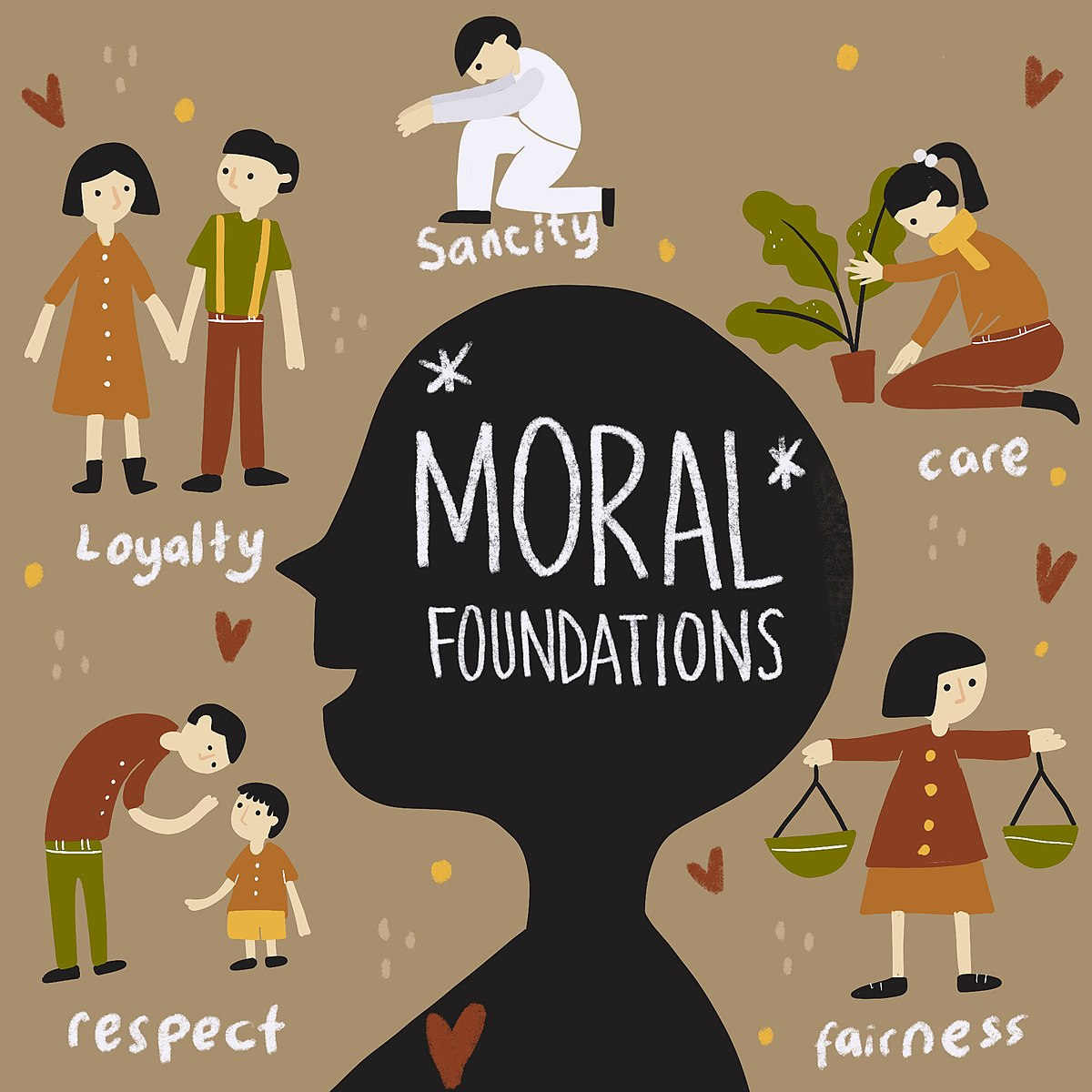
MORAL
Able to know right from wrong in conduct; deciding and acting from that understanding. First recorded in 1300–50; Middle English, from Latin mōrālis, equivalent to mōr- (stem of mōs) “usage, custom” + -ālis-al1

Morals, ethics refer to rules and standards of conduct and practice. Morals refers to generally accepted customs of conduct and right living in a society, and to the individual’s practice in relation to these: the morals of our civilization. Ethics now implies high standards of honest and honorable dealing, and of methods used, especially in the professions or in business: ethics of the medical profession.

MORALITY

  1. conformity to the rules of right conduct; moral or virtuous conduct.
  2. moral quality or character.
  3. virtue in sexual matters; chastity.
  4. a doctrine or system of morals.
  5. moral instruction; a moral lesson, precept, discourse, or utterance.
  6. morality playan allegorical form of the drama current from the 14th to 16th centuries and employing such personified abstractions as Virtue, Vice, Greed, Gluttony, etc.

3. Contemplate over the question: “Have you been told or taught that the word ‘moral’ meant something different?

If yes, then check for false data (see the steps above).

4. Contemplate over the question: “Do you have any rules or ideas about morality that are contrary to the definition of the word?

If yes, then check for false data.

5. Contemplate over the question: “Have you been given any beliefs on the subject of morality that don’t make sense?”

If yes, then check for false data.

6. Contemplate over the question: “Have you run into a moral code that you found impossible to keep?”

If yes, then check for false data.

7. Contemplate over the question: “Do you have any false data on the subject of morality?”

If yes, then check for false data.

8. Look at your ideas and considerations about morality now, and see if there is still some anomaly that you need to resolve.

If so, then look at that anomaly more closely until it resolves. Repeat this step until no anomaly appears.

.

Glossary: The Way to Happiness

Reference: The Way To Happiness

Definitions

These definitions are given as footnotes in the booklet The Way to Happiness with the following caution: 

“Words sometimes have several different meanings. The footnote definitions given in this book only give the meaning that the word has as it is used in the text. If you find any words in this book you do not know, look them up in a good dictionary. If you do not, then misunderstandings and possible arguments can arise.”

ADAMANT
hard; not giving in; unyielding; something which won’t break; insistent; refusing any other opinion; surrendering to nothing.

ARISTOCRACY
government by a few with special privileges, ranks or positions; rule by an elite few who are above the general law; a group who by birth or position are “superior to everybody else” and who can make or apply laws to others but consider that they themselves are not affected by the laws.

BOORS
persons with rude, clumsy manners and little refinement.

CHAOTIC
having the character or nature of total disorder or confusion. 4. immoral: not moral; not following good practices of behavior; not doing right; lacking any idea of proper conduct.

COMPETENT
able to do well those things one does; capable; skilled in doing what one does; measuring up to the demands of one’s activities. 

COMPROMISE 
a settlement of differences in which each side gives in on some point while retaining others and reaching a mutual agreement thereby

DETER
to prevent or discourage.

DOLE
the British term for government relief. 

ENVIRONMENT
one’s surroundings; the material things around one; the area one lives in; the living things, objects, spaces and forces with which one lives whether close to or far away. 

EVOLUTIONARY
related to a very ancient theory that all plants and animals developed from simpler forms and were shaped by their surroundings rather than being planned or created. 

EXAMPLE 
someone or something worthy of imitation or duplication; a pattern, a model. 

FLOURISH
to be in a state of activity and production; expanding in influence; thriving; visibly doing well. 

“THE GOLDEN RULE”
although this is looked upon by Christians as Christian and is found in the New and Old Testaments, many other races and peoples spoke of it. It also appears in the Analects of Confucius (fifth and sixth centuries B.C.) who, himself, quoted from more ancient works. It is also found in “primitive” tribes. In one form or another it appears in the ancient works of Plato, Aristotle, Isocrates and Seneca. For thousands of years it has been held by man as a standard of ethical conduct. The versions given in this book are newly worded, however, as in earlier wordings it was thought to be too idealistic to be kept. It is possible to keep this version

HAPPINESS
a condition or state of well-being, contentment, pleasure; joyful, cheerful, untroubled existence; the reaction to having nice things happen to one.

HONOR 
to show respect for; to treat with deference and courtesy. 

IMMORAL
not moral; not following good practices of behavior; not doing right; lacking any idea of proper conduct.

IMPLACABLE
not open to being quieted, soothed or pleased; remorseless; relentless. 

INCOMPETENCE
lacking adequate knowledge or skill or ability; unskilled; incapable; subject to making big errors or mistakes; bungling.

INDUSTRIOUS
applying oneself with energy to study or work; actively and purposefully getting things done; opposite of being idle and accomplishing nothing.

INFLUENCES
has an effect upon. 18. influence: the resulting effect.

LIES
false statements or pieces of information deliberately presented as being true; a falsehood; anything meant to deceive or give a wrong impression.

MATERIALISM
any one of a family of metaphysical theories which view the universe as consisting of hard objects such as stones, very big or very small. The theories seek to explain away such things as minds by saying they can be reduced to physical things or their motions. Materialism is a very ancient idea. There are other ideas.

MATERIALISTIC
the opinion that only physical matter exists.

MECHANISM
the view that all life is only matter in motion and can be totally explained by physical laws. Advanced by Leucippus and Democritus (460 B.C. to 370 B.C.) who may have gotten it from Egyptian mythology. Upholders of this philosophy felt they had to neglect religion because they could not reduce it to mathematics. They were attacked by religious interests and in their turn attacked religions. Robert Boyle (1627–1691) who developed Boyle’s Law in physics, refuted it by raising the question as to whether or not nature might have designs such as matter in motion.

MORAL
able to know right from wrong in conduct; deciding and acting from that understanding.

MORALE
the mental and emotional attitude of an individual or a group; sense of well-being; willingness to get on with it; a sense of common purpose.

MURDER
the unlawful killing of one (or more) human being(s) by another, especially with malice aforethought (intending to do so before the act).

OBLIGATION 
the condition or fact of owing another something in return for things, favors or services received.

the state, fact or condition of being indebted to another for a special service or favor received; a duty, contract, promise or any other social, moral or legal requirement that binds one to follow or avoid a certain course of action; the sense of owing another.

PHENOMENON
an observable fact or event.

PILLORIED
exposed to ridicule, public contempt, scorn or abuse.

PRACTICE
to exercise or perform repeatedly in order to acquire or polish a skill.

PRECEPTS
rules or statements advising or laying down a principle or principles or a course of action regarding conduct; directions meant as a rule or rules for conduct.

PRODUCTION
the act of completing something; finishing a task, project or object that is useful or valuable or simply worth doing or having.

PROMISCUOUS
having or engaging in casual, random sexual relations.

PROPAGANDA
spreading ideas, information or rumor to further one’s own cause and/or injure that of another, often without regard to truth; the act of putting lies in the press or on radio and TV so that when a person comes to trial he will be found guilty; the action of falsely damaging a person’s reputation so he will not be listened to. Propagandist: a person or group who does, makes or practices propaganda.

PROPAGANDIST
a person or group who does, makes or practices propaganda. Propaganda: spreading ideas, information or rumor to further one’s own cause and/or injure that of another, often without regard to truth; the act of putting lies in the press or on radio and TV so that when a person comes to trial he will be found guilty; the action of falsely damaging a person’s reputation so he will not be listened to.

PROSPER
to achieve economic success; succeeding at what one does

RELIEF
goods or money given by a government agency to people because of need or poverty.

SAFEGUARD
prevent from being harmed; protect.

SURVIVAL
the act of remaining alive, of continuing to exist, of being alive.

TEMPERATE
not going to extremes; not overdoing things; controlling one’s cravings.

TRUTH
that which agrees with the facts and observations; logical answers resulting from looking over all the facts and data; a conclusion based on evidence uninfluenced by desire, authority or prejudice; an inevitable (unavoidable) fact no matter how arrived at.

TYRANNICAL
the use of cruel, unjust and absolute power; crushing; oppressing; harsh; severe.

VANDALISM
the willful and malicious destruction of public or private property, especially anything beautiful or artistic.

VIRTUES
the ideal qualities in good human conduct.

WILL
bearing or attitude toward others; disposition; traditionally, “men of good will” means those who mean well toward their fellows and work to help them.

.