
Reference: Essays on Substance
Second Postulate of Relativity
Let’s look at the second postulate underlying relativity.
(2) The speed of light in a vacuum is the same for all observers, regardless of the motion of the light source or the observer.
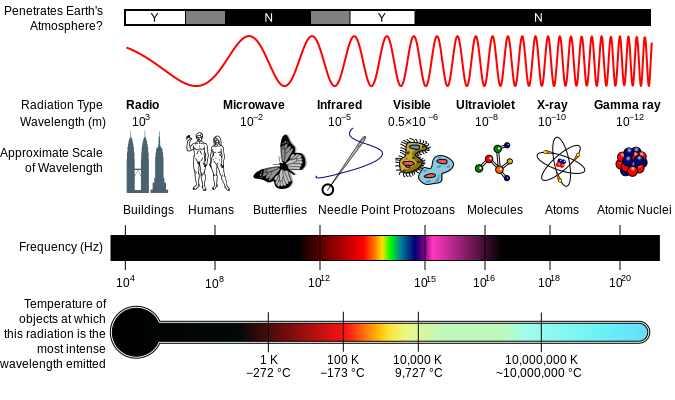
The speed of light may be compared to the ratio of the average wavelength of light to the average wavelength of an atom. We calculated that ratio using the wavelength of a nucleon (instead of an atom) to be 4 x 10⁸. It is in the same ballpark. See
When we look from one end of the EM spectrum to the other, this ratio varies as follows:
For longest radio wave: 2^(77.6-1.6) = 7.5 x 10²²
For shortest gamma ray: 2^(77.6-66.6) = 2 x 10³
Apparently, there is a large variation in the speed of EMR, but we use the speed of visible light as our standard.
The speed of visible light is about 3 x 10⁸ times the speed of matter. This ratio is so large that it is practically constant relative to any inertial frame of matter. For this reason, the theory of relativity works, but it works relative to material frames of reference only.
It does not work that effieciently when we consider the electron’s frame of reference.
.
