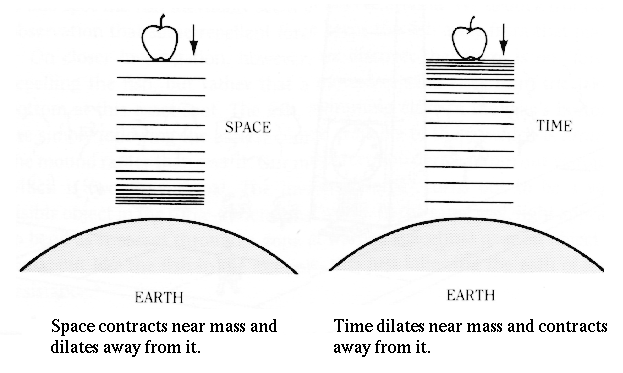
See UNIVERSE: Basic Definitions
It has been a while since any major contribution has been made to physical sciences in terms of fundamental theoretical research. It has not been easy to examine physical phenomena at the atomic levels. There are more mathematical explanations than real explanations in modern scientific investigations.
Newton used mathematics to “describe” the void, which could not be realistically described. Maxwell used mathematics to “describe” aether, which was postulated by the wave theory of light. Einstein used mathematics to “describe” space and time in an effort to explain gravity. The increasing use of mathematics in quantum mechanics and particle physics has only resulted in further losing touch with reality.
Although Newtonian mechanics, Maxwell’s Electromagnetic theory, Einstein’s theory of Relativity, and now Quantum mechanics and Particle physics predict remarkably verifiable results in selected areas, they are not integrated enough to predict verifiable results for all physical phenomena.
The very fact that the fundamental theories of physics cannot be reconciled indicates that there are basic assumptions underlying physics that are inconsistent with reality.
The subject of physics started out considering material substance moving in a complete void. It stumbled over the question: “How do material objects influence each other across the void?” Any influence requires contact. The void does not allow any contact.
From the study of electricity and magnetism arose the idea of invisible force fields that could transmit force. This idea of field has changed considerably from Faraday’s lines of force to the abstract mathematical objects of quantum physics. But the interaction between matter and void has yet to be described realistically without using the prop of mathematical symbolism.
This book is written on the premise that physics is taking certain concepts for granted, which needs to be examined more closely.
The subject of physics started out with the consideration that there is matter existing in a void. Therefore, the first two concepts that need to be examined more closely are matter and void.
The Part I of this book traces the discoveries in the subject of physical sciences. Part II then looks at this subject for assumptions.
[NOTE: This is a work in progress.]
.