Monthly Archives: January 2013

IITK in the 60s

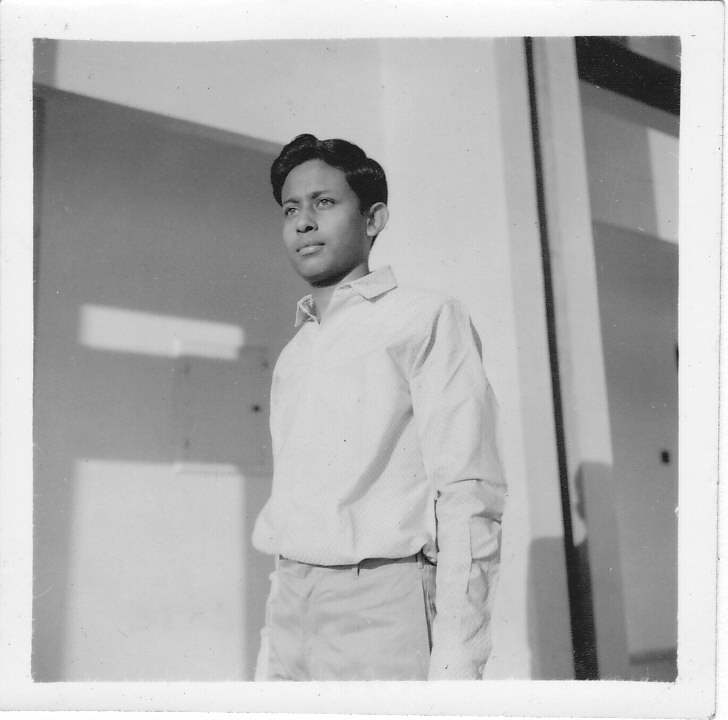
Uday Sengupta

My very dear friend UDAY SENGUPTA, who, unfortunately, passed away recently.

This picture now makes me feel sad. Uday was a wonderful artist.

{Note: Here are my current views on Death}

.

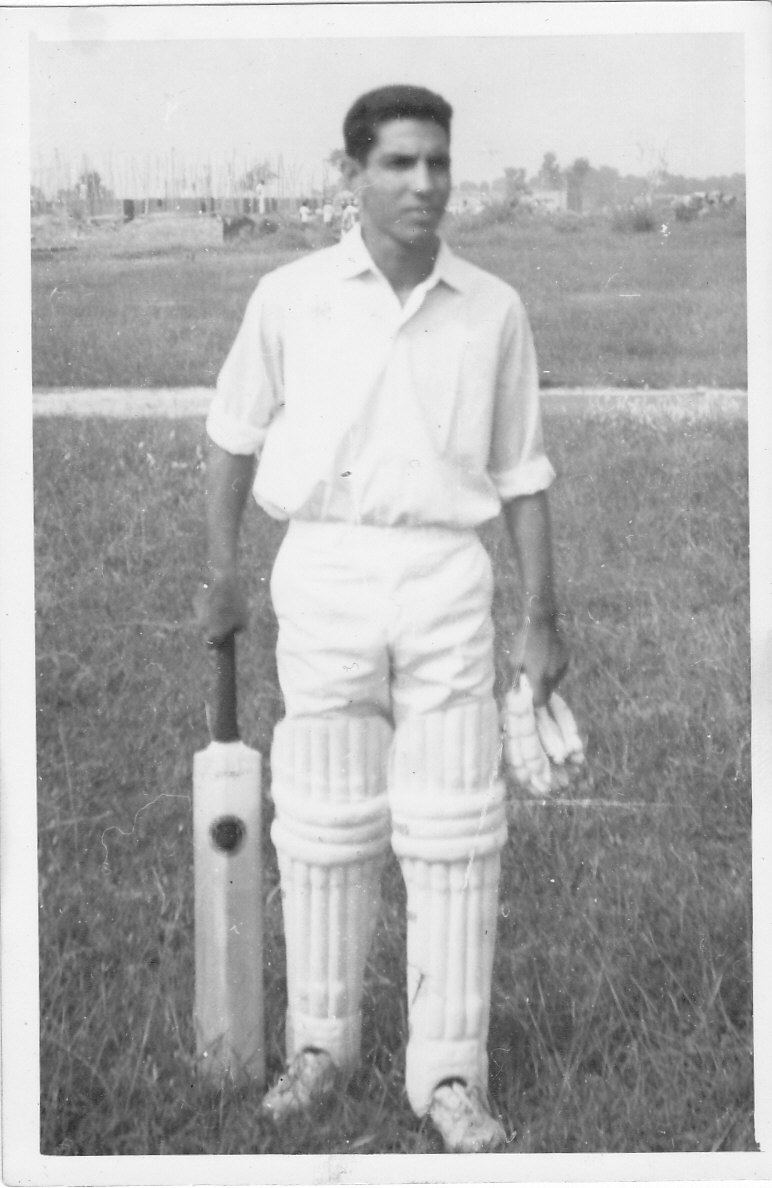
Sunil Dhawan

My good friend, Sunil Dhawan, who I have always admired for his level-headedness.

{Note: Here are my current views on Life}

.

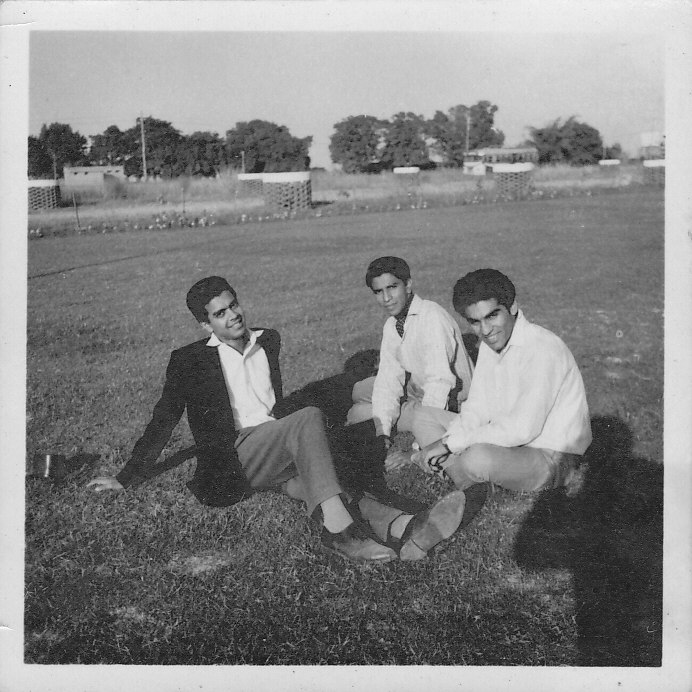
Vinay Sushil Ashok

Here I am with my room mate, Ashok Dhawan, on the right, and dorm neighbor, Sushil Handa in the middle. This was one of the moments of relaxation from studies and antics. My room number was 113 in the first year and 213 in the subsequent years. Handa’s room number was 111 and 211 respectively. It is amazing that such small details still exist in the memory.

.

It was a wonderful life then. It is a wonderful life now.

The world around you is what you make it.

.

Vinaire

.

Modern Scientology OT

Here is an example of a modern Scientology OT:

A Scientology OT seems to be fixated on the salvation of the self. He treats self as something that needs to be boosted up, made powerful and glorified. But self is relative, conditioned and impermanent.

“The Absolute Truth is that there is nothing absolute in the world, that everything is relative, conditioned and impermanent, and that there is no unchanging, everlasting, absolute substance like Self, Soul, or Ātman within or without.” ~ Buddha

This fixation on self is one of the problems with Scientology. This is also pertinent to the manipulation of self, as in brainwashing.

.

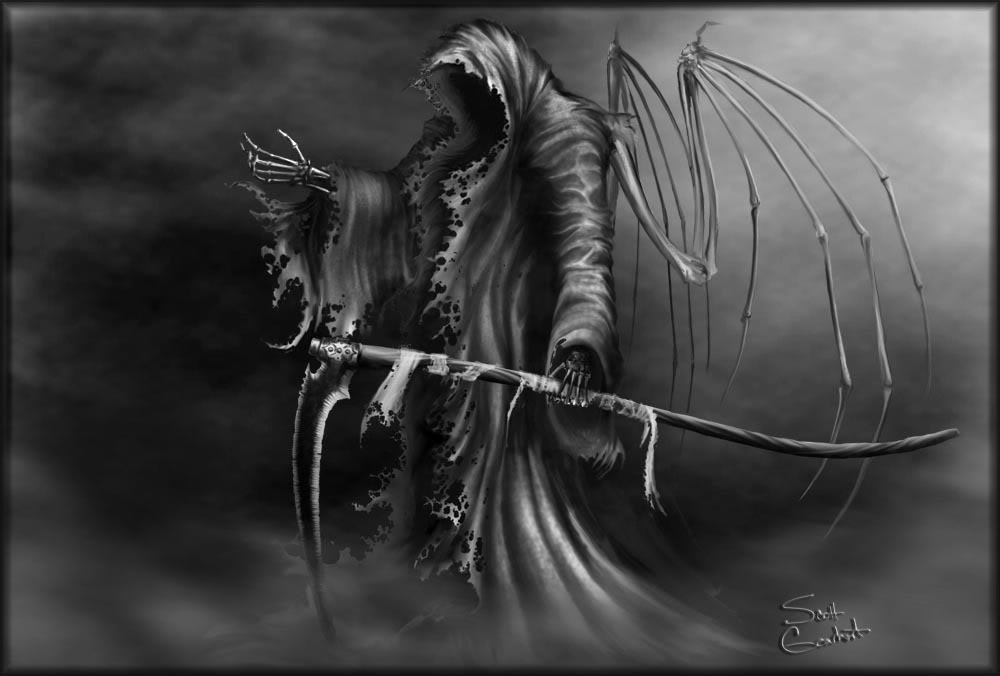
Death

Angel_of_Death

At death, the body disintegrates into physical particles (atoms and molecules), and the identity that was the body is dissolved. Similarly, the observing and thinking part of the person (the living soul) also disintegrates into considerations (thoughts, memories, etc.), and the identity that was the person is also dissolved. That is my current understanding.

However, the particles and considerations remain and they can recombine into another “body plus living soul” configuration. There is infinity of such recombination.

What are the ultimate laws underlying this disintegration and reintegration, I don’t know the details at the moment. But this seems to be going on forever like complex cycles of some eternal wave according to Hinduism.

Nirvana is something different altogether. It happens to a live soul. In my opinion, nirvana is like de-condensation of CONSIDERATIONS. It is the separation of perception-point from all its considerations. This is called giving up of all attachment in Hinduism. One then sees things as they are without any filters as in Buddhism. There is no individuality in terms of attachment to considerations. A perception point is the same as any other perception point. It does not add anything to what is observed or experienced.

Nothing arrives at Nirvana. it is what remains after all attachments are dissolved. I call it a perception-point. But even the perception-point dissolves at parinirvana by merging into its own manifestation… something like electron merging into positron.

Parinirvana is probably what occurs at death, where the live soul, that was already reduced to a completely detached perception-point, merges back into its own manifestation, extinguishing both. The laws of disintegration and reintegration are thus bypassed. But this is only my speculation.

The basis of this speculation is removal of all inconsistencies that I am aware of at this level.

.

Out of Body Experience

OOBE

A friend recently sent me an article Who Am I? The question of one’s identity This article describes a “spiritual” experience that I have myself experienced. I would like to comment on the following experience from this article.

I was lying in bed not yet asleep when my consciousness shifted and I became aware of another reality. The sense of being in my bedroom and even of being in my body disappeared. I expanded in a spherical way and finally found myself in an unlimited space. Imagine yourself being somewhere in the universe. You can see the stars all around you. Then take the stars away, that was the space I was in. Just me and unlimited space. It impossible to describe it accurately. I have to resort to our mundane language to give you some idea what it was like. The vastness of that space is beyond description. My perception was spherical, and there was a strong sense of duality of me and that infinity. There were no directions, there was nothing else. Nothing to grab on to. That made me extremely afraid. I desperately wanted to get back to my body. At least that was something I could grab on to. I needed limitations, I could not deal with unlimited emptiness. It was a long and hard struggle, requiring all my will power to get to my body.

This is very similar to my experience that I documented in Chapter 18 of My Introduction to America. It still sends chills through me whenever this happens again. I have gotten somewhat used to it now.

What do I make of this experience? Well, it is something quite subjective. It contains a very unusual sensation that is difficult to get used to completely. It usually happens soon after hitting the bed after an active day. It cannot be willed. It simply happens.

Since working on the Philosophy Project, the “I” appears to me as if it is the center of all the considerations that I hold. By considerations, I mean, thoughts, ideas, assumptions, expectations, suppositions, conjectures, speculations, etc. The existence of “I” seems to depend on all the considerations that I feel attached to. It seems that if I could let go of all my considerations, and view them objectively only, then the “I” would simply reduce to a perception-point. There would no longer be an individuality or identification remaining.

So, what is happening in that experience described above. I have read several people, such as Swami Vivekananda and Aleister Crowley, giving account of a similar experience.  It is almost like the considerations detaching themselves from the “I” and receding from it, and the “I” being reduced to a perception point. It may be described as a process in which “I” is undergoing a de-condensation.

So, the infinite space that is experienced may simply be the impression coming from the final few considerations left. It is what the “I” is reduced to.  “I” has nothing to grab on to but itself; and if this is not acceptable then appropriate considerations would be pulled back in. Though after this experience, the person may not feel the same again.

However, I do not think that at any point the life is threatened. The body is still there and very much alive. What may go away is the subjective attachment to it. The perception may become clearer, and the sense of rationality simpler. One may start looking at everything questioningly as if from a new pair of eyes.

What the above article calls ‘mind’, I refer to it as ‘unknowable’ in the many posts that I have written on this blog. This is because anything that may be stated about the ‘unknowable’ would simply be a consideration arising out of whatever ‘unknowable’ is. We are then looking at the consideration that has arisen and not at what it has arisen from.

There is nothing absolute or permanent. ‘Unknowable’ is unknowable because we cannot even say if it is absolute or permanent. So, I disagree with the following statement from this article.

“This is called the Dharmakaya, the body of realty, the essence, the absolute. This is the essence of our being, it is always there, it will always be.”

Otherwise, it is a good article.

.

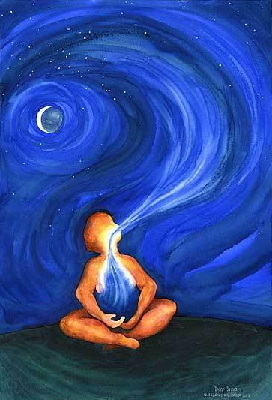
CONSCIENCIA PLENA AL RESPIRAR

[References: MINDFULNESS & MINDFULNESS IN LOOKING]

La consciencia plena con respecto al cuerpo comienza con la respiración. Se observa la respiración en su estado natural conforme aparece y desaparece. No se hace un intento de regular la respiración, ni de añadir nada más. Uno está totalmente inmerso en esta observación, lo que significa permitir cualquier sensación, sentimiento, consciencia, idea, pensamiento, etc., fluir a través del yo sin resistencia.

Budha dice en Satipatthana Sutta: The Foundations of Mindfulness

“¿Y cómo vive un monje contemplando el cuerpo en el cuerpo?
“Aquí,  monjes, un monje, habiendo ido al bosque, al pie de un árbol o en  algún lugar deshabitado,  se sienta con sus piernas cruzadas, manteniendo su torso erecto y  su consciencia alerta.
“Siempre pleno en su consciencia, él aspira,  con consciencia plena, él espira.  Haciendo una aspiración larga,  él sabe,  ‘Estoy haciendo una aspiración larga’; haciendo una espiración larga, él sabe, ‘estoy haciendo  una espiración larga’; haciendo una aspiración corta, él sabe, ‘estoy haciendo una aspiración corta’;  haciendo una espiración corta, él sabe, ‘estoy haciendo una espiración corta.’
“’Experimentando el conjunto (respiración-) cuerpo, yo aspiraré,’ así él se entrena a sí mismo. ‘Experimentando el conjunto (respiración-) cuerpo, yo espiraré,’ así él se entrena a sí mismo. ‘Calmando la actividad  del conjunto (respiración-) cuerpo, Yo aspiraré,’ así él se entrena a sí mismo. ‘Calmando la actividad  del conjunto (respiración-) cuerpo, Yo espiraré,’ así él se entrena a sí mismo.
“Justamente como un tornero experimentado o un aprendiz de tornero, haciendo un torneado largo,  sabe,   ‘estoy haciendo  un torneado largo,’ o haciendo  un torneado corto,  sabe,  ‘estoy hacienda un torneado corto,’  de la misma forma, el monje, haciendo una aspiración larga,  sabe, ‘Estoy haciendo una aspiración larga’;  haciendo una espiración larga,  él sabe, estoy haciendo  una espiración larga’; haciendo una aspiración corta, él sabe, ‘estoy haciendo una aspiración corta’; haciendo una espiración corta,  él sabe, ‘estoy haciendo una espiración corta.’ ’Experimentando el todo (respiración-) cuerpo, yo aspiraré,’ así él se entrena a sí mismo. ‘Experimentando el todo (respiración-) cuerpo, Yo espiraré,’ así él se entrena a sí mismo. ‘Calmando la actividad del conjunto (respiración-) cuerpo, Yo aspiraré,’ así él se entrena a sí mismo. ‘Calmando la actividad del conjunto (respiración-) cuerpo, Yo espiraré,’ así él se entrena a sí mismo.
“Así el vive contemplando el cuerpo en el cuerpo internamente, o vive contemplando el cuerpo en el cuerpo externamente,  o vive contemplando el cuerpo en el cuerpo internamente y externamente.  Él vive contemplando factores de originación  en el cuerpo, o vive contemplando factores de disolución en el cuerpo, o él vive contemplando factores de originación  y disolución en el cuerpo. O su consciencia plena es establecida con el pensamiento: “El cuerpo existe”, al punto justamente necesario para conocimiento y consciencia plena, y él vive separado,  y no se aferra a nada en el mundo. De esta manera, monjes, el monje vive contemplando el cuerpo en el cuerpo.”

.

EJERCICIO

PROPÓSITO:  Practicar consciencia plena al respirar.

NOTA 1: Es muy importante, al tratar de resolver problemas y confusiones,  que te soportes en la realidad. En este ejercicio, respirando, te mantienes anclado en la realidad.

NOTA 2: NO INTERFIERAS CON LA MENTE. Este ejercicio es objetivo y no subjetivo. 

  1. Encuentra un lugar donde puedas sentarte cómodamente por un rato sin interrupciones ni distracciones.

  2. Asegúrate de haber comido y dormido lo suficiente. No quieres que tu cuerpo sea una distracción.

  3. Siéntate en una posición cómoda con tu espalda levantada y derecha.  Si te sentaste en una silla, mantén tus pies apoyados en el piso y tus manos en tu vientre.

  4. Mantente atento a tu respiración. No trates de regular la respiración. Simplemente observa el patrón natural al aspirar y espirar.

    En las palabras de Budha:
    • Siempre pleno en consciencia,  aspira,  con consciencia plena,  espira.
    • Haciendo una aspiración larga, sabe,  “Estoy haciendo una aspiración larga”;
    • Haciendo una espiración larga, sabe, “Estoy haciendo  una espiración larga”;
    • Haciendo una aspiración corta, sabe, “Estoy haciendo una aspiración corta”;
    • Haciendo una espiración corta, sabe, “Estoy haciendo una espiración corta.”
  5. No te muevas ni hagas nada. Simplemente está ahí como observador. Puedes cerrar tus ojos si lo deseas.

    NOTA: Puedes rascarte, bostezar, ajustar el cuerpo, etc., conforme te asientas,  pero después de un tiempo, cuando realmente te metas al ejercicio, todos esos movimientos deben desaparecer sin mucho esfuerzo.
  6. No le añadas nada a este ejercicio. Por ejemplo:

    • No esperes ningún resultado especial
    • No trates de hacer que tu mente se ponga en blanco
    • No suprimas pensamientos, sentimientos o emociones
  7. Mientras estás teniendo consciencia plena de la respiración, experimenta todo el cuerpo.

    En las palabras de Budha:
    • Entrénate a tí mismo, “Experimentando  todo el cuerpo, yo aspiraré.”
    • Entrénate a tí mismo, “Expermientando  todo el cuerpo, yo espiraré.”
  8. Mientras haces lo anterior, no interfieras con las actividades del cuerpo  y de la mente en forma de poner resistencia a ellas,  añadiendo o suprimiendo pensamientos o algo más. Esto gradualmente calmará las actividades del cuerpo y la mente.

    Por ejemplo, si la mente empieza a correr, déjala correr. Deja que las sensaciones, sentimientos, consciencias, ideas, pensamientos, etc., vengan y vayan.  Si el cuerpo siente sueño, déjalo dormir; se despertará de nuevo. Simplemente mantén plena consciencia del respirar. 

    En las palabras de Budha:
    • Entrénate a ti mismo, “Camando la actividad del cuerpo, yo aspiraré.”
    • Entrénate a tí mismo, “Calmando la actividad del cuerpo, yo espiraré.”
  9. Continúa contemplando al cuerpo y sus actividades, internamente y/o externamente.

  10. Ten consciencia plena de los factores de originación en el cuerpo y/o de los factores de disolución en el cuerpo.

  11. Ten consciencia plena de que el cuerpo existe justamente como es necesario para que haya conocimiento y consciencia plena.

  12. Vive de manera objetiva, y no te aferres a nada en el mundo.

  13. Deja que el ejercicio ocurra sin esfuerzo. Termina el ejercicio en un punto en el que te sientas bien. El tiempo que te mantengas sentado puede estar en cualquier punto entre 15 minutos y 2 horas o más.

  14. Repite este ejercicio hasta que se convierta en una parte natural de tí.

.

Después de algo de práctica en lo anterior, puedes añadir el siguiente paso si lo deseas.

Mira en tu mente y localiza algo que está tratando de llamar tu atención. Acéptalo sin enjuiciamiento, y experiméntalo sin resistencia.

.