Tag Archives: 800000

Eddington 1927: Theory of the Atom

atom3

Reference: The Nature of the Physical World

This paper presents Chapter IX (section 4) from the book THE NATURE OF THE PHYSICAL WORLD by A. S. EDDINGTON. The contents of this book are based on the lectures that Eddington delivered at the University of Edinburgh in January to March 1927.

The paragraphs of original material are accompanied by brief comments in color, based on the present understanding.  Feedback on these comments is appreciated.

The heading below links to the original materials.

.

Theory of the Atom

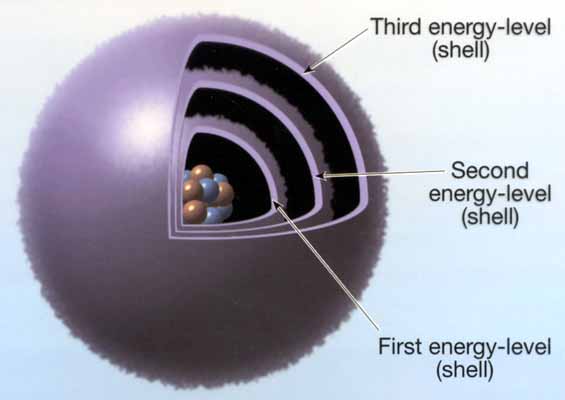
We return now to further experimental knowledge of quanta. The mysterious quantity h crops up inside the atom as well as outside it. Let us take the simplest of all atoms, namely, the hydrogen atom. This consists of a proton and an electron, that is to say a unit charge of positive electricity and a unit charge of negative electricity. The proton carries nearly all the mass of the atom and remains rock-like at the centre, whilst the nimble electron moves round in a circular or elliptic orbit under the inverse square-law of attraction between them. The system is thus very like a sun and a planet. But whereas in the solar system the planet’s orbit may be of any size and any eccentricity, the electron’s orbit is restricted to a definite series of sizes and shapes. There is nothing in the classical theory of electromagnetism to impose such a restriction; but the restriction exists, and the law imposing it has been discovered. It arises because the atom is arranging to make something in its interior equal to h. The intermediate orbits are excluded because they would involve fractions of h, and h cannot be divided.

The significance of the mysterious quantity ‘h’ (Planck’s constant) is that it is energy per cycle at the center of the atom. Here the frequency is near infinite, and the energy per cycle is the lowest. Actually, ‘h’ is the limiting value as frequency goes to infinity.

An atom is a whirlpool of field-substance, much like a galaxy. The rotating field-substance is increasing in substantiality as it approaches the center. At the center it condenses into a nucleus. The nucleus anchors the atom.

The rotating field-substance within the atom is diffused at the periphery but it increases in frequency and quantization as it approaches the center. Increasingly discrete field-particles appear closer to the nucleus. In case of the simplest hydrogen atom, the whirlpool-like field-substance is identified as an “electron”, and the condensed nucleus at the center is identified as a “proton”. The field-substance and field-particles have charge instead of mass. The property of mass belongs to the whole atom.

This field-substance has many quantization levels. Each quantization level has a unique energy per cycle. It acquires the lowest value ‘h’ at the center. The value ‘h’ appears to be constant and indivisible only because it is a limiting value for infinite frequency.

But there is one relaxation. When wave-energy is sent out from or taken into the atom, the amount and period must correspond exactly to h. But as regards its internal arrangements the atom has no objection to 2h, 3h, 4h, etc.; it only insists that fractions shall be excluded. That is why there are many alternative orbits for the electron corresponding to different integral multipliers of h. We call these multipliers quantum numbers, and speak of 1 -quantum orbits, 2-quantum orbits, etc. I will not enter here into the exact definition of what it is that has to be an exact multiple of h; but it is something which, viewed in the four-dimensional world, is at once seen to be action though this may not be so apparent when we view it in the ordinary way in three-dimensional sections. Also several features of the atom are regulated independently by this rule, and accordingly there are several quantum numbers—one for each feature; but to avoid technical complication I shall refer only to the quantum numbers belonging to one leading feature.

Within an atom the highest quantization level exist at the center where the frequency is the highest and energy per cycle is the lowest. As one moves towards the periphery of the atom, the quantization decreases and the energy per cycle increases.

At lower quantization levels, the space and time units are larger because of lesser substantiality. The energy per cycle at these levels is identified as the wave-energy sent from or taken into the atom. The values of energy per cycle appear to be unique and as strict multiples of ‘h’.

Bohr’s atom seems to identify different quantum-orbits filled with electrons. Instead there seems to be different quantization levels manifested as unique field-particles for that level. These field-particles are not completely discrete.

According to this picture of the atom, which is due to Niels Bohr, the only possible change of state is the transfer of an electron from one quantum orbit to another. Such a jump must occur whenever light is absorbed or emitted. Suppose then that an electron which has been travelling in one of the higher orbits jumps down into an orbit of less energy. The atom will then have a certain amount of surplus energy that must be got rid of. The lump of energy is fixed, and it remains to settle the period of vibration that it shall have when it changes into aether-waves. It seems incredible that the atom should get hold of the aether and shake it in any other period than one of those in which it is itself vibrating. Yet it is the experimental fact that, when the atom by radiating sets the aether in vibration, the periods of its electronic circulation are ignored and the period of the aether-waves is settled not by any picturable mechanism but by the seemingly artificial h-rule. It would seem that the atom carelessly throws overboard a lump of energy which, as it glides into the aether, moulds itself into a quantum of action by taking on the period required to make the product of energy and period equal to h. If this unmechanical process of emission seems contrary to our preconceptions, the exactly converse process of absorption is even more so. Here the atom has to look out for a lump of energy of the exact amount required to raise an electron to the higher orbit. It can only extract such a lump from aether-waves of particular period—not a period which has resonance with the structure of the atom, but the period which makes the energy into an exact quantum.

There are no electrons jumping from one quantum orbit to another. Instead there are field-particles being added or subtracted at different quantization levels due to interactions. Each field-particle constitutes a cycle, which is absorbed or emitted as light.

There is no aether. There is only field-substance quantized as field-particle, and which may de-quantize back to field-substance (light).

As the adjustment between the energy of the orbit jump and the period of the light carrying away that energy so as to give the constant quantity h is perhaps the most striking evidence of the dominance of the quantum, it will be worthwhile to explain how the energy of an orbit jump in an atom can be measured. It is possible to impart to a single electron a known amount of energy by making it travel along an electric field with a measured drop of potential. If this projectile hits an atom it may cause one of the electrons circulating in the atom to jump to an upper orbit, but, of course, only if its energy is sufficient to supply that required for the jump; if the electron has too little energy it can do nothing and must pass on with its energy intact. Let us fire a stream of electrons all endowed with the same known energy into the midst of a group of atoms. If the energy is below that corresponding to an orbit jump, the stream will pass through without interference other than ordinary scattering. Now gradually increase the energy of the electrons; quite suddenly we find that the electrons are leaving a great deal of their energy behind. That means that the critical energy has been reached and orbit jumps are being excited. Thus we have a means of measuring the critical energy which is just that of the jump—the difference of energy of the two states of the atom. This method of measurement has the advantage that it does not involve any knowledge of the constant h, so that there is no fear of a vicious circle when we use the measured energies to test the h rule.* Incidentally this experiment provides another argument against the collection-box theory. Small contributions of energy are not thankfully received, and electrons which offer anything less than the full contribution for a jump are not allowed to make any payment at all.

* Since the h rule is now well established the energies of different states of the atoms are usually calculated by its aid; to use these to test the rule would be a vicious circle.

There are no electrons in the atom jumping orbits. There are only the field-particles condensing and de-condensing at certain energies of quantization levels.

.
Eddington 1927: Conflict with the Wave-Theory of Light

Wave theory

Reference: The Nature of the Physical World

This paper presents Chapter IX (section 3) from the book THE NATURE OF THE PHYSICAL WORLD by A. S. EDDINGTON. The contents of this book are based on the lectures that Eddington delivered at the University of Edinburgh in January to March 1927.

The paragraphs of original material are accompanied by brief comments in color, based on the present understanding.  Feedback on these comments is appreciated.

The heading below links to the original materials.

.

Conflict with the Wave-Theory of Light

The pursuit of the quantum leads to many surprises; but probably none is more outrageous to our preconceptions than the regathering of light and other radiant energy into A-units, when all the classical pictures show it to be dispersing more and more. Consider the light-waves which are the result of a single emission by a single atom on the star Sirius. These bear away a certain amount of energy endowed with a certain period, and the product of the two is h. The period is carried by the waves without change, but the energy spreads out in an ever-widening circle. Eight years and nine months after the emission the wave-front is due to reach the earth. A few minutes before the arrival some person takes it into his head to go out and admire the glories of the heavens and—in short—to stick his eye in the way. The light-waves when they started could have had no notion what they were going to hit; for all they knew they were bound on a journey through endless space, as most of their colleagues were. Their energy would seem to be dissipated beyond recovery over a sphere of 50 billion miles’ radius. And yet if that energy is ever to enter matter again, if it is to work those chemical changes in the retina which give rise to the sensation of light, it must enter as a single quantum of action h. Just 6 . 55 . 10-27 erg-seconds must enter or none at all. Just as the emitting atom regardless of all laws of classical physics is determined that whatever goes out of it shall be just h, so the receiving atom is determined that whatever comes into it shall be just h. Not all the light-waves pass by without entering the eye; for somehow we are able to see Sirius. How is it managed? Do the ripples striking the eye send a message round to the back part of the wave, saying, “We have found an eye. Let’s all crowd into it!”

The confusion here is view the phenomenon as many cycles of a very small period, rather than a single cycle of a larger wavelength and period. That single cycle is the quantum. This requires thinking of space and time in units other than the material units. This is quantization of time which goes along with quantization of space. We incorrectly measure the space in material units of “miles” or “meters”.

Attempts to account for this phenomenon follow two main devices which we may describe as the “collection-box” theory and the “sweepstake” theory, respectively. Making no effort to translate them into scientific language, they amount to this: In the first the atom holds a collection-box into which each arriving group of waves pays a very small contribution; when the amount in the box reaches a whole quantum, it enters the atom. In the second the atom uses the small fraction of a quantum offered to it to buy a ticket in a sweepstake in which the prizes are whole quanta; some of the atoms will win whole quanta which they can absorb, and it is these winning atoms in our retina which tell us of the existence of Sirius.

The collection-box explanation is not tenable. As Jeans once said, not only does the quantum theory forbid us to kill two birds with one stone; it will not even let us kill one bird with two stones. I cannot go fully into the reasons against this theory, but may illustrate one or two of the difficulties. One serious difficulty would arise from the half-filled collection-boxes. We shall see this more easily if, instead of atoms, we consider molecules which also absorb only full quanta. A molecule might begin to collect the various kinds of light which it can absorb, but before it has collected a quantum of any one kind it takes part in a chemical reaction. New compounds are formed which no longer absorb the old kinds of light; they have entirely different absorption spectra. They would have to start afresh to collect the corresponding kinds of light. What is to be done with the old accumulations now useless, since they can never be completed? One thing is certain; they are not tipped out into the aether when the chemical change occurs.

The space is neither filled of matter nor is it enduring like matter. But we proclaim space to be just that when we use material units to measure it. The error of old theories is to think of a quantum being constructed of many small cycles defined by material units, rather than a single cycle defined by quantized units.

A phenomenon which seems directly opposed to any kind of collection-box explanation is the photoelectric effect. When light shines on metallic films of sodium, potassium, rubidium, etc., free electrons are discharged from the film. They fly away at high speed, and it is possible to measure experimentally their speed or energy. Undoubtedly it is the incident light which provides the energy of these explosions, but the phenomenon is governed by a remarkable rule. Firstly, the speed of the electrons is not increased by using more powerful light. Concentration of the light produces more explosions but not more powerful explosions. Secondly, the speed is increased by using bluer light, i.e. light of shorter period. For example, the feeble light reaching us from Sirius will cause more powerful ejections of electrons than full sunlight, because Sirius is bluer than the sun; the remoteness of Sirius does not weaken the ejections though it reduces their number.

When we use quantized units instead of material units, Sirius is not that many cycles away as we think. This gives us a different feel for space.

This is a straightforward quantum phenomenon. Every electron flying out of the metal has picked up just one quantum from the incident light. Since the h-rule associates the greater energy with the shorter vibration period, bluer light gives the more intense energy. Experiments show that (after deducting a constant “threshold” energy used up in extricating the electron from the film) each electron comes out with a kinetic energy equal to the energy of the quantum of incident light.

The film can be prepared in the dark; but on exposure to feeble light electrons immediately begin to fly out before any of the collection-boxes could have been filled by fair means. Nor can we appeal to any trigger action of the light releasing an electron already loaded up with energy for its journey; it is the nature of the light which settles the amount of the load. The light calls the tune, therefore the light must pay the piper. Only classical theory does not provide light with a pocket to pay from.

It is always difficult to make a fence of objections so thorough as to rule out all progress along a certain line of explanation. But even if it is still possible to wriggle on, there comes a time when one begins to perceive that the evasions are far-fetched. If we have any instinct that can recognise a fundamental law of Nature when it sees one, that instinct tells us that the interaction of radiation and matter in single quanta is something lying at the root of world-structure and not a casual detail in the mechanism of the atom. Accordingly we turn to the “sweepstake” theory, which sees in this phenomenon a starting-point for a radical revision of the classical conceptions.

Suppose that the light-waves are of such intensity that, according to the usual reckoning of their energy, one-millionth of a quantum is brought within range of each atom. The unexpected phenomenon is that instead of each atom absorbing one-millionth of a quantum, one atom out of every million absorbs a whole quantum. That whole quanta are absorbed is shown by the photoelectric experiments already described, since each of the issuing electrons has managed to secure the energy of a whole quantum.

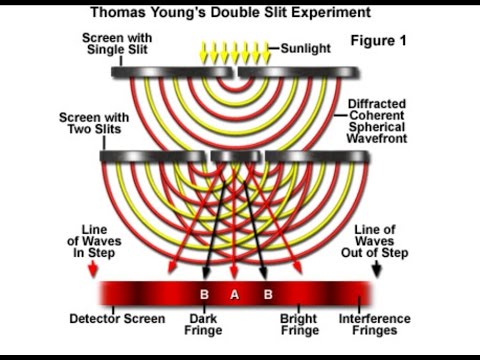
It would seem that what the light-waves were really bearing within reach of each atom was not a millionth of a quantum but a millionth chance of securing a whole quantum. The wave-theory of light pictures and describes something evenly distributed over the whole wave-front which has usually been identified with energy. Owing to well-established phenomena such as interference and diffraction it seems impossible to deny this uniformity, but we must give it another interpretation; it is a uniform chance of energy. Following the rather old-fashioned definition of energy as “capacity for doing work” the waves carry over their whole front a uniform chance of doing work. It is the propagation of a chance which the wave-theory studies.

The quantum hits the metal surface as a single cycle, and whichever atom it hits directly, absorbs it and expels a photoelectron.

Different views may be held as to how the prize-drawing is conducted on the sweepstake theory. Some hold that the lucky part of the wave-front is already marked before the atom is reached. In addition to the propagation of uniform waves the propagation of a photon or “ray of luck” is involved. This seems to me out of keeping with the general trend of the modern quantum theory; and although most authorities now take this view, which is said to be indicated definitely by certain experiments, I do not place much reliance on the stability of this opinion.

Any such idea as “chance” or “ray of luck” is not science.

.

Eddington 1927: The Atom of Action

Frequency

Reference: The Nature of the Physical World

This paper presents Chapter IX (section 2) from the book THE NATURE OF THE PHYSICAL WORLD by A. S. EDDINGTON. The contents of this book are based on the lectures that Eddington delivered at the University of Edinburgh in January to March 1927.

The paragraphs of original material are accompanied by brief comments in color, based on the present understanding.  Feedback on these comments is appreciated.

The heading below links to the original materials.

.

The Atom of Action

Remembering that action has two ingredients, namely, energy and time, we must look about in Nature for a definite quantity of energy with which there is associated some definite period of time. That is the way in which without artificial section a particular lump of action can be separated from the rest of the action which fills the universe. For example, the energy of constitution of an electron is a definite and known quantity; it is an aggregation of energy which occurs naturally in all parts of the universe. But there is no particular duration of time associated with it that we are aware of, and so it does not suggest to us any particular lump of action. We must turn to a form of energy which has a definite and discoverable period of time associated with it, such as a train of light-waves; these carry with them a unit of time, namely, the period of their vibration. The yellow light from sodium consists of aethereal vibrations of period 510 billions to the second. At first sight we seem to be faced with the converse difficulty; we have now our definite period of time; but how are we to cut up into natural units the energy coming from a sodium flame? We should, of course, single out the light proceeding from a single atom, but this will not break up into units unless the atom emits light discontinuously.

A cycle has a definite period; so we may associate action with the energy of a cycle. But such a cycle may be small or large depending on the units of space and time we choose.

It turns out that the atom does emit light discontinuously. It sends out a long train of waves and then stops. It has to be restarted by some kind of stimulation before it emits again. We do not perceive this intermittence in an ordinary beam of light, because there are myriads of atoms engaged in the production.

We see a single wave, or a train of waves, depending on the units of space and time we chose.

The amount of energy coming away from the sodium atom during any one of these discontinuous emissions is found to be 3.4 . 10-12 ergs. This energy is, as we have seen, marked by a distinctive period 1.9 . 10-15 secs. We have thus the two ingredients necessary for a natural lump of action. Multiply them together, and we obtain 6.55 . 10-27 erg-seconds. That is the quantity h.

The remarkable law of Nature is that we are continually getting the same numerical results. We may take another source of light—hydrogen, calcium, or any other atom. The energy will be a different number of ergs; the period will be a different number of seconds; but the product will be the same number of erg-seconds. The same applies to X-rays, to gamma rays and to other forms of radiation. It applies to light absorbed by an atom as well as to light emitted, the absorption being discontinuous also. Evidently h is a kind of atom— something which coheres as one unit in the processes of radiation; it is not an atom of matter but an atom or, as we usually call it, a quantum of the more elusive entity action. Whereas there are 92 different kinds of material atoms there is only one quantum of action— the same whatever the material it is associated with. I say the same without reservation. You might perhaps think that there must be some qualitative difference between the quantum of red light and the quantum of blue light, although both contain the same number of erg-seconds; but the apparent difference is only relative to a frame of space and time and does not concern the absolute lump of action. By approaching the light-source at high speed we change the red light to blue light in accordance with Doppler’s principle; the energy of the waves is also changed by being referred to a new frame of reference. A sodium flame and a hydrogen flame are throwing out at us the same lumps of action, only these lumps are rather differently orientated with respect to the Now lines which we have drawn across the four-dimensional world. If we change our motion so as to alter the direction of the Now lines, we can see the lumps of sodium origin under the same orientation in which we formerly saw the lumps of hydrogen origin and recognise that they are actually the same.

There is one quantum of action only because the units being used are for material-space and material-time. There will be different quanta of action if the energy emitted or absorbed is seen as a single cycle of field-space and field-time.

We noticed in chapter IV that the shuffling of energy can become complete, so that a definite state is reached known as thermodynamical equilibrium; and we remarked that this is only possible if indivisible units are being shuffled. If the cards can be torn into smaller and smaller pieces without limit there is no end to the process of shuffling. The indivisible units in the shuffling of energy are the quanta. By radiation absorption and scattering energy is shuffled among the different receptacles in matter and aether, but only a whole quantum passes at each step. It was in fact this definiteness of thermodynamical equilibrium which first put Prof. Max Planck on the track of the quantum; and the magnitude of h was first calculated by analysis of the observed composition of the radiation in the final state of randomness. Progress of the theory in its adolescent stage was largely due to Einstein so far as concerns the general principles and to Bohr as regards its connection with atomic structure.

The paradoxical nature of the quantum is that although it is indivisible it does not hang together. We examined first a case in which a quantity of energy was obviously cohering together, viz. an electron, but we did not find h; then we turned our attention to a case in which the energy was obviously dissolving away through space, viz. light-waves, and immediately h appeared. The atom of action seems to have no coherence in space; it has a unity which overleaps space. How can such a unity be made to appear in our picture of a world extended through space and time?

The problem is coming from using material-units of space and time as our reference.

.

Eddington 1927: The Origin of the Trouble

Old Quantum

Reference: The Nature of the Physical World

This paper presents Chapter IX (section 1) from the book THE NATURE OF THE PHYSICAL WORLD by A. S. EDDINGTON. The contents of this book are based on the lectures that Eddington delivered at the University of Edinburgh in January to March 1927.

The paragraphs of original material are accompanied by brief comments in color, based on the present understanding.  Feedback on these comments is appreciated.

The heading below links to the original materials.

.

The Origin of the Trouble

Nowadays whenever enthusiasts meet together to discuss theoretical physics the talk sooner or later turns in a certain direction. You leave them conversing on their special problems or the latest discoveries; but return after an hour and it is any odds that they will have reached an all-engrossing topic —the desperate state of their ignorance. This is not a pose. It is not even scientific modesty, because the attitude is often one of naive surprise that Nature should have hidden her fundamental secret successfully from such powerful intellects as ours. It is simply that we have turned a corner in the path of progress and our ignorance stands revealed before us, appalling and insistent. There is something radically wrong with the present fundamental conceptions of physics and we do not see how to set it right.

The cause of all this trouble is a little thing called h which crops up continually in a wide range of experiments. In one sense we know just what h is, because there are a variety of ways of measuring it; h is .00000000000000000000000000655 erg-seconds. That will (rightly) suggest to you that h is something very small; but the most important information is contained in the concluding phrase erg-seconds. The erg is the unit of energy and the second is the unit of time; so that we learn that h is of the nature of energy multiplied by time.

Now in practical life it does not often occur to us to multiply energy by time. We often divide energy by time. For example, the motorist divides the output of energy of his engine by time and so obtains the horsepower. Conversely an electric supply company multiplies the horse-power or kilowatts by the number of hours of consumption and sends in its bill accordingly. But to multiply by hours again would seem a very odd sort of thing to do.

But it does not seem quite so strange when we look at it in the absolute four-dimensional world. Quantities such as energy, which we think of as existing at an instant, belong to three-dimensional space, and they need to be multiplied by a duration to give them a thickness before they can be put into the four-dimensional world. Consider a portion of space, say Great Britain; we should describe the amount of humanity in it as 40 million men. But consider a portion of space-time, say Great Britain between 19 15 and 1925; we must describe the amount of humanity in it as 400 million man-years. To describe the human content of the world from a space-time point of view we have to take a unit which is limited not only in space but in time. Similarly if some other kind of content of space is described as so many ergs, the corresponding content of a region of space-time will be described as so many erg-seconds.

Energy multiplied by time may describe the substance.

We call this quantity in the four-dimensional world which is the analogue or adaptation of energy in the three-dimensional world by the technical name action. The name does not seem to have any special appropriateness, but we have to accept it. Erg-seconds or action belongs to Minkowski’s world which is common to all observers, and so it is absolute. It is one of the very few absolute quantities noticed in pre-relativity physics. Except for action and entropy (which belongs to an entirely different class of physical conceptions) all the quantities prominent in pre-relativity physics refer to the three-dimensional sections which are different for different observers.

Entropy describes a tendency toward equilibrium and condensation, which is increase in quantization. Action seems to describe the quantization achieved.

Long before the theory of relativity showed us that action was likely to have a special importance in the scheme of Nature on account of its absoluteness, long before the particular piece of action h began to turn up in experiments, the investigators of theoretical dynamics were making great use of action. It was especially the work of Sir William Hamilton which brought it to the fore; and since then very extensive theoretical developments of dynamics have been made on this basis. I need only refer to the standard treatise on Analytical Dynamics by your own (Edinburgh) Professor (Prof. E. T. Whittaker), which fairly reeks of it. It was not difficult to appreciate the fundamental importance and significance of the main principle; but it must be confessed that to the non-specialist the interest of the more elaborate developments did not seem very obvious—except as an ingenious way of making easy things difficult. In the end the instinct which led to these researches has justified itself emphatically. To follow any of the progress in the quantum theory of the atom since about 19 17, it is necessary to have plunged rather deeply into the Hamiltonian theory of dynamics. It is remarkable that just as Einstein found ready prepared by the mathematicians the Tensor Calculus which he needed for developing his great theory of gravitation, so the quantum physicists found ready for them an extensive action-theory of dynamics without which they could not have made headway.

The essential nature of action (h) is to emphasize discrete-ness. The four-dimensional “spacetime” represents the quantization of substance.

But neither the absolute importance of action in the four-dimensional world, nor its earlier prominence in Hamiltonian dynamics, prepares us for the discovery that a particular lump of it can have a special importance. And yet a lump of standard size 6 . 55 . 10-27 erg-seconds is continually turning up experimentally. It is all very well to say that we must think of action as atomic and regard this lump as the atom of action. We cannot do it. We have been trying hard for the last ten years. Our present picture of the world shows action in a form quite incompatible with this kind of atomic structure, and the picture will have to be redrawn. There must in fact be a radical change in the fundamental conceptions on which our scheme of physics is founded; the problem is to discover the particular change required. Since 1925 new ideas have been brought into the subject which seem to make the deadlock less complete, and give us an inkling of the nature of the revolution that must come; but there has been no general solution of the difficulty. The new ideas will be the subject of the next chapter. Here it seems best to limit ourselves to the standpoint of 1925, except at the very end of the chapter, where we prepare for the transition.

Even though action (h) emphasizes discreteness, its value depends on the choice of the system of units.  We may thus make “h” as large or small as we want similar to the cycles, by choosing different units of space and time. It is more abstract than the reality of an atom, like Faraday’s lines of force.

.

Eddington 1927: Formation of Planetary Systems

Solar-system-orbits-ESO1

Reference: The Nature of the Physical World

This paper presents Chapter VIII (section 4) from the book THE NATURE OF THE PHYSICAL WORLD by A. S. EDDINGTON. The contents of this book are based on the lectures that Eddington delivered at the University of Edinburgh in January to March 1927.

The paragraphs of original material are accompanied by brief comments in color, based on the present understanding.  Feedback on these comments is appreciated.

The heading below links to the original materials.

.

Formation of Planetary Systems

If the planets of the solar system should fail us, there remain some thousands of millions of stars which we have been accustomed to regard as suns ruling attendant systems of planets. It has seemed a presumption, bordering almost on impiety, to deny to them life of the same order of creation as ourselves. It would indeed be rash to assume that nowhere else in the universe has Nature repeated the strange experiment which she has performed on the earth. But there are considerations which must hold us back from populating the universe too liberally.

On examining the stars with a telescope we are surprised to find how many of those which appear single points to the eye are actually two stars close together. When the telescope fails to separate them the spectroscope often reveals two stars in orbital revolution round each other. At least one star in three is double—a pair of self-luminous globes both comparable in dimensions with the sun. The single supreme sun is accordingly not the only product of evolution; not much less frequently the development has taken another turn and resulted in two suns closely associated. We may probably rule out the possibility of planets in double stars. Not only is there a difficulty in ascribing to them permanent orbits under the more complicated field of gravitation, but a cause for the formation of planets seems to be lacking. The star has satisfied its impulse to fission in another manner; it has divided into two nearly equal portions instead of throwing off a succession of tiny fragments.

The double stars revolve around each other with natural speeds that are inversely proportional to the square roots of their inertia.

The most obvious cause of division is excessive rotation. As the gaseous globe contracts it spins fast and faster until a time may come when it can no longer hold together, and some kind of relief must be found. According to the nebular hypothesis of Laplace the sun gained relief by throwing off successively rings of matter which have formed the planets. But were it not for this one instance of a planetary system which is known to us, we should have concluded from the thousands of double stars in the sky that the common consequence of excessive rotation is to divide the star into two bodies of equal rank.

It might still be held that the ejection of a planetary system and the fission into a double star are alternative solutions of the problem arising from excessive rotation, the star taking one course or the other according to circumstances. We know of myriads of double stars and of only one planetary system; but in any case it is beyond our power to detect other planetary systems if they exist. We can only appeal to the results of theoretical study of rotating masses of gas; the work presents many complications and the results may not be final; but the researches of Sir J. H. Jeans lead to the conclusion that rotational break-up produces a double star and never a system of planets. The solar system is not the typical product of development of a star; it is not even a common variety of development; it is a freak.

Planetary systems are rare.

By elimination of alternatives it appears that a configuration resembling the solar system would only be formed if at a certain stage of condensation an unusual accident had occurred. According to Jeans the accident was the close approach of another star casually pursuing its way through space. This star must have passed within a distance not far outside the orbit of Neptune; it must not have passed too rapidly, but have slowly overtaken or been overtaken by the sun. By tidal distortion it raised big protuberances on the sun, and caused it to spurt out filaments of matter which have condensed to form the planets. That was more than a thousand million years ago. The intruding star has since gone on its way and mingled with the others; its legacy of a system of planets remains, including a globe habitable by man.

Even in the long life of a star encounters of this kind must be extremely rare. The density of distribution of stars in space has been compared to that of twenty tennis-balls roaming the whole interior of the earth. The accident that gave birth to the solar system may be compared to the casual approach of two of these balls within a few yards of one another. The data are too vague to give any definite estimate of the odds against this occurrence, but I should judge that perhaps not one in a hundred millions of stars can have undergone this experience in the right stage and conditions to result in the formation of a system of planets.

However doubtful this conclusion as to the rarity of solar systems may be, it is a useful corrective to the view too facilely adopted which looks upon every star as a likely minister ‘to life. We know the prodigality of Nature. How many acorns are scattered for one that grows to an oak? And need she be more careful of her stars than of her acorns? If indeed she has no grander aim than to provide a home for her greatest experiment, Man, it would be just like her methods to scatter a million stars whereof one might haply achieve her purpose.

Man is at the top of the evolutionary sequence.

The number of possible abodes of life severely restricted in this way at the outset may no doubt be winnowed down further. On our house-hunting expedition we shall find it necessary to reject many apparently eligible mansions on points of detail. Trivial circumstances may decide whether organic forms originate at all; further conditions may decide whether life ascends to a complexity like ours or remains in a lower form. I presume, however, that at the end of the weeding out there will be left a few rival earths dotted here and there about the universe.

A further point arises if we have especially in mind contemporaneous life. The time during which man has been on the earth is extremely small compared with the age of the earth or of the sun. There is no obvious physical reason why, having once arrived, man should not continue to populate the earth for another ten billion years or so; but—well, can you contemplate it? Assuming that the stage of highly developed life is a very small fraction of the inorganic history of the star, the rival earths are in general places where conscious life has already vanished or is yet to come. I do not think that the whole purpose of the Creation has been staked on the one planet where we live; and in the long run we cannot deem ourselves the only race that has been or will be gifted with the mystery of consciousness. But I feel inclined to claim that at the present time our race is supreme; and not one of the profusion of stars in their myriad clusters looks down on scenes comparable to those which are passing beneath the rays of the sun.

.