This is an old documentary, but worth listening to. It was Vivekananda’s writings that gave me direction during my teenage years. Here are those writings.
Complete Works of Swami Vivekananda
.
 Vinaire's Blog
This is an old documentary, but worth listening to. It was Vivekananda’s writings that gave me direction during my teenage years. Here are those writings.
Complete Works of Swami Vivekananda
.
Here we see exactly 32 metronomes unite in synchronous play with no help from human hands. The secret lies in the platform on which these metronomes are set up parallel to each other. This platform sits on rollers that can roll from side to side in the same direction that the metronome arms strike.
When any two metronome arms hit, their forces on the platform either cancel out or add together, depending on how out-of or in-sync they are. Any arms that are out of sync will experience a force in the opposite direction that inches them closer to the pack.
Eventually all 32 arms find the same rhythm and sync up. It is interesting to note that 32 is the fifth power of 2. The sixth power of 2 is 64. So, this may happen with 64 metronomes too.
.
The metronome model may explain in an earthly manner what happens during mindfulness contemplation. Correctly done contemplation will bring up realizations that will allow discontinuities, disharmonies and inconsistencies to level out.
In contemplation, breathing is allowed to have its own free rhythm that is not interfered with, and the attention is allowed to roam to allow free associations. Like the platform on rollers that does not put up any resistance, the person does not put up any resistance to the experiences which contemplation brings to view.
After some practice with this contemplation, the things that are bothering the person seems to settle down with realizations that make them continuous, harmonious and consistent with reality.
Then a mindfulness guided process may be used to introduce an inconsistency. One may then sit back and watch that inconsistency level out by itself. Wonderful realizations may follow in the wake of this process.
NOTE; Synchronization will not occur in either of these cases (metronomes or meditation) if the platform, or self, offers resistance.
.
Make Learning Human: the Secret to Sal Khan’s Success |
|||
Khan Academy founder Sal Khan ’98, MEng ’98 told an MIT audience May 8 about one secret to his success: he created his early videos for one person, his cousin in Louisiana. That human touch has made all the difference, he says. “If I were making these for Bill Gates, I would have messed up,” by making the videos seem polished but not personal. Instead, he says, Khan Academy’s 4,100 free online videos are “very conversational and focused on intuition.” Watch the one-hour interview with MIT President L. Rafael Reif, with an introduction from a 60 Minutes segment. |
Sheena Iyengar: The art of choosing
.

ARITHMETIC = Arithmos (number) + Techne (Skill) = Number skill
.
(1) In counting, the previous number is one less.
1 less than 3 = 2
1 less than 2 = 1
1 less than 1 = 0 (zero, nothing)
.
(2) Zero provides the reference point for all counting numbers.
1 = 0 + 1
5 = 0 + 5
9 = 0 + 9
If N is any number then,
N = 0 + N
For measuring heights on earth, zero is the sea level.
.
(3) Then numbers may be counted both forward and backward from zero.
Numbers counted forward from 0 are positive numbers: +N = 0 + N
Numbers counted backward from 0 are negative numbers: –N = 0 – N
The numbers go on forever in both forward and backward directions.
This we call the set of INTEGERS (untouched, hence, undivided)
.
(4) The set of integers may be visualized as a number line.

.
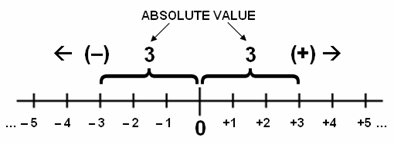
(5) An integer is made up of a sign and an absolute value.
.
(6) POSITIVE affirms the existing characteristic.
Positive of a positive integer is that positive integer: + (+1) = +1
Positive of a negative integer is the negative integer: + (–1) = –1
.
(7) NEGATIVE indicates the opposite characteristic.
Negative of a positive integer is the negative integer: – (+1) = –1
Negative of a negative integer is the positive integer: – (–1) = +1
.
(8) A Rational number can be expressed as a ratio of two counting numbers.
Therefore, there is a definite unit on which a rational number is based.
This unit is the common factor of the two counting numbers.
.
(9) An Irrational number cannot be expressed as a ratio of two counting numbers.
Therefore, there is no unit, however small, on which an irrational number may be based.
Please see Going Beyond Counting.
Thus, the basic nature of number being discrete comes under question.
.
(10) The following are considered as Real numbers:
Natural, whole, positive, negative, rational and irrational numbers.
Real numbers may be represented on a Number Line with a common reference point of zero.
The reference point of zero may be selected arbitrarily on the number line.
.
(11) The square of an integer of either sign is always a positive integer.
A positive integer has two square roots: one positive and the other negative.
A negative integer has no square root in the real number system.
.
(12) The square root of –1 is denoted as i (an imaginary unit)
Thus, i2 = −1
Therefore, the square root of –4 is written as 2i.
.
(13) The Imaginary numbers may be represented on a different number line.
The imaginary and real numbers lines are independent of each other.
.
(14) A complex number a + bi is made up of real and imaginary components.
The real component is a, and the imaginary component is bi
Here a and b are real numbers, and i is the imaginary unit satisfying i2 = −1
.
(16) The Complex numbers may be represented on a complex plane.
A complex plane is determined by a real number line as the horizontal axis,
and an imaginary number line as the vertical axis.
The reference point of zero is shared by both number lines.
.

