Einstein’s Legacy

Albert Einstein (1879 – 1955)

[In bold black are the published facts. In color are some comments.]

.

Einstein provided ground breaking physical reasoning to establish the reality of molecules, electromagnetic radiation and physical space. He proved the existence of molecules directly by relating it to the observable phenomenon of Brownian motion mathematically.

Matter, as a substance, is reducible to discrete point-particles that have momentum and inertia. Such properties are distinctive of “mass”.The “mass” of the electron is seen as increasing with velocity; but it is actually the inertia of electron that is increasing when accelerated. Electron has charge but it has no mass because it is not reducible to a point-particle.

Einstein established beyond any doubt that electromagnetic radiation has particle-like properties. In spite of its wave properties radiation was not a disturbance in some postulated ether. Radiation field could exist in space quite independently of palpable matter. Einstein visualized radiation as made up of unchanging energy-packets (quanta) distributed discontinuously in space. Einstein proved further that energy and mass are equivalent, and mechanics could no longer be maintained as the foundation of physics.

The particle-like properties of electromagnetic radiation are actually substance-like properties of momentum and inertia. Radiation is a different kind substance in that its momentum and inertia are many orders of magnitude less than that of matter, and it follows the laws of electromagnetism instead of Newton’s laws of motion. The wave-particle dilemma disappears when radiation is viewed as a fluid-like substance with a diffused consistency rather than a particle-like concentrated consistency in space. Maxwell’s model accounted for the intensity of radiation but not its unchanging consistency. The consistency naturally provides the unit of energy involved in the absorption and emission of that radiation. This is the quantum.

Einstein further established the nature of electromagnetic substance through his special theory of relativity. He determined that no observer (inertial frame) could travel at the speed of light. He postulated that the laws of nature, including the speed of light, should appear the same in all inertial frames moving with uniform speed with respect to each other. This became the basis of Einstein’s relativity. It resulted in the revision of the concepts of space and time.

The waves of electromagnetic substance are analogous to the waves of disturbance in a material medium. They are described by the same mathematics; but they are actually different in reality. The wave in a material medium is described by frequency, wave-length and period. However, the corresponding characteristics of an electromagnetic wave are best described as consistency, volume-space and duration. As frequency increases, wave-length decreases and period becomes increasingly repetitive. Similarly, as the consistency of radiation increases, its volume-space condenses and its duration at a location increases. This results in the reduction of speed. Thus, we see electron moving much slower than light. Since the consistency of light is many orders of magnitude less than the consistency of matter, the speed of light is many orders of magnitude greater than the speed of inertial frames in the material domain. Therefore, the speed of light appears to be constant for any uniformly moving coordinate system in the material domain. This is a good approximation. The mathematics of special relativity then follows. Matter and electromagnetic radiation are two different kind of substances that exist in space. Their relative motion is an expression of their relative consistency. The perception of space and time is fixed in nature through this relationship. 

Einstein also published an analysis indicating the equivalence of gravitational and inertial mass is not a mere accident of nature, but the basis of a profound physical principle that leads to a new theory of gravity. Einstein realized that mathematical descriptions of nature were to be taken as laws only if their forms remain unchanged in going from one frame of reference to any other frame by the most general type of coordinate transformation we can imagine. This became his general theory of relativity.

From matter to electromagnetic radiation the substance undergoes orders of magnitude reduction in its essential property of inertia. A similar orders of magnitude reduction takes place from electromagnetic radiation to space. The substance of space is currently recognized as the Higgs Field. As material and electromagnetic substances move through space, there is a resistance that appears as inertia. The more is the acceleration, the greater is the inertia. When the acceleration is fixed and balanced by inertia it appears as the consistency of the quantum or mass. Here we have the Higgs field converting into the quantum or mass and vice versa. Please see A New Theory of Gravitation.

.

The Reality of “Ether”

My recent realization has been that the concept of “ether” was discarded not only by Einstein but also by Faraday and Maxwell.

The concept of “ether” that was discarded was a “medium in which light traveled as a wave.” 

Faraday replaced that “ether” by the concept of a field of force. Maxwell gave that field the sense of being an electromagnetic substance. Light became this electromagnetic substance instead of being a disturbance in some static medium.

Einstein then added further meat to that electromagnetic substance, which varied up and down the electromagnetic spectrum. He recognized the property of the momentum of radiation and equated it with the momentum of matter to come up with famous energy-matter equivalence. 

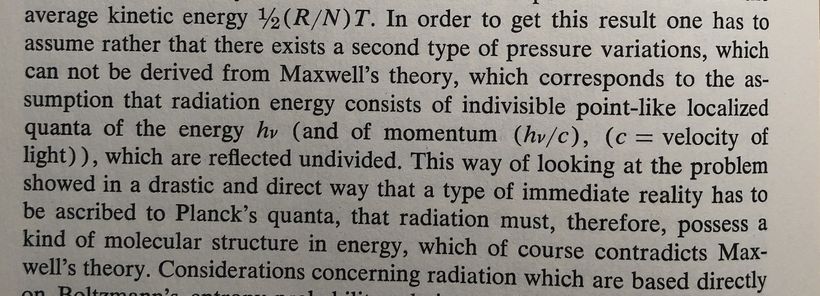
But Einstein assumed the electromagnetic substance to exist in the form of small or large discrete energy-packets in space. There is no reason why momentum of radiation cannot be viewed as coming from the consistency of a fluid-like continuum view of energy. It does not change the mathematics. See the above excerpt from Einstein’s autobiographical notes.

The consistency of a fluid-like continuum of energy can express a quantum just as well as a point-like discrete energy-packet in space.

Now we can go back to the ancient view of “ether” as being the substance of space itself. We may now associate that with the Higgs field. The secret of gravitation may now be explored through the Higgs field.

.

FRANCIS BACON: The Essays

Reference: The Story of Philosophy 

This paper presents Chapter III, Section 3 from the book THE STORY OF PHILOSOPHY by WILL DURANT. The contents are from the 1933 reprint of this book by TIME INCORPORATED by arrangement with Simon and Schuster, Inc.

The paragraphs of the original material (in black) are accompanied by brief comments (in color) based on the present understanding.  Feedback on these comments is appreciated.

The heading below is linked to the original materials.

.

III. The Essays

His elevation seemed to realize Plato’s dreams of a philosopher-king. For, step by step with his climb to political power, Bacon had been mounting the summits of philosophy. It is almost incredible that the vast learning and literary achievements of this man were but the incidents and diversions of a turbulent political career. It was his motto that one lived best by the hidden life—bene vixit qui bene latuit. He could not quite make up his mind whether he liked more the contemplative or the active life. His hope was to be philosopher and statesman, too, like Seneca; though he suspected that this double direction of his life would shorten his reach and lessen his attainment “It is hard to say,” he writes, “whether mixture of contemplations with an active life, or retiring wholly to contemplations, do disable or hinder the mind more.” He felt that studies could not be either end or wisdom in themselves, and that knowledge unapplied in action was a pale academic vanity. “To spend too much time in studies is sloth; to use them too much for ornament is affectation; to make judgment wholly by their rules is the humor of a scholar. … Crafty men condemn studies, simple men admire them, and wise men use them; for they teach not their own use; but that is a wisdom without them, and above them, won by observation.” Here is a new note, which marks the end of scholasticism—i. e., the divorce of knowledge from use and observation—and places that emphasis on experience and results which distinguishes English philosophy, and culminates in pragmatism. Not that Bacon for a moment ceased to love books and meditation; in words reminiscent of Socrates he writes, “without philosophy I care not to live”; and he describes himself as after all “a man naturally fitted rather for literature than for anything else, and borne by some destiny, against the inclination of his genius” (i. e., character), “into active life.” Almost his first publication was called “The Praise of Knowledge” (1592); its enthusiasm for philosophy compels quotation: 

My praise shall be dedicate to the mind itself. The mind is the man, and knowledge mind; a man is but what he knoweth. … Are not the pleasures of the affections greater than the pleasures of the senses, and are not the pleasures of the intellect greater than the pleasures of the affections? Is not that only a true and natural pleasure whereof there is no satiety? Is not that knowledge alone that doth clear the mind of all perturbations? How many things be there which we imagine are not? How many things do we esteem and value more than they are? These vain imaginations, these ill-proportioned estimations, these be the clouds of error that turn into the storms of perturbations. Is there then any such happiness as for a man’s mind to be raised above the confusion of things, where he may have a respect of the order of nature and the error of men? Is there but a view only of delight and not of discovery? Of contentment and not of benefit? Shall we not discern as well the riches of nature’s warehouse as the beauty of her shop? Is truth barren? Shall we not thereby be able to produce worthy effects, and to endow the life of man with infinite commodities? 

Here is a new note, which marks the end of scholasticism—i. e., the divorce of knowledge from use and observation—and places that emphasis on experience and results which distinguishes English philosophy, and culminates in pragmatism. 

His finest literary product, the Essays (1597-1623), show him still torn between these two loves, for politics and for philosophy. In the “Essay of Honor and Reputation” he gives all the degrees of honor to political and military achievements, none to the literary or the philosophical. But in the essay “Of Truth” he writes: “The inquiry of truth, which is the love-making or wooing of it; the knowledge of truth, which is the praise of it; and the belief of truth, which is the enjoying of it, is the sovereign good of human natures.” In books “we converse with the wise, as in action with fools.” That is, if we know how to select our books. “Some books are to be tasted,” reads a famous passage, “others to be swallowed, and some few to be chewed and digested”; all these groups forming, no doubt, an infinitesimal portion of the oceans and cataracts of ink in which the world is daily bathed and poisoned and drowned. 

Francis Bacon looked at truth as something to be applied. “Some books are to be tasted, others to be swallowed, and some few to be chewed and digested.”

Surely the Essays must be numbered among the few books that deserve to be chewed and digested. Rarely shall you find so much meat, so admirably dressed and flavored, in so small a dish. Bacon abhors padding, and disdains to waste a word; he offers us infinite riches in a little phrase; each of these essays gives in a page or two the distilled subtlety of a master mind on a major issue of life. It is difficult to say whether the matter or the manner more excels; for here is language as supreme in prose as Shakespeare’s is in verse. It is a style like sturdy Tacitus’, compact yet polished; and indeed some of its conciseness is due to the skillful adaptation of Latin idiom and phrase. But its wealth of metaphor is characteristically Elizabethan, and reflects the exuberance of the Renaissance; no man in English literature is so fertile in pregnant and pithy comparisons. Their lavish array is the one defect of Bacon’s style: the endless metaphors and allegories and allusions fall like whips upon our nerves and tire us out at last. The Essays are like rich and heavy food, which cannot be digested in large quantities at once; but taken four or five at a time they are the finest intellectual nourishment in English.

Bacon’s Essays must be numbered among the few books that deserve to be chewed and digested.

What shall we extract from this extracted wisdom? Perhaps the best starting point, and the most arresting deviation from the fashions of medieval philosophy, is Bacon’s frank acceptance of the Epicurean ethic. “That philosophical progression, ‘Use not that you may not wish, wish not that you may not fear,’ seems an indication of a weak, diffident and timorous mind. And indeed most doctrines of the philosophers appear to be too distrustful, and to take more care of mankind than the nature of the thing requires. Thus they increase the fears of death by the remedies they bring against it; for whilst they make the life of man little more than a preparation and discipline for death, it is impossible but the enemy must appear terrible when there is no end of the defense to be made against him.” Nothing could be so injurious to health as the Stoic repression of desire; what is the use of prolonging a life which apathy has turned into premature death? And besides, it is an impossible philosophy; for instinct will out. “Nature is often hidden; sometimes overcome; seldom extinguished. Force maketh nature more violent in the return; doctrine and discourse maketh nature less importune; but custom only doth alter or subdue nature. … But let not a man trust his victory over his nature too far; for nature will lay buried a great time, and yet revive upon the occasion or temptation. Like as it was with Aesop’s damsel, turned from a cat to a woman, who sat very demurely at the board’s end, till a mouse ran before her. Therefore let a man either avoid the occasion altogether, or put himself often to it, that he may be little moved with it.” Indeed Bacon thinks the body should be inured to excesses as well as to restraint; else even a moment of unrestraint may ruin it. (So one accustomed to the purest and most digestible foods is easily upset when forgetfulness or necessity diverts him from perfection.) Yet “variety of delights rather than surfeit of them”; for “strength of nature in youth passeth over many excesses which are owing a man till his age”; a man’s maturity pays the price of his youth. One royal road to health is a garden; Bacon agrees with the author of Genesis that “God Almighty first planted a garden”; and with Voltaire that we must cultivate our back yards. 

Bacon is against the repression of desire because it can easily go out of control under temptation. It is better to talk about and confront one’s desire often to understand it and get used to it, so one may be able to control it.

The moral philosophy of the Essays smacks rather of Machiavelli than of the Christianity to which Bacon made so many astute obeisances. “We are beholden to Machiavel, and writers of that kind, who openly and unmasked declare what men do in fact, and not what they ought to do; for it is impossible to join the wisdom of the serpent and the innocence of the dove, without a previous knowledge of the nature of evil; as, without this, virtue lies exposed and unguarded.” “The Italians have an ungracious proverb, Tanto buon she val niente,”—so good that he is good for nothing. Bacon accords his preaching with his practice, and advises a judicious mixture of dissimulation with honesty, like an alloy that will make the purer but softer metal capable of longer life. He wants a full and varied career, giving acquaintance with everything that can broaden, deepen, strengthen or sharpen the mind. He does not admire the merely contemplative life; like Goethe he scorns knowledge that does not lead to action: “men ought to know that in the theatre of human life it is only for Gods and angels to be spectators.” 

Bacon is a departure from the scholasticism of Christianity. He urges that one must understand the nature of evil in order to guard virtue. He scorns knowledge that does not lead to action.

His religion is patriotically like the King’s. Though he was more than once accused of atheism, and the whole trend of his philosophy is secular and rationalistic, he makes an eloquent and apparently sincere disclaimer of unbelief. “I had rather believe all the fables in the Legend, and the Talmud and the Alcoran, than that this universal frame is without a mind. … A little philosophy inclineth a man’s mind to atheism; but depth in philosophy bringeth men’s mind about to religion. For while the mind of man looketh upon second causes scattered, it may sometimes rest in them and go no further; but when it beholdeth the chain of them, confederate and linked together, it must needs fly to Providence and Deity.” Religious indifference is due to a multiplicity of factions. “The causes of atheism are, divisions in religion, if they be many; for anyone division addeth zeal to both sides; but many divisions introduce atheism. …. And lastly, learned times, especially with peace and prosperity, for troubles and adversities do more bow men’s minds to religion.” 

Bacon’s has deep faith that may be regarded as religious.

But Bacon’s value lies less in theology and ethics than in psychology. He is an undeceivable analyst of human nature, and sends his shaft into every heart. On the stalest subject in the world he is refreshingly original. “A married man is seven years older in his thoughts the first day.” “It is often seen that bad husbands have good wives.” (Bacon was an exception.) “A single life doth well with churchmen, for charity will hardly water the ground where it must first fill a pool. . . . He that hath wife and children hath given hostages to fortune; for they are impediments to great enterprises, either of virtue or mischief.” Bacon seems to have worked too hard to have had time for love, and perhaps he never quite felt it to its depth. “It is a strange thing to note the excess of this passion. . . . There was never proud man thought so absurdly well of himself as the lover doth of the person beloved. . . .You may observe that amongst all the great and worthy persons (whereof the memory remaineth either ancient or recent), there is not one that hath been transported to the mad degree of love; which shows that great spirits and great business do keep out this weak passion.” 

But Bacon’s value lies less in theology and ethics than in psychology. He sees the emotional attachment of humans as a weakness. He differentiates between attachment and love that is affinity among humans.

He values friendship more than love, though of friendship too he can be skeptical. “There is little friendship in the world, and least of all between equals, which was wont to be magnified. That that is, is between superior and inferior, whose fortunes may comprehend the one the other. … A principal fruit of friendship is the ease and discharge of the fullness and swellings of the heart, which passions of all kinds do cause and induce.” A friend is an ear. “Those that want friends to open themselves unto are cannibals of their own hearts. … Whoever hath his mind fraught with many thoughts, his wits and understanding do clarify and break up in the communicating and discoursing with another; he tosseth his thoughts more easily; he marshaleth them more orderly; he seeth how they look when they are turned into words; finally, he waxeth wiser than himself; and that more by one hour’s discourse than by a day’s meditation.”

It is more efficient to sort out one’s thoughts through conversation with a friend than in meditation.

In the essay “Of Youth and Age” he puts a book into a paragraph. “Young men are fitter to invent than to judge, fitter for execution than for counsel, and fitter for new projects than for settled business; for the experience of age in things that fall within the compass of it, directeth them; but in new things abuseth them. … Young men, in the conduct and management of actions, embrace more than they can hold, stir more than they can quiet; fly to the end without consideration of the means and degrees; pursue absurdly some few principles which they have chanced upon; care not to” (i. e., how they) “innovate, which draws unknown inconveniences. … Men of age object too much, consult too long, adventure too little, repent too soon, and seldom drive business home to the full period, but content themselves with a mediocrity of success. Certainly it is good to compel employments of both, … because the virtues of either may correct the defects of both.” He thinks, nevertheless, that youth and childhood may get too great liberty, and so grow disordered and lax. “Let parents choose betimes the vocations and courses they mean their children should take, for then they are most flexible; and let them not too much apply themselves to the disposition of their children, as thinking they will take best to that which they have most mind to. It is true that, if the affections or aptness of the children be extraordinary, then it is good not to cross it; but generally the precept” of the Pythagoreans “is good, Optimum lege, suave et facile illud faciet consuetudo,”—choose the best; custom will make it pleasant and easy. For “custom is the principal magistrate of man’s life.” 

Young men are adventurous as they are not weighed down by experience. They have energy but they need to be directed.

The politics of the Essays preach a conservatism natural in one who aspired to rule. Bacon wants a strong central power. Monarchy is the best form of government; and usually the efficiency of a state varies with the concentration of power. “There be three points of business” in government: “the preparation; the debate or examination; and the perfection” (or execution). “Whereof, if you look for dispatch, let the middle only be the work of many, and the first and last the work of a few.” He is an outspoken militarist; he deplores the growth of industry as unfitting men for war, and bewails long peace as lulling the warrior in man. Nevertheless, he recognizes the importance of raw materials: “Solon said well to Croesus (when in ostentation Croesus showed him his gold), ‘Sir, if any other come that hath better iron than you, he will be master of all this gold.”

In politics, Bacon believed in good preparation, detailed examination and determined execution.

Like Aristotle, he has some advice on avoiding revolutions. “The surest way to prevent seditions … is to take away the matter of them; for if there be fuel prepared, it is hard to tell whence the spark shall come that shall set it on fire. … Neither doth it follow that the suppressing of fames” (i. e., discussion) “with too much severity should be a remedy of troubles; for the despising of them many times checks them best, and the going about to stop them but makes a wonder long-lived. … The matter of sedition is of two kinds: much poverty and much discontentment. … The causes and motives of seditions are, innovation in religion; taxes; alteration of laws and customs; breaking of privileges; general oppression; advancement of unworthy persons, strangers; dearths”; disbanded soldiers; factions grown desperate; and whatsoever in offending a people joineth them in a common cause.” The cue of every leader, of course, is to divide his enemies and to unite his friends. “Generally, the dividing and breaking of all factions . . . that are adverse to the state, and setting them at a distance, or at least distrust, among themselves, is not one of the worst remedies; for it is a desperate case, if those that hold with the proceeding of the state be full of discord and faction, and those that are against it be entire and united.” A better recipe for the avoidance of revolutions is an equitable distribution of wealth: “Money is like muck, not good unless it be spread.” But this does not mean socialism, or even democracy; Bacon distrusts the people, who were in his day quite without access to education; “the lowest of all flatteries is the flattery of the common people”; and “Phocion took it right, who, being applauded by the multitude, asked, What had he done amiss?” What Bacon wants is first a yeomanry of owning farmers; then an aristocracy for administration; and above all a philosopher-king. “It is almost without instance that any government was unprosperous under learned governors.” He mentions Seneca. Antoninus Pius and Aurelius; it was his hope that to their names posterity would add his own. 

Like Aristotle, Bacon has some advice on avoiding revolutions. A better recipe for the avoidance of revolutions is an equitable distribution of wealth. What Bacon wants is first a yeomanry of owning farmers; then an aristocracy for administration; and above all a philosopher-king.

.

A New Theory of Gravitation

Reference: A Logical Approach to Theoretical Physics

Matter and electromagnetic radiation are two different kind of substances that exist in in space. It appears that space is also a substance that is very different from electromagnetic radiation and matter. When something moves through space, it is like a “condensed pattern of substance” passing through the substance of space. At the front end of that pattern space is transforming into that pattern; and at the back end the pattern is transforming back into space. It, therefore, appears that the pattern is moving through the space.

This explains why matter, that has the highest consistency of substance, also have the lowest speed, because the gradient of conversion from space to matter is extremely high. Therefore, matter resists being accelerated in space. It has the highest inertia.

Compared to matter, light has a much higher natural speed in space. But this speed has a limit. This means that light also has inertia, but it is many orders of magnitude smaller than the inertia of matter. The light consists of electromagnetic field, which has a consistency many orders of magnitude lower than matter. That seems to explain the high natural speed of light.

Electron exists at the upper end of the electromagnetic spectrum. That means its consistency is much higher than the consistency of light but not as high as that of matter. When electron is “accelerated,” its consistency increases, and so does its inertia. This is seen as the “mass of the electron increasing with velocity.”

Can the above theory explain the gravitational force between two heavenly bodies?

We may postulate that the gravitational field around the planets exists because the space has become more concentrated around the planets. The gravitational force between two planets is related to the masses of the planets and the space between them. The space between the planets shall be more concentrated than the space behind them. The gradient of conversion from space to mass is smaller between the two planets, compared to the gradient from mass to space behind them. This differential of gradient on the two sides of each planet will naturally propel them toward each other. We attribute the reason for this attraction to the “gravitational force.”

In other words, when two masses are accelerating towards each other, the space between them is condensing and converting to masses faster than the mass converting back into space on the back side. There is a conversion differential set up that is pushing the masses toward each other.

Gravity is the condensation of space near the masses. Space is more condensed between the masses than away from them. Condensed space converts more easily into mass. That generates the attraction between the masses.

Electromagnetic radiation has boundaries with space too. Substance is converting between space and electromagnetic radiation at these boundaries. This explains motion and inertia of electromagnetic radiation.

When something is moving in space it is eating space at the front end and spitting it out at the other end. This is the basic postulate on which this theory of gravitation is based.

.

FRANCIS BACON: The Political Career of Francis Bacon

Reference: The Story of Philosophy 

This paper presents Chapter III, Section 2 from the book THE STORY OF PHILOSOPHY by WILL DURANT. The contents are from the 1933 reprint of this book by TIME INCORPORATED by arrangement with Simon and Schuster, Inc.

The paragraphs of the original material (in black) are accompanied by brief comments (in color) based on the present understanding.  Feedback on these comments is appreciated.

The heading below is linked to the original materials.

.

II. The Political Career of Francis Bacon

Bacon was born on January 22, 1561, at York House, London, the residence of his father, Sir Nicholas Bacon, who for the first twenty years of Elizabeth’s reign had been Keeper of the Great Seal. “The fame of the father,” says Macaulay, ”has been thrown into the shade by that of the son. But Sir Nicholas was no ordinary man.” It is as one might have suspected; for genius is an apex, to which a family builds itself through talent, and through talent in the genius’s offspring subsides again towards the mediocrity of man. Bacon’s mother was Lady Anne Cooke, sister-in-law of Sir William Cecil, Lord Burghley, who was Elizabeth’s Lord Treasurer, and one of the most powerful men in England. Her father had been chief tutor of King Edward VI; she herself was a linguist and a theologian, and thought nothing of corresponding in Greek with bishops. She made herself instructress of her son, and spared no pains in his education. 

But the real nurse of Bacon’s greatness was Elizabethan England, the greatest age of the most powerful of modern nations. The discovery of America had diverted trade from the Mediterranean to the Atlantic, had raised the Atlantic nations—Spain and France and Holland and England—to that commercial and financial supremacy which had been Italy’s when half of Europe had made her its port of entry and exit in the Eastern trade; and with this change the Renaissance had passed from Florence and Rome and Milan and Venice to Madrid and Paris and Amsterdam and London. After the destruction of the Spanish naval power in 1588, the commerce of England spread over every sea, her towns throve with domestic industry, her sailors circumnavigated the globe and her captains won America. Her literature blossomed into Spenser’s poetry and Sidney’s prose; her stage throbbed with the dramas of Shakespeare and Marlowe and Ben Jonson and a hundred vigorous pens. No man could fail to flourish in such a time and country, if there was seed in him at all.

Bacon was born in a powerful and cultured family of Elizabethan England, the greatest age of the most powerful of modern nations.

At the age of twelve Bacon was sent to Trinity College, Cambridge. He stayed there three years, and left it with a strong dislike of its texts and methods, a confirmed hostility to the cult of Aristotle, and a resolve to set philosophy into a more fertile path, to turn it from scholastic disputation to the illumination and increase of human good. Though still a lad of sixteen, he was offered an appointment to the staff of the English ambassador in France; and after careful casting up of pros and cons, he accepted. In the Proem to The Interpretation of Nature, he discusses this fateful decision that turned him from philosophy to politics. It is an indispensable passage: 

Whereas, I believed myself born for the service of mankind, and reckoned the care of the common weal to be among those duties that are of public right, open to all alike, even as the waters and the air, I therefore asked myself what could most advantage mankind, and for the performance of what tasks I seemed to be shaped by nature. But when I searched, I found no work so meritorious as the discovery and development of the arts and inventions that tend to civilize the life of man. … Above all, if any man could succeed—not merely in bringing to light some one particular invention, however useful—but in kindling in nature a luminary which would, at its first rising, shed some light on the present limits and borders of human discoveries, and which afterwards, as it rose still higher, would reveal and bring into clear view every nook and cranny of darkness, it seemed to me that such a discoverer would deserve to be called the true Extender of the Kingdom of Man over the universe, the Champion of human liberty, and the Exterminator of the necessities that now keep men in bondage. Moreover, I found in my own nature a special adaptation for the contemplation of truth. For I had a mind at once versatile enough for that most important object—I mean the recognition of similitudes—and at the same time sufficiently steady and concentrated for the observation of subtle shades of difference. I possessed a passion for research, a power of suspending judgment with patience, of meditating with pleasure, of assenting with caution, of correcting false impressions with readiness, and of arranging my thoughts with scrupulous pains. I had no hankering after novelty, no blind admiration for antiquity. Imposture in every shape I utterly detested. For all these reasons I considered that my nature and disposition had, as it were, a kind of kinship and connection with truth. 

But my birth, my rearing and education, had all pointed, not toward philosophy, but towards politics: I had been, as it were, imbued in politics from childhood. And as is not unfrequently the case with young men, I was sometimes shaken in my mind by opinions. I also thought that my duty towards my country had special claims upon me, such as could not be urged by other duties of life. Lastly, I conceived the hope that, if I held some honorable office in the state, I might have secure helps and supports to aid my labors, with a view to the accomplishment of my destined task. With these motives I applied myself to politics.

Bacon’s disposition was kind of kinship and connection with truth. He decided to apply himself to politics.

Sir Nicholas Bacon died suddenly in 1579. He had intended to provide Francis with an estate; but death over-reached his plans, and the young diplomat, called hurriedly to London, saw himself, at the age of eighteen, fatherless and penniless. He had become accustomed to most of the luxuries of the age, and he found it hard to reconcile himself now to a forced simplicity of life. He took up the practice of law, while he importuned his influential relatives to advance him to some political office which would liberate him from economic worry. His almost begging letters had small result, considering the grace and vigor of their style, and the proved ability of their author. Perhaps it was because Bacon did not underrate this ability, and looked upon position as his due, that Burghley failed to make the desired response; and perhaps, also, these letters protested too much the past, present and future loyalty of the writer to the honorable Lord: in politics, as in love, it does not do to give one’s self wholly; one should at all times give, but at no time all. Gratitude is nourished with expectation.

When he was eighteen, his father died suddenly and Bacon found himself fatherless and penniless.

Eventually, Bacon climbed without being lifted from above; but every step cost him many years. In 1583 he was elected to Parliament for Taunton; and his constituents liked him so well that they returned hlm to his seat in election after election. He had a terse and vivid eloquence in debate, and was an orator without oratory. “No man,” said Ben Jonson, “ever spoke more neatly, more (com)pressedly, more weightily, or suffered less emptiness, less idleness in what he uttered. No member of his speech but consisted of its own graces. His hearers could not cough or look aside from him without loss. He commanded where he spoke. … No man had their affections more in his power. The fear of every man that heard him was lest that he should make an end.” Enviable orator! 

Bacon climbed through his own efforts, and 4 years later he was elected to a local parliament. He was an enviable orator and his constituents loved him.

One powerful friend was generous to him—that handsome Earl of Essex whom Elizabeth loved unsuccessfully, and so learned to hate. In 1595 Essex, to atone for his failure in securing a political post for Bacon, presented him with a pretty estate at Twickenham. It was a magnificent gift, which one might presume would bind Bacon to Essex for life; but it did not. A few years later Essex organized a conspiracy to imprison Elizabeth and select her successor to the throne. Bacon wrote letter after letter to his benefactor, protesting against this treason; and when Essex persisted, Bacon warned him that he would put loyalty to his Queen above even gratitude to his friend. Essex made his effort, failed, and was arrested. Bacon pled with the Queen in his behalf so incessantly that at last she bade him “speak of any other subject.” When Essex, temporarily freed, gathered armed forces about him, marched into London, and tried to rouse its populace to revolution, Bacon turned against him angrily. Meanwhile he had been given a place in the prosecuting office of the realm; and when Essex, again arrested, was tried for treason, Bacon took active part in the prosecution of the man who had been his unstinting friend.*

*Hundreds of volumes have been written on this aspect of Bacon’s career. The case against Bacon, as “the wisest and meanest of mankind” (so Pope called him), will be found in Macaulay’s essay, and more circumstantially in Abbott’s Francis Bacon; these would apply to him his own words: “Wisdom for a man’s self is the wisdom of rats, that will be sure to leave a house somewhat before it falls” (Essay “Of Wisdom for a Man’s Self”). The case for Bacon is given in Spedding’s Life and Times of Francis Bacon, and in his Evenings with a Reviewer (a detailed reply to Macaulay). In medio veritas.

Bacon cared for the larger good. He put loyalty to his Queen above even gratitude to his friend.

Essex was found guilty, and was put to death. Bacon’s part in the trial made him for a while unpopular; and from this time on he lived in the midst of enemies watching for a chance to destroy him. His insatiable ambition left him no rest; he was ever discontent, and always a year or so ahead of his income. He was lavish in his expenditures; display was to him a part of policy.. When, at the age of forty-five, he married, the pompous and costly ceremony made a great gap in the dowry which had constituted one of the lady’s attractions. In 1598 he was arrested for debt. Nevertheless, he continued to advance. His varied ability and almost endless knowledge made him a valuable member of every important committee; gradually higher offices were opened to him: in 1606 he was made Solicitor-General; in 1613 he became Attorney-General; in 1618, at the age of fifty-seven, he was at last Lord Chancellor. 

Bacon advanced in his carrier based purely on his varied ability and almost endless knowledge.

.