Reference: Postulate Mechanics
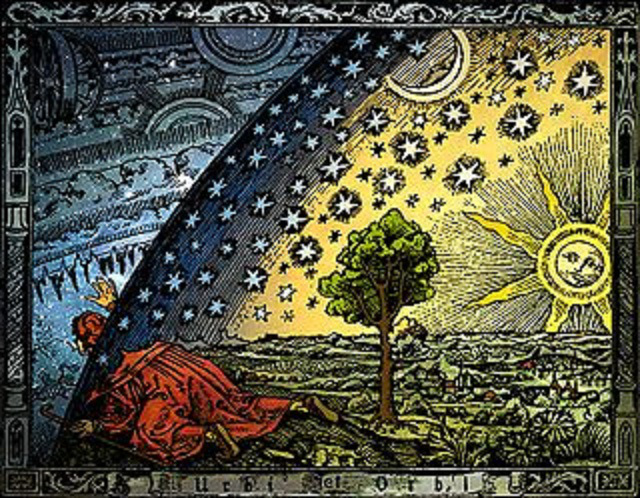
As knowledge became more sophisticated, it progressed from religion to philosophy and science. All the early philosophers and scientists were man of religion. They were attempting to know the world; and, therefore, God. They were not satisfied with a theistic interpretation of God.
.
Definition of PHILOSOPHY
Philosophy, literally means, “the love of wisdom.” It is a systematic study of general and fundamental questions concerning topics like existence, reason, knowledge, value, mind, and language. It is a rational and critical inquiry that reflects on its own methods and assumptions.
The scientific method is a product of philosophy, that has taken the seeking of answers to a new level. The scientific method has been pretty successful in the realm of matter and energy, where the experience has been pretty uniform for everybody. However, it has run into trouble in the areas where experience has been subject to increasing interpretation, such as, in the realm of thought.
The scientific method has always sought consistency with our perception of the universe. As perceptions get finer and more uncertain, it is necessary to establish consistency at the broadest level possible, and then use that certainty to establish consistency at the next level, and so on. This is assisted by the principle of Oneness and the concept of anomalies (See LOGIC).
.
Notes
Philosophy has followed the same path as religion, which is the seeking of answers. From philosophy has come the more robust method of investigation, which is science. When we take a broad view of religion, philosophy and science, we see a powerful and insatiable drive to find answers.
Philosophy has achieved a remarkable precision in its investigation of the physical phenomena through its scientific method. But the same precision has been lacking when it comes to the spiritual or thought phenomena. This has slowed down the progress of philosophy.
Now that we can state the principle of Oneness with precision, we can review and strengthen the gains that philosophy has made until now and move forward from there.
.
Key Misconception
More than a misconception, what seems to be missing from the subject of philosophy, is a method to assimilate all the knowledge that we have gathered. That requires the principle of Oneness.
.
More Misconceptions
You may discover more misconceptions on your own, if you contemplate on each sentence of the above definition with mindfulness. Please see:
The 12 Aspects of Mindfulness
Or, you may end up improving upon this definition.
Good luck!
.
Reference: Postulate Mechanics
.
The Religion
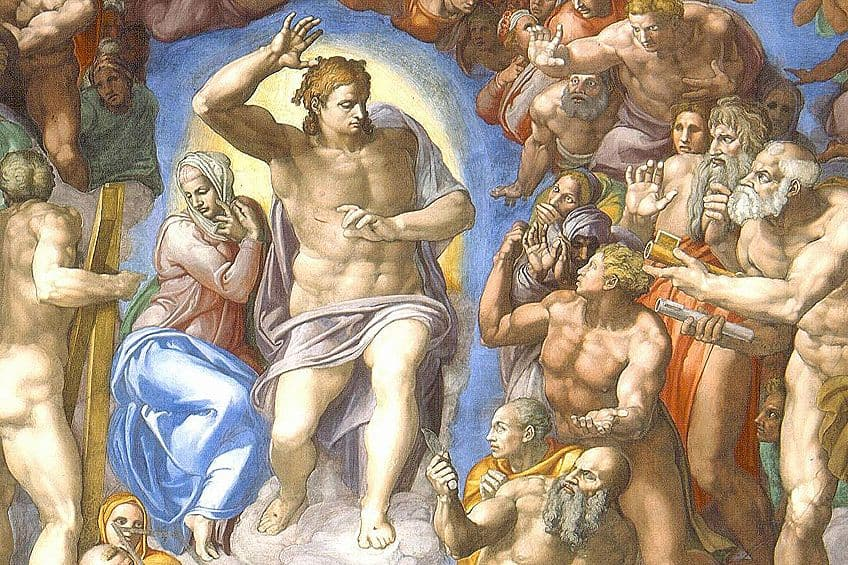
The religion was the first effort of the thinking mind to explain the world it experienced. It was beset by unknowns, so it postulated. The earliest postulate was Unknowable-Knowable.
The ancient Vedas considered the knowable universe to emerge from the Unknowable (see The Creation Hymn of Rig Veda). The knowable that was sensed became the substance (thought, energy and matter), and the agency that sensed it became the Self.
But the later Book of Genesis symbolized the Unknowable as “God” and presented it as “The Creator.” This was the establishment of an identity. Henceforth, the Universe was seen as created. Man saw himself as a created object. He was the body, which was born and which died. He only lived once.
Man’s original impulse, which was to know, now reduced to believing in the symbol “God,” that was explained to him. His own purpose got modified, and became “to survive.”
The religion thus became preoccupied with life and death. Its goal became to realize the eternal Self.
.
Misconception
It is often forgotten that beyond the struggles of life and death there lies a deep quest to know.
.
More Misconceptions
You may discover more misconceptions on your own, if you contemplate on each sentence of the above definition with mindfulness. Please see:
The 12 Aspects of Mindfulness
Then, you may end up improving upon this definition too.
Good luck!
.
Reference: Postulate Mechanics
We look at objective as belonging to the object of thought; and, subjective as belonging to the thinking subject. The anomaly here is that these definitions of objective and subjective are an outcome of our thinking only.
.
The Definition of OBJECTIVE-SUBJECTIVE
In science, objective is the information derived from or guided by direct experience or by experiment; and subjective is the information derived from or guided by abstract principles or theory.
Thus, science looks for results that are consistent with the physical universe. It is, therefore, limited to understanding the physical phenomena. When it comes to the understanding of spiritual phenomena, science does not think that it has a firm basis to determine what is consistent.
Normally, we see verifiable information based on facts and evidence to be objective. To us, the information or perspectives based on feelings, opinions, or emotions are subjective. Today we see even facts and evidence being doubted and questioned.
More and more people are moving towards the extreme view that everything is subjective. So, we need another way of looking at the meanings of objective and subjective.
At the highest level of logic we find continuity, consistency and harmony to be the criterion for a complete picture of what is there. We call this criterion the principle of Oneness. Any violation of this principle is an anomaly. Based on the degree of violation, we may define objective-subjective as a scale. The degree of subjectivity is based on our viewpoint. The more anomalies are there in our viewpoint, the more subjective we are.
Viewpoint means the frame of reference that one uses to view things. The viewpoint can be as broad as the whole universe; but it becomes narrow as it gets identified with the universe and cannot differentiate itself from it.
The degree of identification with the universe then gives us a measure of subjectivity. The subjectivity of a viewpoint is then measured by the number of anomalies it cannot see or appreciate because of its identification.
The objective viewpoint is not identified with the universe. Therefore, it is as broad as the universe and can grasp the oneness of the whole universe. It can see and appreciate all anomalies.
To attain objectivity one can start recognizing anomalies broadly, and follow them up to become aware of deeper anomalies. As a person continues to spot deeper anomalies, he starts to become increasingly objective in his viewpoint.
.
Notes
The human society and science is unable to deal with the “spiritual” or the thought universe because it is missing the principle of Oneness as the ideal scene for its logic.
All our current social problems are the result of our inability to use the true logic of oneness in all variations. We, therefore, fail to see and appreciate the actual anomalies underlying the social problems.
Please see The Logic to understand the ideal scene for logic.
.
Key Misconception
A key misconception is not having the proper definitions for objective and subjective.
.
More Misconceptions
You may discover more misconceptions on your own, if you contemplate on each sentence of the above definition with mindfulness. Please see:
The 12 Aspects of Mindfulness
Or, you may end up improving upon this definition.
Good luck!
.
Reference: Postulate Mechanics
Logic has to do with how you argue or reason to reach correct or reliable inference. It follows certain principles to reach sound conclusions.
.
Definition of LOGIC
Logic means the art and method of correct thinking. Logic is applied to get a complete picture of a situation. Logic, therefore, seeks the ideal scene of oneness of knowledge. Any departure from this ideal scene is called an anomaly.
The anomalies take the form of discontinuity (missing data), inconsistency (contradictory data), or disharmony (arbitrary data). To handle missing data, logic postulates a datum that brings oneness to the existing data. To handle contradictory data, logic determines the gradient of data that clarifies the contradiction. To handle arbitrary data logic discovers the underlying fixation or identification.
The logic, therefore, examines data for its associations. These associations are logical when the data can be assimilated into a consistent whole.
Logic is best applied by starting broad. This allows one to become aware of the broad anomalies. These anomalies then guide one towards more specific anomalies. This narrowing down to specifics finally reveals the key anomaly that underlies the whole situation. Resolving this anomaly then resolves the situation.
The mind must have a flexible viewpoint that can follow the course of logic. When fixations come to view in the viewpoint itself, then they must also be examined and resolved.
.
Notes
Logic provides the mechanics of completing a picture. It involves:
(1) Perceive correctly (see things as they are)
(2) Make postulates to fill the gaps (find oneness)
(3) Arrange concepts from broad to narrow
(4) Formulate precise definitions for concepts
(5) Examine phenomena using precise definitions
(6) Resolve anomalies in what is observed
We sense the universe and describe it using concepts that can be arranged on a scale from broad to narrow. Realism and nominalism describe the two ends of this scale. The more precisely the definitions fit together into oneness, the more objectivity they provide. The workability of Aristotle’s syllogism depends on the major premise being broad enough to fully include the minor premise.
Hubbard’s logic is based on the assumption that a being is eternal and he is trying to survive. This is an anomaly because something eternal does not need to survive. Resolution of this anomaly leads to the discovery of Hubbards fixation on individuality, which is an identification and reduces awareness.
Hubbard’s logic, as described in the Data Series, is brilliant, but it does not include the ideal scene of oneness. The outpoints described in Data Series may be related to anomalies as follows:
- Omit a fact (discontinuity)
- Change sequence of events (inconsistency)
- Drop out time (discontinuity)
- Add a falsehood (inconsistency and disharmony)
- Alter importance (disharmony)
.
Key Misconception
The key misconception in the subject of Logic is that we do not have a good idea of the ideal scene of logic. Logic exists to provide the complete awareness of what is there. The ideal scene of logic is given by the Principle of Oneness.
.
More Misconceptions
You may discover more misconceptions on your own, if you contemplate on each sentence of the above definition with mindfulness. Please see:
The 12 Aspects of Mindfulness
Or, you may end up improving upon this definition.
Good luck!
.
Reference: Postulate Mechanics
Some people think of spirit or soul in terms of the popular idea of ghost. They are afraid of ghosts and stay away from places that are supposedly haunted. There are others who ignore the idea of ghost. But there is a phenomenon that can be described as a ghost.
.
Definition of GHOST
After a person dies his body-mind system reduces to a latent thought pattern that maintains its own space. This thought pattern is so thin that it is normally imperceptible to most people and has no influence.
This thought pattern is the outcome of identification with the universe. Highly enlightened persons, who have overcome their identifications, leave no thought patterns behind. But those, who are heavily identified with their bodies and its unconscious tendencies, do leave behind heavy thought patterns.
Such heavy thought patterns seem to have denser presence in certain spaces. These patterns may get activated and run like a video clip. The unconscious tendencies forming these thought patterns can be perceived.
You may psychologically respond to such perceptions of thought patterns. It is such a response that may appear as a ghost.
.
Notes
You are basically responding to tendencies that are external to you. These tendencies are not out to harm you. They are simply operating compulsively according to their nature. They don’t have a discriminatory intellect to choose. They may be intense, mild or meek. They may just hang around certain places per their memory. They are everywhere in some way. This is the reason why processes exist to clear out such influences.
If you are vulnerable, these ghosts (external tendencies) can “possess” you, and thus influence your actions. But, if you have the quality of meditativeness, you cannot be possessed. A person who is easily frightened, can, however, be terrorized; and it can lead to situations that are fatal. But, if you have raised yourself to that level of awareness where you can feel and recognize such patterns, you will have no problem with them.
These disembodied thought patterns exist only in the level of “awareness” in which a person died. They are in a stagnant state that has a certain lifespan. They can be contacted and dissolved.
.
Key Misconception
It is a key misconception to think that a ghost is an entity that is alive. The ghost is like a three-dimensional hologram that may get activated to play itself out. This hologram can be stopped from playing itself; or, it can be dissolved completely.
.
More Misconceptions
You may discover more misconceptions on your own, if you contemplate on each sentence of the above definition with mindfulness. Please see:
The 12 Aspects of Mindfulness
Or, you may end up improving upon this definition.
Good luck!
.