Category Archives: Subject Clearing

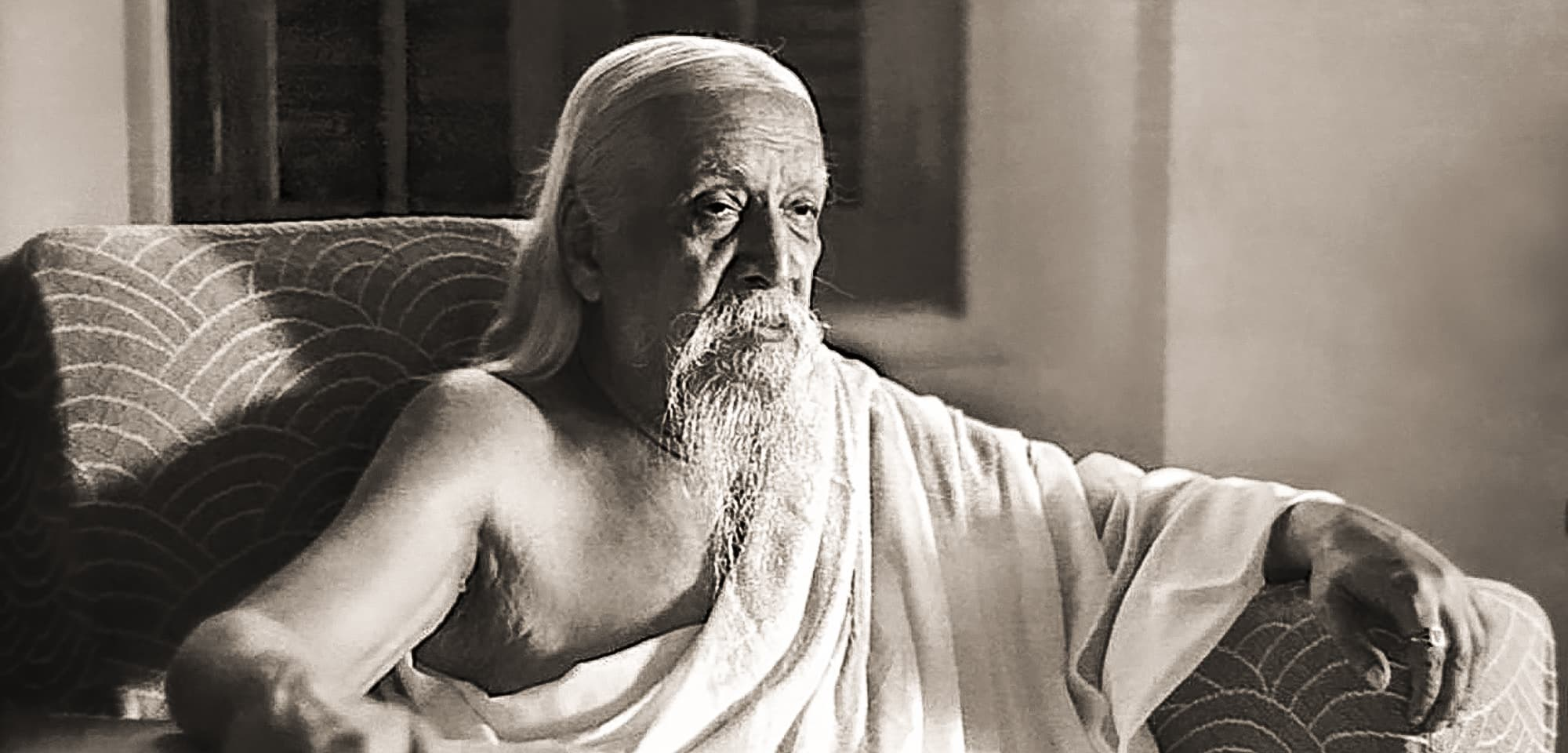
My View of Sri Aurobindo

I think I am done with Sri Aurobindo’s philosophy after grasping his concepts of ego, psychic being, Individual Divine and the Supreme.

He defines EGO as a temporary construct formed by Nature to organize thoughts, desires, and actions into a separate individual personality within the external world.

He defines PSYCHIC BEING as the evolving soul—our inmost divine center that grows through lifetimes, aspiring for truth and harmony, and survives physical death to continue its journey of spiritual development.

He defines INDIVIDUAL DIVINE as the eternal, unchanging individual Self—a pure portion of the Divine that stands above and beyond the evolutionary process, remaining unaffected by birth and death. It serves as the spiritual center, or the true “I,” which can realize its oneness with the Supreme and is necessary for spiritual liberation.

He defines the SUPREME as the ultimate Reality, which is absolute, infinite, and eternal, simultaneously transcendent and immanent in the universe. The Supreme is described as Sachchidananda, meaning Existence (Sat), Consciousness (Chit), and Bliss (Ananda), which is the foundational triune nature of Reality.

To me, the “ego” starts as the body mechanism that assimilates sensations into perceptions. But then it grows into a mental mechanism of “mind” that assimilates perceptions into memories, memories into experience and experience into knowledge. Ultimately, it grows into a spiritual mechanism of “self” that assimilates all knowledge into wisdom. Thus, ego expands from being individual (body), to being mental (familial, social, racial, and cultural), to being spiritual (human and representative of all life and universe). But it still remains rooted in the body and dies with the body. However, it influences the progress of all surrounding selves; and the effect is for all selves to grow in wisdom.

Dualities are two ends of a dimension; for example, “hot-cold” expands into the dimension of temperature. Similarly, “ego-spirit” expands into the dimension of self. This is pointed out by Sri Aurobindo.

Sri Aurobindo has taught me: The Gradient of Enlightenment. I regard him very highly.

This is a never ending evolution. The ultimate reality is Unknowable.

.

References used:
An Analysis of Sri Aurobindo’s The Life Divine
Renaissance—Sri Aurobindo Society
Karmayogi.net
A Study Guide compiled by David Hutchinson

,

The Ultimate Reality

We  find a beautiful description of the ultimate reality in the Nasadiya Sukta, which is the 129th hymn (sukta) of the 10th Mandala of the Rig Veda. Here is a translation of this sukta: The Creation Hymn of Rig Veda.

We discover that

  1. The ultimate reality is UNKNOWABLE. 
  2. The ultimate goal is TO KNOW.

But, this is an anomaly. How was this anomaly resolved way back in the beginning?

The UNKNOWABLE has to be beyond knowable. The ancient theories based on Vedas called it “Nirākār Brahman”. In the modern times, Kant philosophized it as the “thing-in-itself”.

What this basically means is that, in the beginning, we felt that something could be there but we had no idea what it was. What followed then?

Vedas say that the Nirākār Brahman manifested itself through Māyā. This is like saying that Kant’s thing-in-itself somehow became known.

More scientifically, we may say that we “perceived” the unknowable by making a postulate about what could be there. The funny thing is that we then knew only our postulate and not the unknowable. The Unknowable simply triggered a postulate in us. Let’s look at what a postulate is.

POSTULATE
We sense this universe because it is substantial. It forms our entire consciousness. We are conscious of it because it has acquired a meaning. This meaning is provided by POSTULATES. Dictionaries define ‘postulate’ as a creative thought that is claimed to be true. It is then used as a basis for reasoning. For example, Einstein’s theory of relativity is based on the postulate, “The speed of light in a vacuum is constant for all observers, regardless of their motion.” This postulate has profound implications for our understanding of space and time. In general, a postulate brings clarity to what we sense. All scientific theories, philosophic rumination and religious faiths have begun with postulates. 

We are now saying that postulates also underlie our reality, which we call the knowable universe. 

Our ultimate goal then becomes to discover and know the postulates, from which we reason our reality.

But, ultimately, there has to be that first postulate followed by subsequent postulates. This means that there must be continuity, consistency and harmony among the postulates that determine our reality.

And, we arrive at those postulates by resolving all the violations of continuity, consistency and harmony in our reality. These violations are called anomalies.

ANOMALY
An ANOMALY is something that doesn’t make sense. Actually, an anomaly is a violation of ONENESS, in the form of discontinuity (missing data), inconsistency (contradictory data), or disharmony (arbitrary data). An anomaly is basically a misalignment among concepts. As you look closely at an anomaly, it resolves into concepts. The concepts arrange themselves into a consistent order. This allows missing, contradictory and arbitrary data to be straightened out. The anomaly then blows.

This is a new look at how to discover the ultimate reality.

.

Clearing Subjects

Reference: The Book of Subject Clearing

The first action of Subject Clearing is to choose the right subject to clear. This would be the most relevant subject at the top of list of Exercise 2 in Listing Subjects.

If this item pertains to personal life then go to Handling Personal Life and do the exercises there until your attention is no longer on personal life. Then do Exercise 2 again.

When the top item of Exercise 2 no longer pertains to personal life, then continue with the exercise below. This exercise requires the discipline of The 12 Aspects of Mindfulness for maximum positive results.

.

Exercise 3: Clearing Subjects

  1. Select the most relevant subject at the top of list. See the exercise in Listing Subjects.
  2. Make a list of all the key words related to that subject.
  3. Start clearing the meanings of these key words. Please see Word Meanings.
  4. Use AI and mindfulness meditation to fully understand the concepts underlying the key words in the context of the subject.
  5. As you become aware of more key words of the subject, add them to the list.
  6. Arrange all key words, starting from the purpose of the subject, from broad to narrow concepts on a gradient. 
  7. Please note that such an arrangement may branch out in various directions.
  8. Notice the missing, contradictory and arbitrary concepts that now become visible. Please see Resolving Anomalies.
  9. The missing concepts may be hidden under not so developed or overlapping concepts.
  10. Add the key words related to such concepts in the right sequence on the list.
  11. The contradictions may be resolved by looking more closely at the related definitions and fine tuning them. 
  12. The arbitrary, redundant or overlapping concepts may be given due consideration before getting rid of them.
  13. Develop comprehensive definitions for the key words as you resolve anomalies.
  14. Develop a glossary in which the key words and their definitions are presented alphabetically.
  15. Focus on working out the fundamentals of that subject, down to the postulates. 
  16. Come forward defining the subsequent concepts until there is continuity, consistency and harmony among them.
  17. Do this until your attention is no longer fixated on the subject, and it is free to consider other subjects.
  18. Go back to the exercise of Listing Subjects, and rearrange the subjects again that are crowding your mind.
  19. Go back to step 1 above.

.

Handling Personal Life

Reference: The Book of Subject Clearing

Regrets

When applying Subject Clearing to personal life, here is a specific exercise:

  1. Start making a list of actions you committed, or omitted, which resulted in harm of some kind, and you have regrets about it.
  2. For each such action meditate specifically on the following aspects:
    • The precise TIME (in days, weeks, months and years ago) when that action occurred.
    • The precise PLACE (location in house, city, state, country) where that action took place.
    • The precise FORM (category, type) of that action, such as, a betrayal, a lie, etc.
    • The full EVENT (the details of that action—one moment to the next) from beginning to end.
  3. Keep meditating and continue adding such actions to your list until you start to feel relief.

You just have to get totally honest with yourself. This exercise may require a bit of courage.

.

General Approach

A general approach of Subject Clearing to personal life shall be as follows:

  1. Make a list of all the things that you have attention on. NOTE: It is important that you complete this list to a point that you have a feeling of satisfaction.
  2. Arrange these items in the order from the most to the least relevant.
  3. Meditate on the top item from this list.
  4. Notice the missing, contradictory and arbitrary considerations that now become visible. NOTE: This is the key step.
  5. Find missing considerations. Resolve contradictions among considerations through meditation. Get rid of arbitrary considerations.
  6. Do this until your attention is no longer fixated on this item, and it free to consider other items of personal life.
  7. Go back to step 1.

.

Comprehensive Approach

If the above is not comprehensive enough for you then go to Grassroots Scientology.

.

Listing Subjects

Reference: The Book of Subject Clearing

In this exercise we start making a complete list of subjects that are crowding your mind.

During this exercise, if any time you have difficulty with focusing your attention then go to Handling Introversion and do the exercises there until your attention is extroverted and stabilized. Then return to this exercise.

.

Exercise 2: Listing Subjects

  1. Once you understand the different categories of subjects, start making a list of all the subjects that are crowding your mind. 
  2. Find all the subjects related to the doubts, perplexities, and confusions you have, and write their titles on a list.
  3. When you have accounted for all the things crowding in your mind by your list of subjects, you will feel a sense of relief. If not, then look anything missing on this list.
  4. When your list is complete, start clearing up the meanings of subject titles according to the example given below. At a minimum clear up the ‘root meaning’ and ‘purpose’.
  5. If more subjects come to your mind as you proceed with this exercise, just add them to this list.
  6. Once the meanings of all subject titles are cleared, arrange the subjects on the list from most relevant to the least.
  7. The end product of this exercises is a well-arranged, complete list of subjects that are crowding your mind.

Example: Clear the meaning of subject title.

  1. Suppose the subject title is MATHEMATICS. 
  2. The first action is to look up the “root meaning” of MATHEMATICS to get the basic sense of it.
    1. You may use a Dictionary or Google to look up the word MATHEMATICS.
    2. Or, you may ask Perplexity, “What is the root meaning of the word MATHEMATICS?”
    3. You may get a response somewhat along the lines: “Mathematics” derives from Greek máthēma, meaning “that which is learned” or “knowledge.” Ignore other details.
  3. The second action is to look up the “purpose” of MATHEMATICS.
    1. You may use a Dictionary or Google to look up definitions until you understand the purpose.
    2. Or, you may ask Perplexity, “What is the purpose of MATHEMATICS?”
    3. You may get a response somewhat along the lines: “The purpose of mathematics is to provide a universal framework for understanding, describing, and solving problems in the world through patterns, logic, and quantitative relationships.” Ignore other details.


Go to Clearing Subjects for the next exercise.

.