Reference: Einstein’s 1920 Book
Section XVII (Part 1)
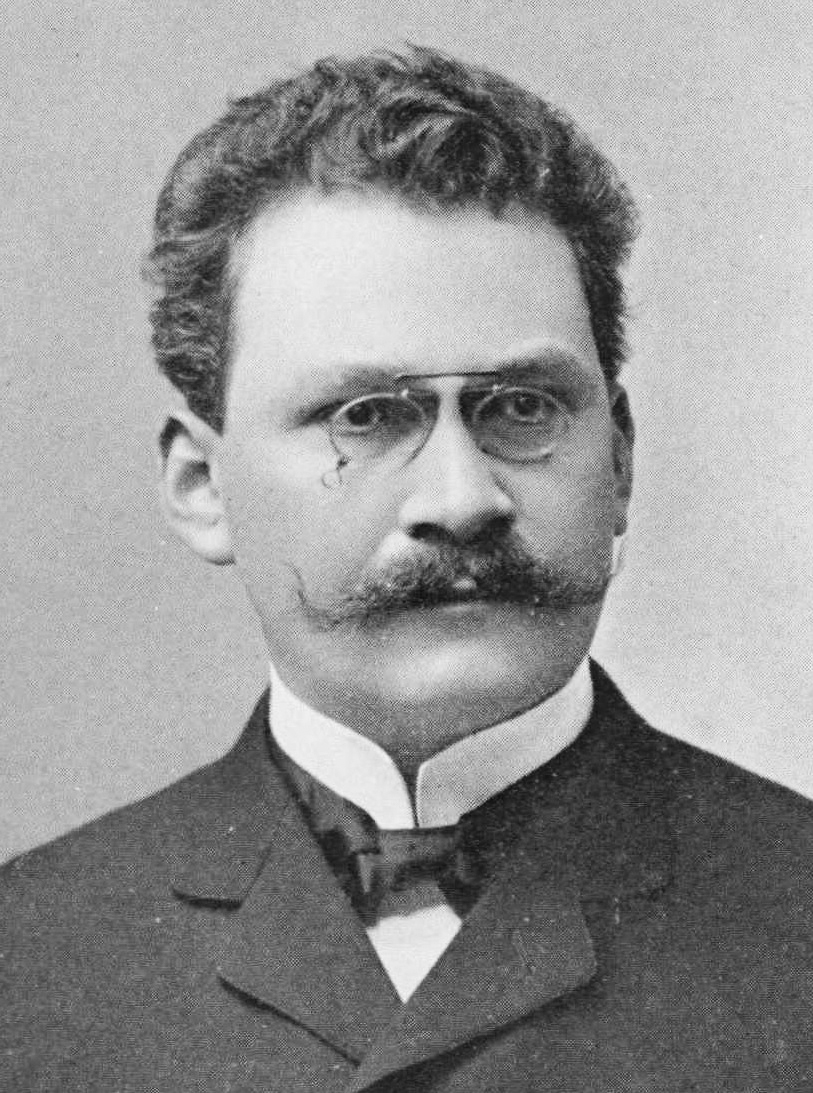
Minkowski’s Four-Dimensional Space
Please see Section XVII at the link above.
.
Summary
The world in which we live is a four-dimensional continuum. It is composed of individual events, each of which is described by four numbers, namely, three space co-ordinates x, y, z and a time co-ordinate t.In classical mechanics, t is considered to be independent and absolute; but in the theory of relativity, t is not independent of x, y, and z.
Pure “space-distance” of two events with respect to K results in “time-distance” of the same events with respect to K’. Therefore, space and time are related on a larger scale, though this is not so apparent in the material domain. Minkowski made this very clear by presenting the time coordinate as “√(-1) ct“ so that the time co-ordinate plays exactly the same rôle as the three space coordinates.
Minkowski’s idea made the mathematical foundation of the general theory of relativity possible.
.
Final Comments
The four dimensions are length (x), width (y), height (z) and time (t). The dimensions are like scales and x, y, z, and t, called co-ordinates, represent specific values on those scales. These dimensions are attributes of substance. For example, the three space coordinates x, y, and z represent “a location in the space occupied by substance”; and the time coordinate t represents “the duration of substance at that location.”
The important point is that these dimensions do not exist in the absence of substance. A point in a space occupied by substance is not dimensionless. It has four dimensions, and the fourth dimension represented by t is the inertia (rigidity or flexibility), associated with that point. Minkowski’s contribution made it possible to model this property of inertia, or consistency, mathematically.
Time (duration) is the inertial dimension. This inertia is very large throughout the material domain, and the changes in it are imperceptible; so the matter is very rigid. But this inertia is negligible throughout the energy domain, and it is hardly perceptible; so the energy is very flexible.
The four dimensions together represent the continuum of substance. There is no empty space; thus, we have matter floating in energy. There is no clear separation at the boundary between matter and its surrounding energy.
The consistency decreases from matter to energy. As a result, the flexibility increases, which manifests itself as motion. So, there is a natural relationship between consistency (inertia) and motion (velocity). This is the meaning of the contribution of Minkowski to four-dimensional space.
.