Category Archives: Science

Substance and Consistency

Reference: Essays on Substance

Light has no mass, but it has momentum. This indicates that, according to Einstein’s famous equation E = mc2, light could have a “mass” of the order of 1/c2 in mass units. This amount is so small that it is ignored as mass. But it is still significant as momentum; and we can call it consistency.

CONSISTENCY means “a degree of density, firmness, viscosity, etc.” The use of ‘consistency’ in place of ‘mass’ establishes an equivalence between radiation and matter as two different categories of substance.

The terms SUBSTANCE and CONSISTENCY have not been used in the vocabulary of science because they have not had precise definitions in the past. The Theory of Substance now assigns them precise definitions as follows:

SUBSTANCE
“Substance is anything that is substantial enough to be sensed. We can sense matter, radiation and thought; and, therefore, they are three different categories of substance.”

CONSISTENCY
“Consistency is the measure of the substantiality of substance. Matter has very high consistency called MASS. Radiation has no mass but it has consistency of the order of 1/c2 in mass units. Thought has a consistency so small that it can be sensed only mentally.” 

To be part of scientific vocabulary, a term must have precise definition. Newton introduced the terms FORCE, INERTIA, MASS and GRAVITY to science by assigning them precise definitions. We now introduce the terms SUBSTANCE and CONSISTENCY to the scientific vocabulary.

.

Space, Mathematics and Einstein

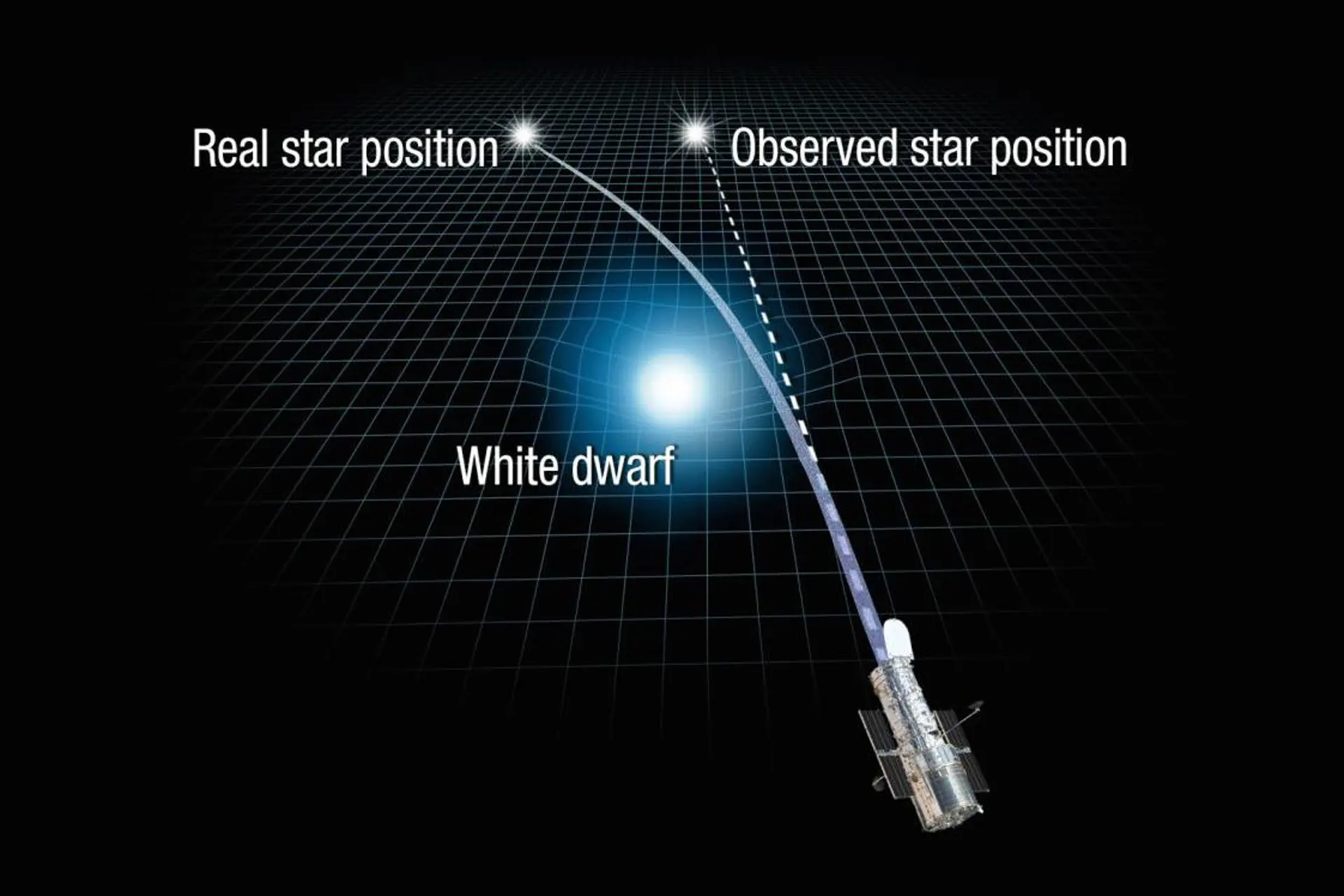
Einstein, in his general relativity, gives pure space a structure. This structure is influenced by the presence of physical mass. Where does this structure of space come from?

Space can curve. If this is an analogy, then the only description of space curving is through mathematics. Mathematics is based on postulates that are in coherence with each other. These postulates, axioms, or rules are all pure thought

So, a structure for pure space is being postulated in GR. Light is shown to follow this structure. Gravity of planets is also explained when planets are seen to follow this structure of pure space.

Basically, GR is postulating a coherence between physical structure of matter and radiation on one hand and the structure of pure space on the other. Matter, radiation and “space” are shown to be in some kind of coherence, or equilibrium, with each other.

We can sense the physical structures of matter and radiation through our physical senses. But we can sense the structure of pure space only through the thought put in mathematics. We can sense thought through our mental sense. And this makes thought a substance on its own right.

This is because SUBSTANCE can be defined as “anything substantial enough to be sensed.” We sense thought differently from radiation and matter; but thought, radiation and matter can all be sensed.

We may, therefore, say that pure space is made of thought.

.

Eddington 1927: Chapter 3 Summary

Reference: The Book of Physics

Note: The original text is provided below.
Previous / Next

.

Summary

.

Comments

.

Original Text

In this chapter the idea of a multiplicity of frames of space has been extended to a multiplicity of frames of space and time. The system of location in space, called a frame of space, is only a part of a fuller system of location of events in space and time. Nature provides no indication that one of these frames is to be preferred to the others. The particular frame in which we are relatively at rest has a symmetry with respect to us which other frames do not possess, and for this reason we have drifted into the common assumption that it is the only reasonable and proper frame; but this egocentric outlook should now be abandoned, and all frames treated as on the same footing. By considering time and space together we have been able to understand how the multiplicity of frames arises. They correspond to different directions of section of the four-dimensional world of events, the sections being the “world-wide instants”. Simultaneity (Now) is seen to be relative. The denial of absolute simultaneity is intimately connected with the denial of absolute velocity; knowledge of absolute velocity would enable us to assert that certain events in the past or future occur Here but not Now; knowledge of absolute simultaneity would tell us that certain events occur Now but not Here. Removing these artificial sections, we have had a glimpse of the absolute world-structure with its grain diverging and interlacing after the plan of the hour-glass figures. By reference to this structure we discern an absolute distinction between space-like and time-like separation of events—a distinction which justifies and explains our instinctive feeling that space and time are fundamentally different. Many of the important applications of the new conceptions to the practical problems of physics are too technical to be considered in this book; one of the simpler applications is to determine the changes of the physical properties of objects due to rapid motion. Since the motion can equally well be described as a motion of ourselves relative to the object or of the object relative to ourselves, it cannot influence the absolute behaviour of the object. The apparent changes in the length, mass, electric and magnetic fields, period of vibration, etc., are merely a change of reckoning introduced in passing from the frame in which the object is at rest to the frame in which the observer is at rest. Formulae for calculating the change of reckoning of any of these quantities are easily deduced now that the geometrical relation of the frames has been ascertained.

.

Eddington 1927: Chapter 2 Summary

Reference: The Book of Physics

Note: The original text is provided below.
Previous / Next

Summary

.

Comments

.

Original Text

Let us take a last glance back before we plunge into four dimensions. We have been confronted with something not contemplated in classical physics—a multiplicity of frames of space, each one as good as any other. And in place of a distance, magnetic force, acceleration, etc., which according to classical ideas must necessarily be definite and unique, we are confronted with different distances, etc., corresponding to the different frames, with no ground for making a choice between them. Our simple solution has been to give up the idea that one of these is right and that the others are spurious imitations, and to accept them en bloc; so that distance, magnetic force, acceleration, etc., are relative quantities, comparable with other relative quantities already known to us such as direction or velocity. In the main this leaves the structure of our physical knowledge unaltered; only we must give up certain expectations as to the behaviour of these quantities, and certain tacit assumptions which were based on the belief that they are absolute. In particular a law of Nature which seemed simple and appropriate for absolute quantities may be quite inapplicable to relative quantities and therefore require some tinkering. Whilst the structure of our physical knowledge is not much affected, the change in the underlying conceptions is radical. We have travelled far from the old standpoint which demanded mechanical models of everything in Nature, seeing that we do not now admit even a definite unique distance between two points. The relativity of the current scheme of physics invites us to search deeper and find the absolute scheme underlying it, so that we may see the world in a truer perspective.

.

Eddington 1927: Velocity through the Aether

Reference: The Book of Physics

Note: The original text is provided below.
Previous / Next

Summary

.

Comments

.

Original Text

The theory of relativity is evidently bound up with the impossibility of detecting absolute velocity; if in our quarrel with the nebular physicists one of us had been able to claim to be absolutely at rest, that would be sufficient reason for preferring the corresponding frame. This has something in common with the well-known philosophic belief that motion must necessarily be relative. Motion is change of position relative to something-, if we try to think of change of position relative to nothing the whole conception fades away. But this does not completely settle the physical problem. In physics we should not be quite so scrupulous as to the use of the word absolute. Motion with respect to aether or to any universally significant frame would be called absolute.

No aethereal frame has been found. We can only discover motion relative to the material landmarks scattered casually about the world; motion with respect to the universal ocean of aether eludes us. We say, “Let V be the velocity of a body through the aether”, and form the various electromagnetic equations in which V is scattered liberally. Then we insert the observed values, and try to eliminate everything that is unknown except V. The solution goes on famously; but just as we have got rid of the other unknowns, behold! V disappears as well, and we are left with the indisputable but irritating conclusion: 0 = 0.

This is a favourite device that mathematical equations resort to, when we propound stupid questions. If we tried to find the latitude and longitude of a point north-east from the north pole we should probably receive the same mathematical answer. “Velocity through aether” is as meaningless as “north-east from the north pole”.

This does not mean that the aether is abolished. We need an aether. The physical world is not to be analyzed into isolated particles of matter or electricity with featureless interspace. We have to attribute as much character to the interspace as to the particles, and in present-day physics quite an army of symbols is required to describe what is going on in the interspace. We postulate aether to bear the characters of the interspace as we postulate matter or electricity to bear the characters of the particles. Perhaps a philosopher might question whether it is not possible to admit the characters alone without picturing anything to support them—thus doing away with aether and matter at one stroke. But that is rather beside the point.

In the last century it was widely believed that aether was a kind of matter, having properties such as mass, rigidity, motion, like ordinary matter. It would be difficult to say when this view died out. It probably lingered longer in England than on the continent, but I think that even here it had ceased to be the orthodox view some years before the advent of the relativity theory. Logically it was abandoned by the numerous nineteenth-century investigators who regarded matter as vortices, knots, squirts, etc., in the aether; for clearly they could not have supposed that aether consisted of vortices in the aether. But it may not be safe to assume that the authorities in question were logical.

Nowadays it is agreed that aether is not a kind of matter. Being non-material, its properties are sui generis. We must determine them by experiment; and since we have no ground for any preconception, the experimental conclusions can be accepted without surprise or misgiving. Characters such as mass and rigidity which we meet with in matter will naturally be absent in aether; but the aether will have new and definite characters of its own. In a material ocean we can say that a particular particle of water which was here a few moments ago is now over there; there is no corresponding assertion that can be made about the aether. If you have been thinking of the aether in a way which takes for granted this property of permanent identification of its particles, you must revise your conception in accordance with the modern evidence. We cannot find our velocity through the aether; we cannot say whether the aether now in this room is flowing out through the north wall or the south wall. The question would have a meaning for a material ocean, but there is no reason to expect it to have a meaning for the non-material ocean of aether.

The aether itself is as much to the fore as ever it was, in our present scheme of the world. But velocity through aether has been found to resemble that elusive lady Mrs. Harris; and Einstein has inspired us with the daring skepticism—”I don’t believe there’s no sich a person”.

.