Category Archives: Sadhguru

SADHGURU 2016: “Something there is that doesn’t love a wall”

Reference: Inner Engineering (Content)

This paper presents the summary of Part two, chapter 2.2, from the book, INNER ENGINEERING By Sadhguru. The contents are from the first edition (2016) of this book published in the United States by Spiegel & Grau, an imprint of Random House, a division of Penguin Random House LLC, New York.

The summary of the original material (in black) is accompanied by brief comments (in color) based on the present understanding.

.

“Something there is that doesn’t love a wall”

As a machine, the body is faultless. The only problem is that it just springs out of the earth and falls back into the earth. It does not take us anywhere. What truly makes us who we are is a dimension beyond physicality that has infused itself into this wonderful mechanism. This dimension gives us the consciousness of being more than just physical.

At the level of the physical body there is a longing to root ourselves well on this planet for self-preservation. But in the dimension beyond physicality there is a longing to expand without bounds. The instinct of self-preservation fixates us on the physical body. One doesn’t need to be so fixated.

Spirituality is the dimension beyond the physical. The human desire to transcend the limitations of the physical is a completely natural one. Fixation on self-preservation poses a limitation that is entirely created by us. Yoga is all about unknotting and dismantling such limitations.

Fixation is like gravity that is trying to hold us down. Freedom is like grace that is trying to lift us up. All we to do to get rid of fixation is to stop identifying with the physical dimension and make ourselves receptive to the spiritual dimension.

Our intelligence is struggling against the physical idea of “self-preservation”. It has the goal to evolve until it becomes boundless. 

.
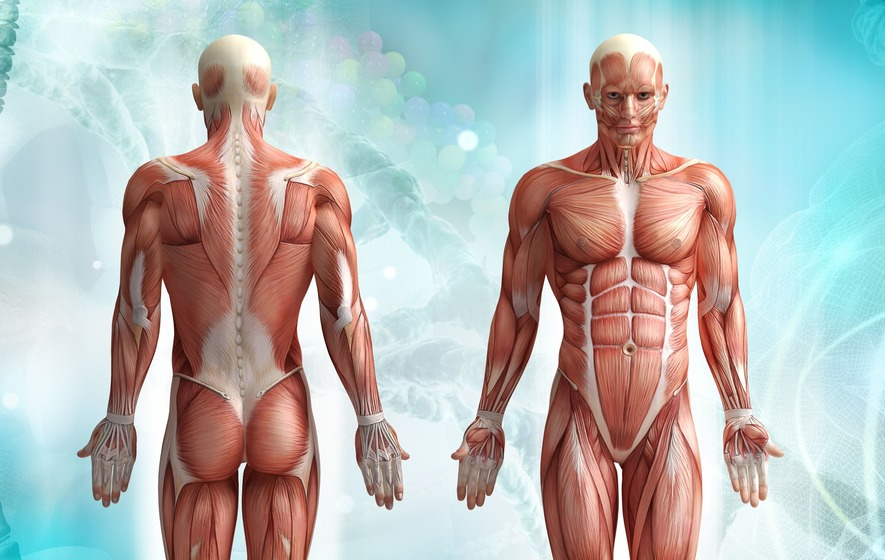
SADHGURU 2016: Body: The Ultimate Machine

Reference: Inner Engineering (Content)

This paper presents the summary of Part two, chapter 2.1, from the book, INNER ENGINEERING By Sadhguru. The contents are from the first edition (2016) of this book published in the United States by Spiegel & Grau, an imprint of Random House, a division of Penguin Random House LLC, New York.

The summary of the original material (in black) is accompanied by brief comments (in color) based on the present understanding.

.

Body: The Ultimate Machine

The physical body is the ultimate machine.  It has created all other machines in the world. In yogic sciences, everything is just a body—whether it is a food body, a mind body, an energy body, an etheric body, or a bliss body. This idea of body grounds us firmly in the tangible. 

The physical body is a pretty complete and self-contained instrument. It is designed to function by itself without much intervention. It embodies the highest level of mechanics, electronics, and electrical circuitry that one can imagine. It has intelligence to transform food into the highest piece of technological excellence in just a few hours.

This intelligence is way beyond the logical mind, but it is working at an unconscious level. If we can only bring just a little bit of this intelligence to the conscious level, we would live magically.

We can become super capable if we can only become conscious of what we are already doing unconsciously.

.

Scientology and Isha

I visited the ISHA INSTITUTE OF INNER SCIENCES in Tennessee recently in May 2022. It is situated on a large scenic area in the mountains. I hiked to a beautiful scenic bluff and a waterfall within the bounds of this institute.

I think that Scientology now has competition. Isha of Sadhguru is the new religion in the age of Internet, which is addressing the same issues that Scientology of Hubbard once did in the absence of Internet. Sadhguru’s Isha is drawing upon the ancient wisdom of India. Sadhguru is marketing his courses through Internet in a way that Hubbard never dreamed of.

Scientology seems to have run its course and becoming stale. Isha is new, fresh and full of energy. It is an interesting development to watch.

.

SADHGURU 2016: A Note to the Reader (Part Two)

Reference: Inner Engineering (Content)

This paper presents the summary of Part two, chapter 1, from the book, INNER ENGINEERING By Sadhguru. The contents are from the first edition (2016) of this book published in the United States by Spiegel & Grau, an imprint of Random House, a division of Penguin Random House LLC, New York.

The summary of the original material (in black) is accompanied by brief comments (in color) based on the present understanding.

.

A Note to the Reader

Inner Engineering explores the first three layers of self: Physical, Mental, and Energetic. It does not address the last two layers: qualified knowledge and the Absolute. It seeks to clarify the basic concepts by pointing out common assumptions and clichés. 

You are required to take nothing on faith; but are encouraged to experiment with this data fearlessly, and then conclude for yourself. And so, this section oscillates between information and suggested practice and self-observation exercises. 

You may do the exercises according to your choice. The exercise (Sadhanas) provide you a bridge from “Information” to the business of “daily living.” Thus you may test the hypotheses provided in this book.

The idea here to examine our preconceived notions and to take a fresh look at the physical, mental and energetic aspects of ourselves.

.

SADHGURU 2016: “. . . And Now, Yoga”

Reference: Inner Engineering (Content)

This paper presents the summary of Part one, chapter 6, from the book, INNER ENGINEERING By Sadhguru. The contents are from the first edition (2016) of this book published in the United States by Spiegel & Grau, an imprint of Random House, a division of Penguin Random House LLC, New York.

The summary of the original material (in black) is accompanied by brief comments (in color) based on the present understanding.

.

“. . . And Now, Yoga”

The fundamental desire within every human being is for boundless expansion. You arrive at yoga only when you realize that absolutely nothing else will settle you. 

Yoga is neither contortions of the body, nor sitting effortlessly in a lotus position. Yoga is the science of being in perfect alignment, and in complete sync with existence. With the practice of yoga, your body and mind can be maintained at the highest possible level of capability and efficiency. You are essentially a morsel of energy that is part of the much larger energy system of the universe. Yoga is the technology of upgrading, activating, and refining these inner energies for the highest possibilities. The whole point of yoga is to bring you to an experience wherein, if you sit here, there is no such thing as “you” and “me.” It is all me—or all you! Yoga is a hundred percent empirical science. 

Yoga tells us that we are actually composed of five layers of body. The first layer is annamayakosha (the physical layer). It is the product of all the nourishment you have ingested over the years. The second layer is manomayakosha (the mental layer). It is the intelligence of all the cells distributed throughout the physical body. The fluctuations in the mental and physical layers influence each other. The third layer is pranamayakosha (the energy layer). It energizes the mental and physical layers. When the energy layer is in full vibrancy and proper balance, chronic diseases cannot exist in the physical and mental layers. The physical, mental and energy layers can be sensed and experienced. The fourth layer is vignanamayakosha (the etheric layer). It is the layer of “qualified knowledge” that forms the bridge from physical to non-physical. When the etheric layer is integrated with the first three layers you become intuitively aware of the cosmic phenomena. The fifth layer is anandamayakosha (the bliss layer), which represents a non-physical dimension of the absolute. This dimension cannot be perceived, only experienced as an overwhelming experience of bliss. When the bliss layer is integrated you can fearlessly explore the beyond. 

The aim of yoga is total integration of these layers. In the practice of karma yoga (yoga of duty), you approach this integration using your physical body. In gnana yoga (yoga of knowledge), you approach integration using your intelligence. In bhakti yoga (yoga of devotion), you approach integration using your emotions. And in kriya yoga (yoga of activity), you approach integration using your energies.

All four approaches lead to the same result—the integration of the five layers of body.

The aim of Yoga is the integration of the five layers of body that make up the self.

.