Category Archives: Sadhguru

SADHGURU 2016: Morsel of the Earth

Reference: Inner Engineering (Content)

This paper presents the summary of Part two, chapter 2.6 from the book, INNER ENGINEERING By Sadhguru. The contents are from the first edition (2016) of this book published in the United States by Spiegel & Grau, an imprint of Random House, a division of Penguin Random House LLC, New York.

The summary of the original material (in black) is accompanied by brief comments (in color) based on the present understanding.

.

Morsel of the Earth

The physical body is just a fragment of this planet. Whatever happens to the planet happens to the body too. Therefore, the body is influenced by other planets in the solar system, and by the universe itself. It may just happen to be beyond most people’s perception.

The fact that we view the ingredients which constitute our body, like earth, water, air, and food, as commodities, is a fundamental mistake. The truth is that our body Is an organic part of the life process. If it is to rain today, some change will happen in the body. Simply by observing a completely different level of the human system and its ongoing transaction with the planet, the air, and everything around, you can predict the impending rain even if the sky, at the moment, is clear. 

At the magnetic equator there is no pull toward north or south; and this promotes a certain balance and equanimity in the life of the spiritual seeker. This equanimity can be a powerful device to liberate oneself quite literally from the limitations of the physical world. A few thousand years ago, yogis pinpointed the exact location of the magnetic equator and built a whole string of temples along this area for those who sought ultimate spiritual union.

This kind of spiritual system makes use of natural phenomena to support human efforts at spiritual growth. You can go slowly, step-by-step, accepting all natural assistance available to you. The other alternative, of course, is to withdraw from external life situations, and focus solely on the inner journey.

Another path in yoga is to make use of natural phenomena, such as the magnetic equator, to support human efforts at spiritual growth.

.

SADHGURU 2016: INTENSITY OF INACTIVITY

Reference: Inner Engineering (Content)

This paper presents the summary of Part two, chapter 2.5.2 from the book, INNER ENGINEERING By Sadhguru. The contents are from the first edition (2016) of this book published in the United States by Spiegel & Grau, an imprint of Random House, a division of Penguin Random House LLC, New York.

The summary of the original material (in black) is accompanied by brief comments (in color) based on the present understanding.

.

INTENSITY OF INACTIVITY

If you want to know effortlessness, you need to know effort. When you reach the peak of effort, you become effortless. Only a person who knows what it is to work understands rest. When someone is constantly giving a hundred percent, a point comes when one surpasses all limits and reaches total effortlessness. Effortlessness means transcending the need for physical action.

Zen actually involves tremendous activity because it is not divorced from life in any way. In performing activity, such as arrange pebbles in a Zen garden, you reach a state of non-doing, where you transcend the experience of being a doer. It is in such states that you have a taste of the beyond. 

In yoga, you arrive at the same state through the intensity of inactivity of a yogic posture, and it is a state that can be sustained longer. Meditation is a natural consequence of the intensity that has been achieved. It is the intensity of simply being. It is in these absolutely non-compulsive states of existence that the necessary atmosphere is set for the blossoming of an individual into a cosmic possibility.

Meditation is not an act, but a natural consequence of the “intensity of being” that has been achieved—your humanity simply overflows.

.

SADHGURU 2016: Sadhana (2-2:5:1)

Reference: Inner Engineering (Content)

This paper presents the summary of Part two, chapter 2.5.1 from the book, INNER ENGINEERING By Sadhguru. The contents are from the first edition (2016) of this book published in the United States by Spiegel & Grau, an imprint of Random House, a division of Penguin Random House LLC, New York.

The summary of the original material (in black) is accompanied by brief comments (in color) based on the present understanding.

.

Sadhana

“Sit in any comfortable posture, with your spine erect, and if necessary, supported. Remain still. Allow your attention to slowly grow still as well. Do this for five to seven minutes a day. You will notice that your breath will slow down. 

“What is the significance of slowing down the human breath? Is it just some respiratory yogic acrobatics? No, it is not. A human being breathes twelve to fifteen times per minute, normally. If your breath settles down to twelve, you will know the ways of the earth’s atmosphere (i.e., you will become meteorologically sensitive). If it reduces to nine, you will know the language of the other creatures on this planet. If it reduces to six, you will know the very language of the earth. If it reduces to three, you will know the language of the source of creation. This is not about increasing your aerobic capacity. Nor is it about forcefully depriving yourself of breath. A combination of hatha yoga and an advanced yogic practice called the kriya, will gradually increase your lung capacity, but above all, will help you achieve a certain alignment, a certain ease, so that your system evolves to a state of stability where there is no static, no crackle; it just perceives everything.”

This the ancient Pranayama that Patanjali talks about. Prana means breath, ayama is lengthening or widening through control. When breathing is controlled so as to retain the breath, it is pranayama. The ultimate aim of pranayama is to be able to retain the breath. Thus, if we breathe normally fourteen times per minute, in pranayama we breathe only once or twice per minute

DRILL: As you breathe, do japa: “I am breathing in; I am breathing out.”

.

SADHGURU 2016: Downloading the Cosmos

Reference: Inner Engineering (Content)

This paper presents the summary of Part two, chapter 2.5 from the book, INNER ENGINEERING By Sadhguru. The contents are from the first edition (2016) of this book published in the United States by Spiegel & Grau, an imprint of Random House, a division of Penguin Random House LLC, New York.

The summary of the original material (in black) is accompanied by brief comments (in color) based on the present understanding.

.

Downloading the Cosmos

The more you know about any other gadget, the better you can use it. The body is like the old TV antenna: if you hold it in the right position, it becomes receptive to all there is in existence. If you hold it another way, you will remain absolutely ignorant of everything beyond the five senses.

We are employing less than one percent of what the body is capable of. If you prepare the body properly, it can grasp everything in this existence, because all that happens to this existence is happening, in some way, to this body. 

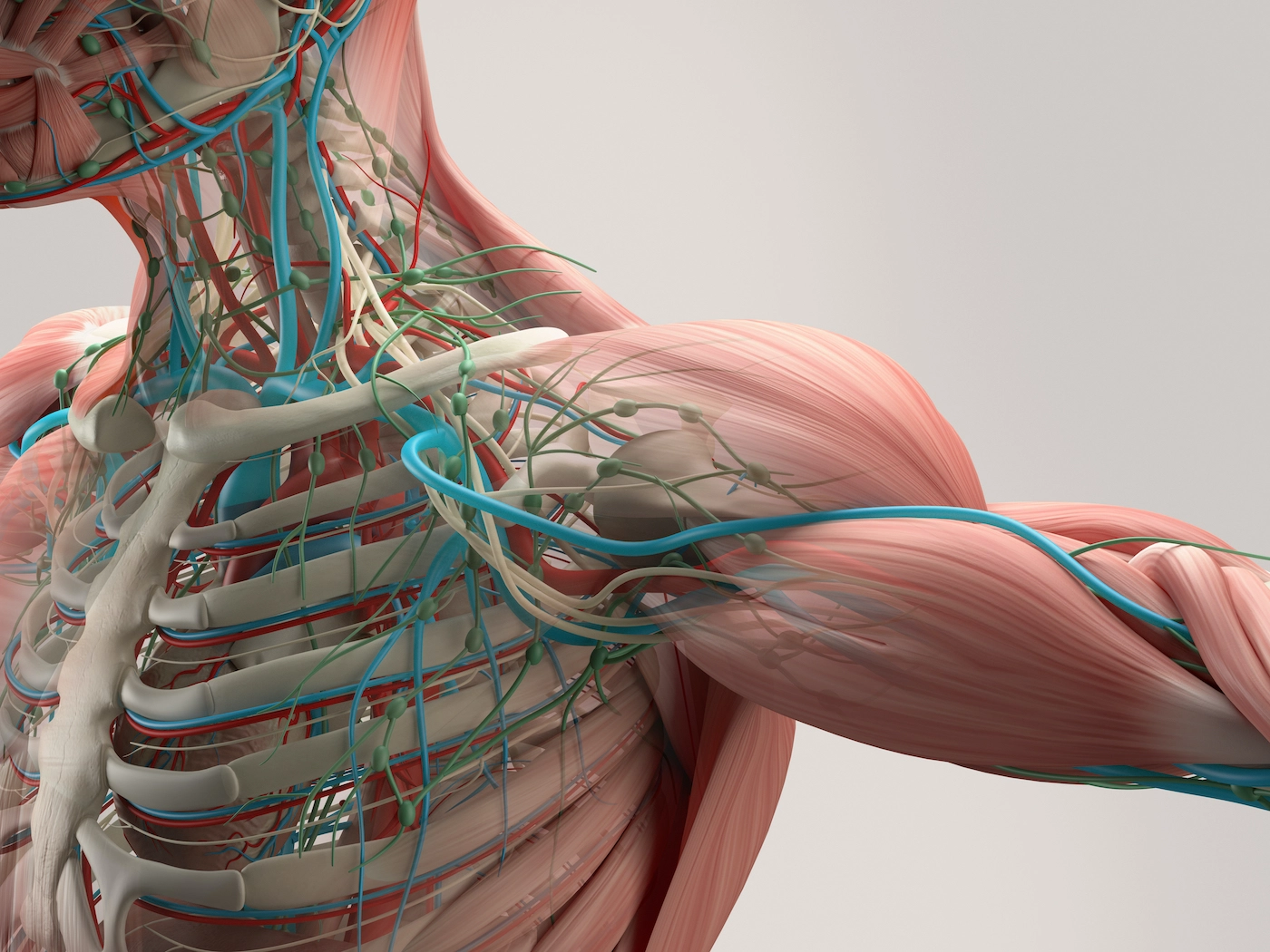
The human body is capable of downloading the entire cosmos. So, the fundamental yoga starts with the physical body. We transform the physical body from a series of compulsions of flesh, blood, and hormones into a conscious process, a powerful instrument of perception and knowing.

In Yoga, we transform the physical body into a powerful instrument of perception and knowing. 

.

Logic of the Body

Reference: Inner Engineering

  1. The body has evolved over millions of years such that most anomalies have been resolved from it. That’s its logic.
  2. Body converts physical energy into metaphysical energy. This happens in the process of eating; and more so in sex, when one is totally relaxed.
  3. It is the metaphysical dimension of the body that makes it wonderful. One should be aware of both physical and metaphysical dimensions.
  4. Evolution requires overcoming of your own compulsion for “self-preservation”.
  5. The attention field is sensing the Akasha through the senses. It is the enhancing of attention that we need.
  6. Posture of the body helps align the mental matrix.
  7. We need to work on enhancing the body’s ability to convert physical to metaphysical energy.
  8. Yogic postures help you let the body unwind so that the attention field aligns better with Akasha.

.

Some Conclusions

  1. Human body does not need that much protein. Indian vegetarian food contains enough protein.
  2. Human body is designed for vegetarian food.
  3. Raw vegetables provide enzymes that help digest the food.
  4. Beyond the age of 30, you need only 2 meals a day.
  5. You think and meditate better on empty stomach.

.