Category Archives: Religion

Buddhism

Reference: The World’s Religions

  1. The Man Who Woke Up
  2. The Silent Sage
  3. The Rebel Saint
  4. The Four Noble Truths
  5. The Eightfold Path
  6. Basic Buddhist Concepts
  7. Big Raft and Little
  8. The Secret of the Flower
  9. The Diamond Thunderbolt
  10. The Image of the Crossing
  11. The Confluence of Buddhism and Hinduism in India
  12. Suggestions for Further Reading

.

HINDUISM: Appendix on Sikhism

Reference: Hinduism

Note: The original Text is provided below.
Previous / Next

Sikhism reaches the most reasonable theological compromise between the Hindu and Muslim faiths. It rejects caste distinctions, images as aids to worship, the notion of avatars, and the sanctity of the Vedas.

.

Summary

.

Comments

.

Original Text

Hindus are inclined to regard Sikhs (literally disciples) as somewhat wayward members of their own extended family, but Sikhs reject this reading. They see their faith as having issued from an original divine revelation that inaugurated a new religion.

The revelation was imparted to Guru Nanak, guru being popularly explained as a dispeller of ignorance or darkness (gu) and bringer of enlightenment (ru). Nanak, pious and reflective from his birth in 1469, around the year 1500 mysteriously disappeared while bathing in a river. On reappearing three days later he said: “Since there is neither Hindu nor Muslim, whose path shall I follow? I will follow God’s path. God is neither Hindu nor Muslim, and the path I follow is God’s.” His authority for those assertions, he went on to explain, derived from the fact that in his three-day absence he had been taken to God’s court, where he was given a cup of nectar (amrit, from which Amritsar, Sikhism’s holy city, is named) and was told:

This is the cup of the adoration of God’s name. Drink it. I am with you. I bless you and raise you up. Whoever remembers you will enjoy my favor. Go, rejoice in my name and teach others to do so also. Let this be your calling.

That Nanak began by distinguishing his path from both Hinduism and Islam underscores the fact that Sikhism arose in a Hindu culture—Nanak was born into the kshatriya caste—that was under Muslim domination. Sikhism’s homeland is the Punjab, “the land of the five rivers” in northwest India, where Muslim invaders were in firm control. Nanak valued his Hindu heritage while also recognizing the nobility of Islam. Here were two religions, each in itself inspired, but which in collision were exciting hatred and slaughter.

If the two sides had agreed to negotiate their differences, they could hardly have reached a more reasonable theological compromise than the tenets of Sikhism afford. In keeping with Hinduism’s sanatana dharma (Eternal Truth), the revelation that was imparted to Nanak affirms the ultimacy of a supreme and formless God who is beyond human conceiving. In keeping with the Islamic revelation, however, it rejects the notion of avatars (divine incarnations), caste distinctions, images as aids to worship, and the sanctity of the Vedas. Having departed from Hinduism in these respects, however, the Sikh revelation leans back toward it in endorsing, as against Islam, the doctrine of reincarnation.

This relatively even division between Hindu and Muslim doctrines has led outsiders to suspect that in his deep, intuitive mind, if not consciously, Nanak worked out a faith he hoped might resolve the conflict religion had produced in his region. As for the Sikhs themselves, they acknowledge the conciliatory nature of their faith, but ascribe its origins to God. Only in a secondary sense was Guru Nanak a guru. The only True Guru is God. Others qualify as gurus in proportion as God speaks through them.

The official Sikh gurus are ten in number and, beginning with Guru Nanak, the Sikh community took shape through their ministrations. The tenth in this lineage, Guru Gobind Singh, announced that he was the last of this line; following his death the Sacred Text that had taken shape would replace human gurus as the head of the Sikh community. Known as the Guru Granth Sahib, or Collection of Sacred Wisdom, this scripture has ever since been revered by the Sikhs as their living Guru; it lives in the sense that the will and words of God are alive within it. For the most part it consists of poems and hymns that came to six of the Gurus as they meditated on God in the deep stillness of their hearts and emerged to sing joyfully God’s praises.

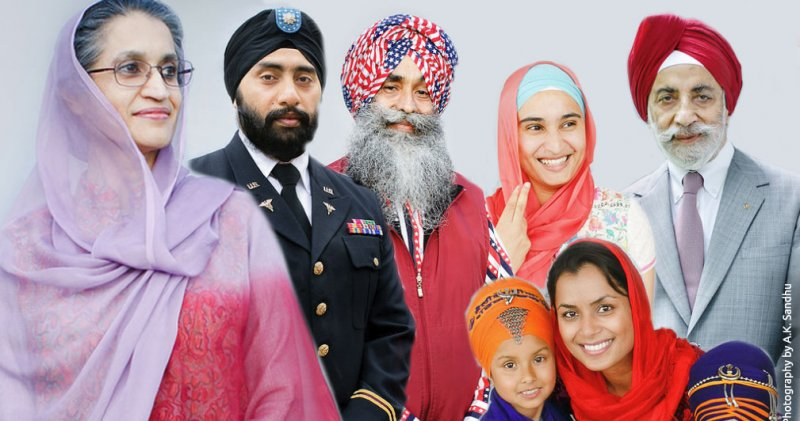
Sikhism has been under heavy assault during much of its history. At a time when the faith was particularly hard pressed, the Tenth Guru called for those who were prepared to commit their lives unreservedly to the faith to step forward. To the “beloved five” who responded he gave a special initiation, thereby instituting the Khalsa, or Pure Order, which continues to this day. Open to men and women alike who are willing to fulfill its regulations, it requires that those who enter it abstain from alcohol, meat, and tobacco, and that they wear “the five Ks,” so-called because in Punjabi all begin with the letter “k.” The five are uncut hair, a comb, a sword or dagger, a steel bracelet, and undershorts. Originally, all five of these had protective as well as symbolic sides. Together with the comb, uncut hair (typically gathered in a turban) shielded the skull while tying in with the yogic belief that uncut hair conserves vitality and draws it upward; the comb for its part symbolized cleanliness and good order. The steel bracelet provided a small shield, while at the same time “shackling” its wearer to God as a reminder that hands should always be in God’s service. Undershorts, which replaced the Indian dhoti, meant that one was always dressed for action. The dagger, now largely symbolic, was originally needed for self-defense.

At the same time that he instituted the Khalsa, Guru Gobind Singh extended his name Singh (literally lion, and by extension stalwart and lionhearted) to all Sikh men, and to women he gave the name Kaur, or princess. The names remain in force for Sikhs, right down to today.

These matters concern religious forms. Centrally, Sikhs seek salvation through union with God by realizing, through love, the Person of God, who dwells in the depths of their own being. Union with God is the ultimate goal. Apart from God life has no meaning; it is separation from God that causes human suffering. In the words of Nanak, “What terrible separation it is to be separated from God and what blissful union to be united with God!”

World renunciation does not figure in this faith. The Sikhs have no tradition of renunciation, asceticism, celibacy, or mendicancy. They are householders who support their families with their earnings and donate one-tenth of their income to charity.

Today there are some 13 million Sikhs in the world, most of them in India. Their headquarters are in the famed Golden Temple, which is located in Amritsar.

.

JUDAISM: Israel

Reference: Judaism

[NOTE: In color are Vinaire’s comments.]

Generally speaking, the four great sectors of Judaism that constitute its spiritual anatomy are faith, observance, culture, and nation. 

This chapter is about to conclude, and everything we have spoken of took place in the biblical period. There are reasons for this. First, it was in biblical times that most of the great formative ideas of Judaism took shape; second, those ideas constitute the side of Judaism that is most accessible to outsiders for whom this book is primarily intended. If, however, this chapter were to create the impression that Jewish creativity stopped with the closing of the Hebrew canon, that would be reductionism of the grossest sort. Judaism cannot be reduced to its biblical period. What happened was this. In 70 C.E. the Romans destroyed the Temple in Jerusalem that the Jews had rebuilt on returning from their Babylonian exile, and the focus of Judaism shifted from the sacrificial rite of the Temple to the study of the Torah and its accompanying Oral Tradition in academies and synagogues. Thenceforth it was not the priests, who were no longer functional, but the rabbis (literally teachers) who held Judaism together, for their synagogues became centers not only for study but for worship and congregational life in general. Rabbinic Judaism grounded itself in the commandment to make the study of the Torah a lifelong endeavor, and Judaism acquired a distinctly intellectual dimension and character. Through the tradition of Torah-study as it developed in the Talmud, the mind was made integral to religious life and mental energies were introduced into piety. Study, including the kind of constant, unceasing questioning and the rigid sense of logic that pervades the Talmud, became a way of worship. In this complex, the Bible became a revealed text inviting and requiring interpretation, and interpretation, was raised to the status of revelation itself.

Rabbinic Judaism grounded itself in the commandment to make the study of the Torah a lifelong endeavor, and Judaism acquired a distinctly intellectual dimension and character. 

The rabbinic accomplishment of keeping Judaism alive for the two-thousand years of its diaspora is one of the wonders of history, but for the reasons that were given above we shall not pursue it here. Instead, having taken note of rabbinic Judaism, we shall jump the two millennia of the Common Era to close this chapter with a look at the twentieth century.

The rabbinic accomplishment of keeping Judaism alive for the two-thousand years of its diaspora is one of the wonders of history.

Judaism is the faith of a people. As such it contains, as one of its features, faith in a people—in the significance of the role the Jews have played and will play in human history. This faith calls for the preservation of the identity of the Jews as a distinct people. In the past Jewish self-identity posed no policy problem. During the biblical period the Jews needed to be separate to keep their distinctive viewpoint from being compromised by neighboring polytheisms. This was the basis of the repeated prophetic demand that the Jews remain a “peculiar” people. Later, especially in post-medieval Europe up to the French Revolution, the Jews were forced to be separate. Required to live in ghettos surrounded by walls whose gates were locked at night, they had no alternative but to live a life that largely turned inward.

Judaism contains, as one of its features, faith in a people—in the significance of the role the Jews have played and will play in human history.

Since the French Revolution the issue of Jewish identity has become something of a problem. With the emancipation of the Jews and their entry into the political, professional, and cultural life of the countries in which they live, the world no longer requires that their identity be retained. Nor is there the clear ethical discrepancy that once compelled Jews to remain aloof from their neighbors on moral grounds. Today, if Jewish distinctness is to continue, the case for it must be argued.

With the emancipation of the Jews and their entry into the political, professional, and cultural life of the countries in which they live, the world no longer requires that their identity be retained. 

Within Judaism itself the arguments differ. Some Jews adhere to the religious thesis of the preceding section: as God has chosen Israel to be a unique instrument for good, the shape and edge of that instrument should be retained. Other Jews argue for distinctiveness on grounds of cultural pluralism. A healthy individual identity depends on a sense of one’s origins, one’s roots. The inclusion of multiple heritages in a society is an advantage, for uniformity breeds sameness and diminishes creativity. Marx, Einstein, and Freud have contributed enormously to modern thought. It seems reasonable to assume that their Jewishness had something to do with making them great.

A healthy individual identity depends on a sense of one’s origins, one’s roots. 

If the argument thus far has carried weight and we have been able to catch some of the Jews’ sense of the importance of maintaining their identity, in what does this identity consist?

Not doctrine, for there is nothing one has to believe to be a Jew. Jews run the gamut, from those who believe that every letter and punctuation mark of the Torah was dictated by God, to those who do not believe in God at all. Indeed, it is impossible to name any one thing that of itself suffices to make one a Jew. Judaism is a complex. It is like a circle that is whole but divisible into sections that converge in a common center. There is no authority that says that a Jew must affirm all (or any one) of these sections or face excommunication. Still, the more sections one embodies, the more Jewish one will be.

Judaism is a complex. It is impossible to name any one thing that of itself suffices to make one a Jew. 

Generally speaking, the four great sectors of Judaism that constitute its spiritual anatomy are faith, observance, culture, and nation. Its faith has already been described. Jews approach it from intellectual angles that range from fundamentalism to ultra-liberalism, but the direction in which their faith looks is much the same. This can also be said of Jewish observance. Different groups of Jews vary markedly in their interpretation and practice of basic rituals such as the Sabbath, dietary laws, daily prayers, and the like. But however great the difference in extent of observance, its intent is the same—the hallowing of life, as that has been described. What remains is to say a few words about the other two components of Judaism; namely, culture and nation.

Generally speaking, the four great sectors of Judaism that constitute its spiritual anatomy are faith, observance, culture, and nation. 

Culture, denoting as it does a total way of life, defies exhaustive description. It includes mores, art forms, styles of humor, philosophy, a literature, and much else. Its ingredients are so numerous that we shall have to limit ourselves to three. Jewish culture includes a language, a lore, and an affinity for a land.

Jewish culture includes a language, a lore, and an affinity for a land.

Its lore is apparent, for much of it has spilled over into Western culture generally. There is an aura that surrounds the Hebrew scriptures’ characters and events that dwarfs Olympus, but for Judaism this is only the beginning. The Torah is followed by the Talmud, a vast compendium of history, law, folklore, and commentary that is the basis of post-biblical Judaism. This in turn is supplemented by the midrashim, an almost equal collection of legend, exegesis, and homily, which began to develop before the biblical canon was fixed and reached its completion in the late Middle Ages. The whole provides an inexhaustible mine for scholarship, anecdote, and cultural identity.

The Torah is followed by the Talmud and supplemented by the midrashim. The whole provides an inexhaustible mine for scholarship, anecdote, and cultural identity.

In addition to its lore, every people has its language and its land. For the Jews these are, respectively, Hebrew and Israel. Both are sacred for their associations. As it was in Hebrew and the Holy Land that Revelation came to the Jews, regard for that Revelation extended to those contexts. Jews conduct all or part of their prayers in Hebrew, and consciousness of the Holy Land enlivens their reading of the Torah and their study of rabbinic literature. It is one of the paradoxes of Judaism that during the two thousand years in which it crossed every national boundary and had no habitation but human hearts, it retained its passion for the land of its birth. Prayers for their return to Zion figured in every public service and every private devotion, including the night prayer after retiring. The toast, “Next year in Jerusalem,” carries so much hope and feeling that people other than Jews sometimes invoke it.

For the Jews, the language is Hebrew, and the land is Israel. Both are sacred for their associations.

In the opening pages of this chapter we quoted Edmund Wilson as describing Palestine as “mild and monotonous.” To the Jew this characterization seems incredible, for it is a wonderful land even physically. Much of its terrain is spectacular: the course from Jerusalem to the Dead Sea that falls 3,481 feet in thirty-five miles, the Jordan that cuts deeply through rock as it winds south from Mount Hermon, the spiny ridge that runs southward from Mount Carmel by the sea, the rough wilderness of Tekoah that runs southward into the desolation of the Negev in sharp contrast to the lush greenness along the banks of south Jordan. There are pinnacles of cypress that reach up like dark spires, “mountains that skip like rams, [and] hills like lambs” (Psalm 114:4), the Fields of Esdraelon that slope upward to Galilee in broad checkerboards of brown and green, and harbors deep with the blue of the Mediterranean, all bathed in a brilliant sunlight and limpid air that lifts the expectant spirit. History cries out from every city and hillside, storied in the past. A brooding sense of the ages is present everywhere, now as when the ancient Hebrew seer beheld, enthroned, the “Ancient of Days.” 

To the Jew Israel is a wonderful land and much of its terrain is spectacular. History cries out from every city and hillside, storied in the past.

But to speak of this land is to enter the fourth component of total Judaism, its nation. For we live in a century when, for the first time since their compulsory dispersion in 70 C.E., Palestine has been restored to the Jews. 

The reasons leading to the establishment of the modern state of Israel in 1948 are complex. Beyond the powerful religious pull toward return, the chief contributing motifs were four. 

  1. The argument from security. The 1938–1945 Nazi-instigated Holocaust in which six million Jews—one-third of their total number—were killed, confirmed for many a conviction that had been growing since the renewal of pogroms in Russia in 1881: that the Jews could not hope for security in European life and civilization. They needed a place where their wounded and terrorized, still fortunate to be among the living, might gather to breathe the air of freedom and security. 
  2. The psychological argument. Some were convinced that it was psychologically unhealthy for the Jews to be everywhere in minority status; that this was breeding in them a subservience and self-rejection that only a nation of their own could correct.
  3. The cultural argument. The stuff of Judaism was running thin and its tradition was bleeding to death. Somewhere in the world there needed to be a land where Judaism was the dominant ethos.
  4. The social, utopian argument. Somewhere in the world there should be a nation dedicated to the historical realization of prophetic ideals and ethics—a better way of life in its totality, including economic structures, than history had yet evinced. Long before the Holocaust, a small but determined number of Jewish dreamers, most of them in eastern Europe, longed for a chance to refashion society in more healthful ways. Beginning in the late eighteen hundreds, several generations of pioneers made their way to Palestine to forge a life in which they would be free to ordain all aspects of their existence. Debarred from agriculture in the lands they left, they hoped to give birth to a new humanity through a way of life built on the foundation of physical labor and life on the land. The kibbutzim, collective agriculture settlements, that they founded were an expression of that idealism.

But to speak of this land is to enter the fourth component of total Judaism, its nation. 

Whatever the reasons that have gone into her creation, Israel is here. Her achievements have been impressive. Her land reclamation, her hospitality to Jewish immigrants (a true ingathering of exiles) her provisions for the laboring class, her new patterns of group living, her intellectual and cultural vitality—all have combined to make Israel an exciting social experiment. 

The state of Israel has become an exciting social experiment. 

But the twentieth century has also produced two agonizing problems for the Jews. The first relates to the Holocaust. What meaning can the concept of a Chosen People have in the face of a God who permitted this enormity, they wonder. Some go so far as to ask if even their postulate of a righteous God continues to make sense. 

But the enormity of Holocaust has made many Jews question the postulate of a righteous God.

The other agonizing problem relates to the idealistic argument for the state of Israel that was mentioned. Having all but scripted the ideals of freedom and justice for Western civilization, if not for the entire world, Jews now find themselves withholding these rights—for security reasons, forced to withhold them, many Jews believe—from Palestinians whose territories they occupy as a result of the 1967 war. The tension between Palestinian national rights and Israeli security is acute and unresolved. 

Furthermore, Jews now find themselves withholding the rights of freedom and justice from Palestinians, whose territories they occupy, for security reasons.

Without presuming to answer these problems, we can appreciate the burdens they place on the conscience of this exceptionally conscientious people. Facing their gravity, they take courage in the fact that at least they are now politically free to confront them. As the Star of David waves over their spiritual homeland, the first flag of their own in almost twenty centuries, the dominant thought in the minds of the Jews is: Am Yisrael chai, The people of Israel live! How wonderful to be living when all this is happening.

At least Jews, for once, are now politically free to confront these problems. The people of Israel live! 

.

HINDUISM: Many Paths to the Same Summit

Reference: Hinduism

Note: The original Text is provided below.
Previous / Next

As one can ascend to the top of a house by means of a ladder or a bamboo or a staircase or a rope, so diverse are the ways and means to approach God, and every religion in the world shows one of these ways. 

.

Summary

.

Comments

.

Original Text

That Hinduism has shared her land for centuries with Jains, Buddhists, Parsees, Muslims, Sikhs, and Christians may help explain a final idea that comes out more clearly through her than through the other great religions; namely, her conviction that the various major religions are alternate paths to the same goal. To claim salvation as the monopoly of any one religion is like claiming that God can be found in this room but not the next, in this attire but not another. Normally, people will follow the path that rises from the plains of their own civilization; those who circle the mountain, trying to bring others around to their paths, are not climbing. In practice India’s sects have often been fanatically intolerant, but in principle most have been open. Early on, the Vedas announced Hinduism’s classic contention that the various religions are but different languages through which God speaks to the human heart. “Truth is one; sages call it by different names.”

It is possible to climb life’s mountain from any side, but when the top is reached the trails converge. At base, in the foothills of theology, ritual, and organizational structure, the religions are distinct. Differences in culture, history, geography, and collective temperament all make for diverse starting points. Far from being deplorable, this is good; it adds richness to the totality of the human venture. Is life not more interesting for the varied contributions of Confucianists, Taoists, Buddhists, Muslims, Jews, and Christians? “How artistic,” writes a contemporary Hindu, “that there should be room for such variety—how rich the texture is, and how much more interesting than if the Almighty had decreed one antiseptically safe, exclusive, orthodox way. Although he is Unity, God finds, it seems, his recreation in variety!” But beyond these differences, the same goal beckons.

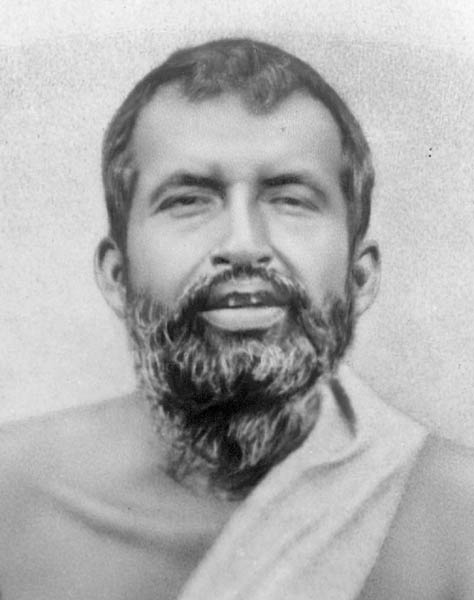
For evidence of this, one of Hinduism’s nineteenth-century saints sought God successively through the practices of a number of the world’s great religions. In turn he sought God through the person of Christ, the imageless, God-directed teachings of the Koran, and a variety of Hindu God-embodiments. In each instance the result was the same: The same God (he reported) was revealed, now incarnate in Christ, now speaking through the Prophet Muhammad, now in the guise of Vishnu the Preserver or Shiva the Completer. Out of these experiences came a set of teachings on the essential unity of the great religions that comprise Hinduism’s finest voice on this topic. As tone is as important as idea here, we shall come closer to the Hindu position if we relinquish the remainder of this section to Ramakrishna’s words instead of trying the paraphrase them.

God has made different religions to suit different aspirations, times, and countries. All doctrines are only so many paths; but a path is by no means God Himself. Indeed, one can reach God if one follows any of the paths with whole-hearted devotion. One may eat a cake with icing either straight or sidewise. It will taste sweet either way. 

As one and the same material, water, is called by different names by different peoples, one calling it water, another eau, a third aqua, and another pani, so the one Everlasting-Intelligent-Bliss is invoked by some as God, by some as Allah, by some as Jehovah, and by others as Brahman.

As one can ascend to the top of a house by means of a ladder or a bamboo or a staircase or a rope, so diverse are the ways and means to approach God, and every religion in the world shows one of these ways. 

Bow down and worship where others kneel, for where so many have been paying the tribute of adoration the kind Lord must manifest himself, for he is all mercy. 

The Saviour is the messenger of God. He is like the viceroy of a mighty monarch. As when there is some disturbance in a far-off province, the king sends his viceroy to quell it, so wherever there is a decline of religion in any part of the world, God sends his Saviour there. It is one and the same Saviour that, having plunged into the ocean of life, rises up in one place and is known as Krishna, and diving down again rises in another place and is known as Christ. 

Everyone should follow one’s own religion. A Christian should follow Christianity, a Muslim should follow Islam, and so on. For the Hindus the ancient path, the path of the Aryan sages, is the best. 

People partition off their lands by means of boundaries, but no one can partition off the all-embracing sky overhead. The indivisible sky surrounds all and includes all. So people in ignorance say, “My religion is the only one, my religion is the best.” But when a heart is illumined by true knowledge, it knows that above all these wars of sects and sectarians presides the one indivisible, eternal, all-knowing bliss. 

As a mother, in nursing her sick children, gives rice and curry to one, and sago arrowroot to another, and bread and butter to a third, so the Lord has laid out different paths for different people suitable for their natures. 

There was a man who worshipped Shiva but hated all other deities. One day Shiva appeared to him and said, “I shall never be pleased with you so long as you hate the other gods.” But the man was inexorable. After a few days Shiva again appeared to him and said, “I shall never be pleased with you so long as you hate.” The man kept silent. After a few days Shiva again appeared to him. This time one side of his body was that of Shiva, and the other side that of Vishnu. The man was half pleased and half displeased. He laid his offerings on the side representing Shiva, and did not offer anything to the side representing Vishnu. Then Shiva said, “Your bigotry is unconquerable. I, by assuming this dual aspect, tried to convince you that all gods and goddesses are but various aspects of the one Absolute Brahman.

.

JUDAISM: The Chosen People

Reference: Judaism

[NOTE: In color are Vinaire’s comments.]

The fact is that Jews have continued their existence in the face of unbelievable odds and adversity, and have contributed to civilization out of all proportion to their numbers.

There is a familiar quatrain that runs:

How odd
Of God
To choose
The Jews.

Certainly, the idea that a universal God decided that the divine nature should be uniquely and incomparably disclosed to a single people is among the most difficult notions to take seriously in the entire study of religion. It is awkward not only for seeming to violate principles of impartiality and fair play, but also because many early peoples considered themselves special; one thinks of the Japanese, whose creation myth presents them as direct descendants of the Sun Goddess Amaterasu. When Moses tells the Jews, “The Lord God has chosen you to be a people for His own possession, out of all the peoples that are on the face of the earth” (Deuteronomy 7:6), is there any reason to think that we are in the presence of anything more than routine religious chauvinism?

The idea that a universal God decided that the divine nature should be uniquely and incomparably disclosed to a single people is among the most difficult notions to take seriously in the entire study of religion.

It is true that the Jewish doctrine of the election begins in a conventional mode, but almost at once it takes a surprising turn. For unlike other peoples, the Jews did not see themselves as singled out for privileges. They were chosen to serve, and to suffer the trials that service would often exact. By requiring that they “do and obey all that the Lord has spoken,” their election imposed on them a far more demanding morality than was exacted of their peers. A rabbinic theory has it that God initially offered the Torah to the world at large, but only the Jews were willing to accept its rigors. And (the thesis whimsically concludes) even they did so on impulse, not realizing what they were getting into. For “You only have I known of all the families of the earth; therefore I will punish you for all your iniquities” (Amos 3:2). Nor was this all. We have seen that Second Isaiah’s doctrine of vicarious suffering meant that the Jews were elected to shoulder a suffering that would otherwise have been distributed more widely.

The Jews did not see themselves as singled out for privileges. They were chosen to serve, and to suffer the trials that service would often exact. 

How different from the usual doctrine of election this Jewish version turns out to be! How much more demanding; how unattractive to normal inclinations. Still, the problem is not resolved. For grant that God called the Jews to heroic ordeal, not sinecure; the fact that they were singled out for a special role in the redemption of the world still looks like favoritism. The Bible makes no attempt to avert this suspicion. “It was not because you were more in number than other people,…but because the Lord loves you [that he] has chosen you to be a people for his own” (Deuteronomy 7:6–8).

Still, the fact that they were singled out for a special role in the redemption of the world still looks like favoritism.

This rankles. Flying as it does in the face of democratic sentiments, it has provoked a special theological phrase to accommodate it: “the scandal of particularity.” It is the doctrine that God’s doings can focus like a burning glass on particular times, places, and people(s)—in the interest, to be sure, of intentions that embrace human beings universally.

We shall not be able to validate this doctrine, but there are two things that we can do. We can understand what led the Jews to adopt the concept, and what it did for them.

It has provoked a special theological phrase to accommodate it: “the scandal of particularity.” 

Our search for what led the Jews to believe that they were chosen will carry us past an obvious possibility—national arrogance—to the facts of their history that we have already rehearsed. Israel came into being as a nation through an extraordinary occurrence, in which a milling band of slaves broke the shackles of the tyrant of their day and were lifted to the status of a free and self-respecting people. Almost immediately afterwards they were brought to an understanding of God that was head and shoulders above that of their neighbors, and deduced from it standards of morality and justice that still challenge the world. Through the three thousand years that have followed, they have continued their existence in the face of unbelievable odds and adversity, and have contributed to civilization out of all proportion to their numbers.

The fact is that Jews have continued their existence in the face of unbelievable odds and adversity, and have contributed to civilization out of all proportion to their numbers.

From beginning to end—this is the point that lies at the heart of the matter—the story of the Jews is unique. According to expectations they should not have escaped from Pharaoh in the first place. Why their God, Yahweh, became in their eyes a God of righteousness, whereas Chemosh, god of the Moabites, and other local deities did not, is, as even such a protagonist of natural explanations as Wellhausen admitted, “a question to which one can give no satisfactory answer.” The prophetic protest against social injustice is universally conceded to be “without close parallel in the ancient world.” And to the already quoted judgment that “by every sociological law the Jews should have perished long ago,” we can now add that of the philosopher Nicholas Berdyaev: “The continued existence of Jewry down the centuries is rationally inexplicable.”

From beginning to end the story of the Jews is unique. By every sociological law the Jews should have perished long ago. The continued existence of Jewry down the centuries is rationally inexplicable.

If what these facts and judgments attest is true and Jewish history has been exceptional, there are two possibilities. Either the credit belongs to the Jews themselves, or it belongs to God. Given this alternative, the Jews instinctively turned the credit Godward. One of the striking features of this people has been their persistent refusal to see anything innately special about themselves as people. According to a midrashic legend, when God took clay for the making of Adam he gathered it from every part of the world and from every color of earth to insure the universality and basic homogeneity of the human race. So the specialness of the Jewish experience must have derived from God’s having chosen them. A concept that appears at first to be arrogant turns out to be the humblest interpretation the Jews could give to the facts of their origin and survival.

A concept that appears at first to be arrogant turns out to be the humblest interpretation the Jews could give to the facts of their origin and survival.

It is possible, of course, to resent particularism even here, but one must ask whether in doing so we would not be resenting the kind of world we have. For like it or not, this is a world of particulars, and human minds are tuned thereto. Nothing registers on human attention until it obtrudes from its background. Apply this point to theology and what does it give us? God probably blesses us as much through the air we breathe as through other gifts; but if piety had to wait for people to infer God’s goodness from the availability of oxygen, it would have been long in coming. The same holds for history. If relief from oppression were routine, the Jews would have taken their liberation for granted. Chalk it up to human obtuseness, the fact remains that divine favors could envelop humanity as the sea envelops fish; were they automatic they would be dismissed as commonplace. This being so, perhaps only the individual, the unique, the particular could have brought the divine to human attention.

Perhaps only the individual, the unique, the particular could have brought the divine to human attention.

Today Jewish opinion is divided on the doctrine of the election. Some Jews believe that it has outgrown whatever usefulness or objective validity it may have had in biblical times. Other Jews believe that until the world’s redemption is complete, God continues to need people who are set apart, peculiar in the sense of being God’s task force in history. For those who think in this second way, the words of Isaiah speak not only of the past but with continuing, contemporary meaning.

Listen to me, O coastlands,
pay attention, you peoples from far away!
The Lord called me from before I was born,
while I was in my mother’s womb he named me.
He made my mouth like a sharp sword,
in his quiver he hid me away.
And he said to me, “You are my servant,
Israel, in whom I will be glorified. (Isaiah 49:1–3)

Jews believe that until the world’s redemption is complete, God continues to need people who are set apart, peculiar in the sense of being God’s task force in history.

.