Category Archives: Philosophy

BERGSON: Criticism

Reference: The Story of Philosophy

This paper presents Chapter X Section 1.4 from the book THE STORY OF PHILOSOPHY by WILL DURANT. The  contents are from the 1933 reprint of this book by TIME INCORPORATED by arrangement with Simon and Schuster, Inc.

The paragraphs of the original material (in black) are accompanied by brief comments (in color) based on the present understanding.

.

I. HENRI BERGSON

4. Criticism

“I believe,” says Bergson, “that the time given to refutation in philosophy is usually time lost. Of the many attacks directed by the many thinkers against each other, what now remains? Nothing, or assuredly very little. That which counts and endures is the modicum of positive truth which each contributes. The true statement is of itself able to displace the erroneous idea, and becomes, without our having taken the trouble of refuting anyone, the best of refutations.” This is the voice of Wisdom herself. When we ”prove” or disprove” a philosophy we are merely offering another one, which, like the first, is a fallible compound of experience and hope. As experience widens and hope changes, we find more “truth” in the “falsehoods” we denounced, and perhaps more falsehood in our youth’s eternal truths. When we are lifted upon the wings of rebellion we like determinism and mechanism, they are so cynical and devilish; but when death looms up suddenly at the foot of the hill we try to see beyond it into another hope. Philosophy is a function of age. Nevertheless…

The time given to refutation in philosophy is usually time lost. That which counts and endures is the modicum of positive truth. The true statement is of itself able to displace the erroneous idea. Philosophy is a function of age. 

What strikes one first in reading Bergson is the style: brilliant not with the paradox-fireworks of Nietzsche, but with a steady brightness, as of a man who is resolved to live up to the fine traditions of luminous French prose. It is harder to be wrong in French than in some other languages; for the French will not tolerate obscurity, and truth is clearer than fiction. If Bergson is occasionally obscure it is by the squandered wealth of his, imagery, his analogies, and his illustrations; he has an almost Semitic passion for metaphor, and is apt at times to substitute ingenious simile for patient proof. We have to be on our guard against this image-maker, as one bewares of a jeweler, or a real-estate poet—while recognizing gratefully, in Creative Evolution, our century’s first philosophic masterpiece.*

* As with Schopenhauer, so with, Bergson, the reader will do well to pass by all summaries and march resolutely through the philosopher’s chef-d’oeuvre itself. Wildon Carr’s exposition is unduly worshipful, Hugh Elliott’s unduly disparaging; they cancel each other into confusion. The Introduction to Metaphysics is as simple as one may expect of metaphysics; and the essay on Laughter, though one-sided, is enjoyable and fruitful.

Bergson is very clear in his language. If he is occasionally obscure it is because of his excessive use of metaphors.

Perhaps Bergson would have been wiser to base his criticism of the intellect on the grounds of a broader intelligence, rather than on the ukases of intuition. Introspective intuition is as fallible as external sense; each must be tested and corrected by matter-of-fact experience; and each can be trusted only so far as its findings illumine and advance our action. Bergson presumes too much in supposing that the intellect catches only the states, and not the flux, of reality and life; thought is a stream of transitive ideas, as James had shown before Bergson wrote; “ideas” are merely points that memory selects in the flow of thought; and the mental current adequately reflects the continuity of perception and the movement of life.

Bergson presumes too much in supposing that the intellect catches only the states, and not the flux, of reality and life. He puts intuition above the intellect. But intuition is just as fallible as the intellect, and must be tested and corrected by matter-of-fact experience.

It was a wholesome thing that this eloquent challenge should check the excesses of intellectualism; but it was as unwise to offer intuition in the place of thought as it would be to correct the fancies of youth, with the fairy-tales of childhood. Let us correct our errors forward, not backward. To say that the world suffers from too much intellect would require the courage of a madman. The romantic protest against thinking, from Rousseau and Chateaubriand to Bergson and Nietzsche and James, has done its work; we will agree to dethrone the Goddess of Reason if we are not asked to re-light the candles before the ikon of Intuition. Man exists by instinct, but he progresses by intelligence.

Man exists by instinct, but he progresses by intelligence. We need a balance of both intuition and intellect.

That which is best in Bergson is his attack upon materialist mechanism. Our pundits of the laboratory had become a little too confident of their categories, and thought to squeeze all the cosmos into a test-tube. Materialism is like a grammar that recognizes only nouns; but reality, like language, contains action as well as objects, verbs as well as substantives, life and motion as well as matter. One could understand, perhaps, a merely molecular memory, like the “fatigue” of overburdened steel; but molecular foresight, molecular planning, molecular idealism?—Had Bergson met these new dogmas with a cleansing skepticism he might have been a little less constructive, but he would have left himself less open to reply. His doubts melt away when his system begins to form; he never stops to ask what “matter” is; whether it may not be somewhat less inert than we have thought; whether it may be, not life’s enemy, but life’s willing menial if life but knew its mind. He thinks of the world and the spirit, of body and soul, of matter and life, as hostile to each other; but matter and body and the “world” are merely the materials that wait to be formed by intelligence and will. And who knows that these things too are not forms of life, and auguries of mind? Perhaps here too, as Heraclitus would say, there are gods.

That which is best in Bergson is his attack upon materialist mechanism. Reality contains life and motion as well as matter. Bergson thinks of the world and the spirit, of body and soul, of matter and life, as hostile to each other; but they are merely the materials that wait to be formed by intelligence and will.

Bergson’s critique of Darwinism issues naturally from his vitalism. He carries on the French tradition established by Lamarck, and sees impulse and desire as active forces in evolution; his spirited temper rejects the Spencerian conception of an evolution engineered entirely by the mechanical integration of matter and dissipation of motion; life is a positive power, an effort that builds its organs through the very persistence of its desires. We must admire the thoroughness of Bergson’s biological preparation, his familiarity with the literature, even with the periodicals in which current science hides itself for a decade of probation. He offers his erudition modestly, never with the elephantine dignity that weighs down the pages of Spencer. All in all, his criticism of Darwin has proved effective; the specifically Darwinian features of the evolution theory are now generally abandoned.*

* Bergson’s arguments, however, are not all impregnable: the appearance of similar effects (like sex or sight) in different lines might be the mechanical resultant of similar environmental exigencies; and many of the difficulties of Darwinism would find a solution if later research should justify Darwin’s belief in the partial transmission of characters repeatedly acquired by successive generations.

Bergson rejects the Spencerian conception of an evolution engineered entirely by the mechanical integration of matter and dissipation of motion. Life is a positive power, an effort that builds its organs through the very persistence of its desires.

In many ways the relation of Bergson to the age of Darwin is a replica of Kant’s relation to Voltaire. Kant strove to repulse that great wave of secular, and partly atheistic, intellectualism which had begun with Bacon and Descartes, and had ended in the skepticism of Diderot and Hume; and his effort took the line of denying the finality of intellect in the field of transcendental problems. But Darwin unconsciously, and Spencer consciously, renewed the assaults which Voltaire, and his more-than-Voltairean followers, had leveled at the ancient faith; and mechanist materialism, which had given ground before Kant and Schopenhauer, had won all of its old power at the beginning of our century. Bergson attacked it, not with a Kantian critique of knowledge, nor with the idealist contention that matter is known only through mind; but by following the lead of Schopenhauer, and seeking, in the objective as well as in the subjective world, an energizing principle, an active entelechy, which might make more intelligible the miracles and subtleties of life. Never was Vitalism so forcefully argued, or so attractively dressed.

Bergson sought in the objective as well as in the subjective world, an energizing principle, an active entelechy, which might make more intelligible the miracles and subtleties of life.

Bergson soared to an early popularity because he had come to the defense of hopes which spring eternally in the human breast. When people found that they could believe in immortality and deity without losing the respect of philosophy, they were pleased and grateful; and Bergson’s lecture-room became the salon of splendid ladies happy to have their heart’s desires upheld with such learned eloquence. Strangely mingled with them were the ardent syndicalists who found in Bergson’s critique of intellectualism a justification of their gospel of “less thought and more action.” But this sudden popularity exacted its price; the contradictory nature of Bergson’s support disintegrated his following; and Bergson may share the fate of Spencer, who lived to be present at the burial of his own reputation.

Bergson soared to an early popularity because he had come to the defense of hopes which spring eternally in the human breast. But the contradictory nature of Bergson’s support disintegrated his following.

Yet, of all contemporary contributions to philosophy, Bergson’s is the most precious. We needed his emphasis on the elusive contingency of things, and the remoulding activity of mind. We were near to thinking of the world as a finished and pre-determined show, in which our initiative was a self-delusion, and our efforts a devilish humor of the gods; after Bergson we come to see the world as the stage and the material of our own originative powers. Before him we were cogs and wheels in a vast and dead machine; now, if we wish it, we can help to write our own parts in the drama of creation.

Bergson’s contribution to philosophy, however, is quite precious. Before him we were cogs and wheels in a vast and dead machine. After him we come to see the world as the stage and the material of our own originative powers. 

.

BERGSON: Creative Evolution

Reference: The Story of Philosophy

This paper presents Chapter X Section 1.3 from the book THE STORY OF PHILOSOPHY by WILL DURANT. The  contents are from the 1933 reprint of this book by TIME INCORPORATED by arrangement with Simon and Schuster, Inc.

The paragraphs of the original material (in black) are accompanied by brief comments (in color) based on the present understanding.

.

I. HENRI BERGSON

3. Creative Evolution

With this new orientation, evolution appears, to us as something quite different from the blind and dreary mechanism of struggle and destruction which Darwin and Spencer described. We sense duration in evolution, the accumulation of vital powers, the inventiveness of life and mind, “the continual elaboration of the absolutely new.” We are prepared to understand why the most recent and expert investigators, like Jennings and Maupas, reject the mechanical theory of protozoan behavior, and why Professor E. B. Wilson, dean of contemporary cytologists, concludes his book on the cell with the statement that “the study of the cell has, on the whole, seemed to widen rather than to narrow the enormous gap that separates even the lowest forms of life from the inorganic world.”  And everywhere, in the world of biology, one hears of the rebellion against Darwin.

Evolution appears to be something quite different from the blind and dreary mechanism of struggle and destruction which Darwin and Spencer described. We sense duration in evolution, the accumulation of vital powers, the inventiveness of life and mind.

Darwinism means, presumably, the origin of new organs and functions, new organisms and species, by the natural selection of favorable variations. But this conception, hardly half a century old, is already worm-eaten with difficulties. How, on this theory, did the instincts originate? It would be convenient to conceive them as the inherited accumulation of acquired habits; but expert opinion closes that door in our faces,—though some day that door may be opened. If only congenital powers and qualities are transmissible, every instinct must have been, on its first appearance, as strong as it natively is now; it must have been born, so to speak, adult, in full panoply for action; else it could not have favored its possessor in the struggle for existence. If, on its first appearance, it was weak, it could have achieved survival value only through that acquired strength which (by current hypothesis) is not inherited. Every origin is here a miracle.

Darwinism means the evolution of species by the natural selection of favorable variations. But this conception does not explain the origination of instincts.

And, as with the first instincts, so with every variation: one wonders how the change could have offered, in its first form, a handle to selection. In, the case of such complex organs as the eye, the difficulty is discouraging: either the eye appeared at once, full-formed and competent (which is as credible as Jonah’s introspection of the whale); or it began with a series of “fortuitous” variations which, by a still more fortuitous survival, produced the eye. At every step the theory of a mechanical production of complicated structures by a blind process of variation and selection presents us with fairy-tales that have all the incredibility of childhood’s lore, and little of its beauty.

Evolution has to be more than just mechanical. A blind process of variation and selection cannot produce complicated structures like an eye.

The most decisive difficulty, however, is the appearance of similar effects, brought about by different means, in widely divergent lines of evolution. Take as example the invention of sex as a mode of reproduction, both in plants and in animals; here are lines of evolution as divergent as could be, and yet the same complex “accident” occurs in both. Or take the organs of sight in two very distinct phyla—the molluscs and the vertebrates; “how could the same small variations, incalculable in number, have ever occurred in the same order on two independent lines of evolution, if they were purely accidental?” More remarkable still,

nature arrives at identical results, in sometimes neighboring species, by entirely different embryogenic processes … The retina of the vertebrate is produced by an expansion of the rudimentary brain of the embryo. … In the mollusc, on the contrary, the retina is derived from the ectoderm * directly. … If the crystalline lens of a Triton be removed, it is regenerated by the iris. Now the original lens was built out of the ectoderm, while the iris is of mesodermal origin. What is more, in the Salamandra maculata, if the lens be removed and the iris left, the regeneration of the lens takes place at the upper part of the iris; but if this upper part of the iris itself be taken away, the regeneration takes place in the inner or retinal layer of the remaining region. Thus parts differently situated, differently constituted, meant normally for different functions, are capable of performing the same duties and even of manufacturing, when necessary, the same pieces of the machine.

* The organs of the growing embryo are built up out of one or another of three layers of tissues; the external layer, or ectoderm; the intermediate layer, or mesoderm; and the internal layer, or endoderm.

The most decisive difficulty, however, is the appearance of similar effects, brought about by different means, in widely divergent lines of evolution. For example, the regeneration of lens of the eye of the salamander by different means under different circumstances.

So, in amnesia and aphasia, ”lost” memories and functions reappear in regenerated or substituted tissues. Surely we have here overwhelming evidence that there is something more in evolution than a helpless mechanism of material parts. Life is more than its machinery; it is a power that can grow, that can restore itself, that can mould to its own will some measure of environing circumstance. Not that there is any external design determining these marvels; that would, be merely an inverted mechanism, a fatalism as destructive of human initiative and of creative evolution as the sombre, surrender of Hindu thought to India’s heat. ”We must get beyond both points of view—mechanism and finalism—as being, at bottom, only standpoints to which the human mind has been led by considering the work of men”: we thought at first that all things moved because of some quasi-human will using them as instruments in a cosmic game; and then we thought that the cosmos itself was a machine because we had been dominated, in character and philosophy, by our mechanical age. There is a design in things; but in them, not outside; an entelechy, an inward determination of all the parts by the function and purpose of the whole.

Life is more than its machinery; it is a power that can grow, that can restore itself. There is a design in things, not outside them, by the function and purpose of the whole.

Life is that which makes efforts, which pushes upwards and outwards and on; “always and always the procreant urge of the world.” It is the opposite of inertia, and the opposite of accident; there is a direction in the growth to which it is self-impelled. Against it is the undertow of matter, the lag and slack of things towards relaxation and rest and death; at every stage life has had to fight with the inertia of its vehicle; and if it conquers death through reproduction, it does so only by yielding, every citadel in turn, and abandoning every individual body at last to inertia and decay. Even to stand is to defy matter and its ”laws”: while to move about, to go forth and seek, and not, plant-like, to wait, is a victory purchased at every moment by effort and fatigue. And consciousness slips, as soon as it is permitted, into the restful automatism of instinct, habit, and sleep.

Life is that which makes efforts; there is a direction in the growth to which it is self-impelled. It is the opposite of inertia, and accident. At every stage life has had to fight with the inertia of its vehicle.

At the outset life is almost as inert as matter; it takes a stationary form, as if the vital impulse were too weak to risk the adventure of motion. And in one great avenue of development this motionless stability has been the goal of life: the bending lily and the majestic oak are altars to the god Security. But life was not content with this stay-at-home existence of the plant; always its advances have been away from security towards freedom; away from carapaces, scales and hides, and other burdensome protections, to the ease and perilous liberty of the bird. “So the heavy hoplite was supplanted by the legionary; the knight, clad in armor, had to give place to the light free-moving infantryman; and in a general way, in the evolution of life, just as in the evolution of human societies and of individual destinies, the greatest successes have been for those who accepted the heaviest risks.” So, too, man has ceased to evolve new organs on his body; he makes tools and weapons instead, and lays them aside when they are not needed, rather than carry all his armament at every step, like those gigantic fortresses, the mastodon. and the megatherium, whose heavy security lost them the mastery of the globe. Life may be impeded, as well as aided, by its instruments.

Life’s advances have been away from security towards freedom; away from burdensome protections towards the ease and perilous liberty of free-movement.

It is with instincts as with organs; they are the tools of the mind; and like all organs that are attached and permanent, they become burdens when the environment that needed them has disappeared. Instinct comes ready-made, and gives decisive—and usually successful—responses to stereotyped and ancestral situations; but it does not adapt the organism to change, it does not enable man to meet flexibly the fluid complexities of modem life. It is the vehicle of security, while intellect is the organ of an adventurous liberty. It is life taking on the blind obedience of the machine.

Instincts and organs become burdens when the environment that needed them has disappeared. They do not adapt the organism to change.

How significant it is that we laugh, usually, when a living thing behaves like matter, like a mechanism; when the clown tumbles about aimlessly, and leans against pillars that are not there; or when our best beloved falls on an icy path, and we are tempted to laugh first and ask questions afterward. That geometrical life which Spinoza almost confused with deity is really a reason for humor and tears; it is ridiculous and shameful that men should be machines; and ridiculous and shameful that their philosophy should describe them so.

It is ridiculous and shameful that men should be machines; and ridiculous and shameful that their philosophy should describe them so.

Life has taken three lines in its evolution: in one it relapsed into the almost material torpor of plants, and found there, occasionally, a supine security, and the cowardly tenure of a thousand years; in another avenue its spirit and effort congealed into instinct as in the ants and bees; but in the vertebrates it took the dare of freedom, cast off its ready-made instincts and marched bravely into the endless risks of thought. Instinct still remains the profounder mode of visioning reality and catching the essence of the world; but intelligence grows ever stronger and bolder, and wider in its scope; it is at last in intelligence that life has placed its interests and its hopes.

It is at last in intelligence that life has placed its interests and its hopes.

This persistently creative life, of which every individual and every species is an experiment, is what we mean by God; God and Life are one. But this God is finite, not omnipotent,—limited by matter, and overcoming its inertia painfully, step by step; and not omniscient, but groping gradually towards knowledge and consciousness and “more light.” “God, thus defined, has nothing of the ready-made; He is unceasing life, action, freedom. Creation, so conceived, is not a mystery; we experience it in ourselves when we act freely,” When we consciously choose our actions and plot our lives. Our struggles and our sufferings, our ambitions and our defeats, our yearnings to be better and stronger than we are, are the voice and current of the Elan Vital in us, that vital urge which makes us grow, and transforms this wandering planet into a theatre of unending creation.

God is this persistently creative life that is limited by matter and is groping gradually towards knowledge and consciousness and “more light.” Creation occurs when we consciously choose our actions and plot our lives. This is the Elan Vital (vital urge) which makes us grow.

And who knows but that at last life may win the greatest victory of all over its ancient enemy, matter, and learn even to elude mortality? Let us have an open mind, even to our hopes.* All things are possible to life if time is generous. Consider what life and mind have done in the mere moment of a millennium, with the forests of Europe and America; and then see how foolish it is to put up barriers to life’s achievements. “The animal takes its stand on the plant, man bestrides animality, and the whole of humanity, in space and time, is one immense army galloping beside and before and behind each of us in an overwhelming charge able to beat down every resistance and clear the most formidable obstacles, perhaps even death.” 

* Bergson thinks the evidence for telepathy is overwhelming. He was one of those who examined Eusapia Palladino and reported in favor of her sincerity. In 1918 he accepted the presidency of the Society for Psychical Research. 

And who knows but that at last life may win the greatest victory of all over its ancient enemy, matter, and learn even to elude mortality?

.

BERGSON: Mind and Brain

Reference: The Story of Philosophy

This paper presents Chapter X Section 1.2 from the book THE STORY OF PHILOSOPHY by WILL DURANT. The  contents are from the 1933 reprint of this book by TIME INCORPORATED by arrangement with Simon and Schuster, Inc.

The paragraphs of the original material (in black) are accompanied by brief comments (in color) based on the present understanding.

.

I. HENRI BERGSON

2. Mind and Brain

We naturally incline to materialism, Bergson argues, because we tend to think in terms of space; we are geometricians all. But time is as fundamental as space; and it is time, no doubt, that holds the essence of life, and perhaps of all reality. What we have to understand is that time is an accumulation, a growth, a duration. “Duration is the continuous progress of the past which gnaws into the future and which swells as it advances”; it means that “the past in its entirety is prolonged into the present and abides there actual and acting.” Duration means that the past endures, that nothing of it is quite lost. “Doubtless we think with only, a small part of our past; but it is with our entire past … that we desire will, and act.” And since time is an accumulation, the future can never be the same as the past, for a new accumulation arises at every step. “Each moment is not only something new, but something unforeseeable; … change is far more radical than we suppose”; and that geometrical predictability, of all things which is the goal of a mechanist science is only an intellectualist delusion. At least “for a conscious being, to exist is to change, to change is to mature, to mature is to go on creating one’s self endlessly.” what if this is true of all things? Perhaps all reality is time and duration, becoming and change?

We naturally incline to materialism, Bergson argues, because we tend to think in terms of space. But time is as fundamental as space; and it holds the essence of life, and perhaps of all reality. We desire, will, and act with our entire past. To exist is to change.

In ourselves, memory is the vehicle of duration, the handmaiden of tune; and through it so much of our past is actively retained that rich alternatives present themselves for every situation. As life grows richer in its scope, its heritage and its memories, the field of choice widens, and at last the variety of possible responses generates consciousness, which is the rehearsal of response. “Consciousness seems proportionate to the living being’s power of choice. It lights up the zone of potentialities that surrounds the act. It fills the interval between what is done and what might be done.” It is no useless appendage; it is a vivid theatre of imagination, where alternative responses are pictured and tested before the irrevocable choice. “In reality,” then, “a living being is a center of action; it represents a sum of contingency entering into the world; that is to say, a certain quantity of possible action.” Man is no passively adaptive machine; he is a focus of redirected force, a center of creative evolution.

As life grows richer in its scope, its heritage and its memories, the field of choice widens, and at last the variety of possible responses generates consciousness. Man is no passively adaptive machine; he is a focus of redirected force, a center of creative evolution.

Free will is a corollary of consciousness; to say that we are free is merely to mean that we know what we are doing.

The primary function of memory is to evoke all those past perceptions which are analogous to the present perception, to recall to us what preceded and what followed them, and so to suggest to us that decision which is the most useful. But this is not all. By allowing us to grasp in a single intuition multiple moments of duration, it frees us from the movement of the flow of things, that is to say, from the rhythm of necessity. The more of these moments memory can contract into one, the firmer is the hold which it gives to us on matter; so that the memory of a living being appears indeed to measure, above all, its powers of action upon things.

To say that we are free is merely to mean that we know what we are doing. We are not free when we are reacting to a trigger.

If determinists were right, and every act were the automatic and mechanical resultant of pre-existent forces, motive would flow into action with lubricated ease. But on the contrary, choice is burdensome and effortful, it requires resolution, a lifting up of the power of personality against the spiritual gravitation of impulse or habit or sloth. Choice is creation and creation is labor. Hence the worried features of men; and their weary envy of the choiceless routine of animals, who “are so placid and self-contained.” But the Confucian peacefulness of your dog is no philosophic calm, no quiet surface of unfathomed depth; it is the certainty of instinct, the orderliness of an animal that need not, and cannot, choose. “In the animal, invention is never anything but a variation on the theme of routine. Shut up in the habits of the species, it succeeds, no doubt, in enlarging them by its individual initiative; but it escapes automatism only for an instant, for just the time to create a new automatism. The gates of its prison close as soon as they are opened; by pulling at its chain, it succeeds only in stretching it. With man, consciousness breaks the chain. In man, and man alone; it sets itself free.” *

* This is an example of Bergson’s facility in replacing argument with analogy, and of his tendency to exaggerate the gap between animals arid men. Philosophy should not flatter. Jerome Coignard was wiser, and “would have refused to sign the Declaration of the Rights of Man, because of the sharp and unwarranted distinction it drew between man and the gorilla.”

If determinists were right, motive would flow into action with lubricated ease. But on the contrary, choice is effortful, and it requires resolution. Determinism by instinct has been lessening as life organisms have evolved; until, in man, it is possible to reduce it completely.

Mind, then, is not identical with brain. Consciousness depends upon the brain, and falls with it; but so does a coat fall with the nail on which it hangs,—which does not prove that the coat is an “epiphenomenon,” an ornamental ectoplasm of the nail. The brain is the system of images and reaction-patterns; consciousness is the recall of images and the choice of reactions. “The direction of the stream is distinct from the river bed, although, it must adopt its winding course. Consciousness is distinct from, the organism which it animates, although it must undergo its vicissitudes.”

Consciousness is distinct from, the organism which it animates, although it must undergo its vicissitudes.

It is sometimes said that in ourselves, consciousness is directly connected with a brain, and that we must therefore attribute consciousness to living beings which have a brain, and deny it to those which have none. But it is easy to see the fallacy of such an argument. It would be just as though we should say that because in ourselves digestion is directly connected with a stomach, therefore only living beings with a stomach can digest. We should be entirely wrong, for it is not necessary to have a stomach, nor even to have special organs, in order to digest. An amoeba digests, although it is an almost undifferentiated protoplasmic mass. What is true is that in proportion to the complexity and perfection of an organism, there is a division of labor; special organs are assigned special functions, and the faculty of digesting is localized in the stomach, or rather is a general digestive apparatus, which works better because confined to that one function alone. In like manner, consciousness in man is unquestionably connected with the brain; but it by no means follows that a brain is indispensable to consciousness. The lower we go in the animal series, the more nervous centers are simplified and separate from one another, and at last they disappear altogether, merged in the general mass of an organism with hardly any differentiation. If, then, at the top of the scale of living beings, consciousness is attached to very complicated nervous centers, must we not suppose that it accompanies the nervous system down its whole descent, and that when at last the nerve stuff is merged in the yet undifferentiated living matter, consciousness is still there, diffused, confused, but not reduced to nothing? Theoretically, then, everything living might be conscious. In principle, consciousness is co-extensive with life.

In principle, consciousness is co-extensive with life.

Why is it, nevertheless, that we seem to think of mind and thought in terms of matter and the brain? It is because that part of our minds which we call the “intellect” is a constitutional materialist; it was developed, in the process of evolution, to understand and deal with material, spatial objects; from this field it derives all its concepts and its “laws,” and its notion of a fatalistic and predictable regularity everywhere! “Our intellect, in the narrow sense of the word, is intended to secure the perfect fitting of our body to its environment, to represent the relations of external things among themselves,—in short, to think matter.” It is at home with solids, inert things; it sees all becoming as being, * as a series of states; it misses the connective tissue of things, the flow of duration that constitutes their very life.

* Cf. Nietzsche: “Being is a fiction invented by those who suffer from becoming.”—Birth of Tragedy, p. xxvii.

We seem to think of mind and thought in terms of matter and the brain, because our intellect was developed to understand and deal with material, spatial objects. Therefore, it has the notion of a fatalistic and predictable regularity everywhere.

Look at the moving-picture; it seems to our tired eyes to be alive with motion and action; here, surely, science and mechanism have caught the continuity of life. On the contrary, it is just here that science and the intellect reveal their limitations. The moving picture does not move, is not a picture of motion; it is only a series of instantaneous photographs, “snap-shots,” taken in such rapid succession that when they are thrown in rapid succession upon the screen, the willing spectator enjoys the illusion of continuity, as he did in his boyhood with thumbnail movies of his pugilistic heroes. But it is an illusion none the less; and the cinema film is obviously a series of pictures in which everything is as still as if eternally congealed.

The moving picture does not move. It is only a series of instantaneous photographs taken in rapid succession. When they are thrown in rapid succession upon the screen, there is an illusion of motion. It is just here that science and the intellect reveal their limitations.

And as the “motion”-picture camera divides into static poses the vivid current of reality, so the human intellect catches a series of states, but loses the continuity that weaves them into life. We see matter and we miss energy; we think that we know what matter is; but when at the heart of the atom we find energy, we are bewildered, and our categories melt away. “No doubt, for greater strictness, all considerations of motion may be eliminated from mathematical processes; but the introduction of motion into the genesis of figures is nevertheless the origin of modern mathematics”;—nearly all the progress of mathematics in the nineteenth century was due to the use of the concepts of time and motion in addition to the traditional geometry of space. All through contemporary science, as one sees in Mach and Pearson and Henri Poincare, there runs the uncomfortable suspicion that “exact” science is merely an approximation, which catches the inertia of reality better than its life.

The human intellect catches a series of states, but loses the continuity that weaves them into life. “Exact” science is merely an approximation, which catches the inertia of reality better than its life.

But it is our own fault if, by insisting on the application of physical concepts in the field of thought, we end in the impasse of determinism, mechanism, and materialism. The merest moment of reflection might have shown how inappropriate the concepts of physics are in the world of mind: we think as readily of a mile as of half a mile, and one flash of thought can circumnavigate the globe; our ideas elude every effort to picture them as material particles moving in space, or as limited by space in their flight and operation; Life escapes these solid concepts; for life is a matter of time rather than of space; it is not position, it is change; it is not quantity so much as quality; it is not a mere redistribution of matter and motion, it is fluid and persistent creation.

A very small element of a curve is very near to being a straight line. And the smaller it is, the nearer. In the limit it may be termed a part of the straight line, as you please, for in each of its points a curve coincides with its tangent. So, likewise, ‘vitality’ is tangent, at any and every point, to physical and chemical forces; but such points are, in fact, only views taken by a mind which imagines stops at various moments of the movement that generates the curve. In reality, life is no more made-up of physico-chemical elements than a curve is composed of straight lines.

But it is our own fault if, by insisting on the application of physical concepts in the field of thought, we end in the impasse of materialism. Life escapes these solid concepts; for life is fluid and persistent creation.

How then shall we catch the flow and essence of life if not by thinking and the intellect? But is the intellect all? Let us for a while stop thinking, and just gaze upon that inner reality—our selves—which is better known to us than all things else: what do we see? Mind, not matter; time, not space; action, not passivity; choice, not mechanism. We see life in its subtle and penetrating flow, not in its “states of mind,” not in its devitalized and separated parts, as when the zoologist examines a dead frog’s legs, or studies preparations under a microscope, and thinks that he is a biologist studying life! This direct perception, this simple and steady looking-upon (intueor) a thing, is intuition; not any mystic process, but the most direct examination possible to the human mind. Spinoza was right: reflective thought is not by any means the highest form of knowledge; it is better, no doubt, than hearsay; but how weak it is beside the direct perception of the thing itself! “A true empiricism is one that sets itself the task of getting as close as possible to the original, of sounding the depths of life, of feeling the pulse of its spirit by a sort of intellectual auscultation”; we “listen in” on the current of life. By direct perception we feel the presence of mind; by intellectual circumlocution we arrive at the notion that thought is a dance of molecules in the brain. Is there any doubt that intuition here beholds more truly the heart of life? 

We don’t catch the flow and essence of life by thinking and the intellect. We can get a glimpse of it by directly looking at ourselves. This simple and steady looking-upon a thing is the most direct examination possible to the human mind. 

This does not mean that thinking is a disease, as Rousseau held, or that the intellect is a treacherous thing which every decent citizen should forswear. The intellect retains its normal function of dealing with the material and spatial world; and with the material aspects or spatial expressions of life and mind; intuition is limited to the direct feeling of life and mind, not in their external embodiments but in their inner being. “I have never maintained that it was necessary ‘to put something different in the place of intellect,’ or to set instinct above it. I have simply tried to show that when we leave the domain of mathematics and physics to enter that of life and consciousness, we must make our appeal to a certain sense of life which cuts across pure understanding and has its origin in the same vital impulse as instinct—although instinct, properly so-called, is quite a different thing.” Nor do we try “to refute intellect by intellect”; we merely “adopt the language of the understanding, since only the understanding has a language”; we cannot help it if the very words that we use are psychological only by symbolism, and still reek with the material connotations forced upon them by their origin. Spirit means breath, and mind means a measure, and thinking points to a thing; nevertheless these are the crass media through which the soul must express itself. “It will be said that we do not transcend our intellect, for it is still with our intellect, and through our intellect, that we see the other forms of consciousness”; even introspection and intuition are materialist metaphors. And this would be a legitimate objection, “if there did not remain, around our conceptual and logical thought, a vague nebulosity, made of the very substance out of which has been formed the luminous nucleus that we call the intellect.” The new psychology is revealing in us a mental region incomparably wider than the intellect. “To explore the most sacred depths of the unconscious, to labor in the sub-soil of consciousness: that will be the principal task of psychology in the century whIch is opening. I do not doubt that wonderful discoveries await it there.”

While the intellect deals with the material and spatial world; intuition is limited to the direct feeling of life and mind in their inner being. Intuition has its origin in the same vital impulse as instinct—although instinct is quite a different thing. The new psychology is revealing in us a mental region incomparably wider than the intellect. 

.

BERGSON: The Revolt against Materialism

Reference: The Story of Philosophy

This paper presents Chapter X Section 1.1 from the book THE STORY OF PHILOSOPHY by WILL DURANT. The  contents are from the 1933 reprint of this book by TIME INCORPORATED by arrangement with Simon and Schuster, Inc.

The paragraphs of the original material (in black) are accompanied by brief comments (in color) based on the present understanding.

.

I. HENRI BERGSON

1. The Revolt Against Materialism

The history of modern philosophy might be written in terms of the warfare of physics and psychology. Thought may begin with its object, and at last, in consistency, try to bring its own mystic reality within the circle of material phenomena and mechanical law; or it may begin with itself, and be driven, by the apparent necessities of Iogic, to conceive all things as forms and creatures of mind. The priority of mathematics and mechanics in the development of modern science, and the reciprocal stimulation of industry and physics under the common pressure of expanding needs, gave to speculation a materialistic impulsion; and the most successful of the sciences became the models of philosophy. Despite Descartes’ insistence that philosophy should begin with the self and travel outward, the industrialization of Western Europe drove thought away from thought and in the direction of material things.

The history of modern philosophy might be written in terms of the warfare of physics and psychology. Thought may begin with its object, and bring its own mystic reality to the interpretation of material phenomena; or it may begin with itself, and be driven by logic to conceive all things as forms.

Spencer’s system was the culminating expression of this mechanical point of view. Hailed though he was as “the philosopher of Darwinism,” he was more truly the reflex and exponent of industrialism; he endowed industry with glories and virtues which to our hind-sight seem ridiculous; and his outlook was rather that of a mechanician and an engineer absorbed in the motions of matter, than that of a biologist feeling the elan of life. The rapid obsolescence of his philosophy is due largely to the replacement of the physical by the biological stand-point in recent thought; by the growing disposition to see the essence and secret of the world in the movement of life rather than in the inertia of things. And indeed, matter itself has in our days almost taken on life: the study of electricity, magnetism, and the electron has given a vitalistic tinge to physics; so that instead of a reduction of psychology to physics—which was the more or less conscious ambition of English thought—we approach a vitalized physics and an almost spiritualized matter. It was Schopenhauer who first, in modern thought, emphasized the possibility of making the concept of life more fundamental and inclusive than that of force; it is Bergson who in our own generation has taken up this idea, and has almost converted a skeptical world to it by the force of his sincerity and his eloquence.

Spencer’s outlook was rather that of a mechanician absorbed in the motions of matter, than that of a biologist feeling the elan of life. But Schopenhauer was the first to emphasize the possibility of making the concept of life more fundamental and inclusive than that of force.

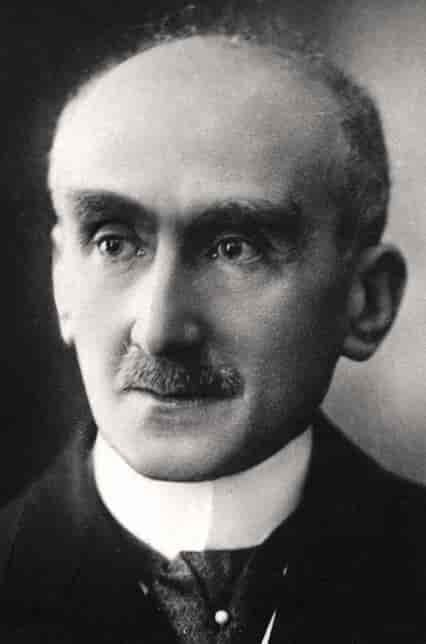
Bergson was born in Paris, in 1859, of French and Jewish parentage. He was an eager student, and seems to have taken every prize that turned up. He did homage to the traditions of modern science by specializing at first in mathematics and physics, but his faculty for analysis soon brought him face to face with the metaphysical problems that lurk behind every science; and he turned spontaneously to philosophy. In 1878 he entered the Ecole Normale Superieure, and on graduating, was appointed to teach philosophy at the Lycee of Clermont-Ferrand. There, in 1888, he wrote his first major work—the Essai sur les donnees immediates de la conscience (Essay on the immediate data of consciousness), translated as Time and Free-will. Eight quiet years intervened before the appearance of his next (and his most difficult) book—Matiere et memoiren (Matter and memory). In 1898 he became professor at the Ecole Normale, and in 1900 at the College de France, where he has been ever since. In 1907 he won international fame with his masterpiece—L’Evolution creatrice (Creative Evolution); he became almost overnight the most popular figure in the philosophic world; and all that was needed for his success was the placing of his books upon the Index Expurgatorius (Index of Purgatory) in 1914. In that same year he was elected to the French Academy.

Bergson specialized at first in mathematics and physics, but as he came face to face with the metaphysical problems, he turned spontaneously to philosophy. 

It is a remarkable thing that Bergson, the David destined to slay the Goliath of materialism, was in youth a devotee of Spencer. But too much knowledge leads to skepticism; early devotees are the likeliest apostates, as early sinners are senile saints. The more he studied Spencer, the more keenly conscious Bergson became of the three rheumatic joints of the materialist mechanism: between matter and life, between body and mind, and between determinism and choice. The patience of Pasteur had discredited the belief in abiogenesis (the generation of life by non-living matter); and after a hundred years of theory and a thousand vain experiments, the materialists were no nearer than before to solving the problem of the origin of life. Again, though thought and brain were obviously, connected, the mode of connection was as far from obvious as it had ever been. If mind was matter, and every mental act a mechanical resultant of neural states, of what use was consciousness? Why could not the material mechanism of the brain dispense with this “epiphenomenon,” as the honest and logical Huxley called it, this apparently useless flame thrown up by the heat of cerebral commotion? Finally, was determinism any more intelligible than free will? If the present moment contains no living and creative choice, and is totally and mechanically the product of the matter and motion of the moment before, then so was that moment the mechanical effect of the moment that preceded it, and that again of the one before … and so on, until we arrive at the primeval nebula as the total cause of every later event, of every line of Shakespeare’s plays, and every suffering of his soul; so that the sombre rhetoric of Hamlet and Othello, of Macbeth and Lear, in every clause and every phrase, was written far off there in the distant skies and the distant aeons, by the structure and content of that legendary cloud. What a draft upon credulity! What an exercise of faith such a theory must demand in this unbelieving generation! What mystery or miracle, of Old, Testament or New, could be half so incredible as this monstrous fatalistic myth, this nebula composing tragedies? There was matter enough for rebellion here; and if Bergson rose so rapidly to fame it was because he had the courage to doubt where all the doubters piously believed.

The mechanical view of no living and creative choice in the present moment inevitably leads to the primeval nebula as the total cause of every later event. Bergson had the courage to doubt this monstrous fatalistic myth.

.

NIETZSCHE: Finale

Reference: The Story of Philosophy

This paper presents Chapter IX Section 10 from the book THE STORY OF PHILOSOPHY by WILL DURANT. The  contents are from the 1933 reprint of this book by TIME INCORPORATED by arrangement with Simon and Schuster, Inc.

The paragraphs of the original material (in black) are accompanied by brief comments (in color) based on the present understanding.

.

X. Finale

“I love him who willeth the creation of something beyond himself, and then perisheth,” said Zarathustra.

Undoubtedly Nietzsche’s intensity of thought consumed him prematurely. His battle against his time unbalanced his mind; “it has always been found a terrible thing to war with the moral system of one’s age; it will have its revenge … from within and from without.” Towards the end Nietzsche’s work grew in bitterness; he attacked persons as well as ideas,—Wagner, Christ, etc. “Growth in wisdom,” he wrote, “may be exactly measured by decrease in bitterness”: but he could not convince his pen. Even his laughter became neurotic as his mind broke down; nothing could better reveal the poison that was corroding him than the reflection: “Perhaps I know best why man is the only animal that laughs: he alone suffers so excruciatingly that he was compelled to invent laughter.” Disease and increasing blindness were the physiological side of his breakdown. He began to give way to paranoiac delusions of grandeur and persecution; he sent one of his books to Taine with a note assuring the great critic that it was the most marvelous book ever written; and he filled his last book, Ecce Homo, with such mad self-praise as we have seen. Ecce homo!—alas, we behold the man here only too well!

Undoubtedly Nietzsche’s intensity of thought consumed him prematurely. His battle against his time unbalanced his mind. Towards the end Nietzsche’s work grew in bitterness; he attacked persons as well as ideas. Disease and increasing blindness were the physiological side of his breakdown.

Perhaps a little more appreciation by others would have forestalled this compensatory egotism, and given Nietzsche a better hold upon perspective and sanity. But appreciation came too late. Taine sent him a generous word of praise when almost all others ignored or reviled him; Brandes wrote to tell him that he was giving a course of lectures on the “aristocratic radicalism” of Nietzsche at the University of Copenhagen; Strindberg wrote to say that he was turning Nietzsche’s ideas to dramatic use; perhaps best of all, an anonymous admirer sent a check for $400. But when these bits of light came, Nietzsche was almost blind in sight and soul; and he had abandoned hope. “My time is not yet,” he wrote; “only the day after tomorrow belongs to me.”

Perhaps a little more appreciation by others would have forestalled this compensatory egotism, and given Nietzsche a better hold upon perspective and sanity. But appreciation came too late.

The last blow came at Turin in January, 1889, in the form of a stroke of apoplexy. He stumbled blindly back to his attic room, and dashed off mad letters: to Cosima Wagner four words-“Ariadne, I love you”; to Brandes a longer message signed “The Crucified”; and to Burckhardt and Overbeck such fantastic missives that the latter hurried to his aid. He found Nietzsche ploughing the piano with his elbows, singing and crying his Dionysian ecstasy.

They took him at first to an asylum, but soon his old mother came to claim him and take him under her own forglving care. What a picture!—the pious woman who had borne sensitively but patiently the shock of her son’s apostasy from all that she held dear, and who, loving him none the less, received him now into her arms, like another Pieta. She died in 1897, and Nietzsche was taken by his sister to live in Weimar. There a statue of him was made by Kramer—a pitiful thing, showing the once powerful mind broken, helpless, and resigned. Yet he was not all unhappy; the peace and quiet which he had never had when sane were his now; Nature had had mercy on him when she made him mad. He caught his sister once weeping as she looked at him, and he could not understand her tears: “Lisbeth,” he asked, “why do you cry? Are we not happy?” On one occasion he heard talk of books; his pale face lit up: “Ah!” he said, brightening, “I too have written some good books”—and the lucid moment passed. 

The last blow came at Turin in January, 1889, in the form of a stroke of apoplexy. They took him at first to an asylum, but soon his old mother came to claim him and take him under her own forgiving care. It was a once powerful mind broken, helpless, and resigned. 

He died in 1900. Seldom has a man paid so great a price for genius.

.