KHTK Factor # 18: The forms may endure because of the fixed considerations of the viewpoint.
There comes about an attachment to forms. Thereby, one’s original purpose “to know” gets corrupted into to a fixation on certain postulates and considerations. The human viewpoint then resorts to making those forms and underlying considerations and postulates survive.
There is nothing wrong with the human effort is to make life better through arts and sciences. It is the attachment to one’s forms and viewpoint that drags one down.
.
Scientology
Compare the above to the following factor in Scientology.
Scientology Factor # 18. It is the opinion of the viewpoints that some of these forms should endure. Thus there is survival.
Survival has the connotation of attachment and fixation. This attachment and fixation is the source of all suffering.
.
Logic
Logic must have the purpose to resolve anomalies; and not just to make certain ideas and forms endure.
KHTK Factor # 17: The forms appear beautiful or ugly based on the considerations of the viewpoint.
Buddha said, “All that we are is the result of what we have thought: it is founded on our thoughts, it is made up of our thoughts.”
A person sees only what he considers, and not the totality of that reality. His reality is made up of what he has thought—good or bad. We cannot say that all that is good is the result of our thoughts, and all that is bad is the result of some other person’s thought.
.
Scientology
Compare the above to the following factor in Scientology.
Scientology Factor # 17. And the opinion of the viewpoint regulates the consideration of the forms, their stillness or their motion, and these considerations consist of assignment of beauty or ugliness to the forms and these considerations alone are art.
According to Hubbard, “One’s own universe is amenable to instantaneous creation and destruction, by himself and without argument.” This is not so. A person is bound by his own postulates that determine his individuality.
.
Logic
We are trying to approximate the reality with our postulates and reasoning. When we assign our thoughts to somebody else, we think we are no longer responsible for those thoughts. That is the source of all that is bad.
KHTK Factor # 16: As forms combine and get more complex, their motion also gets increasingly complex.
With the expansion and consolidation of viewpoints and dimension points, the forms start to get increasingly complex. With the complexity of forms, the motion that is generated, also gets increasingly complex.
We can see this in the motion of a galaxy as compared to the motion of a planet. Or, we may observe it in the motion of the human body, as compared to the motion of an ant.
.
Scientology
Compare the above to the following factor in Scientology.
Scientology Factor # 16. The viewpoint can combine dimension points into forms and the forms can be simple or complex and can be at different distances from the viewpoints and so there can be combinations of form. And the forms are capable of motion and the viewpoints are capable of motion and so there can be motion of forms.
This Scientology Factor simply states how the motion of forms comes about.
“The term ‘physics’ is derived from this Greek word [physis] and meant…, originally, the endeavour of seeing the essential nature of all things… The Milesians… saw no distinction between animate and inanimate, spirit and matter. In fact, they did not even have a word for matter, since they saw all forms of existence as manifestations of the ‘physis’, endowed with life and spirituality…
“Heraclitus [c. 535 – c. 475] believed in a world of perpetual change, of eternal ‘Becoming’. For him, all static Being was based on deception and his universal principle was fire, a symbol for the continuous flow and change of all things. Heraclitus taught that all changes in the world arise from the dynamic and cyclic interplay of opposites and he saw any pair of opposites as a unity. This unity, which contains and transcends all opposing forces, he called the Logos.
“The split of this unity began with the Eleatic school, which assumed a Divine Principle standing above all gods and men. This principle was first identified with the unity of the universe, but was later seen as an intelligent and personal God who stands above the world and directs it. Thus began a trend of thought which led, ultimately, to the separation of spirit and matter and to a dualism which became characteristic of Western philosophy.
“A drastic step in this direction was taken by Parmenides of Elea [c. 515/540 -c. 450] who was in strong opposition to Heraclitus. He called his basic principle the Being and held that it was unique and invariable. He considered change to be impossible and regarded the changes we seem to perceive in the world as mere illusions of the senses. The concept of an indestructible substance as the subject of varying properties grew out of this philosophy and became one of the fundamental concepts of Western thought.
“In the fifth century B.C., the Greek philosophers tried to overcome the sharp contrast between the views of Parmenides and Heraclitus. In order to reconcile the idea of unchangeable Being (of Parmenides) with that of eternal Becoming (of Heraclitus), they assumed that the Being is manifest in certain invariable substances, the mixture and separation of which gives rise to the changes in the world.”
.
Parallel to Buddha’s principle of anatta in the East, is Heraclitus’ theory of perpetual change in the West. This happened just about the same time. A departure from this view was championed by Parmenides, who came up with the principle of Being. This principle was first identified with the unity of the universe, but was later seen as an intelligent and personal God who stands above the world and directs it. This departure came about from the logic to have a stable reference point for the perpetual change.
But for Buddha, underlying the principle of anatta was the principle of “oneness of reality” from the Vedas. In other words, there is no permanent substance but all that impermanence has “oneness,” in the sense that it is continuous, consistent and harmonious. Any random change from this “oneness” is an aberration. That aberration, ultimately, settles itself out.
So we have the stable reference point of “oneness of reality” in the East. But the stable reference point in the West became an “intelligent and personal God.”
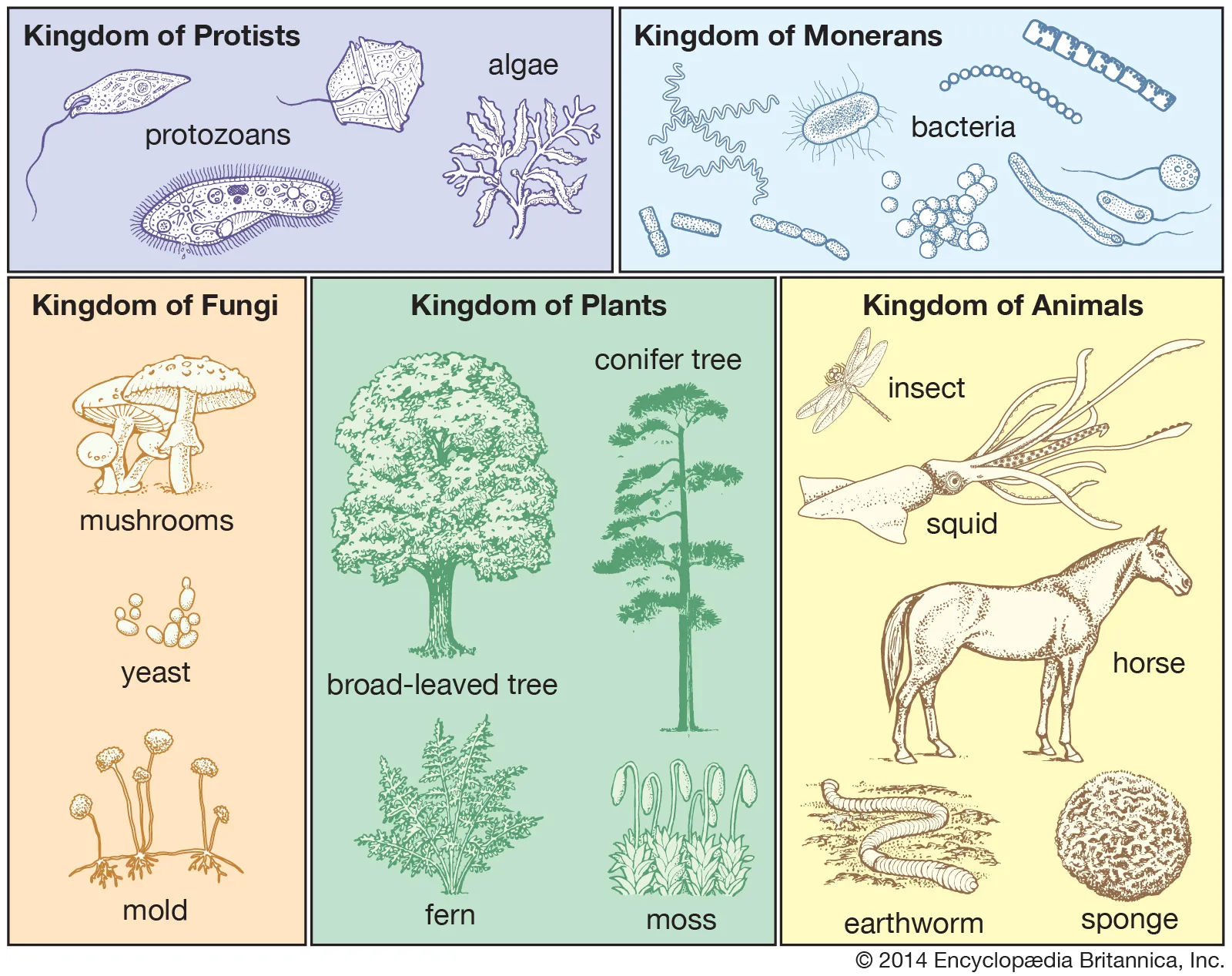
KHTK Factor # 15: As reality is simplified according to principles, it is reduced to classification based on scales.
The viewpoint and dimension points, together, form our reality. As they expand they become complex. As they are consolidated they reduce to principles and relationships that appear as classifications.
Such classes may be arranged further into subclasses for analysis and understanding. All such classes and subclasses remain consistent per the dimensional scale principle.
.
Scientology
Compare the above to the following factor in Scientology.
Scientology Factor # 15. The dimension point can be different from other dimension points and thus can possess an individual quality. And many dimension points can possess a similar quality, and others can possess a similar quality unto themselves. Thus comes about the quality of classes of matter.
The system of classification emerges based on similarities and differences and according to the principle of dimensional scales.
.
Logic
The concept of classification is vital to logical analysis.