Author Archives: vinaire

I am originally from India. I am settled in United States since 1969. I love mathematics, philosophy and clarity in thinking.

Identity versus Individuality

Individuality identifies a person for who he is. It differentiates him from another person. There cannot be individuality without identity. Layers of identity may be taken off, but what is left is still something that identifies a person.

In the Paper on Hinduism Swami Vivekananda stated:

So far all the Hindus are agreed. This is the common religion of all the sects of India; but, then, perfection is absolute, and the absolute cannot be two or three. It cannot have any qualities. It cannot be an individual. And so when a soul becomes perfect and absolute, it must become one with Brahman, and it would only realise the Lord as the perfection, the reality, of its own nature and existence, the existence absolute, knowledge absolute, and bliss absolute. We have often and often read this called the losing of individuality and becoming a stock or a stone.
“He jests at scars that never felt a wound.”
I tell you it is nothing of the kind. If it is happiness to enjoy the consciousness of this small body, it must be greater happiness to enjoy the consciousness of two bodies, the measure of happiness increasing with the consciousness of an increasing number of bodies, the aim, the ultimate of happiness being reached when it would become a universal consciousness.

In other words, perfection transcends self. It has to be the same all over. It cannot have boundary of separation defining it as some quality or individuality. Attaining perfection would then mean losing individuality or self.

Is losing individuality the same as becoming one with matter as thought by those who worship individuality? No, it is nothing of the kind. Individual happiness is to enjoy the consciousness of a small body. Perfection is to enjoy the universal consciousness.

.

It is interesting to note that Scientology is a religion that worships individuality. Hubbard wrote in SCN 8-8008: Identity versus Individuality:

Identity versus Individuality
The most common confusion on the part of a preclear is between himself as an identified object and his beingness. One’s beingness depends upon the amount of space which he can create or command, not upon his identification or any label. Identity as we know it in the MEST universe is much the same as identification, which is the lowest form of thought. When one is an object and is himself an effect, he believes that his ability to be cause is dependent upon his having a specific and finite identity. This is an aberration; as his beingness increases his individuality increases, and he quickly rises above the level of necessity for identity for he is himself self-sufficient with his own identity.
The first question a preclear undergoing theta clearing asks himself is quite often: “How will I establish my identity if I have no body?” There are many remedies for this. The worst method of having an identity is having a body. As his individuality increases and his beingness expands—these two being almost synonymous—he is less and less concerned with this problem; that he is concerned with the problem tells the auditor where he is on the tone-scale.
One of the control mechanisms which has been used on thetans is that when they rise in potential they are led to believe themselves one with the universe. This is distinctly untrue. Thetans are individuals. They do not as they rise up the scale, merge with other individualities. They have the power of becoming anything they wish while still retaining their own individuality. They are first and foremost themselves. There is evidently no Nirvana. It is the feeling that one will merge and lose his own individuality that restrains the thetan from attempting to remedy his lot. His merging with the rest of the universe would be his becoming matter. This is the ultimate in cohesiveness and the ultimate in affinity, and is at the lowest point of the tone-scale. One declines into a brotherhood with the universe. When he goes up scale, he becomes more and more an individual capable of creating and maintaining his own universe. In this wise (leading people to believe they had no individuality above that of MEST) the MEST universe cut out all competition.

Hubbard threw a curve by describing individuality as something good and identity as something bad. He derided the goal of Nirvana in Buddhism, which is to extinguish self or individuality.

Being a fundamental datum of Scientology, this worship of individuality provides a filter that distorts the subject of Scientology. Even though, Scientology contains some brilliant new technology to address the subject of the mind, it ends up producing the following as its valuable final product:

“A scientologist is a person with attention fixed on himself or herself, or on one’s individuality in general.”

.

[Added on December 11, 2013, revised March 20, 2015]:

Individuality is not something different from identity.
Individuality is the core of identity.
Creation of a unit is creation of a boundary.
Anything that creates a unit is part of that unit.
If thetan is a unit, then it has a boundary.
That boundary marks an identity.

.

A Perspective on World war II

General McArthur speaks at the Japanese surrender on Sunday, September 2, 1945:

“We are gathered here, representatives of the major warring powers, to conclude a solemn agreement whereby peace may be restored. The issues, involving divergent ideals and ideologies, have been determined on the battlefields of the world and hence are not for our discussion or debate…”

.

Japanese Surrender

.

This is what it is.

What a succinct way to put World War II in perspective!

.

Some Beautiful Memories

1984 (India) – The newly wedded couple with the ecstatic mother.

.

1994 (India) – Children visiting India and meeting the old family dog Pasha

.

.

.

A Look at Scientology Auditing

Scientology Axiom 11 states:

AS-IS-NESS is the condition of immediate creation without persistence, and is the condition of existence which exists at the moment of creation and the moment of destruction, and is different from other considerations in that it does not contain survival.”

Scientology Axiom 19 states:

Bringing the static to view as–is any condition devaluates that condition.”

.

It is my understanding that at the moment of AS-IS-NESS there is complete awareness of what one is postulating or viewing. There is nothing hidden. One has a choice to make it persist or not persist. This is how Scientology auditing works. Scientology processes, when applied in a session, guide a person where to look.

This principle is borrowed from Buddhism, which exhorts one to:

“Observe things as they really are, not just as they seem to be.”

In Buddhism, the above principle of mindfulness is to be applied at all times and not, as in Scientology, only when a person is in session.

.

In Scientology, a person is made to look deeply into one’s mind through repetition of process “commands.” Under such  introversion a person is likely to be vulnerable. Any little error in directing a person’s attention can have adverse consequences. Some of these consequences may be  subtle and may last beyond the session, resulting in conditioning. Though there are actions built into Scientology to minimize such errors, the liability exists for such processes to cause harm, especially through misuse.

But Buddha simply asks one to be mindful of what is there.

“Observe without expecting anything, or attempting to get an answer.”

One does not have to go around searching into one’s memory. One simply lets the mind unwind itself naturally starting from whatever is grabbing one’s attention. This way one can look deeply into one’s psyche without any liability. There is a simple and natural way one goes about practicing mindfulness.

Scientology auditing can be made simpler and more effective by following the Buddhist principle of mindfulness, instead of mechanically repeating an auditing command.

.

An E-meter is used in Scientology to direct a person’s attention in a session. The E-meter is connected to the person. The reactions on the E-meter guide the person where to look. This is fine but it creates a dependence on the E-meter. The E-meter, or the interpretation of its needle reactions, is not error free.

A conflict often occurs when the E-meter reaction indicates something ought to be there, but the person sees nothing. The person, depending on the E-meter, then digs into the mind, and the liability of conditioning comes into play. It then takes ‘CORRECTION LISTS’ to dig the person back out. This is not rare. This happens routinely in Scientology auditing sessions.

Blind digging into the mind, is a liability, which can be prevented with the use of mindfulness.

Such errors may be avoided by simply looking at what is there and not blindly digging into the mind. If nothing is there then one may simply accept that nothing is there. It is my opinion that training on mindfulness may make Scientology processes run much faster and with better results. This may, however, render the E-meter obsolete. In my opinion, E-meter is a marketing ploy. Auditing goes more smoothly and effectively with trained mindfulness.

.

In Scientology, a person is encouraged to talk in session about his intimate details as one looks at one’s experience. Everything the person says is recorded. The records are  kept in multiple, thick folders. Such information is used by auditors and case supervisors to determine the processes to be run in auditing sessions. The liability exists for this information to be misused.

Collection of intimate personal details is a liability, which can be eliminated with the use of mindfulness.

Gains in auditing come from the person observing and becoming aware, and not from talking about one’s experiences. But a lot of intimate personal details are gathered in Scientology by getting the person to talk about himself so some ‘expert’ can resolve his case through ‘case programming’.

No such information need be gathered when mindfulness is practiced. A battery of processes may be applied one after another. The mind then unstacks itself naturally whenever the processing question is applicable. The battery of processes may be repeated as long as natural unstacking is taking place. That is the extent of ‘case programming’ needed. It is taken care of by the mind itself. Thus, with the application of mindfulness, one’s privacy need not be compromised while the case is getting resolved.

.

The setup of a Scientology session is quite elaborate. The E-meter is an essential part of it. Thus, guidance in Scientology cannot be provided over long distances using phone, or Skype on Internet. This is an enormous limiting factor in this Information age of today.

With mindfulness it becomes possible to provide Scientology auditing over long distances.

No such limitation exists when the practice of mindfulness replaces the use of E-meter. One can routinely conduct Scientology auditing sessions using phone, or Skype on Internet, with great effectiveness.

.

Thus, it appears that considerable liability attached to Scientology auditing may be eliminated with the use of mindfulness. Also eliminated will be the expense associated with training of auditors on complex auditing actions. The auditor’s function would simply consist of providing auditing commands and to ensure that mindfulness is being practiced by both auditor and the preclear. No Case Supervisor would be necessary. This would make it possible to deliver auditing in much greater volume while also increasing the effectiveness of  Scientology applications.

With mindfulness it becomes possible to provide Scientology auditing inexpensively in much greater volume.

Scientology claims itself to be an extension of Buddhism. Let mindfulness also be incorporated into Scientology from Buddhism. There is a great potential in Scientology to spread as a grass roots movement, like Buddhism did 2600 years ago, with great benefit to everybody.

.

A Look at Scientology

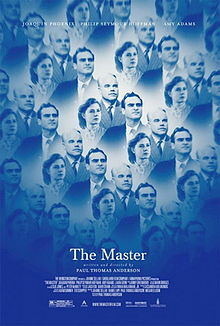
With the recent release of the movie THE MASTER, Scientology has become a subject of broad interest. There is plenty that can be read about this subject in books and on Internet. I have done a close study of this subject over a period that started in 1969 (see My Introduction to America). I even spent a few years aboard Hubbard’s yacht Apollo in the seventies (see Memories at Sea (1972-75)). Here is my summary assessment of Scientology.

  1. Scientology consists of much ground breaking work by Hubbard.

  2. Scientology introduces a whole new plateau to addressing the problems of the mind.

  3. The work on this breakthrough is, however, far from complete.

  4. The success from the application of Scientology is far from consistent.

  5. Any lack of success gets blamed on the practitioner of Scientology.

  6. Unmanageable difficulties seem to exist in the application of Scientology.

  7. Correction lists have become a part of “Standard Scientology.”

  8. A closer look at Scientology shows a lack of application of the principle of poka-yoke.

  9. The 12 Aspects of Mindfulness are the key to success in Scientology auditing.

  10. Scientology does not seem to put emphasis on Mindfulness.

  11. Scientology takes up aspects of mindfulness on TR0, Obnosis, and Data Series, but it fails to treat mindfulness systematically, and fails to highlight its importance in auditing.

  12. The principles of Mindfulness were first elucidated by Buddha 2600 years ago.

  13. Mindfulness seems to provide poka-yoke to Scientology processes.

  14. The principles of Mindfulness are presented under The 12 Aspects of Mindfulness.

  15. Here is an example of application of mindfulness to Scientology processes – ARC Straight wire Processes

.