Author Archives: vinaire

I am originally from India. I am settled in United States since 1969. I love mathematics, philosophy and clarity in thinking.

Counseling Procedure for Self-Learning (Old)

counseling2

August 21, 2014
This issue is now obsolete. For latest references please see: KHTK Self-Learning. The specific reference that updates this issue is Counseling Procedure for Self-Learning.

.

Here is a procedure that may be used by Self-Learning Centers to rehabilitate self-learning.

  1. An unwanted condition exists quite commonly in relation to education. If the person is interested in addressing that area, the education counselor may discuss,

    “Is there something you wanted from education that you failed to get?”

    Identify the unwanted condition in the area of education that the person has been struggling with.

  2. The counselor may then establish the occasion when that unwanted condition began. To locate that occasion he may bracket the earliest time in the person’s life when that condition was there, and an earlier time when the condition was not there. To pinpoint that beginning one may discuss the persons, places, incidents, situations, etc., connected with his education in that period.

  3. Once that occasion is found, the counselor discusses any confusion at the time of that occasion, which is still present in the person’s mind. The counselor gets the person to look at the things that did not go as expected at that time and that interrupted his interest in education.

  4. The counselor then have the person examine that occasion for any drastic shift in his outlook toward education. if so, then the counselor discusses the person’s outlook before and after the shift and how it changed at that occasion.

  5. The counselor probes for possible shocking experience that the person went through that triggered that shift in his outlook. The counselor does not discuss the experience but lets the person look at it carefully. The counselor simply provides any help needed by the person to realize how his difficulties with education start.

  6. The counselor then informs the person of the following policies of the “self-learning” center, and lets him get on with it.

    • This center believes that a person is capable of learning by oneself from childhood.

    • This center supports “Self-learning”.

    • This center does not allow indoctrination.

    • This center does not allow tests other than for diagnostic purposes.

    • This center believes in guiding a learner toward best resources.

    • This center believes that the best learning takes place when it is hands on and involves all the senses.

    • This center believes that one should feel free to make mistakes and learn from them.

    • The counselors of this center are there to help remove confusions through discussion.

    • The discussion policy follows the guidelines of Discussions and what needs to be avoided.

.

Kids can Teach Themselves

Reference: Subject: Education

You may read the transcript here.

Here are the main points from this talk (August 2008):

(1) I wanted to build an argument for primary education in a very specific context. What happens to education as it gets remote from urban centers and resources?

(2) Studies show that test results drop with the remoteness of schools from urban centers. Most teachers in remote areas are not very motivated. Educational technology would have much greater positive impact in these remote areas than in urban areas.

(3) An alternative primary education is required where schools don’t exist, where schools are not good enough, where teachers are not available or where teachers are not good enough, for whatever reason.

(4) A possible alternate system is SOLE (self-organizing learning environment) that was observed in a set of “hole-in-the wall” experiments. It was discovered that a child could self-learn to browse on Internet within 8 minutes. They could even self-learn English by locating an English teaching site on the web.

(5) We found younger children teaching the older one. Six to 13-year-olds could self-instruct in a connected environment (group), irrespective of anything that we could measure. We got a clean learning curve, almost exactly the same as what you would get in a school. They seem to be learning as much by watching as by doing.

(6) The conclusion was that primary education, or parts of it, can happen on its own. It does not have to be imposed from the top downwards. It could perhaps be a self-organizing system. All natural systems are self-organizing.

(7) So, the conclusions are:

  • Remoteness affects the quality of education.
  • Educational technology should be introduced into remote areas first.
  • Values are acquired; doctrine and dogma are imposed.
  • Learning is most likely a self-organizing system.

(8) it gives us a goal, a vision, for an educational technology pedagogy that is digital, automatic, fault-tolerant, minimally invasive, connected and self-organized. We can call this educational technology “out-doctrination,” It could be a goal for the future.

.

Bring on the Learning Revolution!

Reference: Subject: Education

You may read the transcript here.

Here are the main points from this talk (May 2010):

(1) Currently, there is a crisis of human resources. We make very poor use of our talents. Very many people go through their whole lives having no real sense of what their talents may be, or if they have any to speak of. But there are also those who love what they do and couldn’t imagine doing anything else. But such people are in a minority.

(2) You might imagine education would be the way to create the circumstances where natural talents show themselves, but too often it’s not. Education, in a way, dislocates very many people from their natural talents. What we need is not evolution, but a revolution in education.

(3) One of the real challenges is to innovate fundamentally in education, but we are still hypnotized by the ideas that were formed to cope with the circumstances of previous centuries. Those ideas do not meet the circumstances of this century but we take them for granted and find it difficult to overcome them. For example, in education, we are obsessed with getting people to college because we take it for granted that it is the only way to get set up for the rest of our life. But life is not linear; it is organic.

(4) At the heart of our challenge is to reconstitute our sense of ability and of intelligence. Human communities depend upon a diversity of talent, not a singular conception of ability. We create our lives symbiotically as we explore our talents in relation to the circumstances they help to create for us.

(5) We have sold ourselves into a fast food model of education, where everything is standardized and not customized to local circumstances. It is impoverishing our spirit and our energies as much as fast food is depleting our physical bodies.

(6) Human talent is tremendously diverse. People have very different aptitudes. It’s about passion and what excites our spirit and our energy. And the reason so many people are opting out of education is because it doesn’t feed their spirit, it doesn’t feed their energy or their passion.

(7) We have to go from what is essentially an industrial model of education, which is based on linearity and conformity and batching people, to a model that is based more on principles of agriculture, which recognizes that human flourishing is not a mechanical process, and that it is an organic process. You cannot predict the outcome of human development. All you can do, like a farmer, is create the conditions under which they will begin to flourish.

(8) It’s about customizing to your circumstances and personalizing education to the people you’re actually teaching. It is not about scaling a new solution; it’s about creating a movement in education in which people develop their own solutions, but with external support based on a personalized curriculum.

(9) Today’s extraordinary resources in business, multimedia, and the Internet, combined with the extraordinary talents of teachers, provide an opportunity to revolutionize education. Every day, everywhere, our children spread their dreams beneath our feet. And we should tread softly.

.

Massenet Meditation


.


.


.


.

Beautiful meditation at 1:06:20. It is out of this world.

Jewish People

Jewish1Scarlett Johansson: Jewish entertainer

I love this response on Quora, so much so that I have added it to my blog.

Do Jews think they are superior to other ethnic/religious groups in the world?

Response by Marc Ettlinger, a yiddishe boychi

It’s certainly undeniable that Jews have reached incredible heights of achievement in science (Einstein, Feynman, Bohr, Salk, Sagan, Lise Meitner), social science (Freud, Marx, Chomsky, Boas, Levi-Strauss, Proust), technology (Google, Intel, half of Microsoft, Dell, Oracle, Facebook, von Neumann, Erdös, Kurzweil), business (Bloomberg, Soros, Fridman, Rothschilds), the arts (Chagal, Kafka, Roth, Modigliani, Rivera & Kahlo, Rothko, Dylan, Shoenberg, Gershwin), politics (Kissinger, Albright, Disraeli, Goldwater, Emma Goldman, Trotsky&Lenin, Jesus, Brandeis, Ayn Rand) and entertainment (from Groucho Marx and the founders of MGM to Mila Kunis, Scarlet Johanson and Natalie Portman – it’d be easier to list the entertainers that aren’t Jewish). Heck, even the joked about Famous Jewish Sports Heroes pamphlet is filled with luminaries like Mark Spitz, Koufax, Sid Luckman, Aly Raisman and Hank Greenberg; I once even calculated that the number of Jews in baseball (Braun, Youkilis, etc) was actually appropriately proportional to its population.

Jewish2

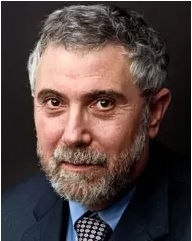
Krugman: Jewish economist

To throw some numbers behind it, Jews make up between 20-30% of Nobel prize winners in all science categories as well as Fields medal and AM Turing award winners. Economics Nobel winners are 36% Jewish, Pulitzers clock in at about 10-20% Jewish, except for Non-Fiction where fully half of all winners are Jewish. 37% of Oscar Winning Directors, 19% of Time Magazine’s 100 Greatest of the 20th Century, 21% of enrollment in the Ivy leagues and 11% of US Senators are Jews. And the cherry and perhaps the most dominant achievement, for 66 years out of its 122 year history, a Jew has been World Chess Champion (Influential Jews in History Jewish Popular History Jewish Population).

All in all, not a bad track record of achievement for a group that makes up about 0.2% of the world’s population.

To sum up, I’ll hand it over to Mark Twain:

“…If statistics are right, the Jews constitute but one percent of the human race. It suggests a nebulous dim puff of  lost in the blaze of the Milky way. Properly, the Jew ought  hardly to be heard of, but he is heard of, has always been heard of. He is as prominent on the planet as any other people, and his commercial importance is extravagantly out of proportion to the smallness of   his bulk. His contributions to the world’s list of great names in literature, science, art, music, finance, medicine, and abstruse learning are also away out of proportion to the weakness of his numbers. He has made a marvelous fight in this world, in all the ages; and had done it with his hands tied behind him. He could be vain of himself, and be excused for it.”

All this, while Jews faced crippling antisemitism for hundreds of years in the US, particularly in the early part of this century (e.g., Harvard’s Jewish Problem). And they still do: Anti-Semitism: Do American Jews experience anti-Semitism ever?(Sorry, but Jew down is not a compliment even if you mean it to refer to Jew’s supposed superior business sense).

In fact, worldwide and throughout history, Jews have been pushed out, killed, converted, chased, banned, robbed from and scapegoated in pretty much every place we’ve lived. From the Roman conquest of Cana’an, the Spanish Inquisition, Christian blood libels, American KKK lynchings, Russian pogroms, 19th c. Muslim forced conversions, and oh yeah, the Holocaust, where fully 1/3 of the entire Jewish population was wiped of the face of the earth from levels it still has not recovered to, it’s been a tough go of it for the past 2000 years or so (Jewish Persecution | Timeline of Judaism | History of AntiSemitism).

Jewish3

Screenshot from Fiddler on the Roof, directed by Norman Jewison who, irony of ironies, is not Jewish.

Tevye put is best when he said, I know, I know. We are Your chosen people. But, once in a while, can’t You choose someone else?

But, as Lisa Liel notes, in some ways we’re superior and in some ways we’re inferior. For example, I think you’ll find that many American Jews are attracted to Buddhism (Jewish Buddhist, or JuBus, e.g., Robert Downey Jr. and Alan Ginsburg) because of the things Buddhism has that Judaism or some Jews may lack. Let me reiterate so there’s no ambiguity: We’re incredibly successful in some ways, but not in others. And success does not equal superiority.

Howeverhaving said that (https://plus.google.com/10513620…) if you look across all the successes and the challenges, if there’s one thing that the crucible of history has ingrained in the Jewish people, if there’s one commonality across the highs and lows of Jewish history, if there’s one way in which Jews are indeed at least above average, it’s in their persistence and perseverance.

Comment:

This is indeed impressive. But there is another story yet to be told of another tradition that is considered decimated… It is a cousin to Jewish people and it is coming back.