Author Archives: vinaire

I am originally from India. I am settled in United States since 1969. I love mathematics, philosophy and clarity in thinking.

Experience Fully

Experience
Reference: The 12 Aspects of Mindfulness

Mindfulness provides the discipline for looking and contemplation.

You may do this exercise while sipping coffee in a café, or strolling along a river. You may even find a place where you can sit comfortably for a while without being disturbed. Then patiently observe the world go by.

Experiencing is deepest form of looking. A person is deeply looking at his feelings, emotions and impulses when he is experiencing them fully. Suppose a dog is running toward you and you feel afraid. If you simply experience that fear without avoiding, resisting or suppressing it, you may find that you are able to handle the situation much better even as it develops.  So, dive into the very heart of whatever arises in the mind without resisting. If the mind is racing, then experience it racing without contributing to it.

.

MINDFULNESS 7: Experience fully what is there.

  1. Make sure the body is well-rested, well-fed and free of stimulants.

  2. Make sure the environment is safe and free of disturbance.

  3. Observe as usual. Notice the environment and other people.

  4. Start applying the aspects of mindfulness that you have learned so far.

  5. Whatever emotions are arising in your mind experience them fully.

  6. Look at your old family album or old pictures, or visit some old locations.

  7. Experience any nostalgia, as long as it lingers. Continue to observe.

  8. Dive into the very heart of the feelings without resisting them.

  9. If you are afraid then experience the fear fully without speculating on it.

  10. If the mind is racing, then experience it racing.

  11. Become fully aware of thoughts without contributing to them.

  12. Expand your span of attention and fully experience whatever perceptions pour in.

  13. Let the realizations present themselves to you without you making any effort.

  14. Use your own judgment as to when to end a session.

.

Develop this exercise to a point where you may execute it even while interacting socially with others. Keep observing patiently experiencing each moment fully. Many things may come up naturally to be scrutinized. Simply observe them and become aware of them without effort.
.

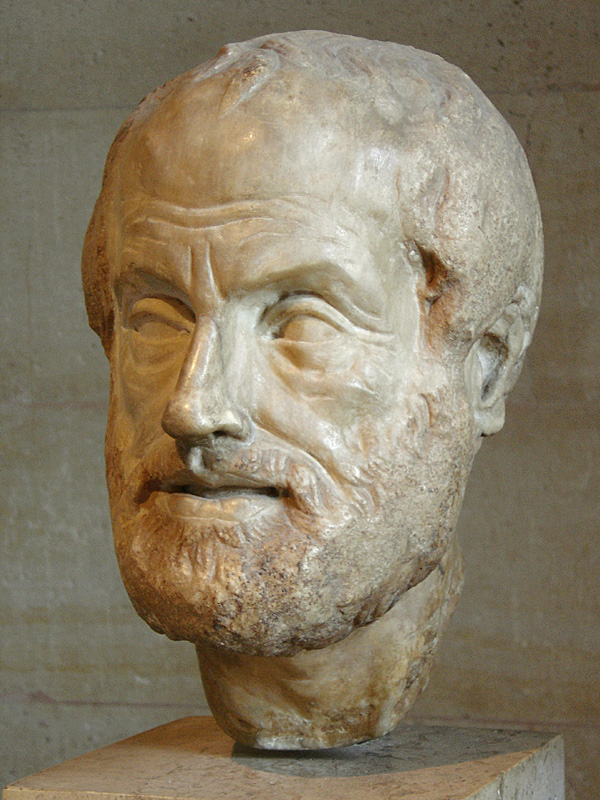
Aristotle and the Ground State

Aristoteles_Louvre
Reference: Unmoved mover

The unmoved mover is a philosophical concept described by Aristotle as a primary cause or “mover” of all the motion in the universe. As is implicit in the name, the “unmoved mover” moves other things, but is not itself moved by any prior action.

Scientifically, the unmoved mover is equivalent to an absolute static. However, an absolute static is not possible in this universe because static-dynamic exists only in pair. This pair may be represented by a scale of infinite gradients where one end approaches increasing static value and the other end approaches increasing dynamic value in an asymptotic manner.

Thus, static and dynamic do not exist independent of each other. There is no static that exists in isolation. There is no “unmoved mover.” Static is always relative to dynamic. There is always relative motion.

One may presume no relative motion, but that would also mean no awareness because awareness arises only with relative motion. This would be the Ground State of “absence of awareness.”

Aristotle argues that “there must be an immortal, unchanging being, ultimately responsible for all wholeness and orderliness in the sensible world”; and to prove this he invents an impressive array of new concepts that includes  potentiality and actuality, the four causes, hylomorphism, the theory of categories, and, of course, the “first cause” or unmoved mover.

But one may ask, “How does that immortal, unchanging being of Aristotle come about?” Or, “How does such an argument come about?” Or, “How does anything come about?”

The Ground State of “absence of awareness” provides a basis from which it becomes possible to start answering such questions. We don’t really need Aristotle’s complex explanations that use a wide variety of new concepts. All this complexity only seems to generate more mystery and confusion.

The concept of Static in Scientology is simply the concept of Aristotle’s “Unmoved mover” wrapped up in a new garb. Since the Scientology static has the ability to postulate and to perceive, there is awareness associated with this Static. Thus, such a Static is not something inherently permanent; and, like Aristotle’s unchanging being, it also arises somehow.

All we are asking is, “How does anything come about?” This boils down to the question, “How does awareness come about?”

So the basic question that needs to be answered is, “What is awareness? How does it arise?”

Whatever is beyond awareness is unknowable. The idea of primary cause may simply be dropped. It is not required.

.

Awareness and the Ground State

infinite_regress1
Reference: The Ground State of the Universe

I believe in a Ground State. Scientifically, there has to be a ground state of beingness, existence or the universe. But it is not the Absolute Zero of science though. Nor is it the God of the Abrahamic religions. It is not the self, soul, spirit or atman. It is not even the Buddha-nature, or the Static of Scientology.

The Ground State is a mystery.

Let’s start with our beingness. The core characteristic of a human being is that it is aware of being aware. We are talking about the human being as a whole and not of its parts. We may define awareness as follows.

Awareness is the ability of an organism to respond to stimuli. It is unaware of the stimulus it cannot respond to.

The stimuli, in general, would be physical objects in one’s environment. When the stimilus is a mental object, such as, thought, emotion, or impulse, and the organism responds to it, then we may call it “awareness of awareness.”

.

Humans are not only aware, they are aware of being aware.

Animals are definitely aware but not aware of being aware to the degree humans are.

Plants are definitely aware also, but we regard them as not aware of being aware.

Minerals are limited in awareness. They are aware to the degree that they respond to chemical interactions.

Awareness is intimately related to motion. If there is no motion anywhere we would find it very hard to define external awareness. Thus, we may say that inert gases are approaching unawareness, except at molecular level by reason of temperature, and at atomic level by reason of structure. Beyond the solidity of nucleus there is the motion of electromagnetic waves.

We may imagine a whole scale that goes asymptotic toward absence of awareness at one end and toward awareness of awareness at the other.

Everything in existence seems to be at some point on this scale of awareness. Life seems to start when a certain level of awareness is reached.

.

Philosophically, we may look at the dichotomy of “awareness – no awareness,” and say that beyond awareness would be no awareness and any area beyond awareness would be unknowable. We are unable to tell if there is no life beyond awareness because that area is unknowable.

Our whole universe lies in the sphere of awareness. We may say that our universe is bounded by an “absence of awareness.” To us, all manifestations lie within this sphere of awareness. Our universe is the universe of awareness.

Beyond this universe, there is neither awareness nor motion. Awareness arises only when there is motion.

There is no definition possible for “absence of motion or awareness” simply because there is no awareness. Anything defined shall be within the universe of awareness. Therefore, self, soul, atman, God, Static, etc., are all within the universe of awareness.

We may only speculate. But any speculation would then be part of awareness. Any potential that we may imagine shall be part of the universe of awareness.

“Absence of awareness” shall then act as the theoretical reference point for our universe of  awareness, the same way that “zero” acts as the reference point for all numbers.

Thus, “absence of awareness” may serve as an approximation for the Ground State for now. Certainly anything that we can be aware of would not qualify as the Ground State.

Thus, the Ground State is unknowable from the perspective of this universe of awareness. It cannot be defined.

Let the Mind Un-stack

Unstack
Reference: The 12 Aspects of Mindfulness

Mindfulness provides the discipline for looking and contemplation.

You may do this exercise while sipping coffee in a café, or strolling along a river. You may even find a place where you can sit comfortably for a while without being disturbed. Then patiently observe the world go by.

Let the mind un-stack itself naturally through patient contemplation on whatever comes up. Observe the issue uppermost in the mind, and then the next, and the next. Let the mind deal with issues in the order it wants to.  There should be no effort to recall, to dig for answers, or to interfere with the mind in any way.  Simply look at what is right there in front of the mind’s eye at any moment. The mind will never present anything overwhelming when allowed to un-stack itself.

.

MINDFULNESS 6: Let the mind un-stack itself. 

  1. Observe as usual. Notice the environment and other people.

  2. Start applying the aspects of mindfulness that you have learned so far.

  3. Simply look at what is right there in front of your physical and mental vision.

  4. Do not put any resistance to the mind. Let it bring up whatever it wants to.

  5. Let the mind freely associate and un-stack itself naturally in the order it wants to.

  6. If there are many issues, let the mind choose what to look at first.

  7. If there is a question, simply look in and around the area of question more closely.

  8. If there is no answer to the question do not search for one; let the mind un-stack.

  9. If there is something that does not makes sense, simply look around that area more closely.

  10. Do not dig into the mind for explanation; let the mind un-stack.

  11. Do not manipulate. Simply observe the issue uppermost in the mind.

  12. Contemplate patiently on whatever is there by looking at it from various angles.

  13. If the mind wants to get lost, let it get lost. Get some rest. The mind will return.

  14. Expand your span of attention and let the perceptions pour in.

  15. Let the realizations present themselves to you without you making any effort.

  16. Use your own judgment as to when to end a session.

.

Develop this exercise to a point where you may execute it even while interacting socially with others. Keep observing patiently without interfering with the mind in any manner. Let it un-stack itself. Many things may come up naturally to be scrutinized. Simply observe them and become aware of them without effort.

.

Observe all Senses

M5
Reference: The 12 Aspects of Mindfulness

Mindfulness provides the discipline for looking and contemplation.

You may do this exercise while sipping coffee in a café, or strolling along a river. You may even find a place where you can sit comfortably for a while without being disturbed. Then patiently observe the world go by.

We associate the idea of sense organs with eye, ear, nose, tongue, and body. We use them to observe physical objects, such as, chair, car, house, etc. However, the mind is also a sense organ, which senses ideas, thoughts, feelings, emotions, etc. These are mental objects. When being mindful, recognize both physical and mental objects for what they are.

.

MINDFULNESS 5: Use physical senses as well as the mental sense to observe.

  1. Observe as usual. Notice the environment and the people in it.

  2. Start applying the aspects of mindfulness that you have learned so far.

  3. Notice some physical objects in the environment, such as, table, chairs, trees, bodies, etc.

  4. Notice some visual perceptions of shape, color, etc.

  5. Notice some perception of sounds, such as, those of birds, animals, people, etc.

  6. Notice some perception of smells, such as, that of food, coffee, freshly cut grass, etc.

  7. Notice some perception of tastes in your mouth, and when eating and drinking.

  8. Notice some perception of touch, such as, that of clothes on your body, and anything that comes into contact with your hands and feet.

  9. Notice the presence of some mental objects, such as, thoughts, emotions, labels, evaluations, conclusions, etc.

  10. Notice some mental objects that you are creating right now.

  11. Notice some mental objects from your education.

  12. Notice some mental objects from your experience.

  13. Notice the mental objects that occur again and again.

  14. Notice some associations of mental objects with physical objects in your environment.

  15. Expand your span of attention and let the perceptions pour in.

  16. Let the realizations present themselves to you without you making any effort.

  17. Use your own judgment as to when to end a session.

.

Develop this exercise to a point where you may execute it even while interacting socially with others. Keep observing patiently the physical objects, the mental objects, and the associations among them. Many things may come up naturally to be scrutinized. Simply observe and become aware of them without effort.

.