
Reference: Postulate Mechanics (PM)
The Four Noble Truths of Buddha are:
- The truth of suffering
- The truth of the origin of suffering
- The truth of the cessation of suffering
- The truth of the path to the cessation of suffering
We look at these truths from the perspective of Postulate Mechanics.
.
Suffering
The First Noble Truth of Buddhism is the existence of Dukkha (suffering), which asserts that life inherently contains unsatisfactoriness, pain, and instability. It is not a pessimistic view, but a realistic observation that birth, aging, sickness, death, and not getting what one wants are inescapable forms of suffering.
From the perspective of Postulate Mechanics, the ideal state of life consists of harmony. Any violation of harmony is an anomaly. Therefore, Dukkha consists of anomalies. It is much easier to understand and address Dukkha, when a person views it as made up of a collection of anomalies. He can then handle specific anomalies one at a time, and see harmony being restored gradually to his life.
.
Origin of Suffering
The Second Noble Truth states that the cause of suffering (dukkha) is craving, desire, or thirst. It teaches that suffering arises from internal mental reactions—specifically craving pleasurable sensations, continued existence, or cessation of experience—rather than just external events.
Postulate Mechanics agrees with Buddhism that suffering arises from internal mental reactions; but it looks further into the cause of those reactions. It is easier to trace back to causes when one is addressing specific anomalies. Today’s world is very complex. It is not easy to handle craving, desire, or thirst as a generality. The “craving, desire, or thirst” for knowledge is natural. Only when there is a lack of harmony in the forms of distortion, misdirection or corruption of that desire that anomalies come about.
.
Cessation of Suffering
The Third Noble Truth states that the cessation of suffering (dukkha) is possible by eliminating its cause, which is craving (tanha). It asserts that by letting go of attachments, greed, and delusion, one can achieve freedom, peace, and ultimate happiness, known as Nirvana.
Postulate Mechanics observes that letting go of attachments, greed, and delusion is the right goal, but it has been difficult to attain. First, there are numerous attachments; and second, there are many, many instances of greed and delusion. Each of them gets triggered by different things. There is definitely a single factor, which, once handled, makes it much easier to handle all these numerous triggers. But it requires a single-minded effort to find and handle that single factor. Most people find it difficult to engage in such an effort.
.
Path to the Cessation of Suffering
The Fourth Noble Truth prescribes a “Middle Way” balancing moderation with mental discipline, offering a guide for ethical living, mindfulness, and wisdom to achieve liberation.
Postulate Mechanics observes that this path has been difficult to follow because of misconceptions. The earlier chapters of this book address many broad misconceptions. A basic misconception has been about the substance of this universe. Another misconception has been about the relationship between inertia and motion, and its role in the evolution of life and thought.
.
Postulate Mechanics
The basic principles of the universe have now evolved to such a complex level, that they manifest as self-awareness and reason. With that has come about the ideas of “I” and suffering. These ideas have not existed prior to the emergence of humans.
Postulate Mechanics has clarified suffering as “lack of harmony.” Clarification is still needed to the question, “Who or what is ‘I’ that is suffering?”
Do we really understand what ‘I’ is? Or, is there a general misconception about it.
.

Comments
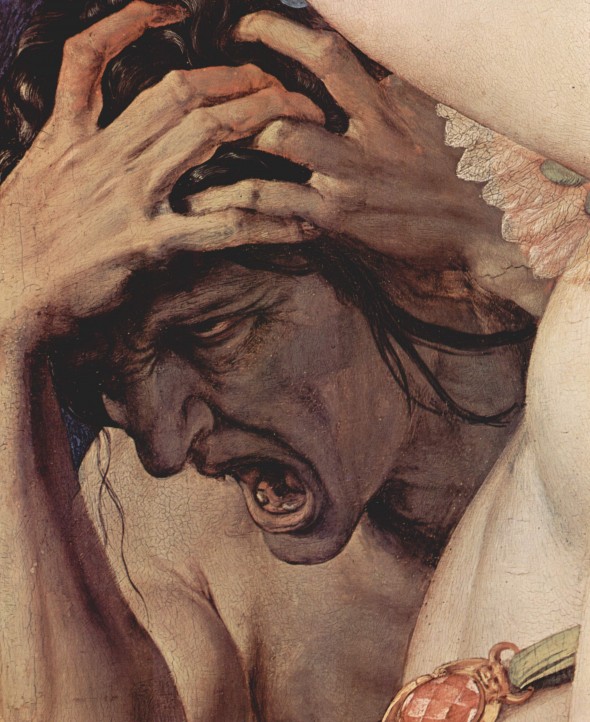
The picture at the beginnng of this post is part of the painting described here.
https://en.wikipedia.org/wiki/Venus,_Cupid,_Folly_and_Time