
Reference: SC: Psychology
Executive Summary
This period was marked by the rise of Islam. There was a quick spread of medical knowledge and hospitals were built throughout the Islamic world. These institutions had specialized wards, including wards for mentally ill patients. They stood as models for later hospitals in Europe and the wider world, helping to shape the modern concept of the hospital as a place of healing, learning, and public welfare.
Classification, description and management of mental disorders continued to be improved. Psychotherapy and counseling were integrated with medical treatment. Holistic approaches were introduced in mental health care. Mental health came to be addressed within mainstream medical practice.
It was recognized that mental and physical health are deeply interconnected. Medical and psychological remedies were proposed that were tailored to each type of mental distress. It was stressed that mental health problems are as natural as physical ailments, and they should not be stigmatized as weaknesses of faith or willpower. Mental health and self-esteem were emphasized as being crucial to overall well-being.
.
BIMARISTAN (c. 800 CE)
A bimaristan (from Persian: bīmār – sick, -stan – place) was the hospital and major medical institution of the medieval Islamic world and represents a foundational development in the history of healthcare.
Origins and Early Development
- The word bimaristan traces its roots to the Sassanian Empire (pre-Islamic Persia), but the institution became fully developed and widely recognized in the Islamic era following the Muslim conquest of Persia.
- The earliest form of bimaristan was the mobile hospital—a tent set up to treat wounded soldiers during battles. Notably, Rufaidah al-Aslamiya established a tent hospital during the Battle of Khandaq (627 CE), a tradition that was later expanded into formal state-run hospitals.
Growth Under Islamic Rule
- The first permanent bimaristan was established in Damascus in 707 AD (86 AH) by Umayyad Caliph Al-Walid ibn Abdul-Malik. It initially focused on treating chronic diseases such as leprosy, but soon expanded to treat a variety of illnesses.
- Bimaristans quickly spread throughout the Islamic world, with major centers in Baghdad, Cairo, and later Granada and other cities. During the Abbasid Caliphate, the concept of fixed and mobile bimaristans flourished; mobile facilities could be transported on camels to serve remote communities.
Organization and Innovation
- Bimaristans were secular, serving all citizens regardless of color, religion, or gender, and their services were provided free of charge.
- They functioned as both hospitals and medical schools, with licensed physicians, regular ward inspections, and documentation of patient cases for both care and teaching—precursors to modern hospital practices.
- Departments included wards for internal medicine, surgery, infectious diseases, psychiatry, and ophthalmology, among others. Special attention was given to mental health, with early psychiatric wards established, notably in Baghdad by the 9th century.
- Notable hospitals like the Al-Adudi Hospital in Baghdad and Al-Mansuri Hospital in Cairo featured advanced facilities, multiple departments, running water, and independent wards for different diseases. The Al-Mansuri Hospital (Cairo, 1284 AD) could accommodate 8,000 patients and had endowment-funded free care.
Legacy
The bimaristan system introduced many concepts central to modern healthcare:
- Free, universal access to medical care
- Professional standards and licensure for physicians
- Round-the-clock nursing care
- Integration of pharmacy services
- Medical education and clinical training
These institutions stood as models for later hospitals in Europe and the wider world, helping to shape the modern concept of the hospital as a place of healing, learning, and public welfare.
.
PAUL OF AEGINA (c. 625–690 CE)
Paul of Aegina, a Byzantine physician from the 7th century, contributed to mental health through his influential medical compendium, which included discussion of mental disorders and their management within the context of ancient Greek medical theory. His work synthesized knowledge from Hippocrates and Galen, offering both classification and treatments for mental and neurological conditions.
Key contributions:
- In his major work, the Epitome of Medicine, Paul addressed a range of mental health conditions—such as epilepsy, melancholy, phrenitis (acute mental derangement), and nervous diseases—alongside physical illnesses.
- He recommended treatments typical of the ancient humoral tradition: bloodletting, diet, medicines, and physical therapies aimed at restoring humoral balance, all of which were understood as impacting both physical and mental well-being.
- He suggested that hysteria should be treated by ligature of the limbs, and mania by tying the patient to a mattress placed inside a wicker basket and suspended from the ceiling. He also recommended baths, wine, special diets, and sedatives for the mentally ill.
- Paul classified ailments by body part and described mental problems in relation to diseases of the head, showing an integrated view of neurological and mental disorders.
- Although not mainly recognized for original psychological theories, his systematic approach to disease, hygiene, and physical regimens provided a framework for maintaining overall health—including mental health—within his era’s medical context.
Paul’s work remained highly influential for centuries, shaping later Byzantine, Arabic, and Western European medicine’s understanding of the mind-body relationship and the treatment of mental ailments. However, his contributions are considered primarily as compendious and practical rather than philosophically innovative regarding the nature of mental illness.
.
ALI IBN SAHL RABBAN AL-TABARI (c. 850 CE)
Ali ibn Sahl Rabban al-Tabari (c. 838–c. 870 CE), a pioneering Persian physician and scholar, made significant early contributions to mental health and clinical psychology during the 9th century. His main medical work, the encyclopedic Firdaws al-Hikmah (“Paradise of Wisdom”), was among the first Islamic medical texts to systematically address diseases of both body and mind.
Key contributions to mental health include:
- Integration of Psychology and Medicine: Al-Tabari was one of the earliest physicians to emphasize strong ties between psychological states and physical health. He advocated for the use of psychotherapy and counseling as part of medical treatment, highlighting the need to address a patient’s mental as well as physical well-being.
- Descriptive Psychopathology: In Firdaws al-Hikmah, he described symptoms, causes, and treatments of brain and mental disorders using a system loosely based on Greek humoral theory, but he localized mental functions (imagination, thought, memory) to different parts of the brain. Deficits in these regions, often due to disruptions in bodily humors, were linked to distinct psychiatric symptoms such as delusions, hallucinations, agitation, and social withdrawal.
- Clinical Observation of Psychiatric Disorders: Al-Tabari offered some of the earliest detailed clinical observations on what would now be recognized as psychotic disorders. He recounted cases of individuals with strong delusions (believing they were made of pottery, wild camels, or chickens) and various hallucinations. Such descriptions are now seen as among the earliest accounts resembling schizophrenia-spectrum disorders.
- Holistic and Humane Care: He promoted a treatment philosophy that considered both psychological and environmental factors alongside physical ones, prefiguring holistic approaches in mental health care.
- Influence on Later Physicians: Al-Tabari’s teachings shaped generations of physicians, most notably al-Razi, and his work circulated widely, helping establish a tradition in Islamic medicine of addressing mental health within mainstream medical practice.
In summary, Ali ibn Sahl Rabban al-Tabari stands out as a founding figure in medieval Islamic mental health who bridged psychological insight with systematic medical practice, offering some of the first proto-clinical approaches to mental disorders documented in either Eastern or Western medicine.
.
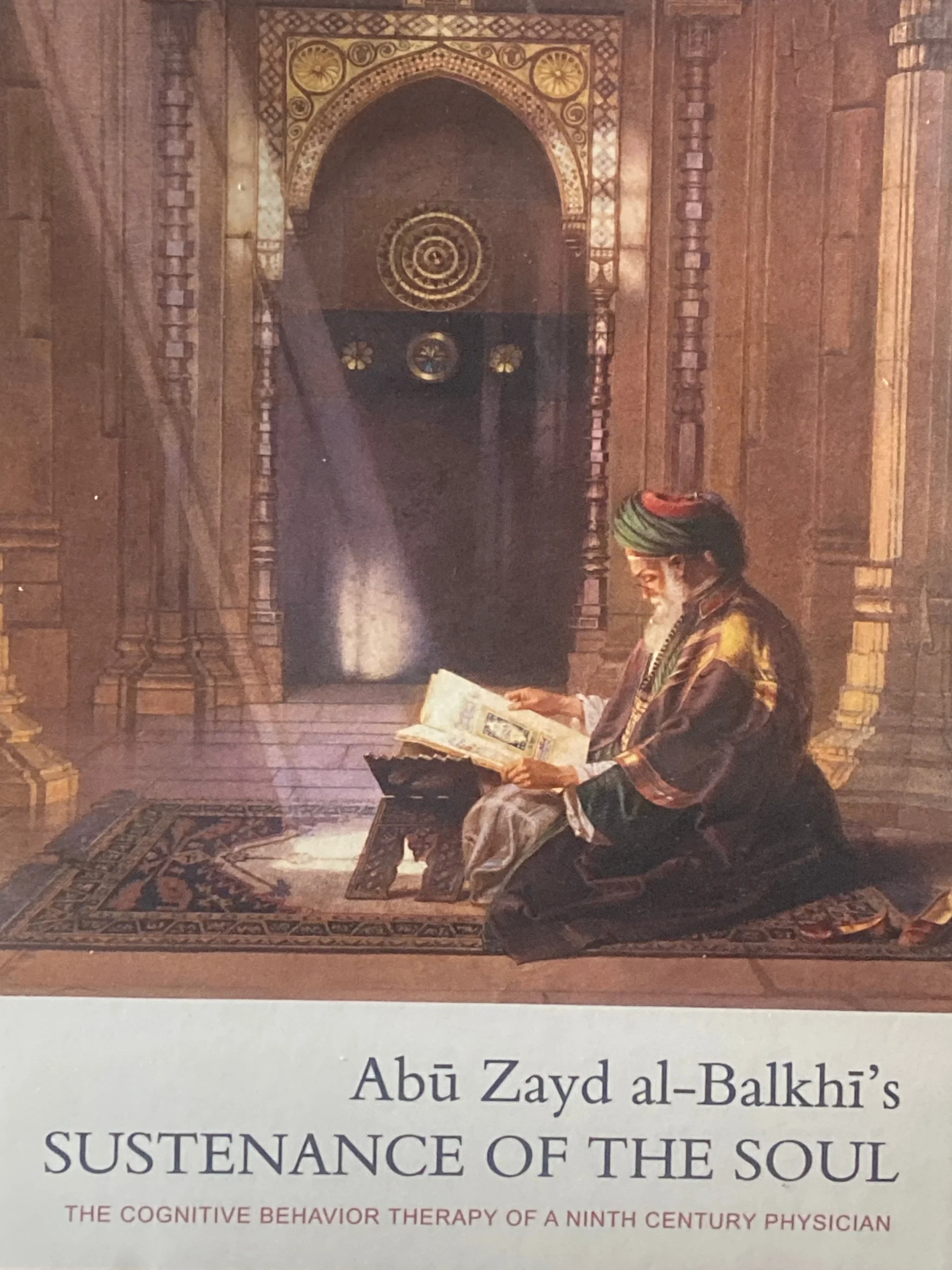
ABU ZAYD AL-BALKHI (c. 900 CE)
Abu Zayd al-Balkhi (850–934 CE) was a pioneering figure in the field of mental health during the Islamic Golden Age, credited with several foundational contributions that predate many aspects of modern psychology and psychotherapy.
Key contributions:
- Systematic Classification of Mental Disorders: Al-Balkhi was the first to differentiate between various types of mental illnesses, clearly distinguishing between neurosis and psychosis and classifying neurotic disorders into four emotional categories: fear and anxiety, anger and aggression, sadness and depression, and obsessions (including early descriptions of OCD).
- Innovations in Psychotherapy: He introduced and practiced methods resembling modern cognitive-behavioral therapy (CBT). Al-Balkhi recognized that irrational beliefs and negative thoughts play a central role in emotional distress, and proposed that individuals could learn to manage their thoughts to achieve better mental health.
- Recognition of Psychosomatic Medicine: He asserted that mental and physical health are deeply interconnected—acknowledging that disturbances of the mind (nafs, or soul) can cause physical illness and vice versa. This early understanding of psychosomatic medicine parallels later Western developments.
- Holistic and Preventive Approach: Al-Balkhi advocated a holistic approach, emphasizing the need for balance between body and soul. He recommended preventive mental health care (such as maintaining healthy thoughts, lifestyle adjustments, and social connections) as well as treatments for when disorders occur.
- Descriptions of Depression and Anxiety: He distinguished different types of depression (endogenous and reactive), anxiety, and phobic states, and proposed both medical and psychological remedies tailored to each type.
- Therapeutic Techniques: His therapeutic recommendations included rational discussion, cognitive restructuring, social support, spiritual guidance, music therapy, exposure to nature, physical exercise, and the concept of “opposites therapy” (reciprocal inhibition), more than a millennium before these became standard in modern therapy.
- Normalization of Mental Illness: Al-Balkhi stressed that mental health problems are as natural as physical ailments, and worked to destigmatize conditions like depression, anxiety, and OCD by treating them as regular diseases rather than as weaknesses of faith or willpower.
- Accessible Writings: His principal work, Masalih al-Abdan wa al-Anfus (“Sustenance of Body and Soul”), was written in accessible language for the lay public and is considered one of the earliest comprehensive works on mental health and psychosomatic medicine.
These contributions make al-Balkhi a central early figure in global mental health, with concepts that anticipated and influenced both Islamic and, centuries later, Western approaches to mental illness and psychotherapy.
.
ABU BAKR AL-RAZI
Abu Bakr al-Razi (Rhazes, 865–925 CE) made foundational contributions to mental health by establishing some of the earliest psychiatric wards, treating mental illness as a medical condition, advancing psychotherapy, and integrating mental and physical health in both theory and clinical practice.
Key contributions:
- Founder of the first psychiatric ward: Al-Razi created the earliest known psychiatric ward in Baghdad, institutionalizing systematic and humane care for the mentally ill at a time when such approaches were unprecedented.
- Classification and clinical descriptions: In major works like Kitab al-Hawi, he classified mental disorders, distinguishing conditions such as melancholia (depression), madness (Gunun), and epilepsy, and clearly differentiating between psychiatric conditions and neurological diseases. He described symptoms, differential diagnoses, and treatments in detail.
- Psychotherapy and doctor-patient relationship: Al-Razi employed methods similar to modern psychotherapy. He recommended empathy, positive physician-patient relationships, and psychological strategies (including cognitive approaches, counseling, and reason-based techniques). He understood that hopeful and supportive remarks from physicians could impact patient outcomes.
- Integration of psychosomatic medicine: He argued that mental disturbances (intrapsychic conflicts) could cause physical disorders, and vice versa, foreshadowing modern psychosomatic medicine.
- Humanistic and ethical approach: Al-Razi advocated for respect, dignity, and individualized care for patients with mental illness, emphasizing that mental health and self-esteem are crucial to overall well-being. He rejected the prevailing view that mental illness resulted from supernatural forces or demonic possession.
- Therapeutic innovation: Al-Razi used a variety of treatments including cognitive methods, reason, music therapy, and staged therapeutic interventions. He believed in treating the “soul” with as much attention as the body and wrote a treatise, Al-Tibb al-Ruhani (“Spiritual Medicine”), focused on psychology and psychotherapy.
- Localization of mental processes: He was among the first to propose that different mental processes reside in specific brain regions, anticipating later neurological concepts.
Al-Razi’s legacy in mental health includes institutional innovations, clinical methodology, and a humane, scientific approach that heavily influenced both Islamic and European medicine.
.
