
Reference: The Book of Scientology
Responsibility
Please see the original section at the link above.
.
Summary
Hubbard says, “The responsibility level of the preclear depends upon his willingness or unwillingness to handle energy.” But responsibility depends on a person’s ability to respond to a situation appropriately, rather than his willingness. If he can’t respond properly then he runs into difficulty.
At the top of the tone scale, a person is able to respond to any situation appropriately. As he descends the tone scale his ability to respond appropriately decreases. He starts to run into more difficulties. At first he blame others for the unhandled situations. Then he starts to accept fault to escape punishment. He may exhibit “glee of insanity” to show how harmless he is. Ultimately, he sinks into apathy.
Hubbard sees insanity as a state of ultimate irresponsibility. According to him, the intention underlying insanity is to escape punishment. He does not see insanity as a state of total overwhelm.
Hubbard defines happiness as “the overcoming of not insurmountable obstacles toward the known goal of havingness.” To Hubbard, one should be intensely driven toward a goal; otherwise, he is running away from responsibility. In his view “slaves are made by giving them freedom from responsibility.”
.
Comments
In Hubbard’s view a person must be intensely self-driven towards his goal to be responsible. He should overcome all obstacles by any means possible. If he encounters opposing goals he should destroy them. Such a person doesn’t much care what happens to others in the process of him achieving his goals. In his view, others are being responsible only when they are supporting his goals.
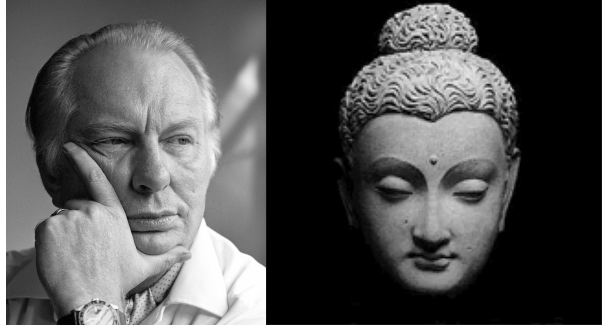
This shows Hubbard’s fixation on self, and his inability to resolve that fixation and the conflicts among goals. He rejects the ultimate goal of oneness (continuity, consistency and harmony) that was supported by Buddha.
.
