Reference: Chapter 3, The Second Noble Truth: The Arising of Dukkha
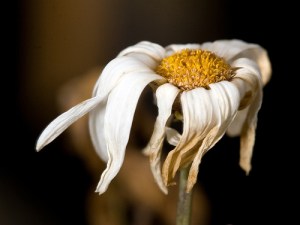
At the core of dukkha is the idea of impermanence. It is the attachment to things that are inherently impermanent, which causes all suffering. When we look at things as they really are we come to realize the impermanent nature of things, and the futility of holding on to them. This awareness helps us replace fear and anxiety with peace and contentment.
Underlying dukkha there is a thirst, which is bound with passionate greed; and which finds fresh delight now here and now there in sense-pleasures and in becoming this or that. But there is no first cause of dukkha. Even the thirst depends on sensation, which, in turn, depends on the contact of internal faculties with the external objects, and so on and so forth on the circle which is known as Conditioned Genesis. However, this ‘thirst’ has at its center the false idea of ‘self’ arising out of ignorance.
This ‘thirst’ is not only for sense-pleasures, wealth and power, but also for idea and ideals, views, opinions, theories, conceptions and beliefs. It is this thirst that keeps the existence there. Here we have the will to live, to re-exist, to continue, to become more and more. Here we have ‘mental volition’ or karma.
It is this striving forward by the way of good and bad actions that creates the root of existence and continuity. This is called karma (volitional action) that hankers after, and brings about that, which tends to be impermanent. Karma is part of the aggregate of mental formations (see The Structure of “I”). Thus, the cause, the germ, of the arising of dukkha (the five aggregates) is within dukkha itself, and not outside; and we must equally well remember that the cause, the germ, of the cessation of dukkha, of the destruction of dukkha, is also within dukkha itself, and not outside. It is karma, no matter how good or bad it is, that produces continuity. None of what continues is permanent.
‘Self’ that continues is also not permanent. It is the false idea that self is permanent, which contributes heavily to karma.

The theory of karma is the theory of cause and effect, of action and reaction; it is a natural law, which has nothing to do with the idea of justice or reward and punishment. Every volitional action produces its effects or results. If a good action produces good effects and a bad action produces bad effects, it is not justice, or reward, or punishment meted out by anybody or any power sitting in judgment on your action, but this is in virtue of its own nature, its own law.
It is important to understand that the effect of a volitional action may continue to manifest itself even in a life after death. As explained in The Structure of “I”, it is a combination of physical and mental forces, or energies, that expresses itself as a being. The being manifests itself through a physical body. What we call death is the total non-functioning of the physical body. The physical and mental forces are still there even after body’s death; they are simply not being manifested. Underlying these forces and energies is this tremendous thirst that wants to continue. This thirst may then manifest itself through another body that is born.
Life is a combination of physical and mental energies, which is constantly changing. This combination does not remain the same for two consecutive moments. Every moment a combination is born, it decays and dies. It continues even after the body is no longer alive. The idea of a permanent, unchanging substance like Self or Soul is not required.
From “What Buddha taught”:
“When this physical body is no more capable of functioning, energies do not die with it, but continue to take some other shape or form, which we call another life. In a child all the physical, mental and intellectual faculties are tender and weak, but they have within them the potentiality of producing a full grown man. Physical and mental energies which constitute the so-called being have within themselves the power to take a new form, and grow gradually and gather force to the full.
“As there is no permanent, unchanging substance, nothing passes from one moment to the next. So quite obviously, nothing permanent or unchanging can pass or transmigrate from one life to the next. It is a series that continues unbroken, but changes every moment. The series is, really speaking, nothing but movement. It is like a flame that burns through the night: it is not the same flame nor it is another. A child grows up to be a man of sixty. Certainly the man of sixty is not the same as the child of sixty years ago, nor is he another person. Similarly, a person who dies here and is reborn elsewhere is neither the same person, nor another (na ca so na ca aňňo). It is the continuity of the same series. The difference between death and birth is only a thought-moment: the last thought-moment in this life conditions the first thought-moment in the so-called next life, which, in fact, is the continuity of the same series. During this life itself, too, one thought-moment conditions the next thought-moment. So from the Buddhist point of view, the question of life after death is not a great mystery, and a Buddhist is never worried about this problem.
“As long as there is this ‘thirst’ to be and to become, the cycle of continuity (samsāra) goes on. It can stop only when its driving force, this ‘thirst’, is cut off through wisdom which sees Reality, Truth, Nirvāna.”
Thus, a fundamental inconsistency occurs when one considers oneself to be, ultimately, permanent and unchanging. It takes some understanding before one can come to terms with this inconsistency.
.