
A sunrise viewed from my backyard
.
 Vinaire's Blog
A sunrise viewed from my backyard
.

KHTK AXIOM FOUR: EXISTENCE IS WHAT IS WITHOUT ANY FURTHER QUALIFICATION.
The proper way to understand existence would then be to stop speculating about it because speculations create filters that qualify existence.
We should start recognizing and eliminating the filters created by speculations, assumptions and justifications that have already been injected. The understanding of existence would increase as filters are reduced.
Thus, we have the formula recommended by Buddha:
Observe things as they are, not as they seem to be.
You don’t know what is actually there as long as there are inconsistencies present.
Reference: Inconsistency & Looking
.
Complete Reference: KHTK Axioms: A Work in Progress
.
KHTK AXIOM THREE: ANYTHING THAT CAN BE PERCEIVED IS MANIFESTED.
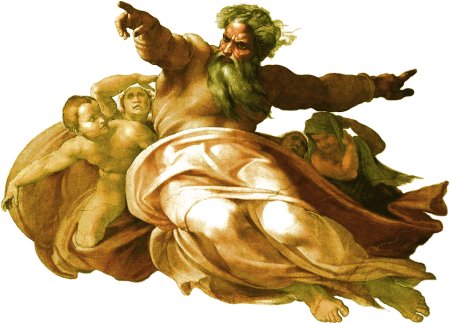
There is no clear consensus on the nature of God.
Judaism, Christianity and Islam see God as a being who created the world and who rules over the universe. God is usually held to have the properties of holiness, justice, sovereignty, omnipotence, omniscience, benevolence, omnipresence, and immortality.
God is also believed to be transcendent, meaning that God is outside space and time.
As long as God is perceived to be a being with certain properties, then God is also part of existence. God that is “unknowable” may not be part of existence.
Complete Reference: KHTK AXIOMS: A Work in Progress
.

KHTK AXIOM TWO: CONJECTURES ABOUT EXISTENCE ARE MANIFESTED AS CONJECTURES.
Corollary: Anything, whether physical or not, when manifested exists.
.
Thomas Aquinas (c. 1225–1274), a theologian in Medieval Europe, conceived the idea that the Universe must have been caused by something that was itself uncaused, which he asserted was God. This became one of the most influential versions of the cosmological argument. This justified God to be the source of all existence.
Few centuries earlier, the Islamic philosopher Avicenna (c. 980–1037) had inquired into the question of being, and had reasoned that existence must be due to an agent cause that necessitates, imparts, gives, or adds existence to an essence. To do so, the cause must coexist with its effect and be an existing thing. This argument makes both cause and effect to be part of existence.
The First Cause arguments have been posited in Greek philosophy by Plato (c. 427–347 BC) and Aristotle (c. 384–322 BC). Plato posited a basic argument in The Laws (Book X), in which he argued that motion in the world and the Cosmos was “imparted motion” that required some kind of “self-originated motion” to set it in motion and to maintain that motion. In Book 12 of his Metaphysics, Aristotle describes the unmoved mover as being perfectly beautiful, indivisible, and contemplating only the perfect contemplation: itself contemplating. He equates this concept also with the Active Intellect. This Aristotelian concept had its roots in cosmological speculations of the earliest Greek “Pre-Socratic” philosophers. This argument makes existence to be cause of itself.
Ideas, such as, “Uncaused cause,” “Unmoved mover,” “God,” “Supreme or Unconditioned Being,” etc., which are proposed as source of existence, exist as ideas, and, therefore, they are also part of existence.
.
Complete Reference: KHTK AXIOMS: A Work in Progress
.
KHTK AXIOM ONE: EXISTENCE IS EVERYTHING THAT IS MANIFESTED.
Corollary: There is no existence that is not manifested.
Corollary: Anything that is manifested is capable of being perceived.
.
I am using the dictionary definitions as follows:
EXIST: to have being; be.
MANIFEST: perceived by the eye or understanding; evident; obvious; apparent; plain.
Any conjecture about how existence comes about, is a thought. Any conjecture about existence that is not manifested, is also a thought. All such thoughts may be perceived as manifestation of conjectures. They are, therefore, existing. All conjectures about existence are, therefore, a part of existence.
Reference: The Creation Hymn of Rig Veda
The Vedic Process of “Neti neti” supposedly leads one toward the realization of the ultimate knowledge that supports existence. This process helps break the habit and/or constraints of thinking.
The ultimate knowledge seems to be that existence is what is. There is no separate cause.
.
Complete Reference: KHTK AXIOMS: A Work in Progress
.

