.
2014
.
2005
.
 Vinaire's Blog
.
2014
.
2005
.

My introduction to Epistemology has been through the Wikipedia article on William James (see above). Below are excerpts in italics from the section Epistemology from William James’ article followed by my comments…
… in bold color:
(1) “James defined true beliefs as those that prove useful to the believer.”
I think so too. A person will keep a belief because it is restraining some confusion. It helps him to think.
(2) “Truth is verifiable to the extent that thoughts and statements correspond with actual things, as well as the extent to which they “hang together,” or cohere, as pieces of a puzzle might fit together; these are in turn verified by the observed results of the application of an idea to actual practice.”
Exactly so. Reality is what it is. Truth is the consistency among what is. This consistency exists between the thoughts and actual things. This consistency also exists among the thoughts themselves. An inconsistency indicates the presence of arbitrary assumptions.
(3) “The most ancient parts of truth . . . also once were plastic. They also were called true for human reasons. They also mediated between still earlier truths and what in those days were novel observations.”
All truths are relative to each other. They are also consistent with each other. This is the case no matter how far back one goes. There is no absolute truth.
(4) “… the value of any truth was utterly dependent upon its use to the person who held it.”
Yes, that would be personal truth. There is also broader truth that is based on reality regardless of personal viewpoint. The broader truth may be different from personal truth.
(5) “… the world is a mosaic of diverse experiences that can only be properly interpreted and understood through an application of “radical empiricism.” [… the mind and its experiences, and nature are inseparable.]”
It is true that actual things and how they are perceived cannot be separated. No observation is truly objective. However, as we remove inconsistencies one by one, any observation can be brought closer to being objective.
(6) “James’s emphasis on diversity as the default human condition—over and against duality, especially Hegelian dialectical duality—has maintained a strong influence in American culture…”
That is correct. Awareness of ‘inconsistency’ is not necessarily a conflict between two opposites. It could be a more involved interaction. The inconsistency may not be resolved by a two- or multiple-valued logic. It may need to be approached with the infinite-valued logic of scales.
(7) “The ‘facts’ themselves meanwhile are not true. They simply are. Truth is the function of the beliefs that start and terminate among them.”
Yes, the facts simply ARE. The truth lies in the interpretation that demonstrates consistency among them. Any inconsistency shall reveal arbitrary assumptions.
(8) “James seems to speak of truth in relativistic terms… he supported an epistemological realism position.” [Epistemological realism holds that what you know about an object exists independently of your mind.]
When facts are simply taken for what they are, and the truth is measured in terms of consistency, or coherency, then it doesn’t matter whether an object exists independently of the mind or not.
.
From Wikipedia:
Epistemology (… from Greek ἐπιστήμη, epistēmē, meaning “knowledge, understanding”, and λόγος, logos, meaning “study of”) is the branch of philosophy concerned with the nature and scope of knowledge and is also referred to as “theory of knowledge”. It questions what knowledge is and how it can be acquired, and the extent to which knowledge pertinent to any given subject or entity can be acquired. Much of the debate in this field has focused on the philosophical analysis of the nature of knowledge and how it relates to connected notions such as truth, belief, and justification. The term “epistemology” was introduced by the Scottish philosopher James Frederick Ferrier (1808–1864).
.
I shall now like to explore the subject of Epistemology through the Wikipedia article. Please see the comments below, which will be made over time.
.
.
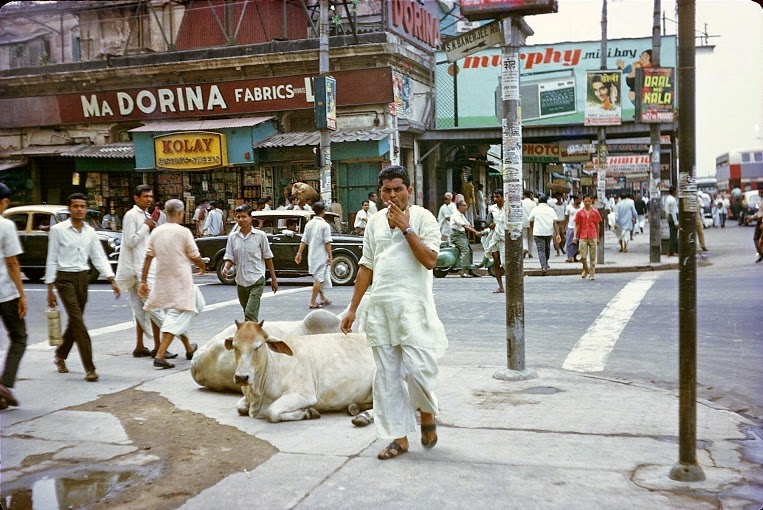
 Madhubala (Marilyn Monroe of the East) in MAHAL
I was 3 years old when this movie was released in 1949. I remember my parents taking me with other siblings to the movie theatre. The only scene that stuck to my mind from this movie was a clock tower in the night from which a huge bat was flying away. The part I got right was the sense that this movie was spooky. But when I watched this movie recently after all these years I discovered that the scene, which was stuck in my mind, was a juxtaposition of two different scenes. Well, I am glad I cleared that up.
.
One of the old Hindi songs that I have always enjoyed is from this movie. Here it is,
.
The lyrics of this song are as follows. They express a beautiful longing.
.
Khaamosh hai zamaanaa, chup chaap hain sitaare
Aaraam se hai duniyaa, bekal hain dil ke maare
Aise mein koyi aahat, is tarah aa rahi hai
Jaise ki chal rahaa ho, man mein koyi hamaare
Yaa dil dhadak rahaa hai, ik aas ke sahaare
Aayegaa, aayegaa, aayegaa, aayegaa aayegaa aanewaalaa
Aayegaa, aayegaa, aanewaalaa,
Aayegaa, aayegaa, aayegaa, aayegaa aanewaalaa
Aayegaa, aayegaa, aayegaa
Deepak bagair kaise, parwaane jal rahe hain
Deepak bagair kaise, parwaane jal rahe hain
Koyi nahin chalaataa, aur teer chal rahe hain
Koyi nahin chalaataa, aur teer chal rahe hain
Tadpegaa koyi kab tak, be aas be sahaare
Tadpegaa koyi kab tak, be aas be sahaare
Lekin ye kah rahe hain, dil ke mere ishaare
Aayegaa, aayegaa, aayegaa, aayegaa aanewaalaa,
Aayegaa aayegaa, aayegaa
Bhatki huyi jawaani, manzil ko dhoondhti hai
Bhatki huyi jawaani, manzil ko dhoondhti hai
Maajhi bagair naiyaa, saahil ko dhoondhti hai
Maajhi bagair naiyaa, saahil ko dhoondhti hai
Kyaa jaane dil ki kashti, kab tak lage kinaare
Kyaa jaane dil ki kashti, kab tak lage kinaare
Lekin ye kah rahe hain, dil ke mere ishaare
Aayegaa, aayegaa, aayegaa, aayegaa aanewaalaa,
Aayegaa aayegaa, aayegaa, aayegaa.
.
Finally here is the whole movie.
.
