Observe beyond Name and Form

Isaac's Apple

Reference: The 12 Aspects of Mindfulness

Mindfulness provides the discipline for looking and contemplation.

You may do this exercise while sipping coffee in a café, or strolling along a river. You may even find a place where you can sit comfortably for a while without being disturbed. Then patiently observe the world go by.

Mindfulness is to observe something for what it is. Name acts as a broad reference point to that thing. Form is one of the many ways that thing may be represented. The perception of that thing goes beyond its name and form. One must get acquainted with its basic purpose and use, as well as its history. Fixation on name and form may act as built-in judgment of what is there. To know something, one must go beyond name and form and look at it more closely including all its associations.

.

MINDFULNESS 10: Do not get hung up on name and form.

  1. Observe as usual. Notice the environment and other people.

  2. Apply the aspects of mindfulness that you have practiced so far.

  3. Notice the names that are being used for the things in your environment.

  4. Notice a name and then observe more closely the thing represented by it.

  5. Repeat step 4 as often as necessary.

  6. Notice the forms of the things in your environment.

  7. Notice a form and then observe more closely the thing represented by it.

  8. Repeat step 7 as often as necessary.

  9. Contemplate over the basic purpose and use of things as attention moves to them.

  10. Contemplate over their visible history and other associations.

  11. Observe something closely then contemplate on the name and form associated with it.

  12. Notice any judgments that are fixed with those names and forms.

  13. Observe the things that are there objectively as closely as you can.

  14. Expand your span of attention and let the perceptions pour in.

  15. Let the realizations present themselves to you without you making any effort.

  16. Use your own judgment as to when to end a session.

.

Develop this exercise to a point where you may execute it even while interacting socially with others. Keep observing patiently without getting hung up on name and form. Many things may come up naturally to be scrutinized. Simply observe them and become aware of them without effort.

.

Associate Data freely

Associate8
Reference: The 12 Aspects of Mindfulness

Mindfulness provides the discipline for looking and contemplation.

You may do this exercise while sipping coffee in a café, or strolling along a river. You may even find a place where you can sit comfortably for a while without being disturbed. Then patiently observe the world go by.

In order to practice the earlier steps of mindfulness you will have to let your mind associate data freely. This exercise simply emphasizes this point. Mindfulness is observing the very activity of thinking itself. So observe the mind associating data freely on its own.

.

MINDFULNESS 9: Associate data freely.

  1. Observe as usual. Notice the environment and other people.

  2. Let the mind associate that data freely on its own.

  3. Let the mind present data. Do not interfere with the mind.

  4. Observe how the mind is doing all this thinking.

  5. Practice each aspect of mindfulness that you have learned so far while associating data freely.

  6. Expand your span of attention and let the perceptions pour in.

  7. Let the realizations present themselves to you without you making any effort.

  8. Use your own judgment as to when to end a session.

.

Develop this exercise to a point where you may execute it even while interacting socially with others. Keep observing patiently while letting the mind associate data freely. Many things may come up naturally to be scrutinized. Simply observe them and become aware of them without effort.

.

Do not suppress

Lion
Reference: The 12 Aspects of Mindfulness

Mindfulness provides the discipline for looking and contemplation.

You may do this exercise while sipping coffee in a café, or strolling along a river. You may even find a place where you can sit comfortably for a while without being disturbed. Then patiently observe the world go by.

Observe without suppressing anything from yourself. Be totally honest with yourself. Follow your attention where it goes naturally. Do not attempt to control or direct it. If something shameful appears then observe and experience the shame. If something threatening appears then observe and experience the threat. Do not pre-judge and avoid something just because it seems to be painful. Simply experience it without interfering with the mind.

It is the suppression of perceptions, memories, knowledge, visualizations, thinking, etc., that causes all difficulties in life. By not suppressing you establish complete integrity of your perception.

.

MINDFULNESS 8: Do not suppress anything from yourself.

  1. Address any medical condition appropriately before starting this exercise.

  2. Make sure that the environment is safe and free of disturbance.

  3. Observe as usual. Notice the environment and other people.

  4. Start applying the aspects of mindfulness that you have learned so far.

  5. Observe without suppressing anything. Be totally candid with yourself.

  6. Follow your attention where it goes naturally. Do not attempt to control or direct it.

  7. If there is any dopiness or unconsciousness then do not suppress it. Simply go through it.

  8. If something shameful appears then observe and experience the shame.

  9. If something threatening appears then observe and experience the threat.

  10. Do not pre-judge and avoid something just because it seems painful.

  11. Allow all thoughts, memories, visualizations, etc., to come up regardless of their nature.

  12. Simply experience whatever arises without interfering with the mind.

  13. Expand your span of attention and let the perceptions pour in.

  14. Let the realizations present themselves to you without you making any effort.

  15. Use your own judgment as to when to end a session.

.

Develop this exercise to a point where you may execute it even while interacting socially with others. Keep observing patiently while suppressing nothing from yourself. Many things may come up naturally to be scrutinized. Simply observe them and become aware of them without effort.

.

Experience Fully

Experience
Reference: The 12 Aspects of Mindfulness

Mindfulness provides the discipline for looking and contemplation.

You may do this exercise while sipping coffee in a café, or strolling along a river. You may even find a place where you can sit comfortably for a while without being disturbed. Then patiently observe the world go by.

Experiencing is deepest form of looking. A person is deeply looking at his feelings, emotions and impulses when he is experiencing them fully. Suppose a dog is running toward you and you feel afraid. If you simply experience that fear without avoiding, resisting or suppressing it, you may find that you are able to handle the situation much better even as it develops.  So, dive into the very heart of whatever arises in the mind without resisting. If the mind is racing, then experience it racing without contributing to it.

.

MINDFULNESS 7: Experience fully what is there.

  1. Make sure the body is well-rested, well-fed and free of stimulants.

  2. Make sure the environment is safe and free of disturbance.

  3. Observe as usual. Notice the environment and other people.

  4. Start applying the aspects of mindfulness that you have learned so far.

  5. Whatever emotions are arising in your mind experience them fully.

  6. Look at your old family album or old pictures, or visit some old locations.

  7. Experience any nostalgia, as long as it lingers. Continue to observe.

  8. Dive into the very heart of the feelings without resisting them.

  9. If you are afraid then experience the fear fully without speculating on it.

  10. If the mind is racing, then experience it racing.

  11. Become fully aware of thoughts without contributing to them.

  12. Expand your span of attention and fully experience whatever perceptions pour in.

  13. Let the realizations present themselves to you without you making any effort.

  14. Use your own judgment as to when to end a session.

.

Develop this exercise to a point where you may execute it even while interacting socially with others. Keep observing patiently experiencing each moment fully. Many things may come up naturally to be scrutinized. Simply observe them and become aware of them without effort.

.
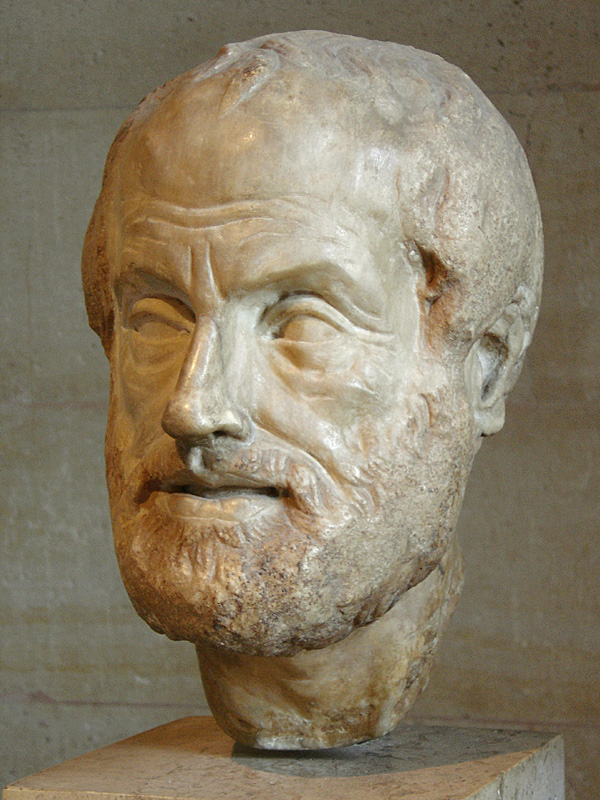
Aristotle and the Ground State

Aristoteles_Louvre
Reference: Unmoved mover

The unmoved mover is a philosophical concept described by Aristotle as a primary cause or “mover” of all the motion in the universe. As is implicit in the name, the “unmoved mover” moves other things, but is not itself moved by any prior action.

Scientifically, the unmoved mover is equivalent to an absolute static. However, an absolute static is not possible in this universe because static-dynamic exists only in pair. This pair may be represented by a scale of infinite gradients where one end approaches increasing static value and the other end approaches increasing dynamic value in an asymptotic manner.

Thus, static and dynamic do not exist independent of each other. There is no static that exists in isolation. There is no “unmoved mover.” Static is always relative to dynamic. There is always relative motion.

One may presume no relative motion, but that would also mean no awareness because awareness arises only with relative motion. This would be the Ground State of “absence of awareness.”

Aristotle argues that “there must be an immortal, unchanging being, ultimately responsible for all wholeness and orderliness in the sensible world”; and to prove this he invents an impressive array of new concepts that includes  potentiality and actuality, the four causes, hylomorphism, the theory of categories, and, of course, the “first cause” or unmoved mover.

But one may ask, “How does that immortal, unchanging being of Aristotle come about?” Or, “How does such an argument come about?” Or, “How does anything come about?”

The Ground State of “absence of awareness” provides a basis from which it becomes possible to start answering such questions. We don’t really need Aristotle’s complex explanations that use a wide variety of new concepts. All this complexity only seems to generate more mystery and confusion.

The concept of Static in Scientology is simply the concept of Aristotle’s “Unmoved mover” wrapped up in a new garb. Since the Scientology static has the ability to postulate and to perceive, there is awareness associated with this Static. Thus, such a Static is not something inherently permanent; and, like Aristotle’s unchanging being, it also arises somehow.

All we are asking is, “How does anything come about?” This boils down to the question, “How does awareness come about?”

So the basic question that needs to be answered is, “What is awareness? How does it arise?”

Whatever is beyond awareness is unknowable. The idea of primary cause may simply be dropped. It is not required.

.