Eddington 1927: Non-Euclidean Geometry

non-Euclid

Reference: The Nature of the Physical World

This paper presents Chapter VII (section 5) from the book THE NATURE OF THE PHYSICAL WORLD by A. S. EDDINGTON. The contents of this book are based on the lectures that Eddington delivered at the University of Edinburgh in January to March 1927.

The paragraphs of original material are accompanied by brief comments in color, based on the present understanding.  Feedback on these comments is appreciated.

The heading below links to the original materials.

.

Non-Euclidean Geometry

I have been encouraging you to think of space-time as curved; but I have been careful to speak of this as a picture, not as a hypothesis. It is a graphical representation of the things we are talking about which supplies us with insight and guidance. What we glean from the picture can be expressed in a more non-committal way by saying that space-time has non-Euclidean geometry. The terms “curved space” and “non-Euclidean space” are used practically synonymously; but they suggest rather different points of view. When we were trying to conceive finite and unbounded space (p. 81) the difficult step was the getting rid of the inside and the outside of the hypersphere. There is a similar step in the transition from curved space to non-Euclidean space—the dropping of all relations to an external (and imaginary) scaffolding and the holding on to those relations which exist within the space itself.

If you ask what is the distance from Glasgow to New York there are two possible replies. One man will tell you the distance measured over the surface of the ocean; another will recollect that there is a still shorter distance by tunnel through the earth. The second man makes use of a dimension which the first had put out of mind. But if two men do not agree as to distances, they will not agree as to geometry; for geometry treats of the laws of distances. To forget or to be ignorant of a dimension lands us into a different geometry. Distances for the second man obey a Euclidean geometry of three dimensions; distances for the first man obey a non-Euclidean geometry of two dimensions. And so if you concentrate your attention on the earth’s surface so hard that you forget that there is an inside or an outside to it, you will say that it is a two-dimensional manifold with non-Euclidean geometry; but if you recollect that there is three-dimensional space all round which affords shorter ways of getting from point to point, you can fly back to Euclid after all. You will then “explain away” the non-Euclidean geometry by saying that what you at first took for distances were not the proper distances. This seems to be the easiest way of seeing how a non-Euclidean geometry can arise— through mislaying a dimension—but we must not infer that non-Euclidean geometry is impossible unless it arises from this cause.

Euclidean space is material-space; Euclidean geometry applies to material-substance. We would think of non-Euclidean space as the field-space; non-Euclidean geometry then applies to field-substance. The additional “dimension” that comes into play here is the dimension of quantization, which is “consistency” of energy as a substance, and not as a frequency of disturbance in some imaginary substance called aether.

NOTE: Consistency is a degree of density, firmness, viscosity, etc.

In our four-dimensional world pervaded by gravitation the distances obey a non-Euclidean geometry. Is this because we are concentrating attention wholly on its four dimensions and have missed the short cuts through regions beyond? By the aid of six extra dimensions we can return to Euclidean geometry; in that case our usual distances from point to point in the world are not the “true” distances, the latter taking shorter routes through an eighth or ninth dimension. To bend the world in a super-world of ten dimensions so as to provide these short cuts does, I think, help us to form an idea of the properties of its non-Euclidean geometry; at any rate the picture suggests a useful vocabulary for describing those properties. But we are not likely to accept these extra dimensions as a literal fact unless we regard non-Euclidean geometry as a thing which at all costs must be explained away.

Of the two alternatives—a curved manifold in a Euclidean space of ten dimensions or a manifold with non-Euclidean geometry and no extra dimensions— which is right? I would rather not attempt a direct answer, because I fear I should get lost in a fog of metaphysics. But I may say at once that I do not take the ten dimensions seriously; whereas I take the non- Euclidean geometry of the world very seriously, and I do not regard it as a thing which needs explaining away. The view, which some of us were taught at school, that the truth of Euclid’s axioms can be seen intuitively, is universally rejected nowadays. We can no more settle the laws of space by intuition than we can settle the laws of heredity. If intuition is ruled out, the appeal must be to experiment—genuine open-minded experiment unfettered by any preconception as to what the verdict ought to be. We must not afterwards go back on the experiments because they make out space to be very slightly non-Euclidean. It is quite true that a way out could be found. By inventing extra dimensions we can make the non-Euclidean geometry of the world depend on a Euclidean geometry of ten dimensions; had the world proved to be Euclidean we could, I believe, have made its geometry depend on a non-Euclidean geometry of ten dimensions. No one would treat the latter suggestion seriously, and no reason can be given for treating the former more seriously.

Energy is “field-substance” that is much less substantial than the material-substance.  The quantization levels are very distinct for field-substance. The ten coefficients of the general theory of relativity describe the twisting of the field-substance as it “moves” in the dimension of quantization.

I do not think that the six extra dimensions have any stalwart defenders; but we often meet with attempts to reimpose Euclidean geometry on the world in another way. The proposal, which is made quite unblushingly, is that since our measured lengths do not obey Euclidean geometry we must apply corrections to them—cook them —till they do. A closely related view often advocated is that space is neither Euclidean nor non-Euclidean; it is all a matter of convention and we are free to adopt any geometry we choose.*

* As a recent illustration of this attitude I may refer to Bertrand Russell’s Analysis of Matter, p. 78—a book with which I do not often seriously disagree. “Whereas Eddington seems to regard it as necessary to adopt Einstein’s variable space, Whitehead regards it as necessary to reject it. For my part, I do not see why we should agree with either view; the matter seems to be one of convenience in the interpretation of formulae.” Russell’s view is commended in a review by C. D. Broad. See also footnote, p. 142.

Naturally if we hold ourselves free to apply any correction we like to our experimental measures we can make them obey any law; but was it worth while saying this? The assertion that any kind of geometry is permissible could only be made on the assumption that lengths have no fixed value—that the physicist does not (or ought not to) mean anything in particular when he talks of length. I am afraid I shall have a difficulty in making my meaning clear to those who start from the assumption that my words mean nothing in particular; but for those who will accord them some meaning I will try to remove any possible doubt. The physicist is accustomed to state lengths to a great number of significant figures; to ascertain the significance of these lengths we must notice how they are derived; and we find that they are derived from a comparison with the extension of a standard of specified material constitution. (We may pause to notice that the extension of a standard material configuration may rightly be regarded as one of the earliest subjects of inquiry in a physical survey of our environment.) These lengths are a gateway through which knowledge of the world around us is sought. Whether or not they will remain prominent in the final picture of world-structure will transpire as the research proceeds; we do not prejudge that. Actually we soon find that space-lengths or time-lengths taken singly are relative, and only a combination of them could be expected to appear even in the humblest capacity in the ultimate world-structure. Meanwhile the first step through the gateway takes us to the geometry obeyed by these lengths—very nearly Euclidean, but actually non-Euclidean and, as we have seen, a distinctive type of non-Euclidean geometry in which the ten principal coefficients of curvature vanish. We have shown in this chapter that the limitation is not arbitrary; it is a necessary property of lengths expressed in terms of the extension of a material standard, though it might have been surprising if it had occurred in lengths defined otherwise. Must we stop to notice the interjection that if we had meant something different by length we should have found a different geometry? Certainly we should; and if we had meant something different by electric force we should have found equations different from Maxwell’s equations. Not only empirically but also by theoretical reasoning, we reach the geometry which we do because our lengths mean what they do.

The INERTIA is a measure of how substantial the material-substance is. As electromagnetic radiation has come to be recognized as field-substance, we use the term CONSISTENCY (quantization), to describe substantialness of field-substance. In this discussion, we shall use inertia to refer to the substantialness of substance in general.

The substance has natural motion which is balanced by its inertia. The object, thus balanced within itself, has a natural velocity. This velocity increases as the inertia decreases. Because inertia is absolute, so is this natural velocity. It then ascertains a certain combination of space and time for the object. We are not free to make our experimental measures obey any law.

Material-space has definite lengths that may be considered absolute. Any variation of length from one material to the next shall depend on the variation of inertia. However this variation happens to be insignificant in the material domain.

The variation becomes significant only in the field domain. But that is accounted for by consistency (quantization, substantialness). The ten principal coefficients of curvature vanish as the consistency approaches zero.

I have too long delayed dealing with the criticism of the pure mathematician who is under the impression that geometry is a subject that belongs entirely to him. Each branch of experimental knowledge tends to have associated with it a specialised body of mathematical investigations. The pure mathematician, at first called in as servant, presently likes to assert himself as master; the connexus of mathematical propositions becomes for him the main subject, and he does not ask permission from Nature when he wishes to vary or generalise the original premises. Thus he can arrive at a geometry unhampered by any restriction from actual space measures; a potential theory unhampered by any question as to how gravitational and electrical potentials really behave; a hydrodynamics of perfect fluids doing things which it would be contrary to the nature of any material fluid to do. But it seems to be only in geometry that he has forgotten that there ever was a physical subject of the same name, and even resents the application of the name to anything but his network of abstract mathematics. I do not think it can be disputed that, both etymologically and traditionally, geometry is the science of measurement of the space around us; and however much the mathematical superstructure may now overweigh the observational basis, it is properly speaking an experimental science. This is fully recognised in the “reformed” teaching of geometry in schools; boys are taught to verify by measurement that certain of the geometrical propositions are true or nearly true. No one questions the advantage of an unfettered development of geometry as a pure mathematical subject; but only in so far as this subject is linked to the quantities arising out of observation and measurement, will it find mention in a discussion of the Nature of the Physical World.

Any geometry is constrained by the consistency of substance it is representing. Geometry cannot be specified arbitrarily independent of substance. Geometry does not exist in the absence of substance.

.
Final Comments

Euclidean space is material-space; Euclidean geometry applies to material-substance. We would think of non-Euclidean space as the field-space; non-Euclidean geometry then applies to field-substance or energy. The additional “dimension” that comes into play here is the dimension of quantization, or “consistency” of energy. We move away from the idea of energy being a disturbance in aether.

Energy is a substance that is much less substantial than the material substance. The consistency of energy increases as one moves up the energy spectrum. Matter appears at the upper end of this spectrum, while space appears at the lower end.

The INERTIA is a measure of how substantial the material-substance is. It becomes CONSISTENCY (quantization) at the level of energy. In this discussion, we shall use inertia to refer to the substantialness of substance in general.

The inertia expresses itself as resistance to motion and therefore, it marks the duration of the substance at a location. Thus relative inertia, in a sense, affects relative motion. The higher the inertia or consistency, the lesser would the substance appear to move by itself.

The object is thus balanced within itself, and therefore, seems ti possess a natural velocity. This velocity increases as the inertia decreases. Since the value of inertia for a substance may be determines absolute, so can be its natural velocity just like the velocity of light. It then ascertains that a certain combination of space and time goes along with the inertia or consistency of substance. We are not free to regulate the velocity of substance without also regulating its inertia.

Material-space has definite lengths whole units may be considered absolute. Any variation of the unit of length from one material to the next is likely to depend on the variation of its inertia. However this variation is insignificant in the material domain. It becomes significant only in the energy domain.

The ten coefficients of the general theory of relativity seems to describe the curvatures of energy in the dimension of inertia (consistency). These coefficients vanish as the inertia approaches zero.

Any geometry is constrained by the consistency of substance it is representing. Geometry cannot be specified arbitrarily independent of substance. Geometry does not exist in the absence of substance.

.
Eddington 1927: Non-Empty Space

Space

Reference: The Nature of the Physical World

This paper presents Chapter VII (section 4) from the book THE NATURE OF THE PHYSICAL WORLD by A. S. EDDINGTON. The contents of this book are based on the lectures that Eddington delivered at the University of Edinburgh in January to March 1927.

The paragraphs of original material are accompanied by brief comments in color, based on the present understanding.  Feedback on these comments is appreciated.

The heading below links to the original materials.

.

Non-Empty Space

The law that the directed radius is constant does not apply to space which is not completely empty. There is no longer any reason to expect it to hold. The statement that the region is not empty means that it has other characteristics besides metric, and the metre rod can then find other lengths besides curvatures to measure itself against. Referring to the earlier (sufficiently approximate) expression of the law, the ten principal coefficients of curvature are zero in empty space but have non-zero values in non-empty space. It is therefore natural to use these coefficients as a measure of the fullness of space.

There is material-space that characterizes the extent of material-substance. Then there is field-space that characterizes the extent of field-substance. There is no space without substance. Hence there is no such thing as empty space.

The measure of fullness of “field-space” comes from quantization of the field-substance. The vanishing ten principal coefficients of the general theory of relativity may then be applied to the field-substance because of the great variations in quantization that goes to zero. The inertia of material-substance remains pretty much finite and constant.

One of the coefficients corresponds to mass (or energy) and in most practical cases it outweighs the others in importance. The old definition of mass as “quantity of matter” associates it with a fullness of space. Three other coefficients make up the momentum—a directed quantity with three independent components. The remaining six coefficients of principal curvature make up the stress or pressure-system. Mass, momentum and stress accordingly represent the non-emptiness of a region in so far as it is able to disturb the usual surveying apparatus with which we explore space—clocks, scales, light-rays, etc. It should be added, however, that this is a summary description and not a full account of the non-emptiness, because we have other exploring apparatus—magnets, electroscopes, etc.—which provide further details. It is usually considered that when we use these we are exploring not space, but a field in space. The distinction thus created is a rather artificial one which is unlikely to be accepted permanently. It would seem that the results of exploring the world with a measuring scale and a magnetic compass respectively ought to be welded together into a unified description, just as we have welded together results of exploration with a scale and a clock. Some progress has been made towards this unification. There is, however, a real reason for admitting a partially separate treatment; the one mode of exploration determines the symmetrical properties and the other the antisymmetrical properties of the underlying world-structure (see p. 236).

There is material-space and field-space, but no “material in space” or “field in space”. That is where the “particles in void” perspective goes wrong. That perspective generates error with unnecessary concepts, such as, aether. Space is a general term for field-substance. We need to develop appropriate surveying apparatus to measure the quantization characteristic of space.

The curvature of the general theory of relativity represents the twisting of space. The ten coefficients, which describe this twisting of space are: mass (1 coefficient), momentum (3 coefficients) and stress (6 coefficients). We need to figure out how these coefficients may help us determine quantization.

Objection has often been taken, especially by philosophical writers, to the crudeness of Einstein’s initial requisitions, viz. a clock and a measuring scale. But the body of experimental knowledge of the world which Einstein’s theory seeks to set in order has not come into our minds as a heaven-sent inspiration; it is the result of a survey in which the clock and the scale have actually played the leading part. They may seem very gross instruments to those accustomed to the conceptions of atoms and electrons, but it is correspondingly gross knowledge that we have been discussing in the chapters concerned with Einstein’s theory. As the relativity theory develops, it is generally found desirable to replace the clock and scale by the moving particle and light-ray as the primary surveying appliances; these are test bodies of simpler structure. But they are still gross compared with atomic phenomena. The light-ray, for instance, is not applicable to measurements so refined that the diffraction of light must be taken into account. Our knowledge of the external world cannot be divorced from the nature of the appliances with which we have obtained the knowledge. The truth of the law of gravitation cannot be regarded as subsisting apart from the experimental procedure by which we have ascertained its truth.

Clock and scale as surveying apparatus apply to the measurement of material-time and material-space respectively. Using these, the theory of relativity discovered anomaly when light, which represents field-substance, was compared to material-substance. Einstein’s general theory of relativity, thus, sets the stage up for more refined explanations.

The conception of frames of space and time, and of the non-emptiness of the world described as energy, momentum, etc., is bound up with the survey by gross appliances. When they can no longer be supported by such a survey, the conceptions melt away into meaninglessness. In particular the interior of the atom could not conceivably be explored by a gross survey. We cannot put a clock or a scale into the interior of an atom. It cannot be too strongly insisted that the terms distance, period of time, mass, energy, momentum, etc., cannot be used in a description of an atom with the same meanings that they have in our gross experience. The atomic physicist who uses these terms must find his own meanings for them—must state the appliances which he requisitions when he imagines them to be measured. It is sometimes supposed that (in addition to electrical forces) there is a minute gravitational attraction between an atomic nucleus and the satellite electrons, obeying the same law as the gravitation between the sun and its planets. The supposition seems to me fantastic; but it is impossible to discuss it without any indication as to how the region within the atom is supposed to have been measured up. Apart from such measuring up the electron goes as it pleases “like the blessed gods”.

The concepts of distance, period of time, mass, energy, momentum, stress, etc., have been designed for material-substance. These concepts cannot be applied to space or, field-substance, without some modification. That modification requires knowledge of quantization of field-substance.

We have reached a point of great scientific and philosophic interest. The ten principal coefficients of curvature of the world are not strangers to us; they are already familiar in scientific discussion under other names (energy, momentum, stress). This is comparable with a famous turning-point in the development of electromagnetic theory. The progress of the subject led to the consideration of waves of electric and magnetic force travelling through the aether; then it flashed upon Maxwell that these waves were not strangers but were already familiar in our experience under the name of light. The method of identification is the same. It is calculated that electromagnetic waves will have just those properties which light is observed to have; so too it is calculated that the ten coefficients of curvature have just those properties which energy, momentum and stress are observed to have. We refer here to physical properties only. No physical theory is expected to explain why there is a particular kind of image in our minds associated with light, nor why a conception of substance has arisen in our minds in connection with those parts of the world containing mass.

We erroneously assign mass to field-particles, such as, electron, proton, neutron etc. They do not have mass (structured inertia); they have charge (unstructured quantization). Mass-energy equivalence really refers to the equivalence between mass and charge. Such equivalence does not mean that mass and charge can be interchanged.

The concepts, which were traditionally developed for material-substance, must be reviewed before they can be applied to field-substance.

This leads to a considerable simplification, because identity replaces causation. On the Newtonian theory no explanation of gravitation would be considered complete unless it described the mechanism by which a piece of matter gets a grip on the surrounding medium and makes it the carrier of the gravitational influence radiating from the matter. Nothing corresponding to this is required in the present theory. We do not ask how mass gets a grip on space-time and causes the curvature which our theory postulates. That would be as superfluous as to ask how light gets a grip on the electromagnetic medium so as to cause it to oscillate. The light is the oscillation; the mass is the curvature. There is no causal effect to be attributed to mass; still less is there any to be attributed to matter. The conception of matter, which we associate with these regions of unusual contortion, is a monument erected by the mind to mark the scene of conflict. When you visit the site of a battle, do you ever ask how the monument that commemorates it can have caused so much carnage?

The lines of force concept appropriately explains how a piece of matter gets a grip on the surrounding medium and makes it the carrier of the gravitational influence radiating from the matter. This brings Newtonian mechanics in consistency with the general theory of relativity when that theory is expressed in terms of quantization.

The philosophic outcome of this identification will occupy us considerably in later chapters. Before leaving the subject of gravitation I wish to say a little about the meaning of space-curvature and non-Euclidean geometry.

.

Eddington 1927: Predictions from the Law

Solar system

Reference: The Nature of the Physical World

This paper presents Chapter VII (section 3) from the book THE NATURE OF THE PHYSICAL WORLD by A. S. EDDINGTON. The contents of this book are based on the lectures that Eddington delivered at the University of Edinburgh in January to March 1927.

The paragraphs of original material are accompanied by brief comments in color, based on the present understanding.  Feedback on these comments is appreciated.

The heading below links to the original materials.

.

Predictions from the Law

I suppose that it is at first rather staggering to find a law supposed to control the movements of stars and planets turned into a law finicking with the behaviour of measuring rods. But there is no prediction made by the law of gravitation in which the behaviour of measuring appliances does not play an essential part. A typical prediction from the law is that on a certain date 384,400,000 metre rods laid end to end would stretch from the earth to the moon. We may use more circumlocutory language, but that is what is meant. The fact that in testing the prediction we shall trust to indirect evidence, not carrying out the whole operation literally, is not relevant; the prophecy is made in good faith and not with the intention of taking advantage of our remissness in checking it.

We have condemned the law of gravitation as a put-up job. You will want to know how after such a discreditable exposure it can still claim to predict eclipses and other events which come off.

A famous philosopher has said—”The stars are not pulled this way and that by mechanical forces; theirs is a free motion. They go on their way, as the ancients said, like the blessed gods.” *

*Hegel, Werke (1842 Ed.), Bd. 7, Abt. 1, p. 97.

This sounds particularly foolish even for a philosopher; but I believe that there is a sense in which it is true.

The stars have natural motion balanced by their inertia. From space to the nucleus of the atoms, which make up the star, there is increasing quantization. Thus, there are lines of force extending outward from the star and thinning out into space, all around the star. The more massive and dense is the star, the more numerous are these lines of force. Here “force” refers to the gradient of quantization.

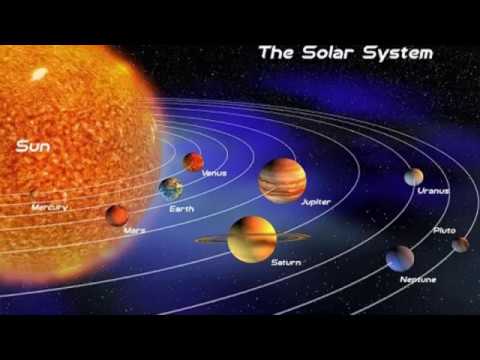
We have already had three versions of what the earth is trying to do when it describes its elliptic orbit around the sun.

  1. It is trying to go in a straight line but it is roughly pulled away by a tug emanating from the sun.
  2. It is taking the longest possible route through the curved space-time around the sun.
  3. It is accommodating its track so as to avoid causing any illegal kind of curvature in the empty space around it.

We now add a fourth version.

  1. (4) The earth goes anyhow it likes.

It is not a long step from the third version to the fourth now that we have seen that the mathematical picture of empty space containing “illegal” curvature is a sheer impossibility in a world surveyed from within. For if illegal curvature is a sheer impossibility the earth will not have to take any special precautions to avoid causing it, and can do anything it likes. And yet the non-occurrence of this impossible curvature is the law (of gravitation) by which we calculate the track of the earth!

There are lines of force extending out both from the earth and the sun, and they meet in between. There is a natural tendency to even out the gradient of quantization, and this draws the two bodies toward each other. However, the natural speed of earth is much greater than that of the sun because of its much lower inertia. As a result, the earth gets into an orbit around the sun.

The earth and the sun are keeping a balance between their inertia and the gradient of quantization in the intervening space. This is the law of gravitation.

The key to the paradox is that we ourselves, our conventions, the kind of thing that attracts our interest, are much more concerned than we realise in any account we give of how the objects of the physical world are behaving. And so an object which, viewed through our frame of conventions, may seem to be behaving in a very special and remarkable way may, viewed according to another set of conventions, be doing nothing to excite particular comment. This will be clearer if we consider a practical illustration, and at the same time defend version (4).

You will say that the earth must certainly get into the right position for the eclipse next June (1927); so it cannot be free to go anywhere it pleases. I can put that right. I hold to it that the earth goes anywhere it pleases. The next thing is that we must find out where it has been pleased to go. The important question for us is not where the earth has got to in the inscrutable absolute behind the phenomena, but where we shall locate it in our conventional background of space and time. We must take measurements of its position, for example, measurements of its distance from the sun. In Fig. 6, SS1 shows the ridge in the world which we recognise as the sun; I have drawn the earth’s ridge in duplicate (EE1} EE2 ) because I imagine it as still undecided which track it will take. If it takes EE1 we lay our measuring rods end to end down the ridges and across the valley from S1 to E1 , count up the number, and report the result as the earth’s distance from the sun. The measuring rods, you will remember, adjust their lengths proportionately to the radius of curvature of the world. The curvature along this contour is rather large and the radius of curvature small. The rods therefore are small, and there will be more of them in $1E1 than the picture would lead you to expect. If the earth chooses to go to E2 the curvature is less sharp; the greater radius of curvature implies greater length of the rods. The number needed to stretch from S± to E2 will not be so great as the diagram at first suggests; it will not be increased in anything like the proportion of S1E2 to S1E1 in the figure. We should not be surprised if the number turned out to be the same in both cases. If so, the surveyor will report the same distance of the earth from the sun whether the track is EE1 or EE2 . And the Superintendent of the Nautical Almanac who published this same distance some years in advance will claim that he correctly predicted where the earth would go.

And so you see that the earth can play truant to any extent but our measurements will still report it in the place assigned to it by the Nautical Almanac. The predictions of that authority pay no attention to the vagaries of the god-like earth; they are based on what will happen when we come to measure up the path that it has chosen. We shall measure it with rods that adjust themselves to the curvature of the world. The mathematical expression of this fact is the law of gravitation used in the predictions.

Perhaps you will object that astronomers do not in practice lay measuring rods end to end through interplanetary space in order to find out where the planets are. Actually the position is deduced from the light rays. But the light as it proceeds has to find out what course to take in order to go “straight”, in much the same way as the metre rod has to find out how far to extend. The metric or curvature is a sign-post for the light as it is a gauge for the rod. The light track is in fact controlled by the curvature in such a way that it is incapable of exposing the sham law of curvature. And so wherever the sun, moon and earth may have got to, the light will not give them away. If the law of curvature predicts an eclipse the light will take such a track that there is an eclipse. The law of gravitation is not a stern ruler controlling the heavenly bodies; it is a kindhearted accomplice who covers up their delinquencies.

I do not recommend you to try to verify from Fig. 6 that the number of rods in S1E1 (full line) and S1E2 (dotted line) is the same. There are two dimensions of space-time omitted in the picture besides the extra dimensions in which space-time must be supposed to be bent; moreover it is the spherical, not the cylindrical, curvature which is ,the gauge for the length. It might be an instructive, though very laborious, task to make this direct verification, but we know beforehand that the measured distance of the earth from the sun must be the same for either track. The law of gravitation, expressed mathematically by Gμν = λgμν means nothing more nor less than that the unit of length everywhere is a constant fraction of the directed radius of the world at that point. And as the astronomer who predicts the future position of the earth does not assume anything more about what the earth will choose to do than is expressed in the law Gμν = λgμν, so we shall find the same position of the earth, if we assume nothing more than that the practical unit of length involved in measurements of the position is a constant fraction of the directed radius. We do not need to decide whether the track is to be represented by EE1 or EE2 , and it would convey no information as to any observable phenomena if we knew the representation.

Eddington is basically saying that the distances are relative and the absolute scenario is impossible to know. This is the unscientific interpretation of the theory of relativity. In the scientific interpretation, the velocity of light is an absolute. It acts as absolute reference point from which to measure the values of inertia of the earth and the sun, and the quantization of the intervening space. The rest then follows.

I shall have to emphasise elsewhere that the whole of our physical knowledge is based on measures and that the physical world consists, so to speak, of measure-groups resting on a shadowy background that lies outside the scope of physics. Therefore in conceiving a world which had existence apart from the measurements that we make of it, I was trespassing outside the limits of what we call physical reality. I would not dissent from the view that a vagary which by its very nature could not be measurable has no claim to a physical existence. No one knows what is meant by such a vagary. I said that the earth might go anywhere it chose, but did not provide a “where” for it to choose; since our conception of “where” is based on space measurements which were at that stage excluded. But I do not think I have been illogical. I am urging that, do what it will, the earth cannot get out of the track laid down for it by the law of gravitation. In order to show this I must suppose that the earth has made the attempt and stolen nearer to the sun; then I show that our measures conspire quietly to locate it back in its proper orbit. I have to admit in the end that the earth never was out of its proper orbit;** I do not mind that, because meanwhile I have proved my point. The fact that a predictable path through space and time is laid down for the earth is not a genuine restriction on its conduct, but is imposed by the formal scheme in which we draw up our account of its conduct.

** Because I can attach no meaning to an orbit other than an orbit in space and time, i.e. as located by measures. But I could not assume that the alternative orbit would be meaningless (inconsistent with possible measures) until I tried it.

.

Eddington 1927: Relativity of Length

Length contraction

Reference: The Nature of the Physical World

This paper presents Chapter VII (section 2) from the book THE NATURE OF THE PHYSICAL WORLD by A. S. EDDINGTON. The contents of this book are based on the lectures that Eddington delivered at the University of Edinburgh in January to March 1927.

The paragraphs of original material are accompanied by brief comments in color, based on the present understanding.  Feedback on these comments is appreciated.

The heading below links to the original materials.

.

Relativity of Length

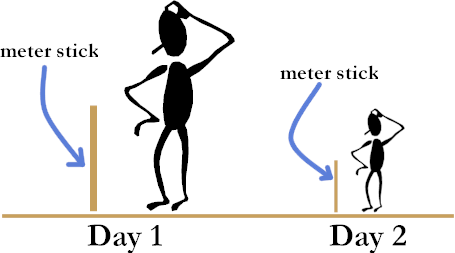
There is no such thing as absolute length; we can only express the length of one thing in terms of the length of something else.* And so when we speak of the length of the directed radius we mean its length compared with the standard metre scale. Moreover, to make this comparison, the two lengths must lie alongside. Comparison at a distance is as unthinkable as action at a distance; more so, because comparison is a less vague conception than action. We must either convey the standard metre to the site of the length we are measuring, or we must use some device which, we are satisfied, will give the same result as if we actually moved the metre rod.

* This relativity with respect to a standard unit is, of course, additional to and independent of the relativity with respect to the observer’s motion treated in chapter II.

There is no absolute unit of length. A unit of length can be as big or as small as desired. The length shall be a function of quantization. The quantization of  space is different from the quantization of matter. Currently, this difference in quantization is not taken into account for the distance between two material bodies.

Now if we transfer the metre rod to another point of space and time, does it necessarily remain a metre long? Yes, of course it does; so long as it is the standard of length it cannot be anything else but a metre. But does it really remain the metre that it was? I do not know what you mean by the question; there is nothing by reference to which we could expose delinquencies of the standard rod, nothing by reference to which we could conceive the nature of the supposed delinquencies. Still the standard rod was chosen with considerable care; its material was selected to fulfil certain conditions—to be affected as little as possible by casual influences such as temperature, strain or corrosion, in order that its extension might depend only on the most essential characteristics of its surroundings, present and past.** We cannot say that it was chosen to keep the same absolute length since there is no such thing known; but it was chosen so that it might not be prevented by casual influences from keeping the same relative length—relative to what? Relative to some length inalienably associated with the region in which it is placed. I can conceive of no other answer. An example of such a length inalienably associated with a region is the directed radius.

** In so far as these casual influences are not entirely eliminated by the selection of material and the precautions in using the rod, appropriate corrections must be applied. But the rod must not be corrected for essential characteristics of the space it is measuring. We correct the reading of a voltmeter for temperature, but it would be nonsensical to correct it for effects of the applied voltage. The distinction between casual and essential influences—those to be eliminated and those to be left in—depends on the intention of the measurements. The measuring rod is intended for surveying space, and the essential characteristic of space is “metric”. It would be absurd to correct the readings of our scale to the values they would have had if the space had some other metric. The region of the world to which the metric refers may also contain an electric field; this will be regarded as a casual characteristic since the measuring rod is not intended for surveying electric fields. I do not mean that from a broader standpoint the electric field is any less essential to the region than its peculiar metric. It would be hard to say in what sense it would remain the same region if any of its qualities were other than they actually are. This point does not trouble us here, because there are vast regions of the world practically empty of all characteristics except metric, and it is to these that the law of gravitation is applied both in theory and in practice. It has seemed, however, desirable to dwell on this distinction between essential and casual characteristics because there are some who, knowing that we cannot avoid in all circumstances corrections for casual influences, regard that as license to adopt any arbitrary system of corrections—a procedure which would merely have the effect of concealing what the measures can teach us about essential characteristics.

The long and short of it is that when the standard metre takes up a new position or direction it measures itself against the directed radius of the world in that region and direction, and takes up an extension which is a definite fraction of the directed radius. I do not see what else it could do. We picture the rod a little bewildered in its new surroundings wondering how large it ought to be—how much of the unfamiliar territory its boundaries ought to take in. It wants to do just what it did before. Recollections of the chunk of space that it formerly filled do not help, because there is nothing of the nature of a landmark. The one thing it can recognise is a directed length belonging to the region where it finds itself; so it makes itself the same fraction of this directed length as it did before.

The standard length adjusts itself to the quantization (substantialness) of space and time.

If the standard metre is always the same fraction of the directed radius, the directed radius is always the same number of metres. Accordingly the directed radius is made out to have the same length for all positions and directions. Hence we have the law of gravitation.

When we felt surprise at finding as a law of Nature that the directed radius of curvature was the same for all positions and directions, we did not realise that our unit of length had already made itself a constant fraction of the directed radius. The whole thing is a vicious circle. The law of gravitation is—a put-up job.

This explanation introduces no new hypothesis. In saying that a material system of standard specification always occupies a constant fraction of the directed radius of the region where it is, we are simply reiterating Einstein’s law of gravitation—stating it in the inverse form. Leaving aside for the moment the question whether this behaviour of the rod is to be expected or not, the law of gravitation assures us that that is the behaviour. To see the force of the explanation we must, however, realise the relativity of extension. Extension which is not relative to something in the surroundings has no meaning. Imagine yourself alone in the midst of nothingness, and then try to tell me how large you are. The definiteness of extension of the standard rod can only be a definiteness of its ratio to some other extension. But we are speaking now of the extension of a rod placed in empty space, so that every standard of reference has been removed except extensions belonging to and implied by the metric of the region. It follows that one such extension must appear from our measurements to be constant everywhere (homogeneous and isotropic) on account of its constant relation to what we have accepted as the unit of length.

The quantization is pretty much the same for all material systems.

We approached the problem from the point of view that the actual world with its ten vanishing coefficients of curvature (or its isotropic directed curvature) has a specialisation which requires explanation; we were then comparing it in our minds with a world suggested by the pure mathematician which has entirely arbitrary curvature. But the fact is that a world of arbitrary curvature is a sheer impossibility. If not the directed radius, then some other directed length derivable from the metric, is bound to be homogeneous and isotropic. In applying the ideas of the pure mathematician we overlooked the fact that he was imagining a world surveyed from outside with standards foreign to it whereas we have to do with a world surveyed from within with standards conformable to it.

The explanation of the law of gravitation thus lies in the fact that we are dealing with a world surveyed from within. From this broader standpoint the foregoing argument can be generalised so that it applies not only to a survey with metre rods but to a survey by optical methods, which in practice are generally substituted as equivalent. When we recollect that surveying apparatus can have no extension in itself but only in relation to the world, so that a survey of space is virtually a self-comparison of space, it is perhaps surprising that such a self-comparison should be able to show up any heterogeneity at all. It can in fact be proved that the metric of a two-dimensional or a three-dimensional world surveyed from within is necessarily uniform. With four or more dimensions heterogeneity becomes possible, but it is a heterogeneity limited by a law which imposes some measure of homogeneity.

I believe that this has a close bearing on the rather heterodox views of Dr. Whitehead on relativity. He breaks away from Einstein because he will not admit the non-uniformity of space-time involved in Einstein’s theory. “I deduce that our experience requires and exhibits a basis of uniformity, and that in the case of nature this basis exhibits itself as the uniformity of spatio-temporal relations. This conclusion entirely cuts away the casual heterogeneity of these relations which is the essential of Einstein’s later theory.”* But we now see that Einstein’s theory asserts a casual heterogeneity of only one set of ten coefficients and complete uniformity of the other ten. It therefore does not leave us without the basis of uniformity of which Whitehead in his own way perceived the necessity. Moreover, this uniformity is not the result of a law casually imposed on the world; it is inseparable from the conception of survey of the world from within—which is, I think, just the condition that Whitehead would demand. If the world of space-time had been of two or of three dimensions Whitehead would have been entirely right; but then there could have been no Einstein theory of gravitation for him to criticise. Space-time being four-dimensional, we must conclude that Whitehead discovered an important truth about uniformity but misapplied it.

*A. N. Whitehead, The Principle of Relativity, Preface.

The conclusion that the extension of an object in any direction in the four-dimensional world is determined by comparison with the radius of curvature in that direction has one curious consequence. So long as the direction in the four-dimensional world is space-like, no difficulty arises. But when we pass over to time-like directions (within the cone of absolute past or future) the directed radius is an imaginary length. Unless the object ignores the warning symbol √-1 it has no standard of reference for settling its time extension. It has no standard duration. An electron decides how large it ought to be by measuring itself against the radius of the world in its space-directions. It cannot decide how long it ought to exist because there is no real radius of the world in its time-direction. Therefore it just goes on existing indefinitely. This is not intended to be a rigorous proof of the immortality of the electron—subject always to the condition imposed throughout these arguments that no agency other than metric interferes with the extension. But it shows that the electron behaves in the simple way which we might at least hope to find.**

** On the other hand a quantum (see chapter IX) has a definite periodicity associated with it, so that it must be able to measure itself against a time-extension. Anyone who contemplates the mathematical equations of the new quantum theory will see abundant evidence of the battle with the intervening symbol √-1.

.

Eddington 1927: The Law of Curvature

Observable_universe_logarithmic_illustration

Reference: The Nature of the Physical World

This paper presents Chapter VII (section 1) from the book THE NATURE OF THE PHYSICAL WORLD by A. S. EDDINGTON. The contents of this book are based on the lectures that Eddington delivered at the University of Edinburgh in January to March 1927.

The paragraphs of original material are accompanied by brief comments in color, based on the present understanding.  Feedback on these comments is appreciated.

The heading below links to the original materials.

.

The Law of Curvature

Gravitation can be explained. Einstein’s theory is not primarily an explanation of gravitation. When he tells us that the gravitational field corresponds to a curvature of space and time he is giving us a picture. Through a picture we gain the insight necessary to deduce the various observable consequences. There remains, however, a further question whether any reason can be given why the state of things pictured should exist. It is this further inquiry which is meant when we speak of “explaining” gravitation in any far-reaching sense.

At first sight the new picture does not leave very much to explain. It shows us an undulating hummocky world, whereas a gravitationless world would be plane and uniform. But surely a level lawn stands more in need of explanation than an undulating field, and a gravitationless world would be more difficult to account for than a world with gravitation. We are hardly called upon to account for a phenomenon which could only be absent if (in the building of the world) express precautions were taken to exclude it. If the curvature were entirely arbitrary this would be the end of the explanation; but there is a law of curvature—Einstein’s law of gravitation—and on this law our further inquiry must be focussed. Explanation is needed for regularity, not for diversity; and our curiosity is roused, not by the diverse values of the ten subsidiary coefficients of curvature which differentiate the world from a flat world, but by the vanishing everywhere of the ten principal coefficients.

All explanations of gravitation on Newtonian lines have endeavoured to show why something (which I have disrespectfully called a demon) is present in the world. An explanation on the lines of Einstein’s theory must show why something (which we call principal curvature) is excluded from the world.

The ten principal coefficients seem to vanish for the field-substance. These must be relevant only for the material-substance. The other ten coefficients that do not vanish, must explain the field-substance.

In the last chapter the law of gravitation was stated in the form—the ten principal coefficients of curvature vanish in empty space. I shall now restate it in a slightly altered form—

The radius of spherical (Cylindrical curvature of the world has nothing to do with gravitation, nor so far as we know with any other phenomenon. Anything drawn on the surface of a cylinder can be unrolled into a flat map without distortion, but the curvature introduced in the last chapter was intended to account for the distortion which appears in our customary flat map; it is therefore curvature of the type exemplified by a sphere, not a cylinder.) curvature of every three-dimensional section of the world, cut in any direction at any point of empty space, is always the same constant length.

The ten principal coefficients, which vanish for empty space, and which are relevant only for the material substance, seem to determine gravity. The world is determined by material-substance and the gravity associated with it. Einstein seems to be saying that the distribution of matter and gravity in this world is constant in any direction.

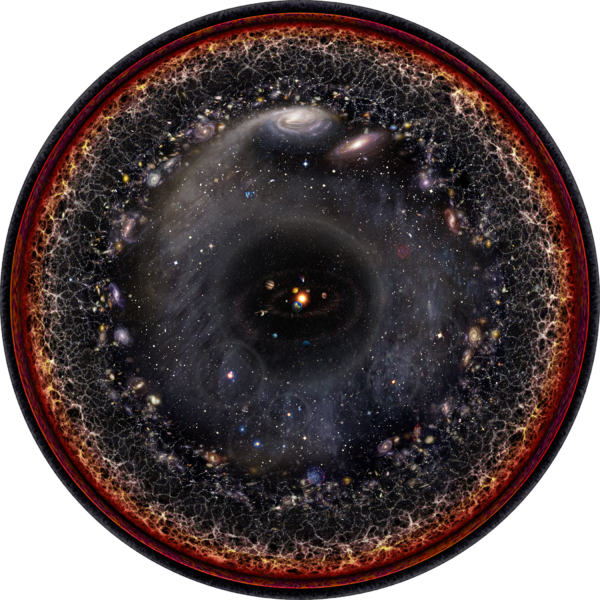
Besides the alteration of form there is actually a little difference of substance between the two enunciations; the second corresponds to a later and, it is believed, more accurate formula given by Einstein a year or two after his first theory. The modification is made necessary by our realisation that space is finite but unbounded (p. 80). The second enunciation would be exactly equivalent to the first if for “same constant length” we read “infinite length”. Apart from very speculative estimates we do not know the constant length referred to, but it must certainly be greater than the distance of the furthest nebula, say 1020 miles. A distinction between so great a length and infinite length is unnecessary in most of our arguments and investigations, but it is necessary in the present chapter.

The only significance that may be given to that length (1020) is the absolute level of inertia attributed to matter.

We must try to reach the vivid significance which lies behind the obscure phraseology of the law. Suppose that you are ordering a concave mirror for a telescope. In order to obtain what you want you will have to specify two lengths (i) the aperture, and (2) the radius of curvature. These lengths both belong to the mirror— both are necessary to describe the kind of mirror you want to purchase—but they belong to it in different ways. You may order a mirror of 100 foot radius of curvature and yet receive it by parcel post. In a certain sense the 100 foot length travels with the mirror, but it does so in a way outside the cognizance of the postal authorities. The 100 foot length belongs especially to the surface of the mirror, a two-dimensional continuum; space-time is a four-dimensional continuum, and you will see from this analogy that there can be lengths belonging in this way to a chunk of space-time—lengths having nothing to do with the largeness or smallness of the chunk, but none the less part of the specification of the particular sample. Owing to the two extra dimensions there are many more such lengths associated with spacetime than with the mirror surface. In particular, there is not only one general radius of spherical curvature, but a radius corresponding to any direction you like to take. For brevity I will call this the “directed radius” of the world. Suppose now that you order a chunk of spacetime with a directed radius of 500 trillion miles in one direction and 800 trillion miles in another. Nature replies “No. We do not stock that. We keep a wide range of choice as regards other details of specification; but as regards directed radius we have nothing different in different directions, and in fact all our goods have the one standard radius, x trillion miles.” I cannot tell you what number to put for x because that is still a secret of the firm.

The fact that this directed radius which, one would think, might so easily differ from point to point and from direction to direction, has only one standard value in the world is Einstein’s law of gravitation. From it we can by rigorous mathematical deduction work out the motions of planets and predict, for example, the eclipses of the next thousand years; for, as already explained, the law of gravitation includes also the law of motion. Newton’s law of gravitation is an approximate adaptation of it for practical calculation. Building up from the law all is clear; but what lies beneath it? Why is there this unexpected standardisation? That is what we must now inquire into.

.