
Happiness: Precept 9

Reference: The Happiness Rundown

9. DON’T DO ANYTHING ILLEGAL

“Illegal acts” are those which are prohibited by official rules or law. 

They are the product of rulers, legislative bodies and judges. They are usually written down in law codes. In a well-ordered society, these are published and made known generally. In a cloudy—and often crime-ridden society—one has to consult an attorney or be specially trained to know them all; such a society will tell one that “ignorance is no excuse for breaking the law.” 

Any member of society, however, has a responsibility, whether young or old, for knowing what that society considers to be an “illegal act.” People can be asked, libraries exist where they can be looked up. 

An “illegal act” is not disobedience to some casual order like “go to bed.” It is an action, which if done, can result in punishment by the courts and state: being pilloried by the state propaganda machine, being fined and even by being imprisoned. 

When one does something illegal, small or large, one is laid open to an attack by the state. It does not matter whether one is caught or not, when one does an illegal act, one has weakened one’s defenses. 

Almost any worthwhile thing one is trying to accomplish often can be done in perfectly legal ways. The “illegal” route is a dangerous and time-wasting shortcut. Imagined “advantages” in committing illegal acts usually turn out not to be worth it. 

The state and government tends to be a rather unthinking machine. It exists and works on laws and codes of laws. It is geared to strike down through its channels at illegality. As such it can be an implacable enemy; adamant on the subject of “illegal acts.” The rightness and wrongness of things do not count in the face of laws and codes of laws. Only the laws count. 

When you realize or discover that those about you are committing “illegal acts,” you should do what you can to discourage it. You yourself, not even a party to it, can yet suffer because of it. The firm’s accountant falsifies the books: in any resulting commotion, the firm could fail and you could lose your job. Such instances can grossly affect one’s own survival. 

As a member of any group subject to laws, encourage the clear-cut publication of those laws so they can be known. Support any legal, political effort to reduce, clarify and codify the laws that apply to that group. Adhere to the principle that all men are equal under law: a principle which, in its own time and place—the tyrannical days of aristocracy—was one of the greatest social advances in human history and should not be lost sight of. 

See that children and people become informed of what is “legal” and what is “illegal” and make it known, if by as little as a frown, that you do not approve of “illegal acts.” 

Those who commit them, even when they “get away with them,” are yet weakened before the might of the state. 

The way to happiness does not include the fear of being found out.

.

Exercise

0. Make sure you have completed the exercise section at Happiness: Precept 8. Study the precept above.

1. Check the responses to the following questions for false data (see false data steps at Happiness: Prologue).

(a) “Have you been told or taught to do illegal things?”
(b) “Do you have any rules or ideas contrary to not doing anything illegal?”
(c) “Have you been led to believe that you should do something that is illegal?”
(d) “Do you know of anything that conflicts with not doing anything illegal?”
(e) “Do you have any false data about doing illegal things?”

.

2. Go over each of the following questions repetitively, until there are no more answers: 

(a) “How have others transgressed against the precept: ‘Don’t do anything illegal’?”
(b) “How have you transgressed against the precept: ‘Don’t do anything illegal’?”

Do a quick review to see if you did not miss any answers on this step. You should be feeling good about this step.

.

3. See if the following question definitely brings up some name you know of:

“Is there any specific person in your past who really transgressed against the precept: ‘Don’t do anything illegal’?”

If no name comes up then go to step 4. if a name has come up, then continue with step 3 as follows:

“Can you recall an exact moment when you observed ___(name)___ transgressing this precept?”

If there is a realization, go to step 4. Otherwise, continue contemplating as follows, until there is some realization.

“Is there any time when you wanted to be like ___(name)___ ?” 
“Is there any time when you decided that doing something illegal was a good thing?”
“Did you ever do anything bad to ___(name)___ ? 
(Get all possible answers)
“Are there any differences between ___(name)___ and yourself?”
“Are there any similarities between ___(name)___  and yourself?”

.

4. Handle any anomalies that come up on the following question by looking at the anomaly more closely. 

”Do you have any reservations about not doing anything illegal?”

If the anomaly does not resolve then review the precept as well as all the exercise steps above to see if anything was missed. Then do step 4 again. When there is no anomaly go to step 5.

.

5. Contemplate on the following question.

“Do you have any reservations about getting someone else not to do anything illegal?” 

If any reservation comes up, then consider the following: 

“How would that be a problem?” 

Get answers to this question until there are no reservations.

.

Happiness: Precept 8

Reference: The Happiness Rundown

8. DO NOT MURDER

Most races, from the most ancient times to the present, have prohibited murder and punished it heavily. Sometimes this has been broadened to say, “Thou shalt not kill,” when a later translation of the same work has found it to read “Thou shalt not murder.” 

There is a considerable difference between these two words kill and murder. A prohibition against all killing would rule out self-defense; it would tend to make it illegal to handle a serpent coiling to strike the baby; it would put a race on a diet of vegetables. I am sure you can see many illustrations of the difficulties raised by a prohibition against all killing. 

“Murder” is another thing entirely. By definition it means, “The unlawful killing of one (or more) human being(s) by another, especially with malice aforethought.” One can easily see that in this age of violent weaponry, murder would be all too easy. One could not exist in a society where oneself or one’s family or friends were at the mercy of some who went about casually taking lives. 

Murder justly bears the highest priority in social prevention and retaliation. 

The stupid, the evil and the insane seek to solve their real or imagined problems with murder. And they have been known to do it for no reason at all. 

Get behind any demonstrably effective program that handles this threat to mankind and push. Your own survival could depend upon it. 

The way to happiness does not include murdering your friends, your family, or yourself being murdered.

.

Exercise

0. Make sure you have completed the exercise section at Happiness: Precept 7-2. Study the precept above.

1. Check the responses to the following questions for false data (see false data steps at Happiness: Prologue).

(a) “Have you been told or taught to murder?”
(b) “Do you have any rules or ideas contrary to not murdering?”
(c) “Have you been led to believe that you should murder?”
(d) “Do you know of anything that conflicts with not murdering?”
(e) “Do you have any false data about murdering?”

.

2. Go over each of the following questions repetitively, until there are no more answers: 

(a) “How have others transgressed against the precept: ‘Do not murder’?”
(b) “How have you transgressed against the precept: ‘Do not murder’?”

Do a quick review to see if you did not miss any answers on this step. You should be feeling good about this step.

.

3. See if the following question definitely brings up some name you know of:

“Is there any specific person in your past who really transgressed against the precept: ‘Do not murder’?”

If no name comes up then go to step 4. if a name has come up, then continue with step 3 as follows:

“Can you recall an exact moment when you observed ___(name)___ transgressing this precept?”

If there is a realization, go to step 4. Otherwise, continue contemplating as follows, until there is some realization.

“Is there any time when you wanted to be like ___(name)___ ?” 
“Is there any time when you decided that murder was a good thing?”
“Did you ever do anything bad to ___(name)___ ? 
(Get all possible answers)
“Are there any differences between ___(name)___ and yourself?”
“Are there any similarities between ___(name)___  and yourself?”

.

4. Handle any anomalies that come up on the following question by looking at the anomaly more closely. 

”Do you have any reservations about not murdering?” 

If the anomaly does not resolve then review the precept as well as all the exercise steps above to see if anything was missed. Then do step 4 again. When there is no anomaly go to step 5.

.

5. Contemplate on the following question.

“Do you have any reservations about getting someone else not to murder?” 

If any reservation comes up, then consider the following: 

“How would that be a problem?” 

Get answers to this question until there are no reservations.

.
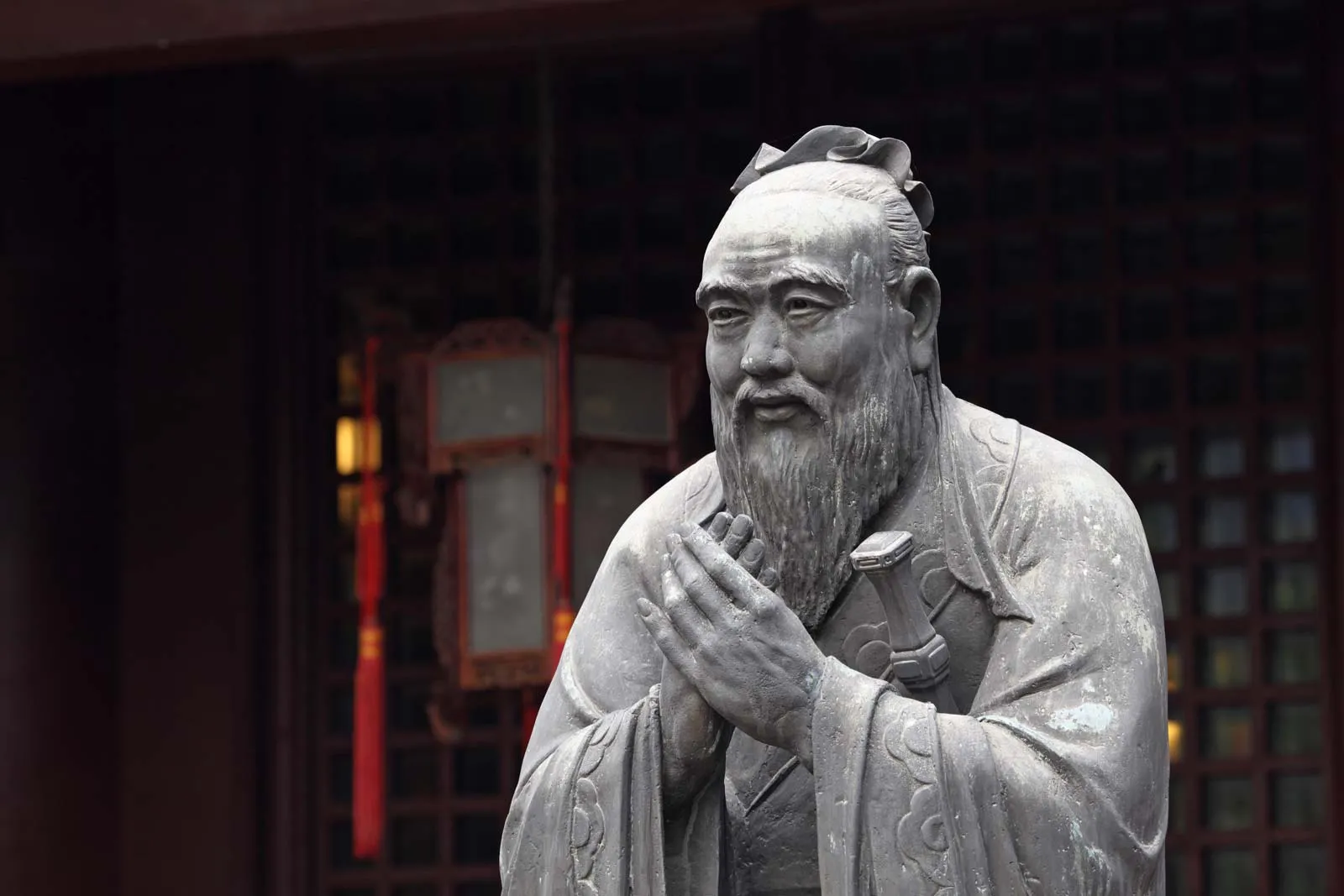
Confucianism

Reference: The World’s Religions

  1. The First Teacher
  2. The Problem Confucius Faced
  3. Rival Answers
  4. Confucius’ Answer
  5. The Content of Deliberate Tradition
  6. The Confucian Project
  7. Ethics or Religion?
  8. Impact on China
  9. Suggestions for Further Reading 

.

BUDDHISM: The Confluence of Buddhism and Hinduism in India

Reference: Buddhism

[NOTE: In color are Vinaire’s comments.]

It is a paradox that Buddhism triumphs in the world at large, only (it would seem) to forfeit the land of its birth. This surface appearance is deceptive. The deeper fact is that in India Buddhism was not so much defeated by Hinduism as accommodated within it.

Among the surface paradoxes of Buddhism—this religion that began by rejecting ritual, speculation, grace, mystery, and a personal God and ended by bringing them all back into the picture—there is a final one. Today Buddhists abound in every Asian land except India; only recently, after a thousand-year absence, are they beginning in small numbers to reappear. Buddhism triumphs in the world at large, only (it would seem) to forfeit the land of its birth. 

It is a paradox that Buddhism triumphs in the world at large, only (it would seem) to forfeit the land of its birth. 

This surface appearance is deceptive. The deeper fact is that in India Buddhism was not so much defeated by Hinduism as accommodated within it. Up to around the year 1000, Buddhism persisted in India as a distinct religion. To say that the Muslim invaders then wiped it out will not do, for Hinduism survived. The fact is that in the course of its 1,500 years in India, Buddhism’s differences with Hinduism softened. Hindus admitted the legitimacy of many of the Buddha’s reforms, and in imitation of the Buddhist sangha orders of Hindu sadhus (wandering ascetics) came into existence. From the other side, Buddhist teachings came to sound increasingly like Hindu ones as Buddhism opened into the Mahayana, until in the end Buddhism sank back into the source from which it had sprung. 

This surface appearance is deceptive. The deeper fact is that in India Buddhism was not so much defeated by Hinduism as accommodated within it.

Only if one assumes that Buddhist principles left no mark on subsequent Hinduism can the merger be considered a Buddhist defeat. Actually, almost all of Buddhism’s affirmative doctrines found their place or parallel. Its contributions, accepted by Hindus in principle if not always practice, included its renewed emphasis on kindness to all living things, on non-killing of animals, on the elimination of caste barriers in matters religious and their reduction in matters social, and its strong ethical emphasis generally. The bodhisattva ideal seems to have left its mark in prayers like the following by Santi Deva in the great Hindu devotional classic, the Bhagavatam:

The bodhisattva ideal seems to have left its mark in prayers like the following by Santi Deva in the great Hindu devotional classic, the Bhagavatam:

I desire not of the Lord the greatness which comes by the attainment of the eightfold powers, nor do I pray him that I may not be born again; my one prayer to him is that I may feel the pain of others, as if I were residing within their bodies, and that I may have the power of relieving their pain and making them happy.

Buddhism brings sensitivity to the pain of others and the measures to relieve it and bring happiness.

All in all, the Buddha was reclaimed as “a rebel child of Hinduism”; he was even raised to the status of a divine incarnation. The goal of Theravada Buddhism was acknowledged to be substantially that of non-dual Hinduism, and even the Prajnaparamita’s contention that eternity is not other than the present moment found its Hindu counterpart:

This very world is a mansion of mirth;
Here I can eat, here drink and make merry.

(Ramakrishna)

The goal of Theravada Buddhism was acknowledged to be substantially that of non-dual Hinduism.

Especially in Hindu Tantric schools, disciples were brought to the point where they could see meat, wine, and sex—things that had formerly appeared as the most formidable barriers to the divine—as but varying forms of God. “The Mother is present in every house. Need I break the news as one breaks an earthen pot on the floor.”

Things that had formerly appeared as most formidable barriers to the divine were now seen as but varying forms of God.

.

Happiness: Precept 7-2

Reference: The Happiness Rundown

7-2. Do not bear false witness

There are considerable penalties connected with swearing or testifying to untrue “facts.” It is called “perjury”: it has heavy penalties.

.

Exercise

0. Make sure you have completed the exercise section at Happiness: Precept 7-1. Study the precept above.

1. Check the responses to the following questions for false data (see false data steps at Happiness: Prologue).

(a) “Have you been told or taught that it was OK to bear false witness?”
(b) “Do you have any rules or ideas contrary to not bearing false witness?”
(c) “Have you been led to believe that you should bear false witness?”
(d) “Do you know of anything that conflicts with not bearing false witness?”
(e) “Do you have any false data about bearing false witness?”

.

2. Go over each of the following questions repetitively, until there are no more answers: 

(a) “How have others transgressed against the precept: ‘Do not bear false witness’?”
(b) “How have you transgressed against the precept: ‘Do not bear false witness’?”

Do a quick review to see if you did not miss any answers on this step. You should be feeling good about this step.

.

3. See if the following question definitely brings up some name you know of:

“Is there any specific person in your past who really transgressed against the precept: ‘Do not bear false witness’?”

If no name comes up then go to step 4. if a name has come up, then continue with step 3 as follows:

“Can you recall an exact moment when you observed ___(name)___ transgressing this precept?”

If there is a realization, go to step 4. Otherwise, continue contemplating as follows, until there is some realization.

“Is there any time when you wanted to be like ___(name)___ ?” 
“Is there any time when you decided that bearing false witness was a good thing?”
“Did you ever do anything bad to ___(name)___ ? 
(Get all possible answers)
“Are there any differences between ___(name)___ and yourself?”
“Are there any similarities between ___(name)___  and yourself?”

.

4. Handle any anomalies that come up on the following question by looking at the anomaly more closely. 

”Do you have any reservations about not bearing false witness?” 

If the anomaly does not resolve then review the precept as well as all the exercise steps above to see if anything was missed. Then do step 4 again. When there is no anomaly go to step 5.

.

5. Contemplate on the following question.

“Do you have any reservations about getting someone else not to bear false witness?” 

If any reservation comes up, then consider the following: 

“How would that be a problem?” 

Get answers to this question until there are no reservations.

.

Wrap up Precept 7

0. Review Precept 7.

1. Contemplate over the following question.

“Is there any conflict between seeking to live with the truth and any other ideas you have encountered?”

Handle any conflict with false data steps.

.

2. Go over each of the following questions repetitively, until there are no more answers: 

“Have you thought of any other transgressions of others against the precept: ‘Seek to live with the truth’?”
“Have you thought of any other transgressions of your own against the precept: ‘Seek to live with the truth’?”
“During these sessions have you thought of any withhold?”

.

3. Consider this question:

“Do you have any feeling that you wouldn’t be yourself if you followed the precept: ‘Seek to live with the truth’?”

If this is not the case, go to the Step 4. Otherwise, ask yourself,

“Can you recall any person who felt the way you do about the precept: ‘Seek to live with the truth’?”

If no name comes up then go to step 4. if a name has come up, then continue with step 3 as follows:

“Can you recall an exact moment when you observed ___(name)___ transgressing this precept?”

If there is a realization, go to step 4. Otherwise, continue contemplating as follows, until there is some realization.

“Is there any time when you wanted to be like ___(name)___ ?” 
“Is there any time when you decided that not seeking to live with the truth was a good thing?”
“Did you ever do anything bad to ___(name)___ ? 
(Get all possible answers)
“Are there any differences between ___(name)___ and yourself?”
“Are there any similarities between ___(name)___  and yourself?”

.

4. Check over the following questions. and handle any anomalies that come up.

“Do you have any other considerations about seeking to live with the truth?”
“Do you have any other considerations about others seeking to live with the truth?”

.