Reference: Evolution of Physics
This paper presents Chapter III, section 13 from the book THE EVOLUTION OF PHYSICS by A. EINSTEIN and L. INFELD. The contents are from the original publication of this book by Simon and Schuster, New York (1942).
The paragraphs of the original material (in black) are accompanied by brief comments (in color) based on the present understanding. Feedback on these comments is appreciated.
The heading below is linked to the original materials.
.
General Relativity and Its Verification
The general theory of relativity attempts to formulate physical laws for all CS. The fundamental problem of the theory is that of gravitation. The theory makes the first serious effort, since Newton’s time, to reformulate the law of gravitation. Is this really necessary? We have already learned about the achievements of Newton’s theory, about the great development of astronomy based upon his gravitational law. Newton’s law still remains the basis of all astronomical calculations. But we also learned about some objections to the old theory. Newton’s law is valid only in the inertial CS of classical physics, in CS defined, we remember, by the condition that the laws of mechanics must be valid in them. The force between two masses depends upon their distance from each other. The connection between force and distance is, as we know, invariant with respect to the classical transformation. But this law does not fit the frame of special relativity. The distance is not invariant with respect to the Lorentz transformation. We could try, as we did so successfully with the laws of motion, to generalize the gravitational law, to make it fit the special relativity theory, or, in other words, to formulate it so that it would be invariant with respect to the Lorentz and not to the classical transformation. But Newton’s gravitational law opposed obstinately all our efforts to simplify and fit it into the scheme of the special relativity theory. Even if we succeeded in this, a further step would still be necessary: the step from the inertial CS of the special relativity theory to the arbitrary CS of the general relativity theory. On the other hand, the idealized experiments about the falling lift show clearly that there is no chance of formulating the general relativity theory without solving the problem of gravitation. From our argument we see why the solution of the gravitational problem will differ in classical physics and general relativity.
Newton’s law of gravitation is valid only in the inertial CS in which the laws of mechanics apply. The law of gravitation needs to be generalized for all CS.
We have tried to indicate the way leading to the general relativity theory and the reasons forcing us to change our old views once more. Without going into the formal structure of the theory, we shall characterize some features of the new gravitational theory as compared with the old. It should not be too difficult to grasp the nature of these differences in view of all that has previously been said.
(1) The gravitational equations of the general relativity theory can be applied to any CS. It is merely a matter of convenience to choose any particular CS in a special case. Theoretically all CS are permissible. By ignoring the gravitation, we automatically come back to the inertial CS of the special relativity theory.
(2) Newton’s gravitational law connects the motion of a body here and now with the action of a body at the same time in the far distance. This is the law which formed a pattern for our whole mechanical view. But the mechanical view broke down. In Maxwell’s equations we realized a new pattern for the laws of nature. Maxwell’s equations are structure laws. They connect events which happen now and here with events which will happen a little later in the immediate vicinity. They are the laws describing the changes of the electromagnetic field. Our new gravitational equations are also structure laws describing the changes of the gravitational field. Schematically speaking, we could say: the transition from Newton’s gravitational law to general relativity resembles somewhat the transition from the theory of electric fluids with Coulomb’s law to Maxwell’s theory.
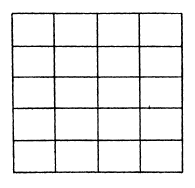
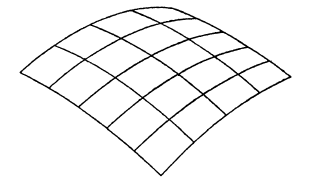
(3) Our world is not Euclidean. The geometrical nature of our world is shaped by masses and their velocities. The gravitational equations of the general relativity theory try to disclose the geometrical properties of our world.
The special theory of relativity applies mainly to the material domain and modifies the inertial frame a bit. It does not apply to all possible CS. The general relativity generalizes the law of gravity for all CS. It applies where the Newton’s law of gravity breaks down. The geometrical nature of our world is shaped by the relationships among inertia, motion, time and space. The time and space characteristics change according to the laws of inertia and motion.
Let us suppose, for the moment, that we have succeeded in carrying out consistently the program of the general relativity theory. But are we not in danger of carrying speculation too far from reality? We know how well the old theory explains astronomical observations. Is there a possibility of constructing a bridge between the new theory and observation? Every speculation must be tested by experiment, and any results, no matter how attractive, must be rejected if they do not fit the facts. How did the new theory of gravitation stand the test of experiment? This question can be answered in one sentence: The old theory is a special limiting case of the new one. If the gravitational forces are comparatively weak, the old Newtonian law turns out to be a good approximation to the new laws of gravitation. Thus all observations which support the classical theory also support the general relativity theory. We regain the old theory from the higher level of the new one.
The old theory is a special limiting case of the new one. If the gravitational forces are comparatively weak, the old Newtonian law turns out to be a good approximation to the new laws of gravitation.
Even if no additional observation could be quoted in favor of the new theory, if its explanation were only just as good as the old one, given a free choice between the two theories, we should have to decide in favor of the new one. The equations of the new theory are, from the formal point of view, more complicated, but their assumptions are, from the point of view of fundamental principles, much simpler. The two frightening ghosts, absolute time and an inertial system, have disappeared. The clew of the equivalence of gravitational and inertial mass is not overlooked. No assumption about the gravitational forces and their dependence on distance is needed. The gravitational equations have the form of structure laws, the form required of all physical laws since the great achievements of the field theory.
Some new deductions, not contained in Newton’s gravitational law, can be drawn from the new gravitational laws. One, the bending of light rays in a gravitational field, has already been quoted. Two further consequences will now be mentioned.
The simpler are the assumptions, the more complete and far reaching is a theory. The equivalence of gravitational and inertial mass means that their laws are equivalent too. The law of inertia brings equilibrium to the velocity of a body, making it finite and constant. The law of gravitation brings dynamic equilibrium to the motion of bodies in a system, such as, the solar system. It predicts the bending of light near a heavy planet because light has inertia.
If the old laws follow from the new one when the gravitational forces are weak, the deviations from the Newtonian law of gravitation can be expected only for comparatively strong gravitational forces. Take our solar system. The planets, our earth among them, move along elliptical paths around the sun. Mercury is the planet nearest the sun. The attraction between the sun and Mercury is stronger than that between the sun and any other planet, since the distance is smaller. If there is any hope of finding a deviation from Newton’s law, the greatest chance is in the case of Mercury. It follows, from classical theory, that the path described by Mercury is of the same kind as that of any other planet except that it is nearer the sun. According to the general relativity theory, the motion should be slightly different. Not only should Mercury travel around the sun, but the ellipse which it describes should rotate very slowly, relative to the CS connected with the sun. This rotation of the ellipse expresses the new effect of the general relativity theory. The new theory predicts the magnitude of this effect. Mercury’s ellipse would perform a complete rotation in three million years! We see how small the effect is, and how hopeless it would be to seek it in the case of planets farther removed from the sun.
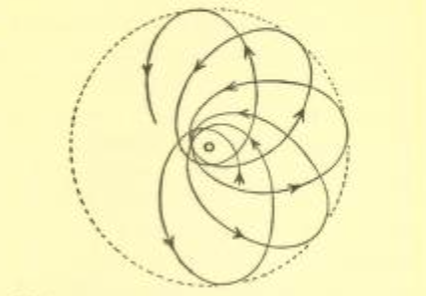
The deviation of the motion of the planet Mercury from the ellipse was known before the general relativity theory was formulated, and no explanation could be found. On the other hand, general relativity developed without any attention to this special problem. Only later was the conclusion about the rotation of the ellipse in the motion of a planet around the sun drawn from the new gravitational equations. In the case of Mercury, theory explained successfully the deviation of the motion from the Newtonian law.
Mercury has the largest differential of inertia with the Sun, and the path of Mercury is more dynamic. Newton’s law of gravitation is unable to account for this dynamism of path, which the theory of general relativity does.
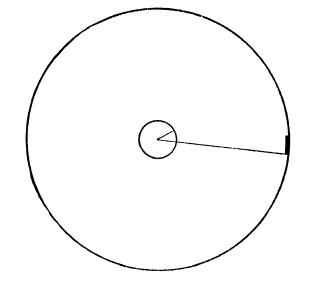
But there is still another conclusion which was drawn from the general relativity theory and compared with experiment. We have already seen that a clock placed on the large circle of a rotating disk has a different rhythm from one placed on the smaller circle. Similarly, it follows from the theory of relativity that a clock placed on the sun would have a different rhythm from one placed on the earth, since the influence of the gravitational field is much stronger on the sun than on the earth.
Clock simply represents inertia. The sun is much more centered than earth.
We remarked on p. 103 that sodium, when incandescent, emits homogeneous yellow light of a definite wave-length. In this radiation the atom reveals one of its rhythms, the atom represents, so to speak, a clock and the emitted wave-length one of its rhythms. According to the general theory of relativity, the wavelength of light emitted by a sodium atom, say, placed on the sun should be very slightly greater than that of light emitted by a sodium atom on our earth.
Wavelength represents velocity of forward motion. It will be affected by the inertia of the sun. According to Postulate Mechanics, it would be very slightly shorter on sun than that of light emitted by a sodium atom on earth.
The problem of testing the consequences of the general relativity theory by observation is an intricate one and by no means definitely settled. As we are concerned with principal ideas, we do not intend to go deeper into this matter, and only state that the verdict of experiment seems, so far, to confirm the conclusions drawn from the general relativity theory.
General relativity has been tested only for higher gravity than earth’s gravity.
.
Final Comment
Law of gravitation is basically the law of inertia applied to a system of bodies. Inertia can approach an infinite value making velocity of forward motion approach a value of zero. This makes an absolute scale of motion possible.
Absolute scale of motion is not considered in Einstein’s theory of relativity (both special and general) because it does not consider inertia directly. It does consider inertia indirectly through the concept of time but not the whole range of possible inertia.
This makes the General Relativity still limited to the material domain.
.