Category Archives: Religion

The Third Noble Truth – The Cessation of Dukkha

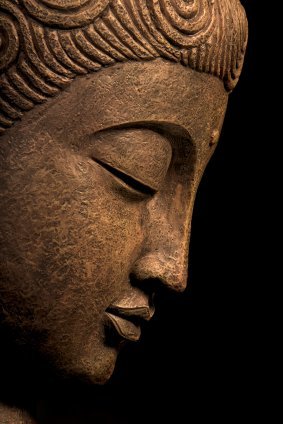
Buddha profile
[Reference: Chapter 4: The Third Noble Truth: The Cessation of Dukkha]

According to Buddha, it is possible to attain freedom from suffering, from the continuity of dukkha. This possibility may be realized with the attainment of Nirvāna. The real nature of Nirvāna is hard to describe. It can neither be perceived by the sense-organs, nor can it be conceived by the mind. Language is limited in what it can convey.

Nirvāna may be approximated by saying that it is an absence of desire or thirst, but that does not describe it fully. It may also be approximated as an absence of attachment, conditioning, illusion, hatred, conceit, etc.

No continuity of anything remains in Nirvāna. There is only the unborn, ungrown, and unconditioned.

Nirvāna may only be expressed in negative terms as neti, neti (not this, not that), because it is not something. But Nirvāna is neither negative nor positive. It is definitely no annihilation of self, because there is no self to annihilate.

Nirvāna is freedom from all evil, freedom from craving, hatred and ignorance, freedom from all terms of duality, relativity, time and space.

 .

The book “What the Buddha Taught” relates a sutta by Buddha describing approach to Nirvana as follows:

1.1       A man is composed of six elements: solidity, fluidity, heat, motion, space and consciousness. He analyses them and finds that none of them is ‘mine’, or ‘my self’.

1.2       He understands how consciousness appears and disappears, how pleasant, unpleasant and neutral sensations appear and disappear. Through this knowledge his mind becomes detached.

1.3       Then he finds within him a pure equanimity, which he can direct towards the attainment of any high spiritual state, and he knows that thus this pure equanimity will last for a long period.

1.4       But then he thinks:

(a)      ‘If I focus this purified and cleansed equanimity on the Sphere of Infinite Space and develop a mind conforming thereto, that is a mental creation.

(b)     ‘If I focus this purified and cleansed equanimity on the Sphere of Infinite Consciousness… on the Sphere of Nothingness … or on the Sphere of Neither-perception nor Non-perception and develop a mind conforming thereto, that is a mental creation.’

1.5       Then he neither mentally creates nor wills continuity and becoming, or annihilation. As he does not construct or does not will continuity and becoming, or annihilation, he does not cling to anything in the world.

1.6       As he does not cling, he is not anxious; as he is not anxious; he is completely calmed within (fully blown out within). And he knows: ‘Finished is birth, lived is pure life, what should be done is done, nothing more is left to be done.’

1.7       Now, when he experiences a pleasant, unpleasant or neutral sensation, he knows that it is impermanent, that it does not bind him, that it is not experienced with passion. Whatever may be the sensation, he experiences it without being bound to it.

1.8       He knows that all those sensations will be pacified with the dissolution of the body, just as the flame of a lamp goes out when oil and wick give out.

1.9       Buddha says, ‘Therefore, O bhikkhus, a person so endowed is endowed with the absolute wisdom, for the knowledge of the extinction of all dukkha is the absolute noble wisdom.

1.10    This deliverance, founded on Truth, is unshakable. This is Nirvana.

 .

According to Buddhism,

2.1       The Absolute Truth is that there is nothing absolute in the world, that everything is relative, conditioned and impermanent, and that there is no unchanging, everlasting, absolute substance like Self, Soul, or Ātman within or without.

2.2       The realization of this Truth (to see things as they are without illusion or ignorance is the extinction of craving ‘thirst’ of dukkha) is Nirvāna. But Nirvāna is not the result of the extinction of craving, or of anything else.

2.3       Nirvāna is beyond logic and reasoning. However much we may engage in highly speculative discussions regarding Nirvāna or Ultimate Truth or Reality, we shall never understand it that way.

2.4       Nirvāna is beyond cause and effect. TRUTH IS. NIRVĀNA IS. The only thing you can do is to see it, to realize it.

2.5       One lives the holy life with Nirvāna as its final plunge, as its goal, as its ultimate end.

2.6       “Nobody” realizes Nirvāna. There is simply an arising and cessation of existence. It is the thought that thinks. It is the realization that realizes. There is no external power that produces the arising and the cessation of dukkha.

2.7       Nirvāna is not some state, nor realm, nor position in which there is some sort of existence. There is no such thing as ‘entering into Nirvāna’. Nirvāna means complete extinction.

2.8       Wisdom, when cultivated, sees the secret. The forces which feverishly produce the continuity then become calm and incapable of producing any more karma-formations.

2.9       Nirvāna can be realized in this very life; it is not necessary to wait till you die to ‘attain’ it.

2.10    He who has realized the Truth, Nirvana, is the happiest being in the world. He is free from all ‘complexes’ and obsessions, the worries and troubles that torment others. His mental health is perfect. He does not repent the past, nor does he brood over the future. He lives fully in the present. Therefore he appreciates and enjoys things in the purest sense without self-projections. He is joyful, exultant, enjoying the pure life, his faculties pleased, free from anxiety, serene and peaceful. As he is free from selfish, desire, hatred, ignorance, conceit, and all such ‘defilements’, he is pure and gentle, full of universal love, compassion, kindness, sympathy, understanding and tolerance. His service to others is of the purest, for he has no thought of self. He gains nothing, accumulates nothing, not even anything spiritual, because he is free from the illusion of Self, and the ‘thirst’ for becoming.

 .
Questions on Buddhism

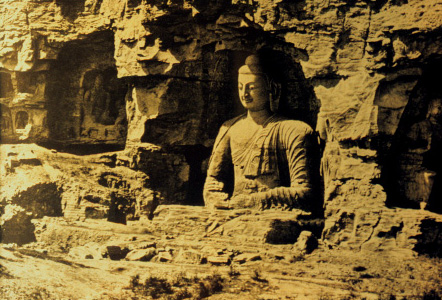
Buddha

I just received some questions on Buddhism by a student who is working on her final project for her class on Religion. These are very good questions. I would like to post these questions and answers here:

1. In your perspective, what is the way of the Buddha?

From my perspective Buddha’s way is an effort to enable a person to overcome suffering. The core of his teaching is to look at things just as they are without assuming anything.

2. What made you decide to practice Buddhism?

I am an engineer and knowledge has always fascinated me. I have studied all major religions and have looked closely at their actual applicability. I am simply practicing what makes sense to me, and what is useful. It happens to be the core ideas expressed in Buddhism. But I must say that these ideas overlap with ideas from other religions. In short, knowledge cannot be limited to any particular label.

3. Was Buddhism a natural part of your life or did you seek it out?

My natural tendency has always been to question what is inconsistent and to seek out consistency in understanding. This has led me to Buddhism. But even in Buddhism there are many different interpretations. I am generating my own understanding of Buddhism that appears consistent to me. Actually this is exactly what Buddha recommended. One must develop one’s own understanding.

4. What are the benefits of Buddhism to a person’s peace, soul, happiness, compassion, empathy, health, perceptions and impacts of this world?

The following is a quote from the book “BUDDHA” by Karen Armstrong,
“If you look at things just as they are, you gradually gain the insight that makes the suffering more tolerable. It does not prevent the suffering that comes from growing old, getting sick, etc., but you can be peaceful in its presence. Following those insights you naturally develop a conduct that enhances peace and happiness.”

5. How is Buddhism taught to its followers?

Buddhism is a major religion, which is now 2600 years old. At first it was taught by Buddha giving sermons to his disciples. After Buddha’s death all his teachings were written down and were made available through well-organized “sanghas.” A sangha is a community of Buddhist monks.

Today, one may study Buddhism by oneself.  There is excellent literature available on Buddhism in all different media. Buddhism is not faith based. It is knowledge-based. There is no faith-conversion required in Buddhism. A person may study Buddhism because it appeals to him or her. The person does not have to believe in Buddhism. He is not required to follow any rituals.

6. How do people worship?

There is no worship per se, because there is no God in Buddhism. There is only respect for knowledge and understanding. Buddha is revered as the founder of Buddhism. There are monasteries and temples, but these are there only to facilitate study and practice of Buddhism.

7. What does one need to do if they are interested in learning Buddhism?

There is a lot of literature available on Buddhism in its original Pali language, which is also translated in most other languages. There are many commentaries written on Buddhism. For beginners I shall recommend reading the following two books.

What the Buddha taught by Walpola Rahula
Buddha by Karen Armstrong

8. Does Buddhism proselytize?

No.

9. Are there any inconsistencies in Buddhism, such as prejudices?

None that I know of.

10. What is the success rate for those wanting to follow the Buddhist path?

At its peak Buddhism is said to have civilized three-quarters of the population of the world. Buddhism has influenced many religions that have followed since. Buddhism is a path of peace, and it has been very successful in bringing about that peace  on a social basis as well as on an individual basis.

11. How does one reach enlightenment?

One reaches enlightenment by understanding the four Noble Truths of Buddha. The fourth Noble Truth lays out an eight-fold path to follow. The following e-book describes it in simple terms:

What the Buddha taught by Walpola Rahula

.

The Second Noble Truth – The Arising of Dukkha

Second
Reference: Chapter 3, The Second Noble Truth: The Arising of Dukkha

At the core of dukkha is the idea of impermanence. It is the attachment to things that are inherently impermanent, which causes all suffering. When we look at things as they really are we come to realize the impermanent nature of things, and the futility of holding on to them. This awareness helps us replace fear and anxiety with peace and contentment.

Underlying dukkha there is a thirst, which is bound with passionate greed; and which finds fresh delight now here and now there in sense-pleasures and in becoming this or that. But there is no first cause of dukkha. Even the thirst depends on sensation, which, in turn, depends on the contact of internal faculties with the external objects, and so on and so forth on the circle which is known as Conditioned Genesis. However, this ‘thirst’ has at its center the false idea of ‘self’ arising out of ignorance.

This ‘thirst’ is not only for sense-pleasures, wealth and power, but also for idea and ideals, views, opinions, theories, conceptions and beliefs. It is this thirst that keeps the existence there. Here we have the will to live, to re-exist, to continue, to become more and more. Here we have ‘mental volition’ or karma.

It is this striving forward by the way of good and bad actions that creates the root of existence and continuity. This is called karma (volitional action) that hankers after, and brings about that, which tends to be impermanent. Karma is part of the aggregate of mental formations (see The Structure of “I”). Thus, the cause, the germ, of the arising of dukkha (the five aggregates) is within dukkha itself, and not outside; and we must equally well remember that the cause, the germ, of the cessation of dukkha, of the destruction of dukkha, is also within dukkha itself, and not outside. It is karma, no matter how good or bad it is, that produces continuity. None of what continues is permanent.

‘Self’ that continues is also not permanent. It is the false idea that self is permanent, which contributes heavily to karma.

The theory of karma is the theory of cause and effect, of action and reaction; it is a natural law, which has nothing to do with the idea of justice or reward and punishment. Every volitional action produces its effects or results. If a good action produces good effects and a bad action produces bad effects, it is not justice, or reward, or punishment meted out by anybody or any power sitting in judgment on your action, but this is in virtue of its own nature, its own law.

It is important to understand that the effect of a volitional action may continue to manifest itself even in a life after death.  As explained in The Structure of “I”, it is a combination of physical and mental forces, or energies, that expresses itself as a being. The being manifests itself through a physical body. What we call death is the total non-functioning of the physical body. The physical and mental forces are still there even after body’s death; they are simply not being manifested. Underlying these forces and energies is this tremendous thirst that wants to continue. This thirst may then manifest itself through another body that is born.

Life is a combination of physical and mental energies, which is constantly changing. This combination does not remain the same for two consecutive moments. Every moment a combination is born, it decays and dies. It continues even after the body is no longer alive. The idea of a permanent, unchanging substance like Self or Soul is not required.

From “What Buddha taught”:

“When this physical body is no more capable of functioning, energies do not die with it, but continue to take some other shape or form, which we call another life. In a child all the physical, mental and intellectual faculties are tender and weak, but they have within them the potentiality of producing a full grown man.  Physical and mental energies which constitute the so-called being have within themselves the power to take a new form, and grow gradually and gather force to the full.

“As there is no permanent, unchanging substance, nothing passes from one moment to the next. So quite obviously, nothing permanent or unchanging can pass or transmigrate from one life to the next. It is a series that continues unbroken, but changes every moment. The series is, really speaking, nothing but movement. It is like a flame that burns through the night: it is not the same flame nor it is another. A child grows up to be a man of sixty. Certainly the man of sixty is not the same as the child of sixty years ago, nor is he another person. Similarly, a person who dies here and is reborn elsewhere is neither the same person, nor another (na ca so na ca aňňo). It is the continuity of the same series. The difference between death and birth is only a thought-moment: the last thought-moment in this life conditions the first thought-moment in the so-called next life, which, in fact, is the continuity of the same series. During this life itself, too, one thought-moment conditions the next thought-moment. So from the Buddhist point of view, the question of life after death is not a great mystery, and a Buddhist is never worried about this problem.

“As long as there is this ‘thirst’ to be and to become, the cycle of continuity (samsāra) goes on. It can stop only when its driving force, this ‘thirst’, is cut off through wisdom which sees Reality, Truth, Nirvāna.”

Thus, a fundamental inconsistency occurs when one considers oneself to be, ultimately, permanent and unchanging. It takes some understanding before one can come to terms with this inconsistency.

.

The First Noble Truth – Dukkha

Suffering

Reference: Chapter 2, The First Noble Truth: Dukkha

The first Noble Truth of Buddha points to dukkha as something that needs to be understood. The term dukkha contains the ordinary meaning of ‘suffering’, but in addition it also includes deeper ideas, such as, ‘imperfection’, ‘impermanence’, ‘emptiness’, and ‘insubstantiality’. The way to happiness starts with a complete understanding of this term dukkha.

One needs to clearly understand that any object of enjoyment ultimately becomes a source of unsatisfactoriness because of its impermanent nature. For example, one enjoys being with a pleasant, charming and beautiful person. One likes to be with him (or her) again and again. One derives pleasure and satisfaction from that person. But this enjoyment is not permanent, just as that person and all his (or her) attractions are not permanent.

As the situation changes and as one no longer is able to derive that pleasure and satisfaction, one becomes sad. One may become unreasonable and unbalanced. One may even behave foolishly. This is the evil, unsatisfactory and dangerous side of the picture. Now this won’t be the case if one is completely detached. Then there is freedom, liberation. This is true with regard to all enjoyment in life.

Impermanence

From this it is evident that we must take into account not only the ordinary suffering, such as, sickness, old age, distress, etc., but also the impermanence of the pleasures of life. This is dukkha. But the philosophic aspect of dukkha as impermanence goes much deeper.

What we call a ‘being’ or an ‘individual’, or ‘I’, according to Buddhist philosophy, is the perceived center of physical and mental forces. These forces or energies are forever changing. They are expressed as the five aggregates of attachment. They are not the same for two consecutive moments. Here A is not equal to A. They are in a flux of momentary arising and disappearing.

So, there is no permanent, unchanging spirit which can be considered ‘Self’, or ‘Soul’, or ‘Ego’, as opposed to matter. Consciousness is not perceived as Self or Soul that continues as a permanent substance through life. Conciousness changes continually. There is nothing in life that is permanent. All the aggregates are impermanent, all constantly changing.

‘Whatever is impermanent is dukkha’

Buddhism advises us to take a realistic view of life and of the world. We must look at things objectively. We should not be falsely lulled into living in a fool’s paradise, nor should we be frightened and agonized with all kinds of imaginary fears and sins. We should look exactly and objectively what we are and what the world around us is. And that would guide us to perfect freedom, peace, tranquility and happiness.

.

The Structure of “I”

SoftSelf
Reference: Chapter 2 of Book: What the Buddha Taught by Walpola Rahula

What we call a ‘being’, ‘soul’, ‘individual’, or ‘I’, according to Buddhist philosophy, is only a combination of ever-changing physical and mental forces or energies. These forces or energies may be divided into five groups or aggregates, as follows.

.

(1) Aggregates of Matter (both internal and external)

  • The Four Great Elements of Matter –
    • Solidity, Fluidity, Heat and Motion
  • Derivatives of the Four Great Elements –
    • INTERNAL
      • The six internal faculties connected to material sense-organs
        • Eye, ear, nose, tongue, body and mind
    • EXTERNAL
      • The corresponding six objects in the external world
        • Visible form, sound, odor, taste, tangible things and mind-objects (idea or thought)

(2) Aggregate of Sensations (both physical and mental)

  • Pleasant, unpleasant, neutral sensations
    • Experienced through the contact of internal faculties with the external objects
      • PHYSICAL
        • Eye with visible forms
        • Ear with sounds
        • Nose with odor
        • Tongue with taste
        • Body with tangible objects
      • MENTAL
        • Mind with mind-objects or thoughts or idea

(3) Aggregate of Perceptions (both physical and mental)

  • Recognition of physical and mental objects
    • Produced through the contact of internal faculties with the external objects
      • PHYSICAL
        • Visual perception when the eye contacts visible forms
        • Auditory perception when the ear contacts sounds
        • Olfactory perception when the nose contacts odors
        • Gustatory perception when the tongue contacts tastes
        • Tactile perception when the body contacts tangible objects
      • MENTAL
        • Mental perception when the mind contacts mind-objects (ideas and thoughts)

(4) Aggregate of Mental Formations

  • Exertion of volition (will, mental activity)
    • All volitional activities (both good and bad)
      • Attention, Will, Determination, Confidence, Concentration, Wisdom, Energy, Desire, repugnance or hate, Ignorance, Conceit, Idea of self, etc. (52 of them)
    • Karma (having willed, one acts through body, speech and mind)
      • Karmic effects
    • Connected with the six internal faculties and the corresponding six external objects
      • Visual, Auditory, Olfactory, Gustatory, Tactile, Mental

  (5) Aggregate of Consciousness

  • Consciousness is a reaction or response which has
    • One of the six faculties as its basis, and
    • One of the six corresponding external phenomena as its objects
  • Consciousness does not recognize an object
    • It is a sort of awareness of the presence of an object
  • Consciousness should not be taken as ‘spirit’ in opposition to matter.
    • Consciousness arises out of conditions
    • There is no arising of consciousness without conditions
  • Consciousness depends on matter, sensation, perception and mental formations
    •  It cannot exist independently of them.

Note: Sensations and perceptions do not produce karmic effects. It is only the volitional actions of mental formations that can produce karmic effects.

.

Thus, ‘being’, ‘individual’, or, ‘I’, is only a convenient name or a label given to the combination of these five groups. They are all impermanent, all constantly changing. They are not the same for two consecutive moments. Here A is not equal to A. They are in a flux of momentary arising and disappearing.

One thing disappears, conditioning the appearance of the next in a series of cause and effect. There is no unchanging substance in them. There is nothing behind them that can be called a permanent Self, individuality, or anything that can in reality be called ‘I’. But when these five physical and mental aggregates which are interdependent are working together in combination as a physio-psychological machine, we get the idea of ‘I’. But this is only a false idea of self. There is no other ‘being’ or ‘I’, standing behind these five aggregates.

There is no unmoving mover behind the movement. It is only movement. It is not correct to say that life is moving, but life is movement itself. Life and movement are not two different things. In other words, there is no thinker behind the thought. Thought itself is the thinker. If you move the thought, there is no thinker to be found. Here we cannot fail to notice how this Buddhist view is diametrically opposed to the Cartesian cogito ergo sum: ‘I think, therefore I am.’

This is counter-intuitive, indeed.

.