Category Archives: Hinduism

Integral Yoga of Sri Aurobindo

According to Sri Aurobindo, the ascending levels of awareness are as above. I have decoded these levels with the help of Subject Clearing as follows.

INCONSCIENT
The state of Total Unawareness associated with inert matter. It is the ultimate condensed knowledge.

SUBCONSCIENT
The state of awareness in terms of impressions only. Knowledge appears as automatic replay of impressions.

PHYSICAL
The state of awareness of the body. Knowledge appears as complex activity with automatic programming.

VITAL
The state of awareness which is expressed as a spectrum of emotions.

MIND
The state of awareness expressed as a spectrum of reflection, imagination, conceptualization and reasoning.

HIGHER MIND
This is the state of awareness of oneness and anomalies accompanied by thinking.

ILLUMINED MIND
At this level a person is advancing into looking instead of thinking. The anomalies resolve with flashes of realizations.

INTUITIVE MIND
At this level a person is becoming aware of the postulates, principles and laws underlying reality.

OVERMIND
At this level a person is becoming aware of oneness among the postulates in different areas of activity.

SUPERMIND
At this level all awareness is completely continuous, consistent and harmonious. There is total oneness of knowledge.

SAT-CHIT-ANANDA
Sat is the all knowing state. Chit is total awareness in this state. Anand is the bliss of total oneness of awareness.

.

Seven Quartets

(From Perplexity AI)

Aurobindo suggests a grand program called Sapta Chatushtaya (seven quartets) to aid this evolution. It is a structured, comprehensive program for yogic and spiritual development revealed to Sri Aurobindo. This system organizes the aspirant’s sadhana (spiritual practice) into seven key areas, each with four elements or goals. The scheme forms a core basis of his early yogic diaries and much of his synthesis of Yoga.

Overview of the Seven Quartets

1. Shanti Chatushtaya (Peace Quartet):

  • Focused on equanimity, inner peace, spiritual happiness, and joyful acceptance (equality, peace, inner happiness, soul’s laughter).
  • The goal is total freedom from disturbance, sorrow, and dissatisfaction, and the cultivation of unwavering gladness and contentment.

2. Shakti Chatushtaya (Power Quartet):

  • Cultivation of forces and capacities—physical, emotional, mental, spiritual—so the divine Shakti (power) can work in all parts.
  • Involves development of strength, energy, faith, and dynamism in body, feelings, and mind, transforming weaknesses into strengths.

3. Vijnana Chatushtaya (Knowledge Quartet):

  • Realization and application of true knowledge.
  • Cultivates the higher intuitive and supramental faculties to perceive truth directly and act from spiritual wisdom, surpassing the ordinary operations of mind.

4. Sharira Chatushtaya (Body Quartet):

  • Perfection of the physical body, its purification, transformation, and harmonization.
  • Aims for health, endurance, purity, and the ability to hold spiritual forces within matter.

5. Karma Chatushtaya (Divine Work Quartet):

  • Action and will become divinized, with work done in the world as an expression of divine realization.
  • Focuses on aligning will, reception, effectivity, and success to become a true instrument for divine action.

6. Brahma Chatushtaya (Being Quartet):

  • Realization of four aspects of the Divine (Brahman): pure existence (sat), pure consciousness (chit), pure bliss (ananda), and infinite nature (anantam).
  • The sadhak realizes unity with all existence and abides in the divine poise.

7. Siddhi Chatushtaya (Perfection Quartet):

  • Concerns the complete integration and perfection of the whole being.
  • Encompasses all other quartets and perfects purification, liberation, realization, and enjoyment (shuddhi, mukti, siddhi, bhukti).

Purpose and Process

  • Each quartet contains four elements, totaling 28 yogic objectives guiding seekers systematically toward integral transformation.
  • Sri Aurobindo received this as a detailed inner revelation and saw its fulfillment not just as personal progress, but as a model for the Yoga of the future, suitable for integrating all aspects of spiritual life with the world.
  • The sapta chatushtaya’s structure represents a uniquely comprehensive, experimental approach, reflecting Aurobindo’s synthesis of traditional Indian yogas with a forward-looking, evolutionary vision.

Context in Sri Aurobindo’s Writings

  • The sapta chatushtaya forms the backbone of his private “Record of Yoga,” predating and informing his later major works like “The Synthesis of Yoga.”
  • The “Quartets” scheme illuminates his broader yogic psychology, which aspires to balance and perfect all dimensions of being, from inner peace to outer action and the transformation of nature.

.

HINDUISM: Appendix on Sikhism

Reference: Hinduism

Note: The original Text is provided below.
Previous / Next

Sikhism reaches the most reasonable theological compromise between the Hindu and Muslim faiths. It rejects caste distinctions, images as aids to worship, the notion of avatars, and the sanctity of the Vedas.

.

Summary

.

Comments

.

Original Text

Hindus are inclined to regard Sikhs (literally disciples) as somewhat wayward members of their own extended family, but Sikhs reject this reading. They see their faith as having issued from an original divine revelation that inaugurated a new religion.

The revelation was imparted to Guru Nanak, guru being popularly explained as a dispeller of ignorance or darkness (gu) and bringer of enlightenment (ru). Nanak, pious and reflective from his birth in 1469, around the year 1500 mysteriously disappeared while bathing in a river. On reappearing three days later he said: “Since there is neither Hindu nor Muslim, whose path shall I follow? I will follow God’s path. God is neither Hindu nor Muslim, and the path I follow is God’s.” His authority for those assertions, he went on to explain, derived from the fact that in his three-day absence he had been taken to God’s court, where he was given a cup of nectar (amrit, from which Amritsar, Sikhism’s holy city, is named) and was told:

This is the cup of the adoration of God’s name. Drink it. I am with you. I bless you and raise you up. Whoever remembers you will enjoy my favor. Go, rejoice in my name and teach others to do so also. Let this be your calling.

That Nanak began by distinguishing his path from both Hinduism and Islam underscores the fact that Sikhism arose in a Hindu culture—Nanak was born into the kshatriya caste—that was under Muslim domination. Sikhism’s homeland is the Punjab, “the land of the five rivers” in northwest India, where Muslim invaders were in firm control. Nanak valued his Hindu heritage while also recognizing the nobility of Islam. Here were two religions, each in itself inspired, but which in collision were exciting hatred and slaughter.

If the two sides had agreed to negotiate their differences, they could hardly have reached a more reasonable theological compromise than the tenets of Sikhism afford. In keeping with Hinduism’s sanatana dharma (Eternal Truth), the revelation that was imparted to Nanak affirms the ultimacy of a supreme and formless God who is beyond human conceiving. In keeping with the Islamic revelation, however, it rejects the notion of avatars (divine incarnations), caste distinctions, images as aids to worship, and the sanctity of the Vedas. Having departed from Hinduism in these respects, however, the Sikh revelation leans back toward it in endorsing, as against Islam, the doctrine of reincarnation.

This relatively even division between Hindu and Muslim doctrines has led outsiders to suspect that in his deep, intuitive mind, if not consciously, Nanak worked out a faith he hoped might resolve the conflict religion had produced in his region. As for the Sikhs themselves, they acknowledge the conciliatory nature of their faith, but ascribe its origins to God. Only in a secondary sense was Guru Nanak a guru. The only True Guru is God. Others qualify as gurus in proportion as God speaks through them.

The official Sikh gurus are ten in number and, beginning with Guru Nanak, the Sikh community took shape through their ministrations. The tenth in this lineage, Guru Gobind Singh, announced that he was the last of this line; following his death the Sacred Text that had taken shape would replace human gurus as the head of the Sikh community. Known as the Guru Granth Sahib, or Collection of Sacred Wisdom, this scripture has ever since been revered by the Sikhs as their living Guru; it lives in the sense that the will and words of God are alive within it. For the most part it consists of poems and hymns that came to six of the Gurus as they meditated on God in the deep stillness of their hearts and emerged to sing joyfully God’s praises.

Sikhism has been under heavy assault during much of its history. At a time when the faith was particularly hard pressed, the Tenth Guru called for those who were prepared to commit their lives unreservedly to the faith to step forward. To the “beloved five” who responded he gave a special initiation, thereby instituting the Khalsa, or Pure Order, which continues to this day. Open to men and women alike who are willing to fulfill its regulations, it requires that those who enter it abstain from alcohol, meat, and tobacco, and that they wear “the five Ks,” so-called because in Punjabi all begin with the letter “k.” The five are uncut hair, a comb, a sword or dagger, a steel bracelet, and undershorts. Originally, all five of these had protective as well as symbolic sides. Together with the comb, uncut hair (typically gathered in a turban) shielded the skull while tying in with the yogic belief that uncut hair conserves vitality and draws it upward; the comb for its part symbolized cleanliness and good order. The steel bracelet provided a small shield, while at the same time “shackling” its wearer to God as a reminder that hands should always be in God’s service. Undershorts, which replaced the Indian dhoti, meant that one was always dressed for action. The dagger, now largely symbolic, was originally needed for self-defense.

At the same time that he instituted the Khalsa, Guru Gobind Singh extended his name Singh (literally lion, and by extension stalwart and lionhearted) to all Sikh men, and to women he gave the name Kaur, or princess. The names remain in force for Sikhs, right down to today.

These matters concern religious forms. Centrally, Sikhs seek salvation through union with God by realizing, through love, the Person of God, who dwells in the depths of their own being. Union with God is the ultimate goal. Apart from God life has no meaning; it is separation from God that causes human suffering. In the words of Nanak, “What terrible separation it is to be separated from God and what blissful union to be united with God!”

World renunciation does not figure in this faith. The Sikhs have no tradition of renunciation, asceticism, celibacy, or mendicancy. They are householders who support their families with their earnings and donate one-tenth of their income to charity.

Today there are some 13 million Sikhs in the world, most of them in India. Their headquarters are in the famed Golden Temple, which is located in Amritsar.

.

HINDUISM: Many Paths to the Same Summit

Reference: Hinduism

Note: The original Text is provided below.
Previous / Next

As one can ascend to the top of a house by means of a ladder or a bamboo or a staircase or a rope, so diverse are the ways and means to approach God, and every religion in the world shows one of these ways. 

.

Summary

.

Comments

.

Original Text

That Hinduism has shared her land for centuries with Jains, Buddhists, Parsees, Muslims, Sikhs, and Christians may help explain a final idea that comes out more clearly through her than through the other great religions; namely, her conviction that the various major religions are alternate paths to the same goal. To claim salvation as the monopoly of any one religion is like claiming that God can be found in this room but not the next, in this attire but not another. Normally, people will follow the path that rises from the plains of their own civilization; those who circle the mountain, trying to bring others around to their paths, are not climbing. In practice India’s sects have often been fanatically intolerant, but in principle most have been open. Early on, the Vedas announced Hinduism’s classic contention that the various religions are but different languages through which God speaks to the human heart. “Truth is one; sages call it by different names.”

It is possible to climb life’s mountain from any side, but when the top is reached the trails converge. At base, in the foothills of theology, ritual, and organizational structure, the religions are distinct. Differences in culture, history, geography, and collective temperament all make for diverse starting points. Far from being deplorable, this is good; it adds richness to the totality of the human venture. Is life not more interesting for the varied contributions of Confucianists, Taoists, Buddhists, Muslims, Jews, and Christians? “How artistic,” writes a contemporary Hindu, “that there should be room for such variety—how rich the texture is, and how much more interesting than if the Almighty had decreed one antiseptically safe, exclusive, orthodox way. Although he is Unity, God finds, it seems, his recreation in variety!” But beyond these differences, the same goal beckons.

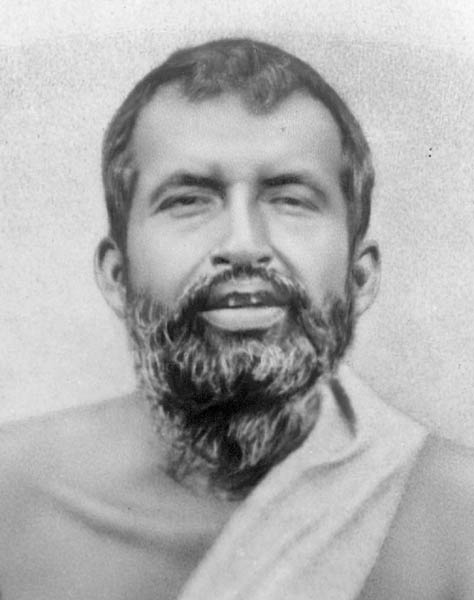
For evidence of this, one of Hinduism’s nineteenth-century saints sought God successively through the practices of a number of the world’s great religions. In turn he sought God through the person of Christ, the imageless, God-directed teachings of the Koran, and a variety of Hindu God-embodiments. In each instance the result was the same: The same God (he reported) was revealed, now incarnate in Christ, now speaking through the Prophet Muhammad, now in the guise of Vishnu the Preserver or Shiva the Completer. Out of these experiences came a set of teachings on the essential unity of the great religions that comprise Hinduism’s finest voice on this topic. As tone is as important as idea here, we shall come closer to the Hindu position if we relinquish the remainder of this section to Ramakrishna’s words instead of trying the paraphrase them.

God has made different religions to suit different aspirations, times, and countries. All doctrines are only so many paths; but a path is by no means God Himself. Indeed, one can reach God if one follows any of the paths with whole-hearted devotion. One may eat a cake with icing either straight or sidewise. It will taste sweet either way. 

As one and the same material, water, is called by different names by different peoples, one calling it water, another eau, a third aqua, and another pani, so the one Everlasting-Intelligent-Bliss is invoked by some as God, by some as Allah, by some as Jehovah, and by others as Brahman.

As one can ascend to the top of a house by means of a ladder or a bamboo or a staircase or a rope, so diverse are the ways and means to approach God, and every religion in the world shows one of these ways. 

Bow down and worship where others kneel, for where so many have been paying the tribute of adoration the kind Lord must manifest himself, for he is all mercy. 

The Saviour is the messenger of God. He is like the viceroy of a mighty monarch. As when there is some disturbance in a far-off province, the king sends his viceroy to quell it, so wherever there is a decline of religion in any part of the world, God sends his Saviour there. It is one and the same Saviour that, having plunged into the ocean of life, rises up in one place and is known as Krishna, and diving down again rises in another place and is known as Christ. 

Everyone should follow one’s own religion. A Christian should follow Christianity, a Muslim should follow Islam, and so on. For the Hindus the ancient path, the path of the Aryan sages, is the best. 

People partition off their lands by means of boundaries, but no one can partition off the all-embracing sky overhead. The indivisible sky surrounds all and includes all. So people in ignorance say, “My religion is the only one, my religion is the best.” But when a heart is illumined by true knowledge, it knows that above all these wars of sects and sectarians presides the one indivisible, eternal, all-knowing bliss. 

As a mother, in nursing her sick children, gives rice and curry to one, and sago arrowroot to another, and bread and butter to a third, so the Lord has laid out different paths for different people suitable for their natures. 

There was a man who worshipped Shiva but hated all other deities. One day Shiva appeared to him and said, “I shall never be pleased with you so long as you hate the other gods.” But the man was inexorable. After a few days Shiva again appeared to him and said, “I shall never be pleased with you so long as you hate.” The man kept silent. After a few days Shiva again appeared to him. This time one side of his body was that of Shiva, and the other side that of Vishnu. The man was half pleased and half displeased. He laid his offerings on the side representing Shiva, and did not offer anything to the side representing Vishnu. Then Shiva said, “Your bigotry is unconquerable. I, by assuming this dual aspect, tried to convince you that all gods and goddesses are but various aspects of the one Absolute Brahman.

.

HINDUISM: The World—Welcome and Farewell

Reference: Hinduism

Note: The original Text is provided below.
Previous / Next

This is a world in which good and evil, pleasure and pain, knowledge and ignorance, interweave in about equal proportions. And this is the way things will remain. The purpose of this world is to provide a training ground for the human spirit. 

.

Summary

.

Comments

.

Original Text

A ground plan of the world as conceived by Hinduism would look something like this: There would be innumerable galaxies comparable to our own, each centering in an earth from which people wend their ways to God. Ringing each earth would be a number of finer worlds above and coarser ones below, to which souls repair between incarnations according to their just desserts. 

“Just as the spider pours forth its thread from itself and takes it back again, even so the universe grows from the Imperishable.” Periodically the thread is withdrawn; the cosmos collapses into a Night of Brahma, and all phenomenal being is returned to a state of pure potentiality. Thus, like a gigantic accordion, the world swells out and is drawn back in. This oscillation is built into the scheme of things; the universe had no beginning and will have no end. The time frame of Indian cosmology boggles the imagination and may have something to do with the proverbial oriental indifference to haste. The Himalayas, it is said, are made of solid granite. Once every thousand years a bird flies over them with a silk scarf in its beak, brushing their peaks with its scarf. When by this process the Himalayas have been worn away, one day of a cosmic cycle will have elapsed.

When we turn from our world’s position in space and time to its moral character, the first point has already been established in the preceding section. It is a just world in which everyone gets what is deserved and creates his or her own future.

The second thing to be said is that it is a middle world. This is so, not only in the sense that it hangs midway between heavens above and hells below. It is also middle in the sense of being middling, a world in which good and evil, pleasure and pain, knowledge and ignorance, interweave in about equal proportions. And this is the way things will remain. All talk of social progress, of cleaning up the world, of creating the kingdom of heaven on earth—in short, all dreams of utopia—are not just doomed to disappointment; they misjudge the world’s purpose, which is not to rival paradise but to provide a training ground for the human spirit. The world is the soul’s gymnasium, its school and training field. What we do is important; but ultimately, it is important for the discipline it offers our individual character. We delude ourselves if we expect it to change the world fundamentally. Our work in the world is like bowling in an uphill alley; it can build muscles, but we should not think that our rolls will permanently deposit the balls at the alley’s other end. They all roll back eventually, to confront our children if we ourselves have passed on. The world can develop character and prepare people to look beyond it—for these it is admirably suited. But it cannot be perfected. “Said Jesus, blessed be his name, this world is a bridge: pass over, but build no house upon it.” It is true to Indian thought that this apocryphal saying, attributed to the poet Kabir, should have originated on her soil.

If we ask about the world’s metaphysical status, we shall have to continue the distinction we have watched divide Hinduism on every major issue thus far; namely, the one between the dual and the non-dual points of view. On the conduct of life this distinction divides jnana yoga from bhakti yoga; on the doctrine of God it divides the personal from the transpersonal view; on the issue of salvation it divides those who anticipate merging with God from those who aspire to God’s company in the beatific vision. In cosmology an extension of the same line divides those who regard the world as being from the highest perspective unreal from those who believe it to be real in every sense.

All Hindu religious thought denies that the world of nature is self-existent. It is grounded in God, and if this divine base were removed it would instantly collapse into nothingness. For the dualist the natural world is as real as God is, while of course being infinitely less exalted. God, individual souls, and nature are distinct kinds of beings, none of which can be reduced to the others. Non-dualists, on the other hand, distinguish three modes of consciousness under which the world can appear. The first is hallucination, as when we see pink elephants, or when a straight stick appears bent under water. Such appearances are corrected by further perceptions, including those of other people. Second, there is the world as it normally appears to the human senses. Finally, there is the world as it appears to yogis who have risen to a state of superconsciousness. Strictly speaking, this is no world at all, for here every trait that characterizes the world as normally perceived—its multiplicity and materiality—vanishes. There is but one reality, like a brimming ocean, boundless as the sky, indivisible, absolute. It is like a vast sheet of water, shoreless and calm. 

The non-dualist claims that this third perspective is the most accurate of the three. By comparison, the world that normally appears to us is maya. The word is often translated “illusion,” but this is misleading. For one thing it suggests that the world need not be taken seriously. This the Hindus deny, pointing out that as long as it appears real and demanding to us we must accept it as such. Moreover, maya does have a qualified, provisional reality.

Were we asked if dreams are real, our answer would have to be qualified. They are real in the sense that we have them, but they are not real inasmuch as what they depict need not exist objectively. Strictly speaking, a dream is a psychological construct, a mental fabrication. The Hindus have something like this in mind when they speak of maya. The world appears as the mind in its normal condition perceives it; but we are not justified in thinking that reality as it is in itself is as it is thus seen. A young child seeing its first movie will mistake the moving pictures for actual objects, unaware that the lion growling from the screen is projected from a booth at the rear of the theater. It is the same with us; the world we see is conditioned, and in that sense projected, by our perceptual mechanisms. To change the metaphor, our sense receptors register only a narrow band of electromagnetic frequencies. With the help of microscopes and other amplifiers, we can detect some additional wavelengths, but superconsciousness must be cultivated to know reality itself. In that state our receptors would cease to refract, like a prism, the pure light of being into a spectrum of multiplicity. Reality would be known as it actually is: one, infinite, unalloyed.

Maya comes from the same root as magic. In saying the world is maya, non-dual Hinduism is saying that there is something tricky about it. The trick lies in the way the world’s materiality and multiplicity pass themselves off as being independently real—real apart from the stance from which we see them—whereas in fact reality is undifferentiated Brahman throughout, even as a rope lying in the dust remains a rope while being mistaken for a snake. Maya is also seductive in the attractiveness in which it presents the world, trapping us within it and leaving us with no desire to journey on.

But again we must ask, if the world is only provisionally real, will it be taken seriously? Will not responsibility flag? Hinduism thinks not. In a sketch of the ideal society comparable to Plato’s Republic, the Tripura Rahasya portrays a prince who achieves this outlook on the world and is freed thereby from “the knots of the heart” and “the identification of the flesh with the Self.” The consequences depicted are far from asocial. Thus liberated, the prince performs his royal duties efficiently but dispassionately, “like an actor on the stage.” Following his teachings and example, his subjects attain a comparable freedom and are no longer motivated by their passions, though they still possess them. Worldly affairs continue, but the citizens are relieved of old resentments and are less buffeted by fears and desires. “In their everyday life, laughing, rejoicing, wearied or angered, they behaved like men intoxicated and indifferent to their own affairs.” Wherefore the sages that visited there called it “the City of Resplendent Wisdom.”

If we ask why Reality, which is in fact one and perfect, is seen by us as many and marred; why the soul, which is really united with God throughout, sees itself for a while as sundered; why the rope appears to be a snake—if we ask these questions we are up against the question that has no answer, any more than the comparable Christian question of why God created the world has an answer. The best we can say is that the world is lila, God’s play. Children playing hide and seek assume various roles that have no validity outside the game. They place themselves in jeopardy and in conditions from which they must escape. Why do they do so when in a twinkling they could free themselves by simply stepping out of the game? The only answer is that the game is its own point and reward. It is fun in itself, a spontaneous overflow of creative, imaginative energy. So too in some mysterious way must it be with the world. Like a child playing alone, God is the Cosmic Dancer, whose routine is all creatures and all worlds. From the tireless stream of God’s energy the cosmos flows in endless, graceful reenactment.

Those who have seen images of the goddess Kali dancing on a prostrate body while holding in her hands a sword and a severed head; those who have heard that there are more Hindu temples dedicated to Shiva (whose haunt is the crematorium and is God in his aspect of destroyer) than there are temples to God in the form of creator and preserver combined—those who know these things will not jump quickly to the conclusion that the Hindu worldview is gentle. What they overlook is that what Kali and Shiva destroy is the finite in order to make way for the infinite.

Because Thou lovest the Burning-ground,
I have made a Burning-ground of my heart—
That Thou, Dark One, hunter of the Burning-ground,
Mayest dance Thy eternal dance. (Bengali hymn)

Seen in perspective, the world is ultimately benign. It has no permanent hell and threatens no eternal damnation. It may be loved without fear; its winds, its ever-changing skies, its plains and woodlands, even the poisonous splendor of the lascivious orchid—all may be loved provided that they are not dallied over indefinitely. For all is maya, lila, the spell-binding dance of the cosmic magician, beyond which lies the boundless good, which all will achieve in the end. It is no accident that the only art form India failed to produce was tragedy.

In sum: To the question, “What kind of world do we have?” Hinduism answers:

  1. A multiple world that includes innumerable galaxies horizontally, innumerable tiers vertically, and innumerable cycles temporally.
  2. A moral world in which the law of karma is never suspended.
  3. A middling world that will never replace paradise as the spirit’s destination.
  4. A world that is maya, deceptively tricky in passing off its multiplicity, materiality, and dualities as ultimate when they are actually provisional.
  5. A training ground on which people can develop their highest capacities.
  6. A world that is lila, the play of the Divine in its Cosmic Dance—untiring, unending, resistless, yet ultimately beneficent, with a grace born of infinite vitality.

.

HINDUISM: Coming of Age in the Universe

Reference: Hinduism

Note: The original Text is provided below.
Previous / Next

The universe is like the Kalpataru tree. It grants all wishes, but together with consequences. It wises the soul up as it passes through it.

.

Summary

.

Comments

.

Original Text

With God in pivotal position in the Hindu scheme, we can return to human beings to draw together systematically the Hindu concept of their nature and destiny. 

Individual souls, or jivas, enter the world mysteriously; by God’s power we may be sure, but how or for what reason we are unable fully to explain. Like bubbles that form on the bottom of a boiling teakettle, they make their way through the water (universe) until they break free into the limitless atmosphere of illumination (liberation). They begin as the souls of the simplest forms of life, but they do not vanish with the death of their original bodies. In the Hindu view spirit no more depends on the body it inhabits than body depends on the clothes it wears or the house it lives in. When we outgrow a suit or find our house too cramped, we exchange these for roomier ones that offer our bodies freer play. Souls do the same.

Worn-out garments
Are shed by the body:
Worn-out bodies
Are shed by the dweller. (Bhagavad-Gita, II:22)

This process by which an individual jiva passes through a sequence of bodies is known as reincarnation or transmigration of the soul—in Sanskrit samsara, a word that signifies endless passage through cycles of life, death, and rebirth. On the subhuman level the passage is through a series of increasingly complex bodies until at last a human one is attained. Up to this point the soul’s growth is virtually automatic. It is as if the soul were growing as steadily and normally as a plant and receiving at each successive embodiment a body that, being more complex, provides the needed largess for its new capabilities.

With the soul’s graduation into a human body, this automatic, escalator-like mode of ascent comes to an end. Its entry into this exalted habitation is evidence that the soul has reached self-consciousness, and with this estate come freedom, responsibility, and effort.

The mechanism that ties these new acquisitions together is the law of karma. The literal meaning of karma (as we encountered it in karma yoga) is work, but as a doctrine it means, roughly, the moral law of cause and effect. Science has alerted the West to the importance of causal relationships in the physical world. Every physical event, we are inclined to believe, has its cause, and every cause will have its determinate effects. India extends this concept of causation to include moral and spiritual life as well. To some extent the West has as well. “As a man sows, so shall he reap”; or again, “Sow a thought and reap an act, sow an act and reap a habit, sow a habit and reap a character; sow a character and reap a destiny”—these are ways the West has put the point. The difference is that India tightens up and extends its concept of moral law to see it as absolute; it brooks no exceptions. The present condition of each interior life—how happy it is, how confused or serene, how much it sees—is an exact product of what it has wanted and done in the past. Equally, its present thoughts and decisions are determining its future experiences. Each act that is directed upon the world has its equal and opposite reaction on oneself. Each thought and deed delivers an unseen chisel blow that sculpts one’s destiny.

This idea of karma and the completely moral universe it implies carries two important psychological corollaries. First, it commits the Hindu who understands it to complete personal responsibility. Each individual is wholly responsible for his or her present condition and will have exactly the future he or she is now creating. Most people are not willing to admit this. They prefer, as the psychologists say, to project—to locate the source of their difficulties outside themselves. They want excuses, someone to blame so that they may be exonerated. This, say the Hindus, is immature. Everybody gets exactly what is deserved—we have made our beds and must lie in them. Conversely, the idea of a moral universe closes the door on chance or accident. Most people have little idea how much they secretly bank on luck—hard luck to justify past failures, good luck to bring future successes. How many people drift through life simply waiting for the breaks, for that moment when a lucky lottery number brings riches and a dizzying spell of fame. If you approach life this way, says Hinduism, you misjudge your position pathetically. Breaks have nothing to do with protracted levels of happiness, nor do they happen by chance. We live in a world in which there is no chance or accident. Those words are simply covers for ignorance.

Because karma implies a lawful world, it has often been interpreted as fatalism. However often Hindus may have succumbed to this interpretation, it is untrue to the doctrine itself. Karma decrees that every decision must have its determinate consequences, but the decisions themselves are, in the last analysis, freely arrived at. To approach the matter from the other direction, the consequences of one’s past decisions condition one’s present lot, as a card player finds himself dealt a particular hand while remaining free to play that hand in a variety of ways. This means that the career of a soul as it threads its course through innumerable human bodies is guided by its choices, which are controlled by what the soul wants and wills at each stage of the journey.

What its wants are, and the order in which they appear, can be summarized quickly here, for previous sections have considered them at length. When it first enters a human body, a jiva (soul) wants nothing more than to taste widely of the sense delights its new physical equipment makes possible. With repetition, however, even the most ecstatic of these falls prey to habituation and grows monotonous, whereupon the jiva turns to social conquests to escape boredom. These conquests—the various modes of wealth, fame, and power—can hold the individual’s interest for a considerable time. The stakes are high and their attainment richly gratifying. Eventually, however, this entire program of personal ambition is seen for what it is: a game—a fabulous, exciting, history-making game, but a game all the same.

As long as it holds one’s interest, it satisfies. But when novelty wears off, when a winner has acknowledged with the same bow and pretty little speech the accolades that have come so many times before, he or she begins to yearn for something new and more deeply satisfying. Duty, the total dedication of one’s life to one’s community, can fill the need for a while, but the ironies and anomalies of history make this object too a revolving door. Lean on it and it gives, but in time one discovers that it is going round and round. After social dedication the only good that can satisfy is one that is infinite and eternal, whose realization can turn all experience, even the experience of time and apparent defeat, into splendor, as storm clouds drifting through a valley look different viewed from a peak that is bathed in sunshine. The bubble is approaching the water’s surface and is demanding final release.

The soul’s progress through these ascending strata of human wants does not take the form of a straight line with an acute upward angle. It fumbles and zigzags its way toward what it really needs. In the long run, however, the trend of attachments will be upward—everyone finally gets the point. By “upward” here is meant a gradual relaxation of attachment to physical objects and stimuli, accompanied by a progressive release from self-interest. We can almost visualize the action of karma as it delivers the consequences of what the soul reaches out for. It is as if each desire that aims at the ego’s gratification adds a grain of concrete to the wall that surrounds the individual self and insulates it from the infinite sea of being that surrounds it; while, conversely, each compassionate or disinterested act dislodges a grain from the confining dike. Detachment cannot be overtly assessed, however; it has no public index. The fact that someone withdraws to a monastery is no proof of triumph over self and craving, for these may continue to abound in the imaginations of the heart. Conversely, an executive may be heavily involved in worldly responsibilities; but if he or she manages them detachedly—living in the world as a mudfish lives in the mud, without the mud’s sticking to it—the world becomes a ladder to ascend.

Never during its pilgrimage is the human spirit completely adrift and alone. From start to finish its nucleus is the Atman, the God within, exerting pressure to “out” like a jack-in-the-box. Underlying its whirlpool of transient feelings, emotions, and delusions is the self-luminous, abiding point of the transpersonal God. Though it is buried too deep in the soul to be normally noticed, it is the sole ground of human existence and awareness. As the sun lights the world even when cloud-covered, “the Immutable is never seen but is the Witness; It is never heard but is the Hearer; it is never thought, but is the Thinker; is never known, but is the Knower. There is no other witness but This, no other knower but This.” But God is not only the empowering agent in the soul’s every action. In the end it is God’s radiating warmth that melts the soul’s icecap, turning it into a pure capacity for God.

What happens then? Some say the individual soul passes into complete identification with God and loses every trace of its former separateness. Others, wishing to taste sugar, not be sugar, cherish the hope that some slight differentiation between the soul and God will still remain—a thin line upon the ocean that provides nevertheless a remnant of personal identity that some consider indispensable for the beatific vision.

Christopher Isherwood has written a story based on an Indian fable that summarizes the soul’s coming of age in the universe. An old man seated on a lawn with a group of children around him tells them of the magic Kalpataru tree that fulfills all wishes. “If you speak to it and tell it a wish; or if you lie down under it and think, or even dream, a wish, then that wish will be granted.” The old man proceeds to tell them that he once obtained such a tree and planted it in his garden. “In fact,” he tells them, “that is a Kalpataru over there”.

With that the children rush to the tree and begin to shower it with requests. Most of these turn out to be unwise, ending in either indigestion or tears. But the Kalpataru grants them indiscriminately. It has no interest in giving advice.

Years pass, and the Kalpataru is forgotten. The children have now grown into men and women and are trying to fulfill new wishes that they have found. At first they want their wishes to be fulfilled instantly, but later they search for wishes that can be fulfilled only with ever-increasing difficulty.

The point of the story is that the universe is one gigantic Wishing Tree, with branches that reach into every heart. The cosmic process decrees that sometime or other, in this life or another, each of these wishes will be granted—together, of course, with consequences. There was one child from the original group, however, so the story concludes, who did not spend his years skipping from desire to desire, from one gratification to another. For from the first he had understood the real nature of the Wishing Tree. “For him, the Kalpataru was not the pretty magic tree of his uncle’s story—it did not exist to grant the foolish wishes of children—it was unspeakably terrible and grand. It was his father and his mother. Its roots held the world together, and its branches reached beyond the stars. Before the beginning it had been—and would be, always.”

.