Category Archives: Postulate Mechanics

Space and Medium of Light

Reference: Essays on Substance

Space and Medium of Light

A question was asked:

“Why is space not considered to be the medium of light when its properties determine the speed of light?”

In 1873, Maxwell’s effort to determine the relationship between electromagnetic theories and the Newton’s theory of motion resulted in the amazing discovery that light was an electromagnetic phenomenon.

Maxwell wrote in the preface to the first edition of his book A TREATISE ON ELECTRICITY AND MAGNETISM:

“The most important aspect of any phenomenon from a mathematical point of view is that of a measurable quantity… I have therefore thought that a treatise would be useful which should have for its principal object to take up the whole subject in a methodical manner, and which should also indicate how each part of the subject is brought within the reach of methods of verification by actual measurement… before I began the study of electricity I resolved to read no mathematics on the subject till I had first read through Faraday’s Experimental Researches in Electricity.

“As I proceeded with the study of Faraday, I perceived that his method of conceiving the phenomena was also a mathematical one, though not exhibited in the conventional form of mathematical symbols. I also found that these methods were capable of being expressed in the ordinary mathematical forms, and thus compared with those of the professed mathematicians.

“For instance, Faraday, in his mind’s eye, saw lines of force traversing all space where the mathematicians saw centres of force attracting at a distance: Faraday saw a medium where they saw nothing but distance: Faraday sought the seat of the phenomena in real actions going on in the medium, they were satisfied that they had found it in a power of action at a distance impressed on the electric fluids.

“When I had translated what I considered to be Faraday’s ideas into a mathematical form, I found that in general the results of the two methods coincided, so that the same phenomena were accounted for, and the same laws of action deduced by both methods, but that Faraday’s methods resembled those in which we begin with the whole and arrive at the parts by analysis, while the ordinary mathematical methods were founded on the principle of beginning with the parts and building up the whole by synthesis.”

It is interesting to note that Maxwell finds Faraday’s “lines of force traversing all space” to be mathematically equivalent to other mathematician’s “centers of force attracting at a distance”. Maxwell notes, “Faraday saw a medium where they [other mathematicians] saw nothing but distance”.

Space is not “nothing” because it has the electromagnetic properties of permittivity and permeability. These properties of space determine the speed of light per Maxwell’s equations. This fact alone should be enough to convince that space is the medium through which light travels.

Why is space not considered to be the medium of light? Why can’t the mysterious ether be space itself?

This thinking led to the theory of Substance.

.

Space Contraction

Reference: Essays on Substance

Space Contraction

Einstein’s theory postulates that the speed of light is constant for all observers, regardless of their relative motion. To reconcile this with classical physics, Einstein proposed that space and time are not fixed but relative, leading to effects such as length contraction and time dilation.

I was really surprised at the following Q and A with AI:

QUESTION: Did Einstein believe in the contraction of space with increase in speed?

ANSWER: Yes, Einstein believed in the contraction of space with an increase in speed. This phenomenon, known as length contraction or Lorentz contraction, is a fundamental aspect of Einstein’s theory of special relativity. According to this theory, as objects approach the speed of light, they appear to shorten in the direction of motion from the perspective of a stationary observer.

The penny suddenly dropped for me. Up until now I was thinking that others were misinterpreting Einstein. But this is different. This shows that Einstein must have made some basic error. No wonder he could not win the debate against Bohr on quantum mechanics.

Here we have a very similar situation as it was with the idea of “relativistic mass”.

According to the theory of Substance:

The contraction will occur only when the body is accelerated by an external force. When the external force is removed, the body will decelerate back due to inertia, until both motion and inertia are in balance. The length will be restored.

In an isolated system, motion will increase only when there is reduction of inertia. There is reduction of inertia only when the consistency (RIM) of the substance decreases. The decrease in consistency accompanies a decrease in frequency. The accompanying increase in wavelength then appears as space expansion. Please see the table.

Instead of contracting the space actually expands when motion increases in an isolated system.

The error of Einstein was not considering an isolated system. Furthermore, he failed to fully account for the external influence. But this does not reduce the brilliance of Einstein at all. Without his accomplishments the Theory of Substance would not have been possible.

.

Falsifiability

Reference: Essays on Substance

Falsifiability

There has been a long standing criterion of verifiability. It states that only statements verifiable through direct observation are meaningful. We now add to it the logical criterion falsifiability.

A theory or hypothesis is falsifiable if it can be logically contradicted by a possible direct sensation or experience. For example, a theory “all crows are black” is falsifiable because it is possible that there is a white crow, even though none has been spotted yet.

Therefore, just like verifiability, falsifiability also acts as a deductive standard of evaluation of scientific theories and hypotheses. its purpose is to make the theory predictive and testable, and thus useful in practice.

The predictions about unobserved things based on previous observations is never totally certain. This is emphasized by the falsifiability criterion.

A theory that promises something to be absolute is non-scientific. Therefore, the falsifiability criterion can also be used to distinguish between science and non-science.

.

Relativistic Mass

Reference: Essays on Substance

Relativistic Mass

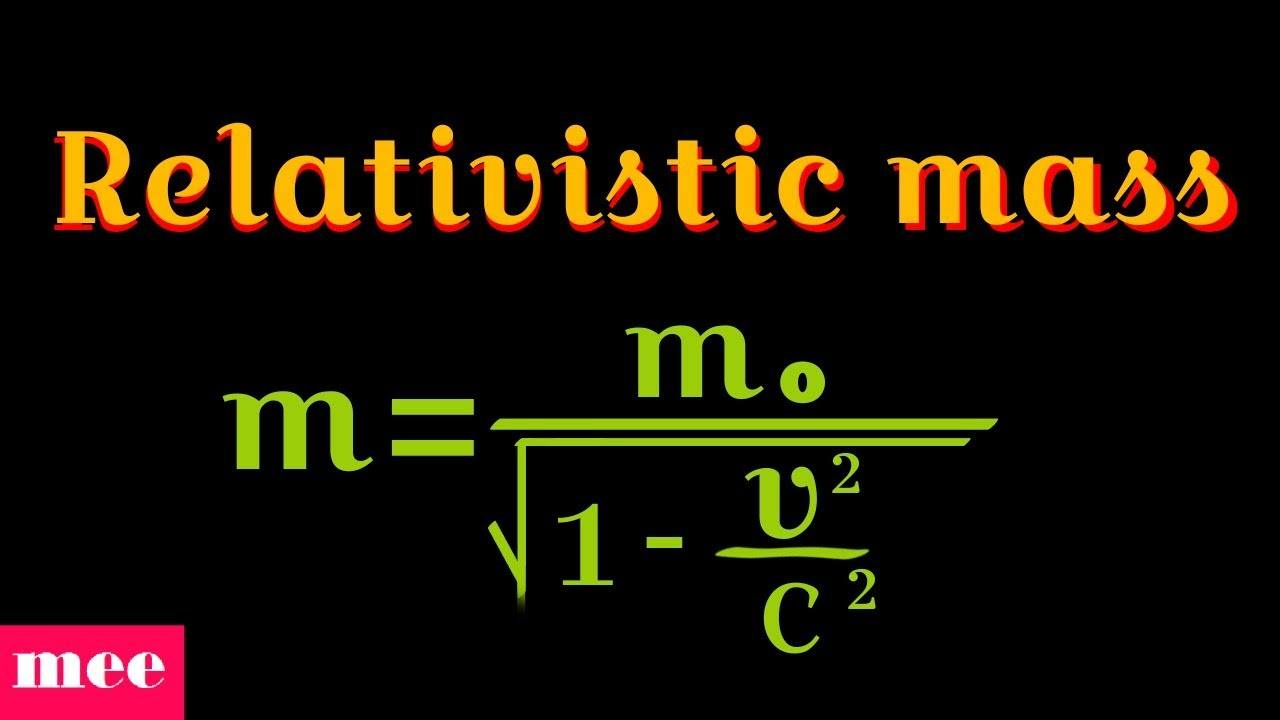
Many people believe, “As the speed of matter approaches the speed of light its mass increases to infinity, and therefore it is impossible to make matter travel faster than light.” Such people misinterpret Einstein’s theory of Relativity. This belief erroneously considers the external force required to increase the velocity of a particle as its “additional mass.”

In fact, a matter particle, as an isolated system, will decrease in its mass and inertia to increase in velocity. If external force is involved, then more force will be required to push a particle that offers less inertia. For example, a photon has no mass or inertia; therefore, it becomes impossible to accelerate it even with an infinite amount of push.

Einstein never derived the expression for relativistic mass himself and privately disapproved of it. By 1948, he had come to denounce the use of relativistic mass as it was being applied in special relativity.

The fact is that matter is very limited in its velocity before it looses its identity as matter and converts into a quanta of energy to have greater speed.

.

New Theory and Skeptics

Reference: Essays on Substance

New Theory and Skeptics

There will always be skeptics to new ideas, theories and discoveries. If these skeptics provide reasoning for their skepticism, then they should be listened to, and effort should be made to resolve the anomalies pointed out. But if the skeptics have a closed mind, and they offer no reasoning but fixed ideas only, then they should be ignored outright.

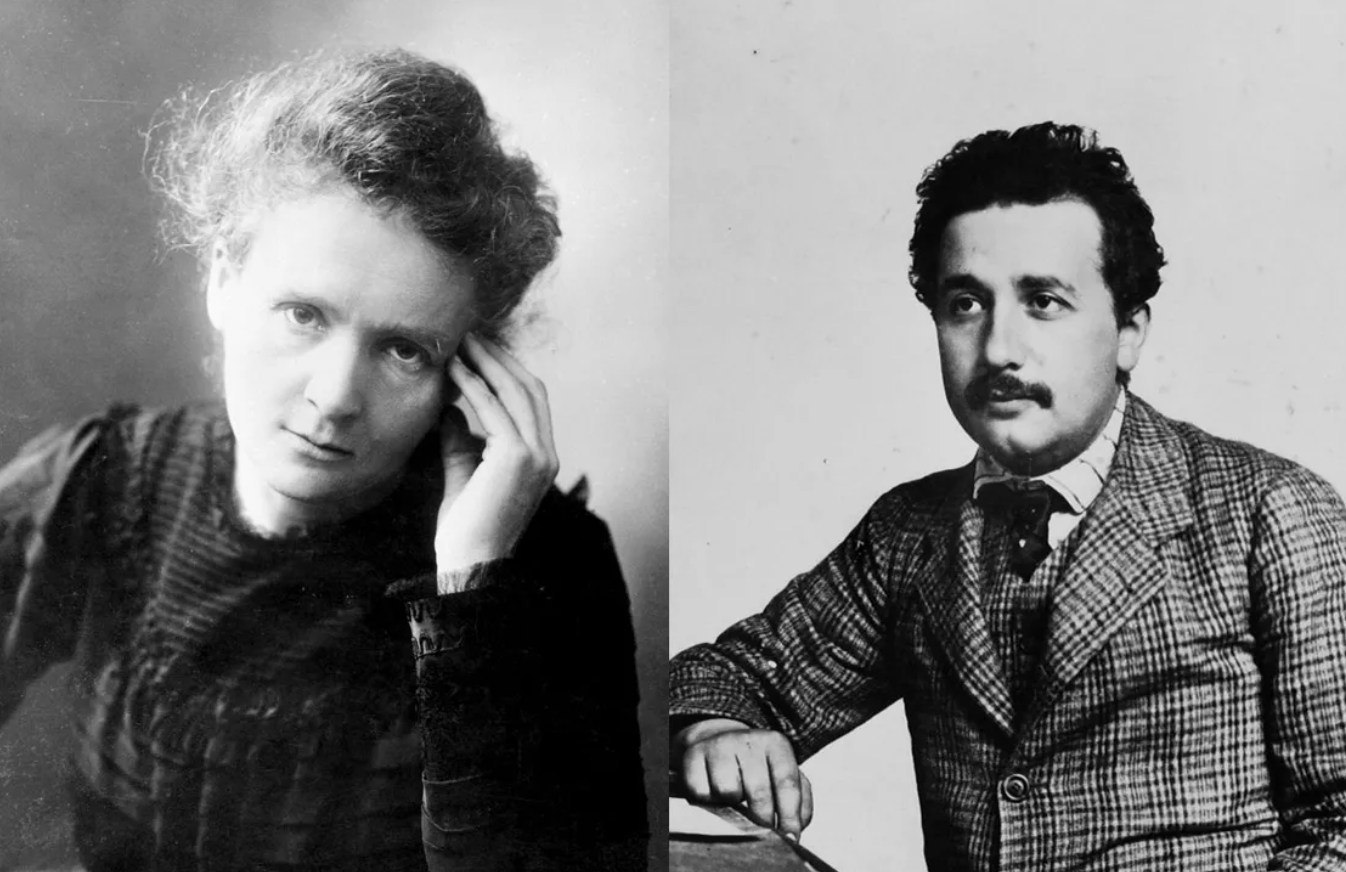
Both Albert Einstein and Marie Curie had their share of skeptics. In 1911, Einstein advised Curie as follows:

“If the rabble continues to occupy itself with you, then simply don’t read that hogwash, but rather leave it to the reptile for whom it has been fabricated.”

Here is Einstein’s letter to Curie in full:

“Highly esteemed Mrs. Curie,

“Do not laugh at me for writing you without having anything sensible to say. But I am so enraged by the base manner in which the public is presently daring to concern itself with you that I absolutely must give vent to this feeling. However, I am convinced that you consistently despise this rabble, whether it obsequiously lavishes respect on you or whether it attempts to satiate its lust for sensationalism! I am impelled to tell you how much I have come to admire your intellect, your drive, and your honesty, and that I consider myself lucky to have made your personal acquaintance in Brussels. Anyone who does not number among these reptiles is certainly happy, now as before, that we have such personages among us as you, and Langevin too, real people with whom one feels privileged to be in contact. If the rabble continues to occupy itself with you, then simply don’t read that hogwash, but rather leave it to the reptile for whom it has been fabricated.

“With most amicable regards to you, Langevin, and Perrin, yours very truly,

“A. Einstein

“P.S. I have determined the statistical law of motion of the diatomic molecule in Planck’s radiation field by means of a comical witticism, naturally under the constraint that the structure’s motion follows the laws of standard mechanics. My hope that this law is valid in reality is very small, though.”

Grateful for Einstein’s support during a time when she was being attacked by the press and others in the scientific community, Curie would go on to become great friends with Einstein. 

.