Category Archives: Philosophy

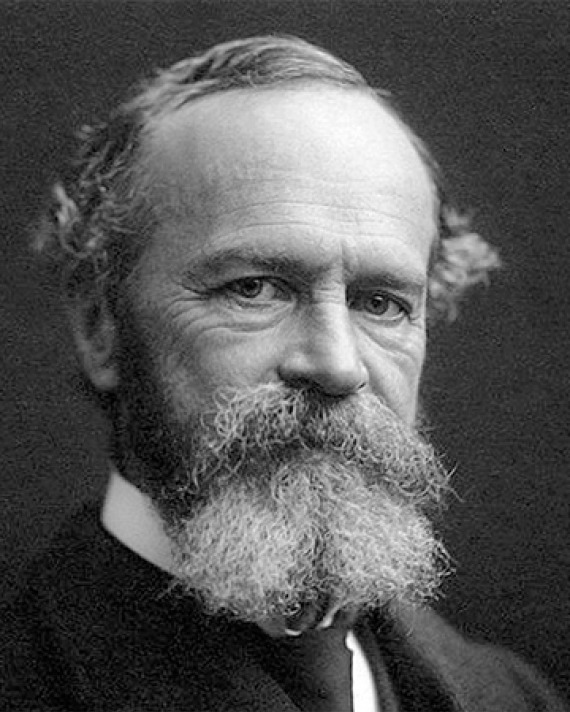
WILLIAM JAMES: Personal

Reference: The Story of Philosophy

This paper presents Chapter XI Section 2.1 from the book THE STORY OF PHILOSOPHY by WILL DURANT. The  contents are from the 1933 reprint of this book by TIME INCORPORATED by arrangement with Simon and Schuster, Inc.

The paragraphs of the original material (in black) are accompanied by brief comments (in color) based on the present understanding.

.

II. WILLIAM JAMES

1. Personal

The reader will not need to be reminded that the philosophy which we have just summarized is a European philosophy in everything but the place of its composition. It has the nuances and polish and mellow resignation characteristic of an old culture; one could tell from any paragraph in the Life of Reason that this is no native American voice.

Santayana’s philosophy, though composed in America, is more European. 

In William James the voice and the speech and the very turn of phrase are American. He pounced eagerly upon such characteristic expressions as “cash-value,” and “results,” and “profits,” in order to bring his thought within the ken of the “man in the street”; he spoke not with the aristocratic reserve of a Santayana or a Henry James, but in a racy vernacular and with a force and directness, which made his philosophy of “‘pragmatism” and “reserve energy” the mental correlate of the “practical” and “strenuous” Roosevelt. And at the same time he phrased for the common man that “tender-minded” trust in the essentials of the old theology which lives side by side, in the American soul, with the realistic spirit of commerce and finance, and with the tough persistent courage that turned a wilderness into the promised land.

In William James the voice and the speech and the very turn of phrase are American. He spoke in a racy vernacular and with a force and directness with the realistic spirit of commerce and finance.

William James was born in New York City in 1842. His father was a Swedenborgian mystic, whose mysticism did no damage to his wit and humor; and the son was not lacking in any of the three. After some seasons in American private schools, William was sent with his brother Henry (one year his junior) to private schools in France. There they fell in with the work of Charcot and other psychopathologists, and took, both of them, a turn to psychology; one of them, to repeat an old phrase, proceeded to write fiction like psychology, while the other wrote psychology like fiction. Henry spent most of his life abroad, and finally became a British citizen. Through his more continuous contact with European culture he acquired a maturity of thought which his brother missed; but William, returning to live in America, felt the stimulation of a nation young in heart and rich in opportunity and hope, and caught so well the spirit of his age and place that he was lifted on the wings of the Zeitgeist to a lonely pinnacle of popularity such as no other American philosopher had ever known.

William James was raised in the mysticism of the Swedenborgian church, and later fell in with the work of Charcot and other psychopathologists. He felt the stimulation of a nation young in heart and rich in opportunity and hope, and caught the spirit of his age and place.

He took his M. D. at Harvard in 1870, and taught there from 1872 to his death in 1910, at first anatomy and physiology, and then psychology, and at last philosophy. His greatest achievement was almost his first—The Principles of Psychology (1890); a fascinating mixture of anatomy, philosophy and analysis; for in James psychology still drips from the foetal membranes of its mother, metaphysics. Yet the book remains the most instructive, and easily the most absorbing, summary of its subject; something of the subtlety which Henry put into his clauses helped William James to the keenest introspection which psychology had witnessed since the uncanny clarity of David Hume.

His greatest achievement was almost his first—The Principles of Psychology (1890); a fascinating mixture of anatomy, philosophy and analysis; for in James psychology still drips from the foetal membranes of its mother, metaphysics. 

This passion for illuminating analysis was bound to lead James from psychology to philosophy, and at last back to metaphysics itself; he argued (against his own positivist inclinations) that metaphysics is merely an effort to think things out clearly; and he defined philosophy, in his simple and pellucid manner, as “only thinking about things in the most comprehensive possible way.” So, after 1900, his publications were almost all in the field of philosophy. He began with The Will to Believe (1897); then, after a masterpiece of psychological interpretation—Varieties of Religious Experience (1902)—he passed on to his famous books on Pragmatism (1907); A Pluralistic Universe (1909), and The Meaning of Truth (1909). A year after his death came Some Problems of Philosophy (1911); and later, an important volume of Essays in Radical Empiricism (1912). We must begin our study with this last book, because it was in these essays that James formulated most clearly the bases of his philosophy. *

* The reader who has leisure for but one book of James’s should go directly to Pragmatism, which he will find a fountain of clarity as compared with most philosophy. If he has more time, he will derive abundant profit from the brilliant pages of the (unabbreviated) Psychology. Henry James has written two volumes of autobiography, in which there is much delightful gossip about William. Flournoy has a good volume of exposition, and Schinz’s Anti-Pragmatism is a vigorous criticism.

James argued that metaphysics is merely an effort to think things out clearly; and he defined philosophy as “only thinking about things in the most comprehensive possible way.” 

.

SANTAYANA: Comment

Reference: The Story of Philosophy

This paper presents Chapter XI Section 1.6 from the book THE STORY OF PHILOSOPHY by WILL DURANT. The  contents are from the 1933 reprint of this book by TIME INCORPORATED by arrangement with Simon and Schuster, Inc.

The paragraphs of the original material (in black) are accompanied by brief comments (in color) based on the present understanding.

.

I. GEORGE SANTAYANA

6. Comment

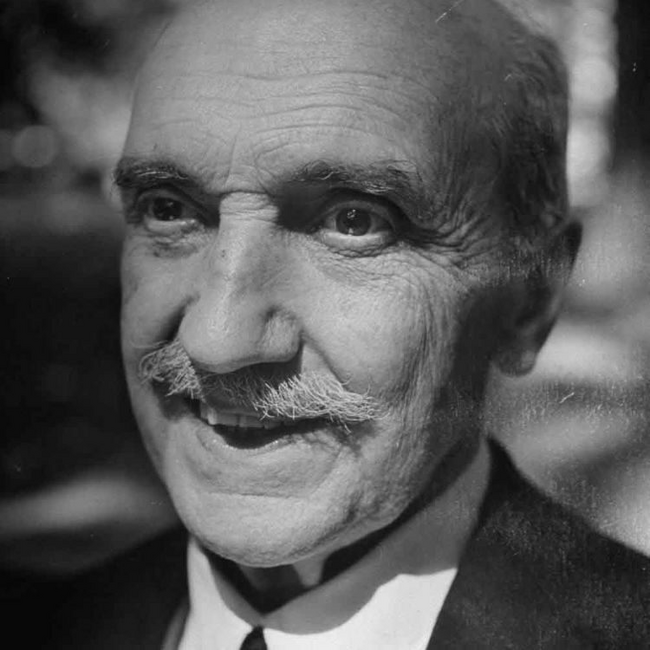
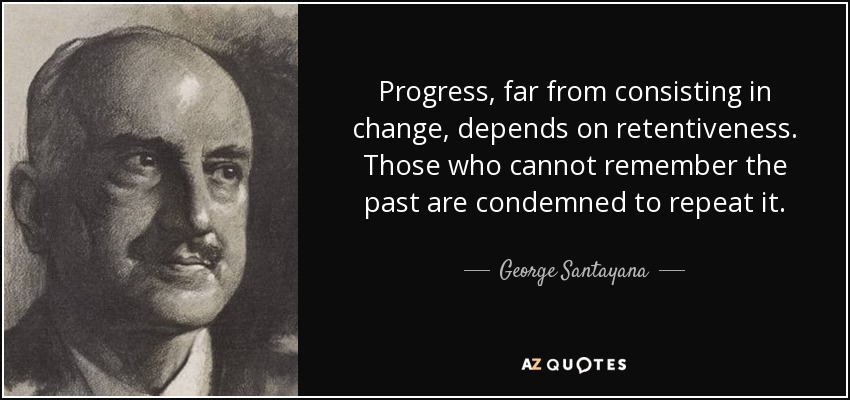
There is in all these pages something of the melancholy of a man separated from all that he loves and was accustomed to a man deracine (uprooted), a Spanish aristocrat exiled to middle-class America. A secret sadness sometimes breaks forth: “That life is worth living,” he says, “is the most necessary of assumptions, and, were it not assumed, the most impossible of conclusions.” In the first volume of “The Life of Reason” he talks of the plot and meaning of human life and history as the subject of philosophy; in the last volume he wonders is there a meaning, or a plot? He has unconsciously described his own tragedy: “There is tragedy in perfection, because the universe in which perfection arises is itself imperfect.” Like Shelley, Santayana has never felt at home on this middling planet; his keen esthetic sense seems to have brought to him more suffering from the ugliness of things than delight in the scattered loveliness of the world. He becomes at times bitter and sarcastic; he has never caught the hearty cleansing laughter of paganism, nor the genial and forgiving humanity of Renan or Anatole France. He stands aloof and superior, and therefore alone. “What is the part of wisdom?” he asks; and answers—“To dream with one eye open; to be detached from the world without being hostile to it; to welcome fugitive beauties and pity fugitive sufferings, without forgetting for a moment how fugitive they are.”

Santayana has never caught the hearty cleansing laughter of paganism, nor the genial and forgiving humanity of Renan or Anatole France. He stands aloof and superior, and therefore alone.

But perhaps this constant memento mori (remember that you must die) is a knell to joy; to live, one must remember life more than death; one must embrace the immediate and actual thing as well as the distant and perfect hope. “The goal of speculative thinking is none other than to live as much as may be in the eternal, and to absorb and be absorbed in the truth.” But this is to take philosophy more seriously than even philosophy deserves to be taken; and a philosophy which withdraws one from life is as much awry as any celestial superstition in which the eye, rapt in some vision of another world, loses the meat and wine of this one. “Wisdom comes by disillusionment,” says Santayana; but again that is only the beginning of wisdom, as doubt is the beginning of philosophy; it is not also the end and fulfillment. The end is happiness, and philosophy is only; a means; if we take it as an end we become like the Hindu mystic whose life-purpose is to concentrate upon his navel.

To live, one must remember life more than death; one must embrace the immediate and actual thing as well as the distant and perfect hope. A philosophy which withdraws one from life is as much awry as any celestial superstition in which the eye, rapt in some vision of another world, loses the meat and wine of this one. 

Perhaps Santayana’s conception of the universe as merely a material mechanism has something to do with this sombre withdrawal into himself; having taken life out of the world, he seeks for it in his own bosom. He protests that it is not so; and though we may not believe him, his too-much protesting disarms us with its beauty:

A theory is not an unemotional thing. If music can be full of passion, merely by giving form to a single sense, how much more beauty or terror may not a vision be pregnant with which brings order and method into everything that we know. … If you are in the habit of believing in special providences, or of expecting to continue your romantic adventures in a second life, materialism will dash your hopes most unpleasantly, and you may think for a year or two that you have nothing left to live for. But a thorough materialist, one born to the faith and not half plunged into it by an unexpected christening in cold water, will be like the superb Democritus, a laughing philosopher. His delight in a mechanism that can fall into so many marvellous and beautiful shapes, and can generate so many exciting passions, should be of the same intellectual quality as that which the visitor feels in a museum of natural history, where he views the myriad butterflies in their cases, the flamingoes and shell-fish, the mammoths and gorillas. Doubtless there were pangs in that incalculable life; but they were soon over; and how splendid meantime was the pageant, how infinitely interesting the universal interplay, and how foolish and inevitable those absolute little passions.

Perhaps Santayana’s conception of the universe as merely a material mechanism has something to do with this sombre withdrawal into himself; having taken life out of the world, he seeks for it in his own bosom. 

But perhaps the butterflies, if they could speak, would remind us that a museum (like a materialist philosophy) is only a show-case of lifeless things; that the reality of the world eludes these tragic preservations, and resides again in the pangs of passion, in the ever-changing and never-ending flow of life. “Santayana,” says an observant friend,

had a natural preference for solitude. … I remember leaning over the railing of an ocean liner anchored at Southampton and watching passengers from the English tender crowd up the gang-plank to the steamer; one only stood apart at the edge of the tender, with calm and amused detachment observed the haste and struggle of his fellow-passengers, and not till the deck had been cleared, followed himself. ‘Who could it be but Santayana?’ a voice said beside me; and we all felt the satisfaction of finding a character true to himself.

Perhaps the reality of the world eludes these tragic preservations, and resides again in the pangs of passion, in the ever-changing and never-ending flow of life.

After all, we must say just that, too, of his philosophy: it is a veracious and fearless self-expression; here a mature and subtle, though too sombre, soul has written itself down quietly, in statuesque and classic prose. And though we may not like its minor key, its undertone of sweet regret for a vanished world, we see in it the finished expression of this dying and nascent age, in which men cannot be altogether wise and free, because they have abandoned their old ideas and have not yet found the new ones that shall lure them nearer to perfection.

Santayana’s philosophy is a veracious and fearless self-expression; here a mature and subtle, though too sombre, soul has written itself down quietly, in statuesque and classic prose. 

.

SANTAYANA: Reason in Society

Reference: The Story of Philosophy

This paper presents Chapter XI Section 1.5 from the book THE STORY OF PHILOSOPHY by WILL DURANT. The  contents are from the 1933 reprint of this book by TIME INCORPORATED by arrangement with Simon and Schuster, Inc.

The paragraphs of the original material (in black) are accompanied by brief comments (in color) based on the present understanding.

.

I. GEORGE SANTAYANA

5. Reason in Society

The great problem of philosophy is to devise a means whereby men may be persuaded to virtue without the stimulus of supernatural hopes and fears. Theoretically it solved this problem twice; both in Socrates and in Spinoza it gave the world a sufficiently perfect system of natural or rational ethics. If men could be moulded to either philosophy, all would be well. But “a truly rational morality or social regimen has never existed in the world, and is hardly to be looked for”; it remains the luxury of philosophers. “A philosopher has a haven in himself, of which I suspect the fabled bliss to follow in other lives … is only a poetic symbol; he has pleasure in truth, and an equal readiness to enjoy the scene or quit it” (though one may observe a certain obstinate longevity in him). For the rest of us the avenue of moral development must lie, in the future as in the past, in the growth of those social emotions which bloom in the generous atmosphere of love and the home.”

The great problem of philosophy is to devise a means whereby men may be persuaded to virtue without the stimulus of supernatural hopes and fears. Man is naturally attuned to the stimulus of reward and punishment instead of rational ethics.

It is true, as Schopenhauer argued, that love is a deception practised upon the individual by the race; that “nine-tenths of the cause of love are in the lover, for one-tenth that may be in the object”; and that love “fuses the soul again into the impersonal blind flux.” Nevertheless, love has its recompenses; and in his greatest sacrifice man finds his happiest fulfilment. “Laplace is reported to have said on his deathbed that science was mere trifling, and that nothing was real but love.” After all, romantic love, despite its poetical delusions, ends normally in a relationship—of parent and child—far more satisfying to the instincts than any celibate security. Children are our immortality; and “we commit the blotted manuscript of our lives more willingly to the flames, when we find the immortal text half engrossed in a fairer copy.”

Nevertheless, love has its recompenses; and in his greatest sacrifice man finds his happiest fulfillment. Even romantic love ends normally in a relationship—of parent and child—far more satisfying to the instincts than any celibate security. 

The family is the avenue of human perpetuity, and therefore still the basic institution among men; it could carry on the race even if all other institutions failed. But it can conduct civilization only to a certain simple pitch; further development demands a larger and more complex system in which the family ceases to be the productive unit, loses its control over the economic relations of its members, and finds its authority and its powers more and more appropriated by the state. The state may be a monster, as Nietzsche called it; a monster of unnecessary size; but its centralized tyranny has the virtue of abolishing the miscellaneous and innumerable petty tyrannies by which life was of old pestered and confined. One master pirate, accepting tribute quietly, is better than a hundred pirates, taking toll without warning and without stint.

The family is the avenue of human perpetuity, but the development of the society demands a larger and more complex system in which the family finds its authority and its powers more and more appropriated by the state. 

Hence, in part, the patriotism of the people; they know that the price they pay for government is cheaper than the cost of chaos. Santayana wonders whether such patriotism does more harm than good; for it tends to attach the stigma of disloyalty to advocates of change. “To love one’s country, unless that love is quite blind and lazy, must involve a distinction between the country’s actual condition and its inherent ideal; and this distinction in turn involves a demand for changes and for effort.” On the other hand, race patriotism is indispensable. “Some races are obviously superior to others. A more thorough adjustment to the conditions of existence has given their spirit victory, scope, and a relative stability.” Hence intermarriage is perilous, except between races of acknowledged equality and stability. “The Jews, the Greeks, the Romans, the English, were never so great as when they confronted other nations, reacting against them and at the same time, perhaps, adopting their culture; but this greatness fails inwardly whenever contact leads to amalgamation.”

People know that the price they pay for government is cheaper than the cost of chaos. Patriotism must involve a distinction between the country’s actual condition and its inherent ideal, that spurs the effort for changes. The intermarriage between races should spur changes as well.

The great evil of the state is its tendency to become an engine of war, a hostile fist shaken in the face of a supposedly inferior world. Santayana thinks that no people has ever won a war.

Where parties and governments are bad, as they are in most ages and countries, it makes practically no difference to a community, apart from local ravages, whether its own army or the enemy’s is victorious in war. … The private citizen in any event continues in such countries to pay a maximum of taxes and to suffer, in all his private interests, a maximum of vexation and neglect. Nevertheless … the oppressed subject will glow like the rest with patriotic ardor, and will decry as dead to duty and honor anyone who points out how perverse is this helpless allegiance to a government representing no public interest.

The great evil of the state is its tendency to become an engine of war, a hostile fist shaken in the face of a supposedly inferior world.

This is strong language for a philosopher; but let us have our Santayana unexpurgated. Often enough, he thinks, conquest and absorption by a larger state is a step forward toward the organization and pacification of mankind; it would be a boon to all the world if all the world were ruled by some great power or group of powers, as all the world was once ruled by Rome, first with the sword and then with the word.

The universal order once dreamt of and nominally almost established, the empire of universal peace, all-permeating rational art, and philosophical worship, is mentioned no more. … Those dark ages, from which our political practice is derived, had a political theory we should do well to study; for their theory about a universal empire and a catholic church was in tum the echo of a former age of reason when a few men conscious of ruling the world had for a moment sought to survey it as a whole and to rule it justIy.*

* Referring, no doubt, to the age of the Antonines, and implicitly accepting the judgment of Gibbon and Renan that this was the finest period in the history of government.

Santayana favors all the world ruled by some great power or group of powers, as all the world was once ruled by Rome, first with the sword and then with the word.

Perhaps the development of international sports may give some outlet to the spirit of group rivalry, and serve in some measure as “a moral equivalent for war”; and perhaps the cross-investments of finance may overcome the tendency of trade to come to blows for the markets of the world. Santayana is not so enamored of industry as Spencer was; he knows its militant as well as its pacific side: and all in all, he feels more at ease in the atmosphere of an ancient aristocracy than in the hum of a modern metropolis. We produce too much, and are swamped with the things we make; “things are in the saddle and ride mankind,” as Emerson put it. “In a world composed entirely of philosophers an hour or two a day of manual labor—a very welcome quality—would provide for material wants.” England is wiser than the United States; for though she too is obsessed with the mania for production, she has in at least a portion of her people realized the value and the arts of leisure.

Santayana is not so enamored of industry as Spencer was; he knows its militant as well as its pacific side: and all in all, he feels more at ease in the atmosphere of an ancient aristocracy than in the hum of a modern metropolis.

He thinks that such culture as the world has known has always been the fruit of aristocracies.

Civilization has hitherto consisted in the diffusion and dilution of habits arising in privileged centres. It has not sprung from the people; it has arisen in their midst by a variation from them, and it has afterward imposed itself on them from above. … A state composed exclusively of such workers and peasants as make up the bulk of modern nations would be an utterly barbarous state. Every liberal tradition would perish in it; and the rational and historic essence of patriotism itself would be lost. The emotion of it, no doubt, would endure, for it is not generosity that the people lack. They possess every impulse; it is experience that they cannot gather, for in gathering it they would be constituting those higher organs that make up an aristocratic society.

Santayana thinks that such culture as the world has known has always been the fruit of aristocracies.

He dislikes the ideal of equality, and argues with Plato that the equality of unequals is inequality. Nevertheless he does not quite sell himself to aristocracy; he knows that history has tried it and found its virtues very well balanced by its defects; that it closes career to unpedigreed talent, that it chokes the growth, in all but a narrow line, of just those superiorities and values that aristocracy would, in theory, develop and use. It makes for culture, but also it makes for tyranny; the slavery of millions pays for the liberty of a few. The first principle of politics should be that a society is to be judged by the measure in which it enhances the life and capacities of its constituent individuals;—“but for the excellence of the typical single life no nation deserves to be remembered more than the sands of the sea.” From this point of view, democracy is a great improvement on aristocracy. But it too has its evils; not merely its corruption and its incompetence, but worse, its own peculiar tyranny, the fetish of uniformity. “There is no tyranny so hateful as a vulgar, anonymous tyranny. It is all-permeating, all-thwarting; it blasts every budding novelty and sprig of genius with its omnipresent and fierce stupidity.”

The first principle of politics should be that a society is to be judged by the measure in which it enhances the life and capacities of its constituent individuals. At the same time, equality and uniformity should not be the goal.

What Santayana despises above all is the chaos and indecent haste of modern life. He wonders was there not more happiness for men in the old aristocratic doctrine that the good is not liberty, but wisdom, and contentment with one’s natural restrictions; the classical tradition knew that only a few can win. But now that democracy has opened the great free-for-all, catch-as-catch-can wrestling match of laissez-faire industrialism, every soul is torn with climbing, and no one knows content. Classes war against one another without restraint; and “whoever is victorious in this struggle (for which liberalism cleared the field) will make an end of liberalism.” This is the nemesis of revolutions, too: that in order to survive they must restore the tyranny which they destroyed.

Revolutions are ambiguous things. Their success is generally proportionate to their power of adaptation and to the reabsorption within them of what they rebelled against. A thousand reforms have left the world as corrupt as ever, for each successful reform has founded a new institution, and this institution has bred its new and congenial abuses.

What Santayana despises above all is the chaos and indecent haste of modern life. The good is not liberty, but wisdom, and contentment with one’s natural restrictions. Revolutions end up restoring the tyranny which they destroyed.

What form of society, then, shall we strive for? Perhaps for none; there is not much difference among them. But if for anyone in particular, for “timocracy.” This would be government by men of merit and honor; it would he an aristocracy, but not hereditary; every man and woman would have an open road according to ability, to the highest offices in the state; but the road would be closed to incompetence, no matter how richly furnished it might be with plebiscites. “The only equality subsisting would be equality of opportunity.” Under such a government corruption would be at a minimum, and science and the arts would flourish through discriminating encouragement. It would be just that synthesis of democracy and aristocracy which the world pines for in the midst of its political chaos today: only the best would rule; but every man would have an equal chance to make himself worthy to be numbered among the best.—It is, of course, Plato over again, the philosopher-kings of the Republic appearing inevitably on the horizon of every far-seeing political philosophy. The longer we think about these matters the more surely we return to Plato. We need no new philosophy; we need only the courage to live up to the oldest and the best.

We shall strive for a form of society which would be government by men of merit and honor. it would he an aristocracy, but not hereditary. Every man and woman would have an open road according to ability, to the highest offices in the state; but the road would be closed to incompetence. “The only equality subsisting would be equality of opportunity.”

.

SANTAYANA: Reason in Religion

Reference: The Story of Philosophy

This paper presents Chapter XI Section 1.4 from the book THE STORY OF PHILOSOPHY by WILL DURANT. The  contents are from the 1933 reprint of this book by TIME INCORPORATED by arrangement with Simon and Schuster, Inc.

The paragraphs of the original material (in black) are accompanied by brief comments (in color) based on the present understanding.

.

I. GEORGE SANTAYANA

4. Reason in Religion

Sainte-Beuve remarked of his countrymen that they would continue to be Catholics long after they had ceased to be Christians. This is the analysis of Renan and Anatole France, and of Santayana too; He loves Catholicism as one may still long for the woman who has deceived him—“I do believe her though I know she lies.” He mourns for his lost faith, that “splendid error, which conforms better to the impulses of the soul” than life itself. He describes himself at Oxford, in the midst of some ancient ritual:

Exile that I am,
Exile not only from the wind-swept moor,
Where Guadarrama lifts his purple crest,
But from the spirit’s realm, celestial, sure,
Goal of all hope, and vision of the best.

Catholicism is loved even when people cease to be Christians.

It is because of this secret love, this believing unbelief, that Santayana achieves his masterpiece in Reason in Religion, filling his sceptical pages with a tender sadness, and finding in the beauty of Catholicism plentiful cause for loving it still. He smiles, it is true, at “the traditional orthodoxy, the belief, namely, that the universe exists and is good for the sake of man or of the human spirit”; but he scorns “the enlightenment common to young wits and worm-eaten old satirists, who plume themselves on detecting the scientific ineptitude of religion—something which the blindest half see—but leave unexplored the habits of thought from which those tenets sprang, their original meaning and their true function.” Here, after all, is a remarkable phenomenon—that men everywhere have had religions; how can we understand man if we do not understand religion? “Such studies would bring the sceptic face to face with the mystery and pathos of mortal existence. They would make him understand why religion is so profoundly moving and in a sense so profoundly just.”

Here is a remarkable phenomenon—that men everywhere have had religions; how can we understand man if we do not understand religion? 

Santayana thinks, with Lucretius, that it was fear which first made the gods.

Faith in the supernatural is a desperate wager made by man at the lowest ebb of his fortunes; it is as far as possible from being the source of that normal vitality which subsequently, if his fortunes mend, he may gradually recover. … If all went well, we should attribute it only to ourselves. … The first things which a man learns to distinguish and repeat are things with a will of their own, things which resist his casual demands; and so the first sentiment with which he confronts reality is a certain animosity, which becomes cruelty toward the weak, and fear and fawning before the powerful. … It is pathetic to observe how lowly are the motives that religion, even the highest, attributes to the deity, and from what a hard-pressed and bitter existence they have been drawn. To be given the best morsel, to be remembered, to be praised, to be obeyed blindly and punctiliously—these have been thought points of honor with the gods, for which they would dispense favors and punishments on the most exorbitant scale.

It was fear which first made the gods.

Add to fear, imagination: man is an incorrigible animist, and interprets all things anthropomorphically; he personifies and dramatises nature, and fills it with a cloud of deities; “the rainbow is taken … for a trace left in the sky by the passage of some beautiful and elusive goddess.” Not that people quite literally believe these splendid myths; but the poetry of them helps men to bear the prose of life. This mythopoetic tendency is weak today, and science has led to a violent and suspicious reaction against imagination; but in primitive peoples, and particularly in the near East, it was unchecked. The Old Testament abounds in poetry and metaphor; the Jews who composed it did not take their own figures literally; but when European peoples, more literal and less imaginative, mistook these poems for science, our Occidental theology was born. Christianity was at first a combination of Greek theology with Jewish morality; it was an unstable combination, in which one or the other element would eventually yield; in Catholicism the Greek and pagan element triumphed, in Protestantism, the stern Hebraic moral code. The one had a Renaissance, the other a Reformation.

The poetry of myths helps men to bear the prose of life. In Catholicism the Greek and pagan element triumphed, in Protestantism, the stern Hebraic moral code. 

The Germans—the ”northern barbarians,” Santayana calls them—had never really accepted Roman Christianity. “A non-Christian ethics of valor and honor, a non-Christian fund of superstition, legend and sentiment, subsisted always among medieval peoples.” The Gothic cathedrals were barbaric, not Roman. The warlike temper of the Teutons raised its head above the peacefulness of the Oriental, and changed Christianity from a religion of brotherly love to a stern inculcation of business virtues, from a religion of poverty to a religion of prosperity and power. “It was this youthful religion—profound, barbaric, poetical—that the Teutonic races insinuated into Christianity, and substituted for that last sigh of two expiring worlds.”

The warlike temper of the Teutons raised its head above the peacefulness of the Oriental, and changed Christianity from a religion of brotherly love to a stern inculcation of business virtues, from a religion of poverty to a religion of prosperity and power. 

Nothing would be so beautiful as Christianity, Santayana thinks, if it were not taken literally; but the Germans insisted on taking it literally. The dissolution of Christian orthodoxy in Germany was thereafter inevitable. For taken literally, nothing could be so absurd as some of the ancient dogmas, like the damnation of innocents, or the existence of evil in a world created by omnipotent benevolence. The principle of individual interpretation led naturally to a wild growth of sects among the people, and to a mild pantheism among the elite—pantheism being nothing more than “naturalism poetically expressed.” Lessing and Goethe, Carlyle and Emerson, were the landmarks of this change. In brief, the moral system of Jesus had destroyed that militaristic Yahveh who by an impish accident of history had been transmitted to Christianity along with the pacifism of the prophets and of Christ.

Nothing would be so beautiful as Christianity if it were not taken literally; but the Germans insisted on taking it literally. 

Santayana is by constitution and heredity incapable of sympathy with Protestantism; he prefers the color and incense of his youthful faith. He scolds the Protestants for abandoning the pretty legends of medievaldom, and above all for neglecting the Virgin Mary, whom he considers, as Heine did, the “fairest flower of poesy.” As a wit has put it, Santayana believes that there is no God, and that Mary is his mother. He adorns his room with pictures of the Virgin and the saints. He likes the beauty of Catholicism more than the truth of any other faith, for the same reason that he prefers art to industry.

There are two stages in the criticism of myths. … The first treats them angrily as superstitions; the second treats them smilingly as poetry. … Religion is human experience interpreted by human imagination. … The idea that religion contains a literal, not a symbolic, representation of truth and life is simply an impossible idea. Whoever entertains it has not come within the region of profitable philosophizing on that subject. … Matters of religion should never be matters of controversy. … We seek rather to honor the piety and understand the poetry embodied in these fables.

Santayana likes the beauty of Catholicism more than the truth of any other faith, for the same reason that he prefers art to industry.

The man of culture, then, will leave undisturbed the myths that so comfort and inspire the life of the people; and perhaps he will a little envy them their hope. But he will have no faith in another life. “The fact of having been born is a bad augury for immortality.” The only immortality that will interest him is that which Spinoza describes.

“He who lives in the ideal,” says Santayana, “and leaves it expressed in society or in art enjoys a double immortality. The eternal has absorbed him while he lived, and when he is dead his influence brings others to the same absorption, making them, through that ideal identity with the best in him, reincarnations and perennial seats of all in him which he could rationally hope to rescue from destruction. He can say, without any subterfuge or desire to delude himself, that he shall not wholly die; for he will have a better notion than the vulgar of what constitutes his being. By becoming the spectator and confessor of his own death and of universal mutation, he will have identified himself with what is spiritual in all spirits and masterful in all apprehension; and so conceiving himself, he may truly feel and know that he is eternal.”

He who lives in the ideal and leaves it expressed in society or in art enjoys a double immortality. 

.

SANTAYANA: Reason in Science

Reference: The Story of Philosophy

This paper presents Chapter XI Section 1.3 from the book THE STORY OF PHILOSOPHY by WILL DURANT. The  contents are from the 1933 reprint of this book by TIME INCORPORATED by arrangement with Simon and Schuster, Inc.

The paragraphs of the original material (in black) are accompanied by brief comments (in color) based on the present understanding.

.

I. GEORGE SANTAYANA

3. Reason in Science

The Life of Reason is “a name for all practical thought and action justified by its fruits in consciousness.” Reason is no foe of the instincts, it is their successful unison; it is nature become conscious in us, illuminating its own path and goal. It “is the happy marriage of two elements—impulse and ideation—which, if wholly divorced, would reduce man to a brute or a maniac. The rational animal is generated by the union of these two monsters. He is constituted by ideas which have ceased to be visionary and actions which have ceased to be vain.” Reason is “man’s imitation of divinity.” 

Reason is the successful unison of instincts, a happy marriage of impulse and ideation, that is justified by its fruits in consciousness.

The Life of Reason bases itself frankly on science, because “science contains all trustworthy knowledge.” Santayana knows the precariousness of reason, and the fallibility of science; he accepts the modern analysis of scientific method as merely a shorthand description of regularities observed in our experience, rather than “laws” governing the world and guaranteed unchangeable. But even so modified, science must be our only reliance; “faith in the intellect … is the onIy faith yet sanctioned by its fruits.” So Santayana is resolved to understand life, feeling like Socrates that life without discourse is unworthy of a man; he will subject all “the phases of human progress,” all the pageant of man’s interests and history, to the scrutiny of reason.

Science contains all trustworthy knowledge, and it forms the basis of the Life of Reason. Science is formed out of regularities that are observed in our experience. Therefore, science is not infallible. This makes reason precarious. But reason is all we have to understand life.

He is modest enough nevertheless; he proposes no new philosophy, but only an application of old philosophies to our present life; he thinks the first philosophers were the best; and of them all he ranks highest Democritus and Aristotle; he likes the plain blunt materialism of the first, and the unruffled sanity of the second. “In Aristotle the conception of human nature is perfectly sound: everything ideal has a natural basis, and everything natural an ideal development. His ethics, when thoroughly digested and weighed, will seem perfectly final. The Life of Reason finds there its classic explication.” And so, armed with the atoms of Democritus and the golden mean of Aristotle, Santayana faces the problems of contemporary life.

In natural philosophy I am a decided materialist-apparently the only one living. … But I do not profess to know what matter is in itself. … I wait for the men of science to tell me. … But whatever matter may be, I call it matter boldly, as I call my acquaintances Smith and Jones without knowing their secrets.

The Life of Reason finds its classic explication in the plain blunt materialism of Democritus, and in the unruffled sanity of Aristotle.

He will not permit himself the luxury of pantheism, which is merely a subterfuge for atheism; we add nothing to nature by calling it God; “the word nature is poetical enough; it suggests sufficiently the generative and controlling function, the endless vitality and changeful order of the world in which I live.” To be forever clinging to the old beliefs in these refined and denatured forms is to be like Don Quixote, tinkering with obsolete armor. Yet Santayana is poet enough to know that a world quite divested of deity is a cold and uncomfortable home. “Why has man’s conscience in the end invariably rebelled against naturalism and reverted in some form or other to a cultus of the unseen?” Perhaps “because the soul is akin to the eternal and ideal”; it is not content with that which is, and yearns for a better life; it is saddened by the thought of death, and clings to the hope of some power that may make it permanent amid the surrounding flux. But Santayana concludes, bluntly: “I believe there is nothing immortal. . . . No doubt the spirit and energy of the world is what is acting in us, as the sea is what rises in every little wave; but it passes through us; and, cry out as we may, it will move on. Our privilege is to have perceived it as it moved.” 

We add nothing to nature by calling it God, yet a world divested of deity is a cold and uncomfortable home. It is because we do not understand the true nature of the divine.

Mechanism is probably universal; and though “physics cannot account for that minute motion and pullulation in the earth’s crust of which human affairs are a portion,” the best method in psychology is to suppose that mechanism prevails even in the inmost recesses of the soul. Psychology graduates from literature into science only when it seeks the mechanical and material basis of every mental event. Even the splendid work of Spinoza on the passions is merely “literary psychology,” a dialectic of deduction, since it does not seek for each impulse and emotion its physiological and mechanical ground. The “behaviorists” of today have found the right road, and should follow it unfrightened.

Psychology graduates from literature into science only when it seeks the mechanical and material basis of every mental event.

So thoroughly mechanical and material is life that consciousness, which is not a thing but a condition and a process, has no causal efficacy; the efficacy lies in the heat with which impulse and desire move brain and body, not in the light which flashes up as thought. “The value of thought is ideal, not causal”; that is, it is not the instrument of action but the theatre of pictured experience and the recipient of moral and esthetic delights.

Is it the mind that controls the bewildered body and points out the way to physical habits uncertain of their affinities? Or is it not much rather an automatic inward machinery that executes the marvelous work, while the mind catches here and there some glimpse of the operation, now with delight and adhesion, now with impotent rebellion? … Lalande, or whoever it was, who searched the heavens with his telescope and could find no God, would not have found the human mind if he had searched the brain with a microscope. … Belief in such a spirit is simply belief in magic. …The only facts observed by the psychologist are physical facts. … The soul is only a fine quick organization within the material animal; … a prodigious network of nerves and tissues, growing in each generation out of a seed.

The causal efficacy lies in the heat with which impulse and desire move brain and body, not in the light which flashes up as thought. 

Must we accept this buoyant materialism? It is astounding that so subtle a thinker and so ethereal a poet as Santayana should tie to his neck the millstone of a philosophy which after centuries of effort is as helpless as ever to explain the growth of a flower or the laughter of a child. It may be true that the conception of the world as “a bisectible hybrid,” half material and half mental, is “the clumsy conjunction of an automaton with a ghost”; but it is logic and lucidity personified alongside of Santayana’s conception of himself as an automaton automatically reflecting on its own automatism. And if consciousness has no efficacy, why was it evolved, so slowly and so painfully, and why does it survive in a world in which useless things so soon succumb? Consciousness is an organ of judgment as well as a vehicle of delight; its vital function is the rehearsal of response and the coordination of reaction. It is because of it that we are men. Perhaps the flower and its seed, and the child and its laughter, contain more of the mystery of the universe than any machine that ever was on land or sea; and perhaps it is wiser to interpret nature in terms of life rather than try to understand her in terms of death.

But Santayana has read Bergson too, and turns away from him in scorn.

Bergson talks a great deal about life, he feels that he has penetrated deeply into its nature; and yet death, together with birth, is the natural analysis of what life is. What is this creative purpose that must wait for sun and rain to set in motion? What is this life that in any individual can be suddenly extinguished by a bullet? What is this elan vital that a little fall in temperature would banish altogether from the universe?

Santayana doesn’t believe in consciousness to have causal efficacy. He believes it to be part of a mechanism as well. He looks at Bergson’s “elan vital” to be something imaginary. To Santayana, it is mechanism all the way.

.