Category Archives: Education

Common Core Standards

CC5
Reference: Frequently Asked Questions

The Common Core State Standards Initiative, known as Common Core, was developed by the states — with input from teachers, education experts and business leaders — and has been voluntarily adopted by 43 states and the District of Columbia.

Common Core is not a curriculum but a set of standards regarding what students should know and be able to do at each grade level in math and English language arts. How kids get there is left to the schools and teachers. The goal is more students graduate ready for college or a career.

In English language arts, the standards require certain critical content for all students, including:

  • Classic myths and stories from around the world
  • America’s founding documents
  • Foundational American literature
  • Shakespeare

The remaining crucial decisions about what content should be taught are made at the state and local levels. In addition to content coverage, the Common Core State Standards require that students systematically acquire knowledge in literature and other disciplines through reading, writing, speaking, and listening.

In mathematics, the standards lay a solid foundation in:

  • Whole numbers
  • Addition
  • Subtraction
  • Multiplication
  • Division
  • Fractions
  • Decimals

Taken together, these elements support a student’s ability to learn and apply more demanding math concepts and procedures. The middle school and high school standards call on students to practice applying mathematical ways of thinking to real-world issues and challenges.

Across the English language arts and mathematics standards, skills critical to each content area are emphasized. In particular, problem-solving, collaboration, communication, and critical-thinking skills are interwoven into the standards.

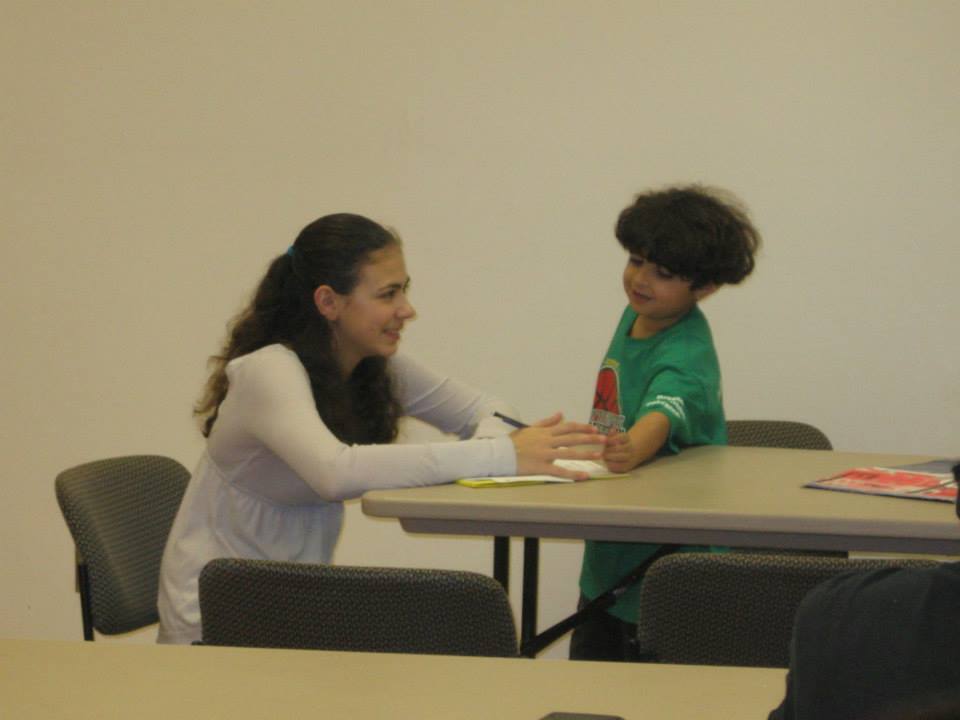
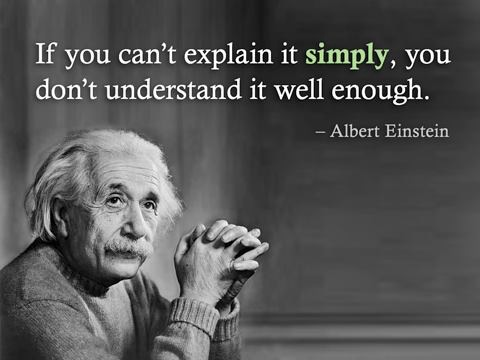
Education in a subject should be such that an educated person should be able to explain it simply to another.

.

Abstract Thinking

mind5

Here is a description of an experiment in learning.

Today we had a student who came to the GED center for the first time. We started her on the self-learning pilot on MILESTONE A1: Numbers & Place Values.

Milestone A1 is written in very simple English. It consists of lots of pictures that explain the abstract concept of regrouping and the use of it to generate the numbering system. So it is very easy to understand. This is the most basic concept in math, so no other knowledge of math is required. Therefore, this pilot provides a measure of the learning ability of a student to grasp an abstract mathematical concept.

I started this student on the pilot. She seemed quite enthusiastic. She claimed that she had made it to the 12th grade but then failed the FCAT. So, I expected her to zip through Milestone A1.

Milestone A1 consists of 15 lessons. Usually I go over the first two lessons with the student to give an idea of how to proceed through rest of the milestone by oneself. I did the same with this student, then let her continue by herself, while keeping an eye on her.

She proceeded through the lessons fast. Then I found her stopped on lesson A1.7. She didn’t ask for help. She just sat there. So I went to help her. I checked her knowledge of lesson A1.5, because that is the key lesson on regrouping on which the understanding of all other lessons depend. She said that she understood it. But when I asked her to demonstrate regrouping on abacus, she couldn’t do it.

This is the common problem I am finding with school dropouts. They think that they know a concept but they really don’t. Asking them to demonstrate is a quick way to check their understanding. You cannot see what is going in their mind. But you can definitely see whether they can demonstrate a concept or not.

This student didn’t get the idea of regrouping on abacus despite the fact that the procedure of regrouping was clearly shown with pictures in Lesson A1.5. It took repeated demonstrations of regrouping on actual abacus for about 30 minutes before this student could get it. But this effort was worth it. After that, she was able to read and write numbers in millions and billions, and was quite happy about it.

.

You can improve your abstract thinking by learning to demonstrate abstract concepts using concrete elements. You may also use thought experiments to assure yourself of the consistency of the concept.

.

What is Self Learning?

Self-learning

The Safety Harbor Math Club

I am currently involved with a Training center at a ministry where I live. This ministry serves people who are homeless, or who are at risk of becoming homeless. It helps them meet their basic needs of food and shelter with the proviso that they should now attempt to improve their lot by educating themselves and getting a job.

Self-learning is based on one’s desire to know. You are self-learning even when you are being helped.

The Training center at the ministry helps people learn English and Mathematics toward obtaining a GED certificate. I am currently volunteering at this center as a tutor. I would like to see a Self-Learning Program implemented at this center.

Self-learning involves responsibility.  Responsibility means, “A response that is proper and adequate to a situation.”

The situation that a person at risk faces is lack of education to be employed. The proper response is to get educated. This sense of responsibility is the basis of Self-Learning. But to build up this sense of responsibility, conditions need to be set right.

Self-learning requires access to materials that are easy to understand. It also involves alert supervision that helps one overcome tough spots in learning.

This book will help a student learn the fundamentals of mathematics. When he is very young, parents can help. When the fundamentals are cleared, he can pick up other text books on mathematics and learn from them by himself.

The Book of Mathematics

.

The Systems View of Life

Transcript of the talk

.

A talk given at Schumacher College (UK), Dartington on May 7th 2014 by Fritjof Capra, the author of the book The Tao of Physics.

The great challenge of our time is to build and nurture sustainable communities, designed in such a manner that their ways of life, physical structures, and technologies do not interfere with nature’s inherent ability to sustain life. To do so, requires a new ecological understanding of life, as well as a new kind of “systemic” thinking.

In this lecture, Fritjof Capra describes that such a new understanding of life in terms of complexity, networks, and patterns of organization, has recently emerged at the forefront of science. He will emphasize, in particular, the new conception of the nature of mind and consciousness, which is one of the most radical philosophical implications of the systemic understanding of life; and the urgency of this new understanding for dealing with our global ecological crisis and protecting the continuation and flourishing of life on Earth.

.

Alan Watts ~ Seeing Through The Illusion Of The World